Sports Economy
Sport read as an economy: how big the global sports industry is, what athletes and coaches teach founders, what sport does for the people inside companies, which countries turn sport into exports, and how football, stadiums, broadcasters, sponsors, bookmakers and investors actually make money.
Ten pillars, one argument
Read in order to build the case that sport is a productive industry rather than a pastime, or jump to the pillar that matches your seat — founder, HR leader, investor, club executive, policymaker. Every guide links onward to the others.
How big the sports economy really is
The size of the global sports industry in revenue, its share of GDP and jobs, the multiplier that turns sports spending into wider output, how the regions compare, and where the numbers are heading by 2030.

Where Is the Sports Economy Heading by 2030?
By 2030 the sports economy could reach $3.7 trillion, media rights $78 billion and women’s sport several billion. This forecast compares Oliver Wyman, PwC, Ampere and Deloitte projections and the downside scenarios.
Sports Economy by Region: North America, Europe, Asia and the Gulf Compared
North America dominates sport’s revenue and valuations, Europe leads in football and participation, Asia is the fastest-growing region and the Gulf supplies state capital. A region-by-region comparison with 2025–2026 figures.
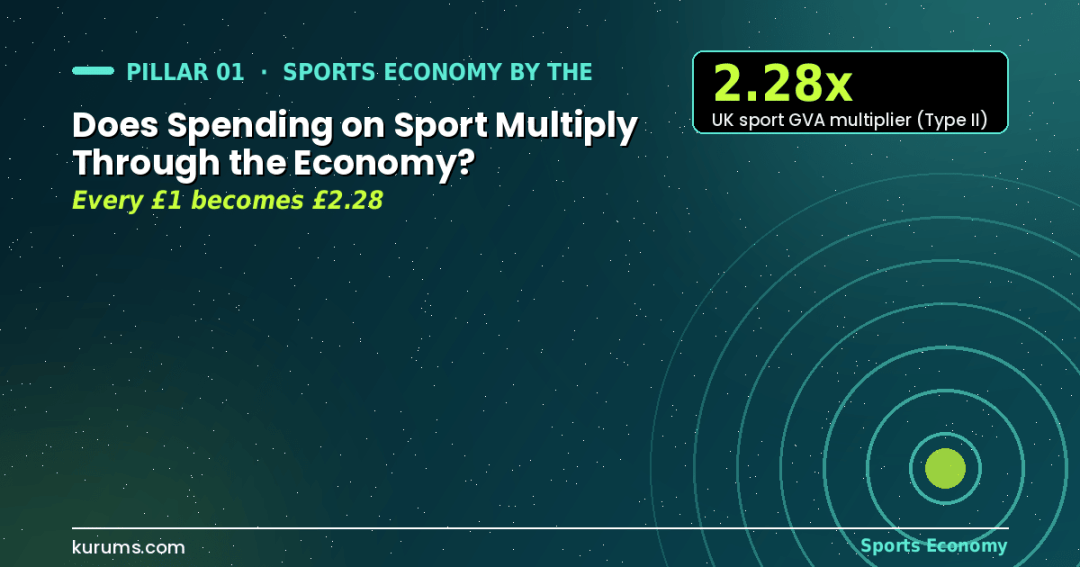
Does Spending on Sport Multiply Through the Economy?
Sport spending does ripple through supply chains and wages, with official multipliers of 1.5 to 2.3 in the UK. But consultant-produced mega-event impact claims routinely overstate the effect. Here is what the evidence supports.
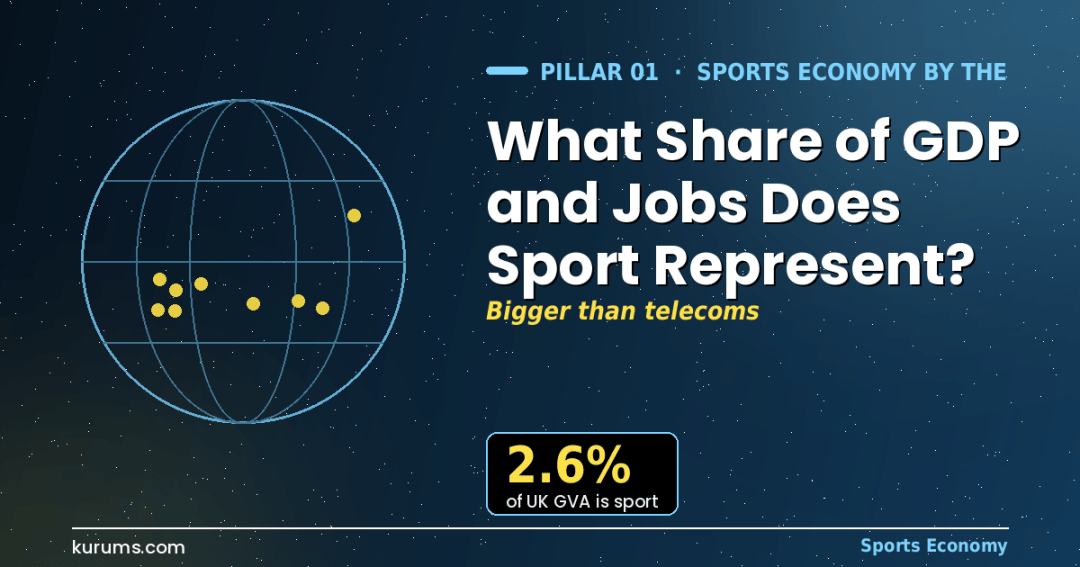
What Share of GDP and Jobs Does Sport Represent?
Sport accounts for roughly 2–3% of GDP and 1–4% of jobs in advanced economies, depending on definition. This article compares UK, EU, US and other satellite-account figures and explains why they differ.
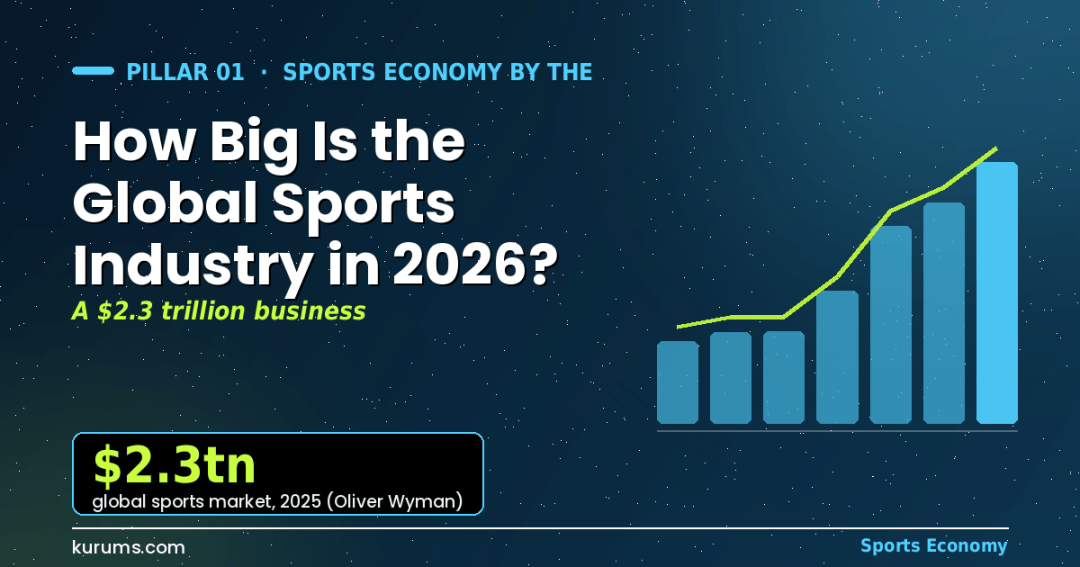
How Big Is the Global Sports Industry in 2026?
The global sports industry is worth between $500 billion and $2.3 trillion in 2026 depending on definition. This guide breaks down leagues, media rights, sponsorship, betting and goods with 2025–2026 figures.
Athletes who build companies, and founders who train like athletes
The athlete-founder model, what founders can borrow from how athletes and coaches work, the sportstech start-ups raising capital, the brands athletes built themselves, and how sport moved from club patrons to private equity.
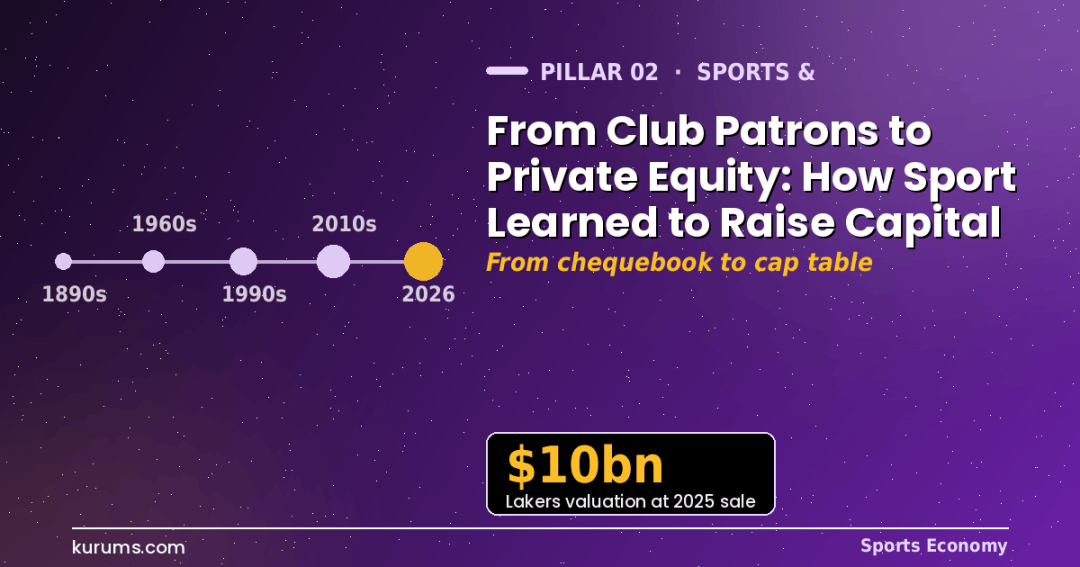
From Club Patrons to Private Equity: How Sport Learned to Raise Capital
A history with numbers of who has paid for sport: patrons and members, listed clubs, billionaires and states, then private-equity funds admitted by every US league. The 2025–2026 deals, the rules and the next stage.
Athlete-Led Brands: From Air Jordan to Serena Ventures
Seven case studies in athlete-led brands, from Jordan Brand’s roughly $7bn a year to Serena Ventures’ $111m fund, Beckham’s DRJB, Federer’s On stake, SpringHill, 35V and BodyArmor, and the pattern behind the ones that last.
SportsTech Start-ups: Funding, Categories and Exits
Drake Star counts $14.3bn of sportstech private placements and $156bn of M&A in 2025. This guide maps the six categories, the DAZN, Polymarket, Kalshi and Oura rounds, the consolidators that buy start-ups and the risks.

What Founders Can Learn from Athletes and Coaches
Sport-to-business lessons with the evidence attached: EY and Cornell data on athletes as leaders, the $5.34bn coaching industry, periodisation, feedback loops, marginal gains, and the sporting ideas founders should not copy.
The Athlete as Entrepreneur: How Players Became Founders
From Jordan’s royalty line to Serena Ventures’ $111m fund, the athlete-entrepreneur model converts a short window of attention into equity. The 2025–2026 numbers, the billionaire scorecard and the failure modes.
What sport does inside a company
The research on workplace sport and productivity, what wellness programmes return, whether team sports build better leaders, why companies hire athletes, and sport sponsorship as an employer-brand lever.
Sports Sponsorship as an Employer-Branding and Retention Tool
Sponsorship is bought for customers but employees feel it too. We show how Emirates, Allianz, Turkish Airlines and Deloitte use sports properties for pride, recruiting and retention, what it costs per head, and the KPIs that prove the return.
Why Companies Hire Athletes: Dual-Career and Transition Programmes
Elite sport pre-screens for traits interviews cannot measure, and the pool is huge: 500,000 NCAA athletes a year, 50,000 former PFA members. We map dual-career and transition models, their costs, returns and the mistakes that lose athlete hires.
Do Team Sports Build Better Leaders and Teams?
Former athletes lead more and thrive more, but much of the gap is selection. We weigh Gallup, Cornell and EY evidence on team sports and leadership, name the five behaviours sport trains, and show how to hire for them fairly.
What Do Corporate Wellness and Fitness Programmes Actually Return?
Vendors claim 3:1 returns, randomised trials find none on healthcare costs, and CEOs still report positive ROI. We reconcile the 2024–2026 evidence on what corporate wellness and fitness programmes return and how a CFO should model them.
Does Workplace Sport Improve Productivity? The Evidence
Workplace sport does raise productivity, but the gain comes through presenteeism among inactive staff, not sick days. We weigh WHO, Vitality, RAND Europe and ASICS data to show what employers should expect and how to measure it.
How countries turn sport into industries and exports
The United States franchise model, the Premier League as a British export, Germany's member-owned clubs, the Gulf's sports-led diversification, and a dedicated guide to Türkiye's sports economy.
Türkiye’s Sports Economy: Football, Basketball and the Road to Export
Türkiye has a huge sports audience and a small sports business. Why Süper Lig TV rights fell from $500m to $182m a season, how the Istanbul clubs are financed, where basketball and volleyball already export, and what export requires.
The Gulf Playbook: Saudi Arabia, Qatar and the UAE as Sports Investors
What Saudi Arabia, Qatar and the UAE have bought in sport, why, and what it cost: PSG, Manchester City, Newcastle, four Saudi clubs, LIV Golf, DAZN, two World Cups, and the 2026 retreat from trophy assets.
Germany: 50+1, Bundesliga Economics and the Member-Club Model
Germany runs the world’s second-richest football league on fan control. How the 50+1 rule works, what the Bundesliga earns, why clubs refused a €1bn private equity deal and what the member-club model costs and delivers.
The United Kingdom: Premier League as a National Export
How Britain built a sports export that earns more abroad than at home: £6.8bn of Premier League revenue, £2.16bn a season in overseas rights, £4.4bn of tax, American owners and the new Independent Football Regulator.
The United States Sports Economy: Leagues, College Sport and the Franchise Model
How the United States turned sport into the world’s most profitable sports economy: closed leagues, $14.5bn of shared NFL television money, $299bn of franchise value, a paid college tier and a $16.9bn betting market.
The sector in eight figures
The business of football and the leagues around it
Where Premier League money comes from and goes, how clubs are valued and why owners buy several at once, the transfer market as an economy, UEFA's financial rules, and the closed-versus-open league debate.
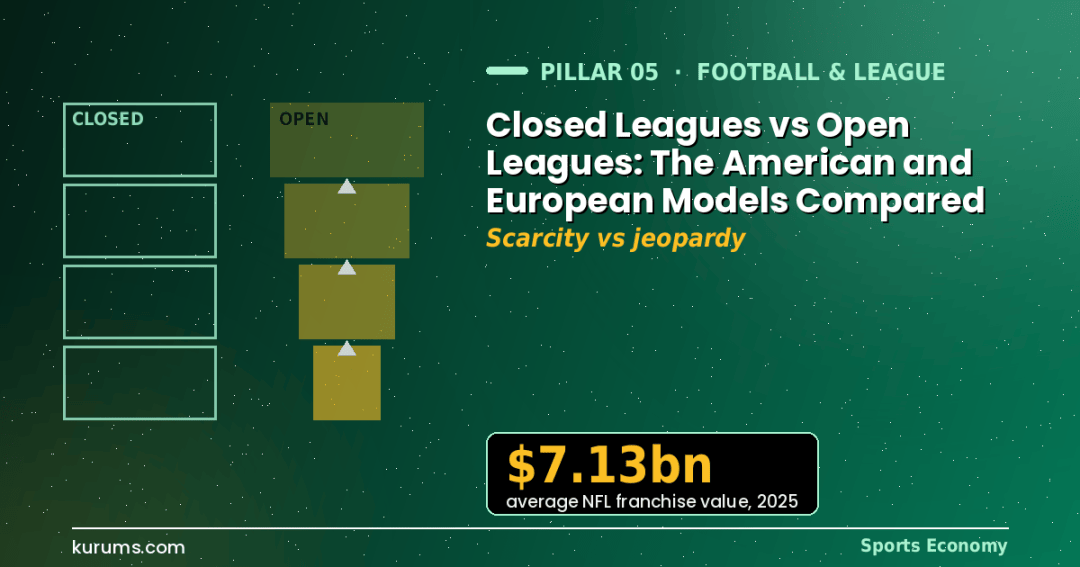
Closed Leagues vs Open Leagues: The American and European Models Compared
American leagues sell scarcity through closed membership, drafts and salary caps; European football sells jeopardy through promotion and relegation. This guide compares the two models on revenue, valuations, competitive balance, risk and law.
UEFA’s Financial Rules: From Financial Fair Play to Squad Cost Control
UEFA’s financial rules have moved from break-even tests to a 70% squad cost ratio. This guide explains the three pillars, the fines imposed on Aston Villa, Chelsea and Newcastle in 2025–2026 and how the Premier League’s new rules differ.

How the Transfer Market Works as an Economy
The transfer market moves more than $8bn a year across borders. This guide explains how fees are priced, amortised and financed, who takes a cut, why the Premier League dominates and how the Diarra ruling is changing the rules.

Football Club Valuations and the Rise of Multi-Club Ownership
Real Madrid is worth $9.5bn, Liverpool sold a third of itself at more than £5bn and 345 European clubs now belong to multi-club groups. How clubs are valued, who is buying and what UEFA’s rules allow.

Premier League Economics: Where the Money Comes From and Where It Goes
The Premier League earned £6.8bn in 2024/25 yet its clubs lost £948m before tax. This guide follows the money from broadcasters and sponsors through the distribution formula to wages, agents and the EFL.
Stadiums, mega-events and the cities that host them
How stadiums are financed, whether the Olympics pay off, the economics of the 2026 World Cup and the road to 2034, what mega-events do to host cities, and the sports-tourism industry.

Sports Tourism: The Industry Built on Travelling Fans
Sports tourism is now a measurable industry: $111 billion of direct spending and 339 million trips in the United States alone in 2025, with youth and amateur events out-earning professional spectators. How the money moves and who captures it.

What Does a Mega-Event Really Do for a Host City?
Host committees promise billions; auditors find fractions of a percent of GDP. Using Super Bowl LX, the Las Vegas Grand Prix, Euro 2024, Paris 2024 and the 2026 World Cup, this guide shows what a mega-event measurably delivers.
The Economics of the 2026 World Cup (and the Road to 2034)
The 2026 World Cup set records on every FIFA line: revenue above $15 billion, 6.8 million spectators, $871 million in prize money, while host cities paid the security bills. The full balance sheet and the road to 2034.
Do the Olympic Games Pay Off? Costs, Revenues and Legacy
Paris 2024 cost French taxpayers €6.6 billion and lifted GDP by 0.07 points while the IOC banked $7.7 billion. How Olympic costs, revenues and legacy add up for hosts, from Paris and Milan Cortina to LA28 and Brisbane.
How Stadiums Are Financed: Public Money vs Private Capital
Stadium financing splits into two worlds: American venues built with billions in public bonds, and European grounds funded by club debt, seat licences and revenue-sharing investors. Here is how each capital stack works and who really pays.
Where the broadcast money comes from
How big the media-rights market is, why the NFL and NBA deals set the price of sport, what Apple, Amazon, Netflix and DAZN changed, what piracy costs, and how leagues sell domestic and international rights.
Domestic vs International Rights: How Leagues Sell the World
The Premier League earns more from international rights than domestic ones; the NFL earns almost nothing abroad. How leagues package and sell overseas rights, who buys them, and why most leagues struggle to export.
What Does Piracy Cost Sport?
Live sports piracy costs rights holders an estimated $28.3 billion a year. How pirate IPTV and streaming sites work, what Streameast’s shutdown and DAZN’s Ligue 1 exit reveal, and what enforcement works.
Streaming Enters the Stadium: Apple, Amazon, Netflix and DAZN
Streaming platforms spend about $14.2 billion a year on sports rights. What Amazon, Apple, Netflix, YouTube and DAZN have bought, the business models behind each bid, and why DAZN’s Ligue 1 exit matters.
The NFL and NBA Media Deals: Why They Set the Price of Sport
The NFL’s $110 billion and the NBA’s $76 billion media contracts take about 30% of the global rights market and set the benchmark for every other league. Here is what was sold, to whom, and why it matters.

How Big Is the Sports Media Rights Market?
Global sports media rights reached a record $65.8 billion in 2026, with the United States taking 54% and the NFL and NBA 30%. Who pays, which leagues win, and why mid-tier fees are falling.
Sponsorship, betting and the fan as a revenue line
The sponsorship market and what a deal buys, how shirt deals and naming rights are priced, the betting economy and its league partnerships, merchandise and licensing, and what survived of fan tokens and NFTs.
Fan Tokens, NFTs and Digital Fan Monetisation: What Survived
Fan tokens and sports NFTs raised hundreds of millions and lost most of their value. This article examines what failed, what regulators did, and the membership, streaming, fantasy and loyalty products that actually monetise fans in 2026.
Merchandise and Licensing: The Retail Side of Sport
Licensed sports merchandise reached $44.4 billion in 2025. This guide explains kit-supplier guarantees and royalties, the biggest deals, Fanatics’ role, and whether clubs should run retail in-house or license it out.
The Sports Betting Economy and Its League Partnerships
Sizing the sports betting economy in 2026 with H2, AGA and Gambling Commission data, explaining how money flows to leagues through sponsorship, data rights and levies, and why prediction markets and advertising bans are reshaping it.
Shirt Sponsorship and Naming Rights: Pricing the Logo
From Real Madrid’s €100 million Emirates shirt to $700 million arena names, this guide explains how shirt sponsorship and naming rights are valued, what the sponsor gets, and what happens when a category is banned.
How Big Is Sports Sponsorship, and What Does a Deal Buy?
Sports sponsorship rights fees reached about $39 billion in 2025. This guide sizes the market with NFL, Formula 1, Premier League and Olympic data, explains who buys, what a deal actually includes and how fees are priced.
Sport as an asset, a loan and a risk
Private equity's entry into sport, why franchise valuations keep rising, club debt and stadium loans, athlete wealth management, and sport as an asset class with returns, risks and liquidity.
Sport as an Asset Class: Returns, Risks and Liquidity
What sports franchises have returned, where the return comes from, how correlated sport is with other assets, the risks of illiquidity and media rights, and the five routes an investor can use to get exposure.
Athlete Income and Wealth Management: From Contract to Portfolio
Where athlete income comes from, how contracts and deferrals work, what tax takes, why so many players run out of money and how the best-advised athletes turn a short career into a lifetime portfolio.
Club Debt: Bonds, Stadium Loans and Who Lends to Sport
How clubs and franchises borrow for stadiums and squads, who lends (banks, bond investors, municipalities, leagues and private credit), what the NFL and UEFA allow, and what happened at Inter, Barcelona and Manchester United.

Why Sports Franchise Valuations Keep Rising
Why sports franchise valuations keep rising: Forbes, Sportico and CNBC 2026 figures, the revenue multiples buyers pay, media rights and expansion fees, the North America–Europe gap and what could stop the escalator.

Private Equity in Sport: The Funds, the Deals and the Rules
Who the sports private equity funds are, what they have bought from the Yankees to Atlético Madrid, the ownership caps each league imposes, and the deals in Germany and at 777 Partners that went wrong.
The software behind the sector, compared independently
Independent comparisons of sports ticketing platforms, club and league management software, performance-analytics systems, sponsorship-measurement tools and fan-engagement/OTT platforms, with pricing checked October 2026.
Fan Engagement and Sports OTT Platforms Compared
An independent comparison of seven fan engagement and sports OTT platforms, from Vimeo’s $1-per-subscriber tier to Deltatre’s league-scale streaming, covering pricing models, what each does well, data ownership and which tool suits a club, league or federation.
Sponsorship Measurement Platforms Compared
An independent comparison of seven sponsorship measurement platforms, covering how exposure, media value and brand lift are calculated, what the vendors claim about scale, how they are priced and which tool suits a club, league or brand.
Sports Performance Analytics Software Compared: Hudl, Catapult, StatsBomb and More
An independent comparison of seven sports performance analytics platforms, from Hudl’s $500-a-team video plans to Catapult wearables, StatsBomb event data and Opta tracking, covering what each measures, what it costs and who it suits.
Club and League Management Software Compared
An independent comparison of seven club and league management platforms, from free apps to governing-body systems, covering registration fees, payment processing, consolidation after the 2026 PlayMetrics-SportsEngine deal and which tool fits which organisation.
Sports Ticketing Platforms Compared: Ticketmaster, SeatGeek, Tixr, SecuTix and More
An independent comparison of seven sports ticketing platforms for clubs, leagues and venues, covering fee models, resale control, data ownership, contract terms and the 2026 antitrust rulings reshaping the market.
Four ways through the hub
Pick the path that matches your seat. Each one runs through five guides in a sensible order.
Deals, signings and rights auctions, every Monday
The running commentary around the hub: the week's club sales and investment rounds, media-rights and sponsorship deals, stadium and mega-event decisions, sportstech funding, and regulatory moves — published each Monday morning.
No Results Found
The page you requested could not be found. Try refining your search, or use the navigation above to locate the post.
Frequently Asked Questions
How big is the global sports economy?
Two Circles' Sports IP Revenue League puts the revenue of sports rights-holders at a record $174 billion in 2025, growing at roughly 6% a year, with media rights the main driver. Broader definitions that add sporting goods, fitness, betting and sports tourism run to several hundred billion dollars. The Sports Economy by the Numbers pillar explains which definition is being used whenever a figure is quoted.
Does sport really affect entrepreneurship and company performance?
Yes, in two measurable ways. Athletes increasingly run companies themselves — from Jordan Brand to Serena Ventures and sportstech start-ups — and the discipline of training, coaching and performance measurement maps onto how founders build teams. Inside companies, workplace sport and wellness programmes show measurable effects on absenteeism, engagement and retention. The Sports & Entrepreneurship and Sports & HR pillars review the evidence.
Which countries make the most money from sport?
The United States dominates on revenue through the NFL, NBA, MLB, NHL and college sport; the United Kingdom runs the most exported league in the world; Germany's member-owned Bundesliga is the model of a different ownership philosophy; and Saudi Arabia, Qatar and the UAE have made sport a diversification strategy. The Country Playbooks pillar covers each, with a dedicated guide to Türkiye.
How do football clubs, stadiums and broadcasters make money?
Clubs earn from broadcasting, matchday and commercial income, with the Premier League's domestic and international TV deals setting the ceiling; stadiums are financed by a mix of public bonds, private debt and naming rights; broadcasters and streamers pay for rights and recoup through subscriptions and advertising. The Football, Stadiums, Media Rights and Sponsorship pillars walk through each value chain.
Is sport a good investment?
Franchise values have risen faster than most asset classes for two decades, which is why private-equity funds such as Arctos, Sixth Street and CVC now own stakes in leagues and clubs; but the assets are illiquid, cash-flow is often thin, and valuations depend on media-rights cycles. The Sports Finance & Investment pillar covers returns, risks, debt and liquidity. Nothing in this hub is investment advice.
How is this hub kept up to date?
Each guide carries a last-updated date and names its sources inline; the category pages behind every pillar list the latest coverage, and the Sports Economy Insights section adds a weekly roundup every Monday with the week's deals, signings, rights auctions and policy moves.