
Marketing
A practical route map for brand, content, search, social, email, paid media, TikTok commerce, pricing and measurement. Pick the job you need to get done and jump straight to the pillar hub, guides and software comparisons behind it.
Start with the task
Pick the job you are trying to do. Each route opens a pillar hub that explains the framework and links every guide in the cluster.
Every Marketing pillar hub
Each hub combines an original framework, comparison tables and FAQs with a live list of the guides in its cluster.
Brand Strategy
Positioning statements, brand architecture, the 4Ps, 7Ps and 4Cs, brand versus performance budgets and brand equity.
Open hub →Content Marketing
Content by funnel stage, distribution and repurposing, writing for AI answers and measuring content ROI.
Open hub →SEO & AI Search
Technical and on-page SEO, content that ranks and answer-engine optimisation for AI assistants.
Open hub →TikTok Marketing & Commerce
TikTok Shop fees and setup, Ads Manager and Spark Ads, affiliate creators, suppliers and unit economics.
Open hub →Digital Ads
Channel comparison, break-even ROAS, CAC payback and MER, and advertising after signal loss.
Open hub →Social Media
Strategy, platform choice and ROI, plus dated updates on Meta, X, Pinterest and YouTube, tool reviews and market watch.
Open hub →Email Marketing
Lifecycle flows, Gmail and Yahoo sender rules, metrics after Apple Mail Privacy Protection and consent law.
Open hub →Growth Hacking
AARRR funnel, growth loops, K-factor, ICE-scored experiments and growth metrics finance accepts.
Open hub →Marketing Analytics
Measurement plans, attribution after GA4, marketing mix modelling, incrementality tests and CFO KPIs.
Open hub →Pricing Psychology
Anchoring, decoys, good-better-best tiers, willingness-to-pay research, discount maths and price rules.
Open hub →Brand Ambassadors
Ambassador, influencer, affiliate and employee-advocacy programs, KPIs and disclosure rules.
Open hub →Marketing Tools & Comparisons
Independent 2026 comparisons of email, SEO, social, automation, analytics, PPC and influencer software.
Compare tools →Marketing news this week
Daily briefs on platform changes, search updates and advertising news, with what marketing teams should do next.
Claim Your Business in ChatGPT: How AI Visibility Became a Managed Marketing Channel
Searches for ‘claim your business in ChatGPT’ jumped 900%. What OpenAI’s Business Hub means for GEO, ads and who owns the customer relationship.
OpenAI Launches Businesses in ChatGPT and Business Hub on November 10, 2026: Notes for Marketing
OpenAI launched Businesses in ChatGPT in beta on November 10, 2026, allowing companies to claim verified profiles through Business Hub, view aggregated engagement insights, and—for eligible US e-commerce and online service businesses—deploy Business Agents.
YouTube Creator Updates, November 2026: Notes for Marketing
A sourced look at YouTube’s late October and early November 2026 changes: the $20 payout test, paid hype in 13 countries, AI search answers, AV2 and what brands should do.
TikTok Marketing & TikTok Shop
Twenty guides on selling through TikTok: how TikTok Shop works and what it costs, Ads Manager and Spark Ads, running affiliate creators at scale, vetting suppliers for viral demand and a worked per-order margin model.
Open the TikTok hub →How is AI being applied in marketing software?
AI in marketing software has moved from copy assistants to agents that plan campaigns and to tools that track brands inside ChatGPT. Some of it is proven at scale; much of it shipped this year and has yet to show results.
How Marketing Software Companies Apply AI in 2026: Content, Agents, AI Search and What Actually Works
Marketing suites now generate content, predict churn, run ad auctions and track AI search. We separate the proven from the beta, with October 2026 pricing.
Marketing terms, translated.
Funnels, A/B tests, brand equity, CTR and CPM, retention versus acquisition, go-to-market: the marketing words behind every campaign meeting.
Benchmark, Decoded: What It Actually Means
A benchmark is a reference point used to judge performance, usually a figure from competitors, an industry average, your own past results or a target. Benchmarking is the habit of comparing your numbers against that reference so you can tell whether a result is good, normal or worrying, rather than guessing in isolation.
NPS, Decoded: What It Actually Means
NPS, or Net Promoter Score, is a customer loyalty metric based on one question: how likely are you to recommend us to a friend or colleague, from 0 to 10? People who answer 9 or 10 are promoters, 7 or 8 are passives, and 0 to 6 are detractors. NPS equals the percentage of promoters minus the percentage of detractors.
SEO, Decoded: What It Actually Means
SEO, or search engine optimization, is the practice of improving a website and its content so it appears higher in unpaid search results. It covers what a page says, how fast and well built the site is, and how much other sites trust and link to it, all aimed at earning free, relevant visitors from search.
Test your Marketing skills in two minutes
Free browser games built on the same topics as our Marketing guides. Each one teaches a single idea by letting you make the call.
Sign in to save your XP and streak, and see where you stand on the leaderboard.
New in Marketing
The most recent in-depth guides across every Marketing pillar.
YouTube Creator Updates, November 2026: Notes for Marketing
A sourced look at YouTube’s late October and early November 2026 changes: the $20 payout test, paid hype in 13 countries, AI search answers, AV2 and what brands should do.
X Subscriptions and X Lift: Notes for Marketing
X launched The X Subscription bundle and the X Lift AI ad builder in October 2026, alongside creator payout updates. Here is what is confirmed, what is not, and what marketers should check.
Pinterest Q3 2026 Results: Notes for Advertisers and Marketing
Pinterest grew revenue 12% in Q3 2026 while Europe stayed flat. We read the release and earnings call for advertisers: Visual Search Ads, Performance+, shopping and tariffs.
Meta Q3 2026 Results: Notes for Advertisers and Social Marketers
Meta’s Q3 2026 results show ad revenue up 26% on 10% more impressions and a 14% higher price per ad. Here is what the AI tool data, guidance and legal charge mean for marketers.
Meta on-device conversion measurement: Nov 12 Notes for Marketing
Meta’s new Pixel setting for measuring conversions on customer devices is due November 12, reportedly on by default. Here is what is verified, what is not, and what marketers can do now.
Metricool review: plans, limits and fit for 2026
An independent look at Metricool’s Free, Starter, Advanced and Custom plans as of October 2026, with brand limits, add-on costs, reporting strengths, inbox gaps and a pilot checklist.
How the pillars fit together
Marketing works as a loop, not a list of channels. Each stage has a hub that explains the method in depth.
Marketing software comparisons
Independently researched 2026 comparisons with pricing, fit and alternatives for every part of the marketing stack.
Best Website Personalization Software in 2026: Pricing & Comparison
Buyer's guide · Marketing Best Website Personalization Software in 2026: Pricing & Comparison We compared...
Best NPS Software in 2026: Pricing & Comparison
Typeform, SurveyMonkey, Retently and AskNicely compared on public pricing, response limits and NPS features for 2026.

Best Direct Mail Automation Software in 2026: 6 Platforms Compared
Six direct mail automation platforms compared on platform fees, per-piece prices, triggered sends, CRM integrations and tracking, from APIs to managed programs.
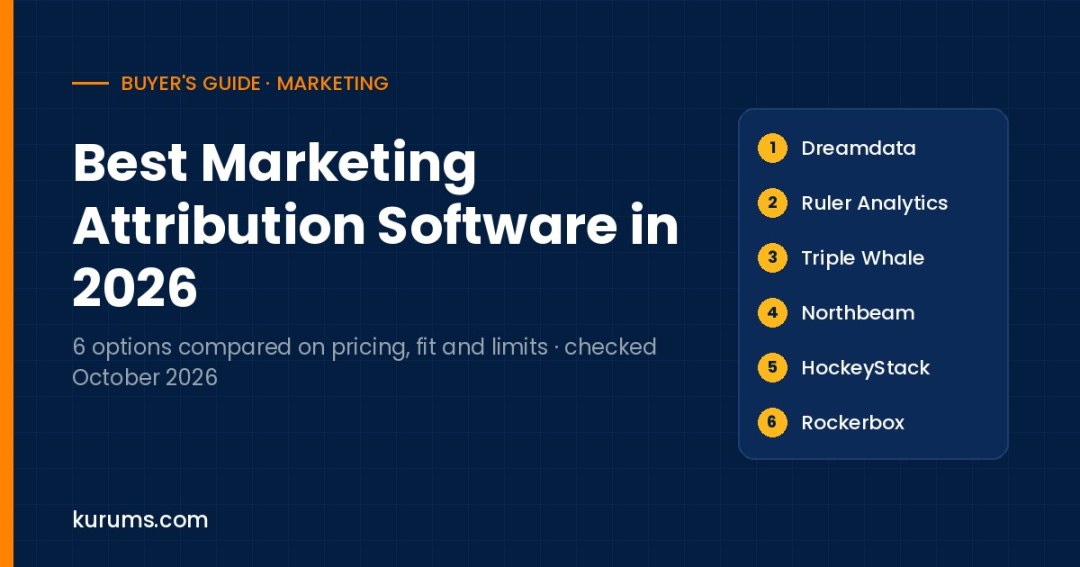
Best Marketing Attribution Software in 2026: 6 MTA Tools Compared
Six multi-touch attribution platforms compared on pricing, free plans, attribution models, MMM and incrementality, and the buyer each one suits.
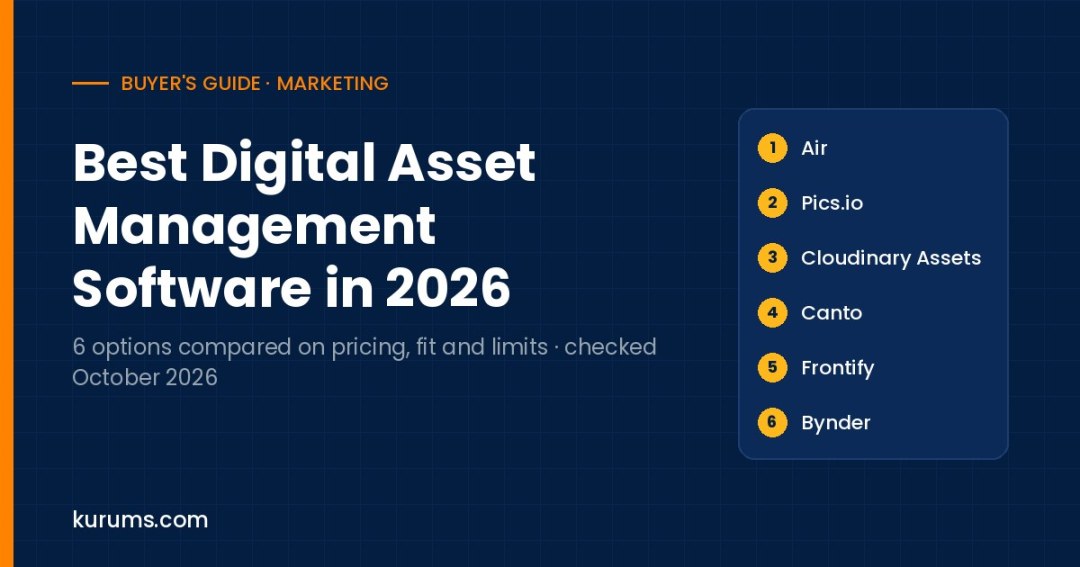
Best Digital Asset Management Software in 2026: 6 DAM Tools Compared
Six DAM platforms compared on published pricing, trials, AI tagging, storage model and brand sharing, from self-serve tools to enterprise brand suites.

Best Creative Automation Software in 2026: 6 Ad Production Tools Compared
Six creative automation platforms compared on pricing, trials, bulk and feed-driven production, publishing and ad serving, from self-serve to enterprise.
Marketing books worth your time
Short, opinionated reviews of the marketing books practitioners keep coming back to.
Positioning
Owning one word in the customer’s mind before spending one dollar.
Read the review →Contagious
The six triggers that make ideas travel without ad spend.
Read the review →Building a StoryBrand
A simple framework for clarifying what a brand says.
Read the review →Influence
The principles of persuasion behind most conversion tactics.
Read the review →$100M Offers
Designing offers so strong that price becomes secondary.
Read the review →Never Split the Difference
Negotiation lessons for partnership and media deals.
Read the review →All Marketing topics
Every Marketing category archive, with the number of guides in each.
Marketing questions we answer
Where should a small business start with marketing?
Start with positioning: who you serve and why they should choose you. Then pick one channel where your buyers already look for solutions, usually search for high-intent products or social for discovery-led products, and one owned channel such as email. Measure cost per customer from the start and add channels only when the first ones work.
What is the difference between brand marketing and performance marketing?
Brand marketing builds long-term memory and preference so that future buyers think of you first; its results show up slowly in awareness, share of search and price premium. Performance marketing captures people who are ready to buy now and is measured in conversions and return on ad spend. Healthy programs fund both, because performance campaigns become cheaper when the brand is already known.
How do I measure whether marketing is working?
Track a short list of commercial metrics, customer acquisition cost, CAC payback, lifetime value relative to CAC and the marketing efficiency ratio, and support them with channel metrics. Use attribution for day-to-day optimisation, and incrementality tests or marketing mix modelling for big budget decisions, because attribution alone cannot prove cause and effect.
How has AI changed marketing in 2026?
AI has made content production and ad creative cheaper, and AI assistants and search summaries now answer many questions directly. That raises the value of original expertise, first-party data and a recognisable brand, and it makes structured, well-sourced pages more likely to be cited. Our SEO and AI Search guides explain how to adapt.
Kurums Book Taste
The Marketing Shelf
Kurums Book Taste is our business-book review desk: every title gets a Taste Note - what the book argues, and exactly how to use it at work - and curated Tasting Menus chain them into reading routes. This is the shelf we keep stocked for Marketing teams.
Use it for offer pages, landing page copy, sales decks, trust signals, and campaign briefs.
Yummy Pick - Book Taste$100M OffersAlex HormoziUse it to make a product, service, or consulting package easier to understand and harder to ignore.
Taste Note - Book TasteBuilding a StoryBrandDonald MillerRun the grunt test on your homepage: can an outsider state offer, benefit, and next step in five seconds?
Taste Note - Book TastePositioning: The Battle for Your MindAl Ries and Jack TroutWrite the one sentence a competitor could never claim, and test every campaign against it.
Taste Note - Book TasteContagious: Why Things Catch OnJonah BergerRun every launch through the six STEPPS as formal review questions, and require two strong triggers before budget is released.
Taste Note - Book TasteMade to StickChip Heath and Dan HeathRewrite your value proposition through all six SUCCESs checks and A/B it against the current one.
Taste Note - Book TasteOgilvy on AdvertisingDavid OgilvyRewrite your top landing page's headline five ways using Ogilvy's formulas and test against the incumbent.
Taste Note - Book TasteThis Is MarketingSeth GodinWrite your smallest-viable-market definition and list three things you'll stop doing because they serve everyone else.
Taste Note - Book TasteCrossing the ChasmGeoffrey A. MooreRun the chasm self-diagnosis: are current customers visionaries or pragmatists, and who do your references actually reach?
Taste Note - Book TasteObviously AwesomeApril DunfordRun the ten-step workshop on your flagship product with sales, product, and CS in the room.
Taste Note - Book TasteHookedNir EyalMap your product's hook: current triggers, action friction, reward types, and what users invest.
Taste Note - Book TasteAlchemyRory SutherlandRun a quarterly 'psycho-logic' session: list your top customer frustrations and brainstorm perception fixes before product fixes.
Taste Note - Book TastePurple CowSeth GodinRun a remark test on your top three offers: write down the one sentence a happy customer would say about each, and escalate any offer that has no such sentence.
Run the numbers before the meeting
10 free Marketing calculators and templates. Type your figures, get a one-page result you can copy or print. No sign-up.
Looking for something else? Browse all 110 business tools across ten departments.