
E-Commerce.
Models, market metrics, marketplaces by country, the tools to open a shop and the suppliers to fill it. One pillar, written for founders and operators, with every figure sourced.
Explore the E-Commerce pillar
E-Commerce Models & Types
Who sells to whom, where the stock sits and where the customer finds you. Start here if you are choosing a model or changing one.
Marketplace vs Own Online Store vs Social Commerce: Where Should You Sell First?
Marketplaces rent you demand, your own store lets you own it, social commerce creates it. What each channel costs, what it gives back and the order to add them in.
Dropshipping vs Private Label vs Wholesale vs Print-on-Demand: Which Inventory Model Should You Choose?
Where the stock sits decides your margin, your cash needs and your risk. A side-by-side comparison of dropshipping, wholesale reselling, private label and print-on-demand.
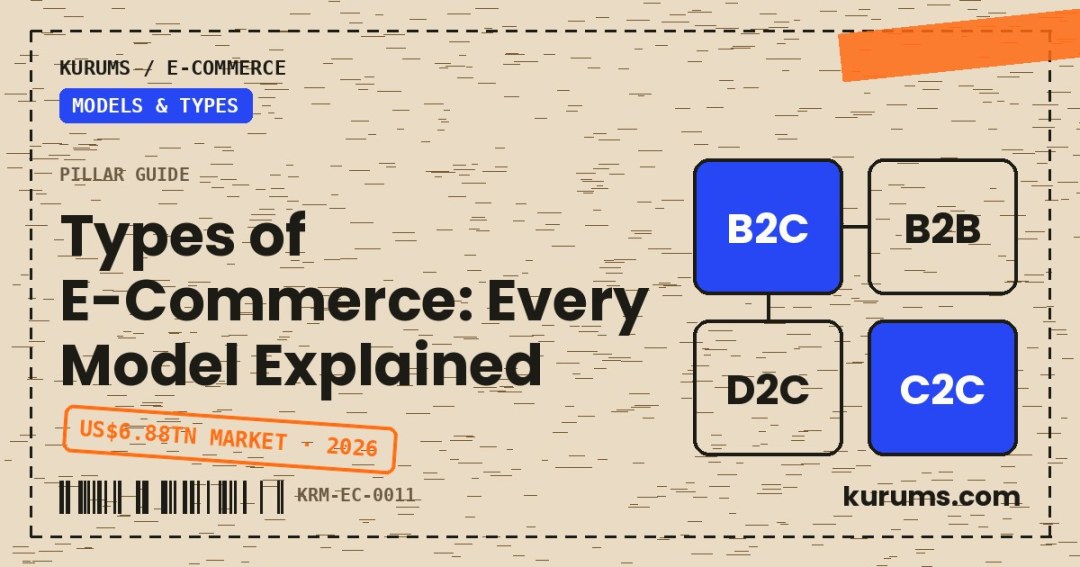
Types of E-Commerce: B2C, B2B, D2C, C2C and Every Model in Between (2026 Guide)
B2C, B2B, D2C, C2C, B2G, marketplaces, subscriptions and social commerce: how each e-commerce model makes money, what it costs to run and which one fits your business.

Pinterest Shopping: How to Sell With Catalogs and Product Pins
A merchant’s guide to selling on Pinterest: catalog and feed requirements, product Pins, the Verified Merchant Program, shopping ads and how checkout is handed off to your store.
Halal E-Commerce: Shariah-Conscious Online Business
Halal e-commerce is the sale of products and services online in a way that respects Islamic requirements, ethical...
US Sales Tax & Use Tax: Economic Nexus After Wayfair (2025)
How US sales tax and use tax work in 2025 — economic nexus after Wayfair, the $100,000 threshold, use tax, the five no-sales-tax states, and how businesses comply.

Adapting Your Business for Agentic Commerce in 2026
As of January 2026, the shift from traditional SEO to Agentic Commerce is essential for businesses. With the introduction of Google’s Universal Commerce Protocol and Stripe’s Agentic Commerce Protocol, companies must optimize for AI agents rather than human users. This involves adopting Agent Engine Optimization practices and leveraging Shared Payment Tokens for secure transactions.
Market Metrics & Unit Economics
The numbers that tell you whether a store, an order or a new country makes money: KPIs with formulas and benchmarks, contribution margin, CAC payback, and the market data to check before expanding.
E-Commerce Market Metrics: 12 Numbers to Check Before You Sell in a New Country
Before translating a single product page, check twelve market-level numbers: size and growth, online share, who owns the traffic, how people pay, what delivery costs and what the border charges.

E-Commerce Unit Economics: Contribution Margin, CAC Payback and the Math of a Profitable Order
A CFO-style walk through the profit and cash of a single order: landed cost, three levels of contribution margin, break-even ROAS, CAC payback and the cash conversion cycle.
E-Commerce Metrics That Matter: The 15 KPIs to Track, With Formulas and 2026 Benchmarks
Fifteen e-commerce KPIs grouped by the question they answer, each with its formula, a 2026 benchmark where a credible one exists, and the mistake people make reading it.
How Nominal GDP Fueled a Fivefold E-Commerce Boom
Curious how Priya’s e-commerce venture grew fivefold by leveraging nominal GDP? Explore key insights, real-world success stories, and actionable strategies for entrepreneurs. From India’s booming economy to global market moves, learn why nominal GDP matters—and how to use it to power your next big business leap. Click to dive in!
Boost Your E-commerce Sales with These Proven Cross-Selling Strategies
Maximize your e-commerce revenue with effective cross-selling strategies. Discover how to offer relevant, value-adding products and enhance the customer experience.
Marketplaces by Country
Which marketplace leads in each country, what the major platforms are like to sell on, and what the rules cost. Country and regional reviews are added continuously.
Türkiye’s Online Marketplaces Reviewed: Trendyol, Hepsiburada, Amazon, n11 and the Rest (2026)
Türkiye is a two-platform market with a long tail. Who owns Trendyol and Hepsiburada, how big they are, what each venue suits, and what a seller needs to know about instalments, mobile and e-export.
Europe’s Online Marketplaces Reviewed: Amazon, Allegro, bol, Zalando, Otto, Cdiscount and the Cross-Border Challengers
Which European marketplace fits which seller: reach by country, category strengths, what each expects from sellers, and the VAT, product-safety and customs rules that apply to all of them.
Top Online Marketplaces by Country (2026): Who Leads Where, and What It Means for Sellers
A country-by-country map of the marketplaces shoppers actually use, the ten largest platforms by GMV, and a region-by-region reading for sellers planning where to list.
How to Become a TikTok Shop Affiliate: A Creator’s Guide to Commission Income
Everything creators need to become a TikTok Shop affiliate — eligibility, choosing products, the sample request system, content that converts, and payouts.
TikTok Shop Affiliate Program: A Seller’s Guide to Creator-Driven Sales
A seller’s guide to the TikTok Shop Affiliate program — how it works, open vs targeted plans, commission strategy, and recruiting creators profitably.
TikTok Shop Policy and Compliance: Keep Your Store Open and Visible
Everything sellers need to stay compliant on TikTok Shop — prohibited products, listing and IP rules, conduct standards, and effective appeals.
TikTok Shop Fees and Margins Explained: Price Products That Stay Profitable
Break down every TikTok Shop cost — commission, processing, promotions, and returns — and learn to calculate a true take rate and price for profit.
TikTok Shop Seller Center: The Complete Dashboard Guide
A module-by-module tour of TikTok Shop Seller Center, the metrics that drive visibility, and the settings new sellers overlook.

How TikTok Shop Works: A Complete Setup Guide for New Sellers
A complete walkthrough of how TikTok Shop works — eligibility, Seller Center setup, product listing, fulfillment, and the fee and payout structure.
Online Store Tools & Reviews
The software needed to open and run an online shop, layer by layer, with independent reviews and side-by-side comparisons of platforms, payments, shipping, loyalty and more.
WooCommerce Review (2026): What ‘Free’ Really Costs, Pros, Cons and Who It Suits
WooCommerce charges nothing for the software and no share of your sales. The bill arrives as hosting, extensions, payment fees and maintenance time. A clear-eyed look at what it costs and who it suits.
Shopify Review (2026): Pricing, Real Costs, Pros, Cons and Who Should Use It
What Shopify costs in 2026 once fees and apps are counted, where it is strong, where it is weak, and how to tell whether it is the right platform for your store.
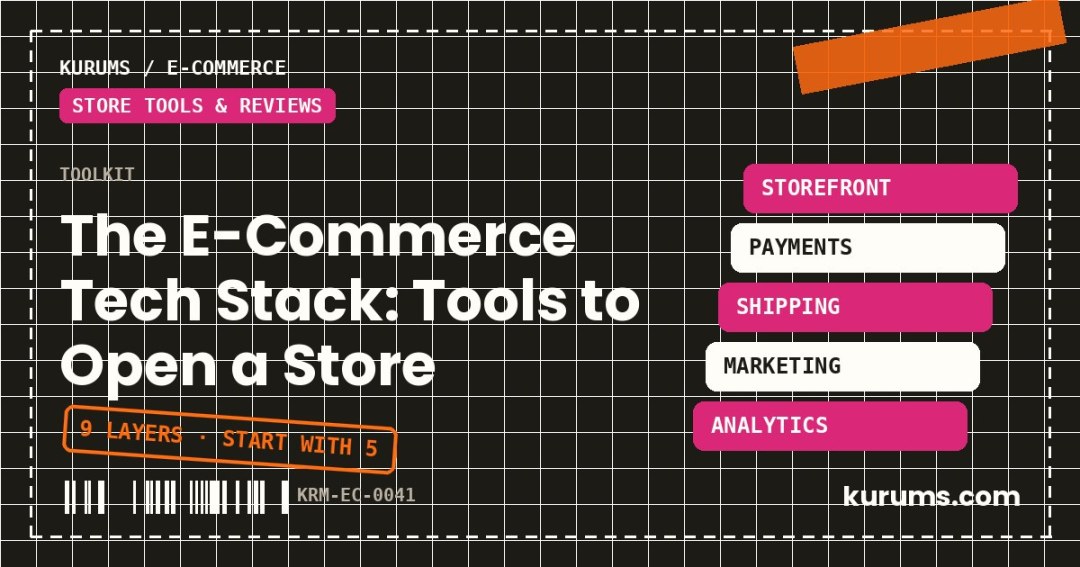
The E-Commerce Tech Stack: Every Tool You Need to Open an Online Store (and What to Skip)
Nine layers, in the order you should set them up: store platform, domain, payments, shipping, tax and invoicing, email, reviews, analytics and accounting. What each does, the leading tools, and what a new store can skip.

Free E-commerce Platforms & Store Builders (2026): 13 Free Plans Compared
Free e-commerce platforms verified October 2026: WooCommerce, Square Online, Big Cartel, Payhip, Gumroad, Storenvy, Etsy, PrestaShop, OpenCart, Magento Open Source, Medusa, Saleor, Bagisto — product caps, transaction fees, custom domains, licences, paid steps. Ecwid free plan gone; Shopify and Sellfy trial-only.

Free Shipping & Freight Quote Tools (2026): 14 Free Plans Compared
Free shipping and freight quote tools verified October 2026: Pirate Ship, Veeqo (unlimited, free), Shippo (30 labels), Easyship, EasyPost (3,000 labels), Packlink, Parcel2Go, Shiprocket, Sendle, Freightos, Freightquote, Shipa Freight, USPS and FedEx accounts — label fees, caps, carrier discounts, paid steps. ShipStation trial-only.
Free Payment Processing With No Monthly Fee (2026): 12 Free Plans Compared
Payment processors with no monthly fee, verified October 2026: Stripe, Square, PayPal, Helcim, Braintree, PayPal Zettle, SumUp, GoCardless, Mollie, Paddle, Lemon Squeezy, Gumroad — per-transaction rates, hardware costs, merchant-of-record status and paid tiers.
Best Website Personalization Software in 2026: Pricing & Comparison
Buyer's guide · Marketing Best Website Personalization Software in 2026: Pricing & Comparison We compared four website...
Best Pricing Optimization Software in 2026: Pricing & Comparison
Compare pricing optimization platforms on published list prices and buyer fit. Pricing checked 14 October 2026.
Best Payment Orchestration Software in 2026: Pricing & Comparison
Buyer's guide · Finance Best Payment Orchestration Software in 2026: Pricing & Comparison Compare four payment...
Best Shipping Software in 2026: Pricing & Comparison
Four shipping software companies compared on October 4, 2026: Pirate Ship, Shippo, EasyPost, and ShipStation.
Best Loyalty Software in 2026: Pricing & Comparison
Compare Smile.io on published 2026 loyalty pricing and buyer fit. Checked 3 October 2026.
Best Referral Software in 2026: Pricing & Comparison
Compare ReferralCandy, GrowSurf, Referral Rock and Friendbuy. Public fees checked 30 September 2026.
Wholesalers & Sourcing
Where products come from: how to find and vet suppliers, what the terms on a quotation mean, and reviews of the wholesale and sourcing platforms sellers actually use.
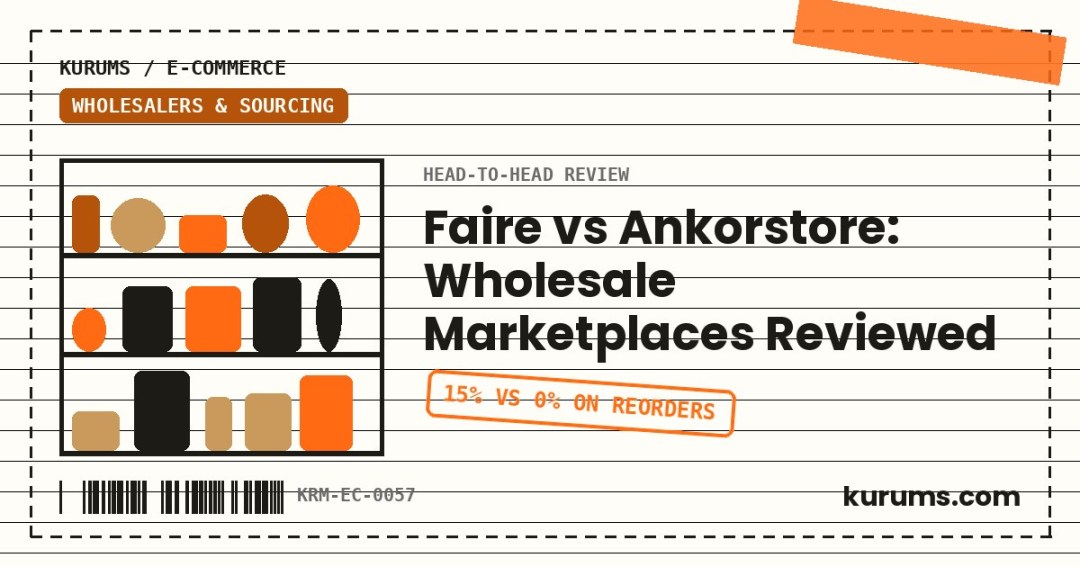
Faire vs Ankorstore (2026): Wholesale Marketplaces for Independent Shops and Brands Reviewed
Two marketplaces changed how independent shops buy stock. How Faire and Ankorstore work, what brands pay, what retailers get, how the fee models diverged in 2026 and which one fits your side of the counter.
Alibaba vs 1688 vs Made-in-China vs DHgate vs Global Sources: China Wholesale Platforms Reviewed
Alibaba.com, 1688, Made-in-China, DHgate and Global Sources serve different buyers. A review of each on price level, minimum order, buyer protection and effort, and which to use at each budget.
How to Find Wholesale Suppliers for an Online Store: Types, MOQs, Vetting and Negotiation
Where online sellers actually find suppliers, how the supply chain’s layers differ in price and minimums, and a step-by-step vetting and negotiation process that protects your first order.
Free Supplier Discovery & Sourcing Platforms (2026): 14 Free Plans Compared
Free supplier discovery and sourcing platforms verified October 2026: Alibaba, Global Sources, Europages, TradeKey, Tradewheel, Thomasnet, Faire, Tridge, IndiaMART, Made-in-China, GlobalSpec, SAM.gov, Kompass and Volza trials — buyer account cost, RFQ tools, verification, what sits behind the paywall. ImportGenius and Panjiva excluded.
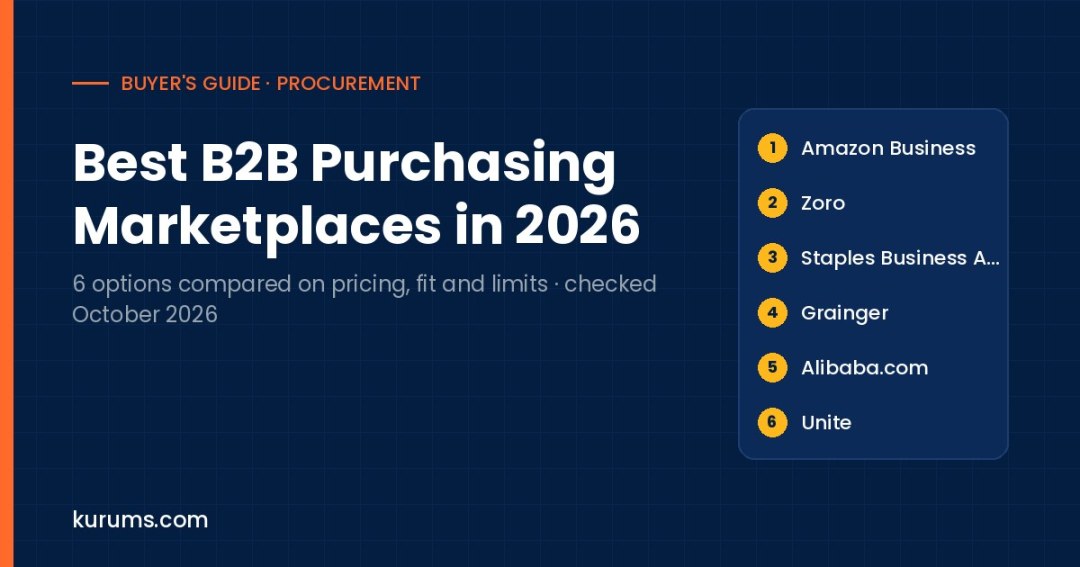
Best B2B Purchasing Marketplaces in 2026: Tail Spend Options Compared
Six business buying marketplaces and distributor platforms compared on membership fees, payment terms, eProcurement integration and catalog fit, with prices checked in October 2026.
Building Resilient Supplier Relationships for Your TikTok Shop
How to negotiate, structure, and nurture supplier relationships that give your TikTok Shop reliability and priority — from terms to resilience to quality control.
How to Find and Vet Suppliers for Your TikTok Shop
How to find and vet suppliers for a TikTok Shop — sourcing channels, manufacturer vs wholesaler vs agent, a vetting process, and the red flags to avoid.
Private Label Power: How Outsourcing Manufacturing Is Revolutionizing Retail
Want to boost profits and launch your brand without building factories? Uncover the secret of private-label products—how retailers like Costco, Trader Joe’s & AmazonBasics thrive, step-by-step tips, and real success stories. Click now to transform your business!
Rescue Your E-Commerce Margins with Reverse Auctions
Margins under pressure? Learn how reverse auctions flip the bidding game to secure top-quality supplies at unbeatable prices. Dive into real success stories, expert tips, and step-by-step strategies tailor-made for e-commerce founders. Click now to revolutionize your procurement and watch your bottom line soar!
E-Commerce Decoded
The vocabulary of online selling, translated. Each entry gives the meaning in two sentences, where you will hear it, a comparison that makes it stick and the serious guide behind it. Start with the 45-term glossary or pick a term.
3PL, Decoded: What It Actually Means
Someone else’s warehouse, staff and couriers, shipping your orders. A 3PL, third-party logistics provider, is a company that stores a seller’s inventory and picks, packs and ships orders on the seller’s behalf. The sel
SKU, Decoded: What It Actually Means
One exact product, in one exact version, with its own code. A SKU, stock keeping unit, is a unique code a business assigns to each distinct item it sells, down to the variant. A T-shirt in three colours and fou
MOQ, Decoded: What It Actually Means
The smallest order a supplier will bother to make for you. MOQ, minimum order quantity, is the lowest number of units, or the lowest order value, a supplier will accept. It exists because starting a production
Dropshipping, Decoded: What It Actually Means
Selling products you never touch, from stock you never bought. Dropshipping is a retail model in which the store takes the order and the payment, then passes the order to a supplier who ships the product directly
ROAS, Decoded: What It Actually Means
For every dollar of ads, how many dollars of sales came back. ROAS, return on ad spend, is revenue attributed to advertising divided by what that advertising cost. A ROAS of 4 means four units of sales for each u
Cart abandonment, Decoded: What It Actually Means
They filled the basket. Then they left. About seven in ten do. Cart abandonment is when a shopper adds products to an online basket and leaves without buying. The rate is the share of created carts that never beco
Conversion rate, Decoded: What It Actually Means
Out of everyone who walked in, how many bought. Conversion rate is the percentage of visits to an online store that end in an order: orders divided by sessions. It measures how well the store turns
AOV, Decoded: What It Actually Means
How much a customer spends each time they check out. AOV, average order value, is total revenue divided by the number of orders in a period. It tells you the size of a typical basket. Because the cost of
Take rate, Decoded: What It Actually Means
The platform’s cut of every sale. Small percentage, entire business model. Take rate is the share of each transaction’s value that a marketplace or payment platform keeps as its own revenue. It is calculated as platform reven
E-Commerce Company Stories
How the platforms were built and what broke along the way: Alibaba and Pinduoduo, Shopify, Temu and Shein, Mercado Livre, Rakuten, Flipkart, Jumia and Konga, bol and Coolblue, Magalu and Americanas.

Pieter Zwart, Pieter van der Does and the New Generation of Dutch Founders
How Coolblue, Adyen, Picnic and Mollie’s founders built a new generation of Dutch companies with outside capital, shared leadership and export from day one.
bol and Coolblue: Can Dutch E-Commerce Hold Off Amazon, Temu and Shein?
bol and Coolblue still lead Dutch e-commerce, but Amazon’s €1.4bn plan and Temu’s rise test them. 2025 results, the shelved IPOs and the EU parcel levy explained.
Tobi Lütke: The German Immigrant Who Built and Kept Control of Canada’s Most Valuable Company
From snowboards in Ottawa to US$11.6bn in revenue: how Tobi Lütke runs Shopify with a founder share, blunt memos and an AI-first mandate, and why he divides Canada.
Shopify: How an Ottawa Snowboard Shop Became a US$200bn Commerce Platform
From Tobi Lütke’s snowboard shop to US$11.6bn of revenue: Shopify’s pandemic boom, 2022 reset, logistics exit, AI strategy and its 2025 move to Nasdaq.

Farfetch: How Portugal’s Biggest Tech Success Became Its Biggest Failure
A marketplace that solved a real problem, then abandoned the model that made it work. How Farfetch went from IPO to fire sale in five years.
KKday and Pinkoi: Building the Hard Side of the Marketplace
Marketplaces look like demand problems and are almost always supply problems.
91APP: Helping Brands Escape the Marketplace
Every brand on a marketplace eventually wants its own channel — and a local software company built the tools.
Americanas: The R$43 Billion Collapse That Rewrote Brazilian Governance
A century of retail royalty, years of invisible leverage, seventeen days to judicial recovery — governance’s Brazilian syllabus.
Mercado Livre: The Infrastructure Empire That Won Latin America
Twenty-five years of building what the region lacked — the commerce-fintech-logistics stack that rules Latin retail.
E-Commerce News & Insights
Developments that change the economics of selling online: AI shopping agents and who lets them in, customs duties on small parcels, platform regulation and results.

The Great AI Agent Lockout: What United’s Ban Means for Agentic Commerce
United’s ban on AI booking agents is part of a wider platform pushback. Why it is happening, where it leads, and how tech teams should respond.
Consumer and Regulatory Scrutiny of AI-Assisted Retail Pricing Tools, October 18, 2026: Notes for Sales
An October 18 Associated Press report highlights growing consumer unease and state-level legislative activity around digital shelf labels and AI-assisted pricing tools used by major retailers and restaurant chains.
Amazon FTC Trial Delay Denied, October 9, 2026: Notes for Law
On October 9, 2026 Judge John H. Chun refused Amazon’s bid to delay the FTC monopolization trial, keeping the March 29, 2027 date.
ChatGPT Try On and Favorites, October 1, 2026: Notes for Marketing
OpenAI launched ChatGPT Try On and Favorites worldwide on October 1, 2026, letting shoppers preview clothing on an uploaded photo and save products in Library. Marketing teams should test feed coverage this week.
Shein Q2 Profit Drop and Europe’s Low-Value Parcel Fees: Notes for Procurement Before November 1, 2026
Shein’s first post-listing quarter showed adjusted profit of $228 million, down about 67%, as U.S. de minimis closure and EU low-value parcel fees hit the model. November 1 adds another European handling fee.
Amazon Blocks Meta Muse AI Agent from Shopping September 20, 2026: Notes for Technology and Sales
Amazon blocked Meta’s Muse personal AI agent from shopping on Amazon.com starting September 20, 2026, citing unauthorized access, lack of identification, and credential concerns. Technology and sales operators must update agent policies and monitor agentic commerce rules.
New to e-commerce? Follow the parcel
- Pick the modelTypes of e-commerce, then where the stock sits.
- Pick the channelMarketplace, own store or social, and who leads in your country.
- Find the productHow to find and vet suppliers.
- Build the shopThe tools you need, and reviews of Shopify and WooCommerce.
- Check the numbersThe KPIs that matter and the profit of one order.
- Cross a borderMarket metrics to check first.
Related Kurums sections
E-commerce: frequently asked questions
What are the main types of e-commerce?
By who sells to whom: B2C, B2B, D2C, C2C and B2G. By how revenue is made: own store, marketplace, subscription and social commerce. Most businesses combine several. See types of e-commerce.
Which metrics should a new online store track?
Conversion rate, average order value, customer acquisition cost, repeat purchase rate and contribution margin. Benchmarks and formulas are in e-commerce metrics that matter.
Which marketplace should I sell on?
The one your customers already use in their country: Amazon in most Western markets, with local leaders such as Allegro, bol, Trendyol, Mercado Libre and Shopee elsewhere. See the country table.
What do I need to open an online shop?
A store platform, a payment provider, a shipping-label tool, an email tool and bookkeeping. The tech stack guide lists them in setup order.
How do I find reliable suppliers?
Shortlist through B2B platforms, trade fairs and brand websites, then verify with documents, paid samples and a small protected trial order. See how to find wholesale suppliers.