
Rising Professions 2026
Rising Professions 2026
The professions on the rise in 2026, country by country: which jobs are growing fastest in 35 markets, what is driving them, what they pay, which certifications unlock them and how employers should hire for them. Forty guides built from official projections, LinkedIn’s 2026 Jobs on the Rise lists, shortage-occupation lists and 2026 salary guides.
Jobs created worldwide by 2030 WEF Future of Jobs Report 2025, employer survey 170M
Jobs displaced by 2030 WEF Future of Jobs Report 2025 92M
Net new jobs, 2025–2030 WEF: +7% of today’s formal employment 78M
Skills expected to change by 2030 WEF 2025, share of workers’ skills 39%
Country guides in this hub North America, Europe, Middle East, APAC, LatAm, Africa 35
/index Six pillars
How the hub is organised
Start with the global outlook if you want the pattern, or jump straight to a region. Every country guide follows the same structure — a ranked table of rising professions with the demand signal behind each one, the drivers, pay, credentials, regional hotspots, declining roles and an employer hiring playbook — so the guides can be compared side by side.
/countries 35 markets
Pick a country
Each guide ranks 10–12 rising professions with the source behind every claim, then covers what they pay in local currency and US dollars, the certifications that unlock them, the cities where the jobs are, and the visa or shortage-list route employers can use.
01 Global Outlook & Skills
Which professions are rising everywhere, and why
The cross-country index of professions that appear in most of our 21 guides, a methodology guide to the job-growth sources HR teams rely on, the skills behind the rising roles, the certifications and courses that lead to them, and a country-by-country salary comparison.
How to Read Job-Growth Data: Which Sources Actually Predict the Rising Professions?
Which job-growth data sources actually predict the rising professions of 2026? A planner’s comparison of projections, postings, profile data and shortage lists, with cadence, biases and a watchlist method.

The Skills Behind 2026’s Rising Jobs: What AI, Green and Care Careers Have in Common
AI engineers, wind technicians and nurses are hired for overlapping skills in 2026. A sourced skills matrix, the durable vs perishable framework, and how HR should assess them.
What Do the Rising Jobs of 2026 Pay? A Country-by-Country Salary Comparison
Sourced 2026 salary ranges for ten rising professions across the US, UK, Germany, Türkiye, UAE, India, Singapore, Australia, Brazil, Poland, Japan and Canada, with USD conversions and purchasing-power context.

The Rising Professions of 2026: Which Jobs Are Growing Fastest Worldwide?
AI engineers top every 2026 list, but nurses, electricians and cyber specialists rise just as widely. A cross-country index of the professions growing fastest worldwide, and the five engines behind them.

Which Certifications and Courses Lead to 2026’s Rising Jobs? A Buyer’s Guide for Career Changers and HR
A buyer’s guide mapping 2026’s rising professions to specific certifications and courses, with publicly listed prices, timelines, prerequisites and an employer playbook for funding credentials as a retention tool.
02 North America
The United States and Canada
BLS 2024–34 projections and LinkedIn’s 2026 US list on one side; Canada’s COPS projections, Job Bank outlooks and Express Entry category draws on the other. Both guides cover AI, health care, skilled trades and the energy build-out.

Fastest-Growing Jobs in Canada 2026: The Professions on the Rise
Which jobs are rising fastest in Canada in 2026? A ranked guide built on LinkedIn, ESDC COPS, Statistics Canada and Express Entry data, with pay, credentials and an employer hiring playbook.
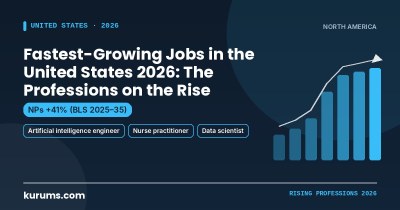
Fastest-Growing Jobs in the United States 2026: The Professions on the Rise
AI engineers, nurse practitioners, data scientists and data-center electricians lead the US rising professions of 2026. Sourced growth rates, pay ranges, regional hotspots and an employer hiring playbook.
03 Europe
Ten European labour markets
The UK, Germany, France, Italy, Spain, the Netherlands, Poland, Sweden, Switzerland and Ireland: shortage-occupation lists, immigration salary lists, the Energiewende and nuclear restarts, defence hiring, semiconductor clusters and the EU pay-transparency rules arriving in June 2026.
Fastest-Growing Jobs in Ireland 2026: The Professions on the Rise
Which jobs are rising fastest in Ireland in 2026? A ranked guide to AI, data, compliance, construction, life-sciences and grid roles, with sourced pay ranges, credentials, permit routes and an employer playbook.
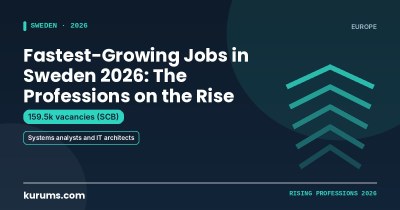
Fastest-Growing Jobs in Sweden 2026: The Professions on the Rise
Which jobs are growing fastest in Sweden in 2026? Arbetsförmedlingen shortage data, SCB vacancies and pay, defence and green-industry demand, credentials, regional hotspots and an employer hiring playbook.
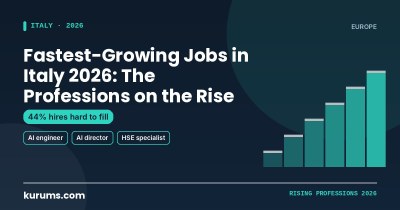
Fastest-Growing Jobs in Italy 2026: The Professions on the Rise
AI engineers, HSE specialists, avionics engineers and engineering technicians lead Italy’s 2026 job market. Sourced demand signals, pay ranges, regional hotspots and an HR hiring playbook.
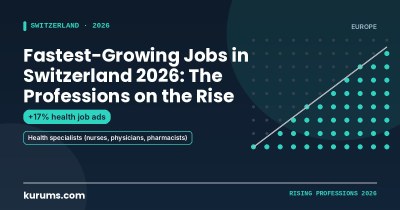
Fastest-Growing Jobs in Switzerland 2026: The Professions on the Rise
Which jobs are growing fastest in Switzerland in 2026? Adecco shortage data, SECO statistics and LinkedIn’s Swiss list ranked, with CHF pay ranges, credentials, regional hotspots and an employer playbook.
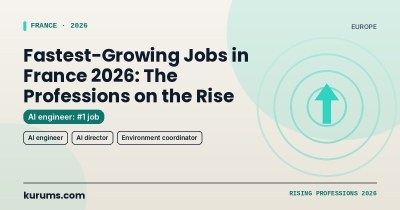
Fastest-Growing Jobs in France 2026: The Professions on the Rise
AI engineer tops LinkedIn’s 2026 France ranking while care, nuclear and industrial trades face record shortages. Sourced rankings, 2026 pay ranges, regional hotspots and an HR playbook.
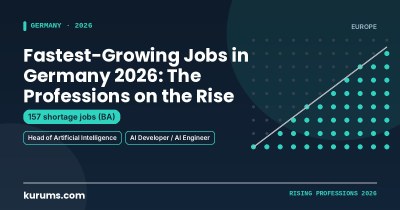
Fastest-Growing Jobs in Germany 2026: The Professions on the Rise
Germany’s fastest-growing jobs in 2026, ranked from LinkedIn and Bundesagentur für Arbeit data: AI, security, safety, care and trades, with 2026 pay, skills, hotspots and an employer hiring playbook.
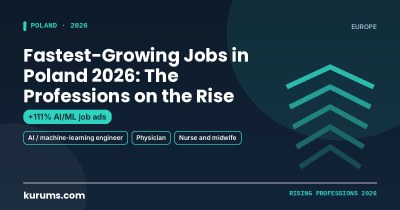
Fastest-Growing Jobs in Poland 2026: The Professions on the Rise
Poland’s fastest-growing jobs in 2026, ranked with Barometr zawodów, GUS and job-board data: AI and security engineers, physicians, nurses, electricians and welders, with pay, credentials and an employer hiring playbook.

Fastest-Growing Jobs in the Netherlands 2026: The Professions on the Rise
Which jobs are growing fastest in the Netherlands in 2026? LinkedIn, UWV, CBS and ROA data ranked, with 2026 pay ranges, credentials, regional hotspots and an employer hiring playbook.

Fastest-Growing Jobs in Spain 2026: The Professions on the Rise
AI engineers, logistics analysts, civil engineering managers and electricians lead Spain’s 2026 job market. Sourced growth signals, pay ranges, regional hotspots and an HR hiring playbook.
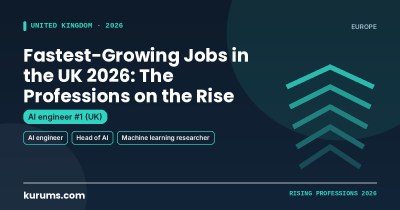
Fastest-Growing Jobs in the UK 2026: The Professions on the Rise
Which jobs are rising fastest in the UK in 2026? A ranked guide to AI, clean energy, health and built-environment roles, with sourced pay ranges, credentials, visa routes and an employer hiring playbook.
04 Middle East & Türkiye
Türkiye, the Gulf and Egypt
Türkiye’s defence, aerospace and export manufacturing boom; the UAE’s AI campuses, Emiratisation and DIFC finance hiring; Saudi Arabia’s giga-projects and Saudization quotas; Qatar’s LNG expansion and Egypt’s IT-export and green-hydrogen push. Pay given in local currency and dollars.

Fastest-Growing Jobs in Egypt 2026: The Professions on the Rise
Egypt’s rising professions for 2026, ranked from ITIDA, CAPMAS, BasharSoft and Paylab data: software, AI and cloud engineers, cybersecurity, renewable and hydrogen engineers, construction and nursing, with pay in EGP and USD.
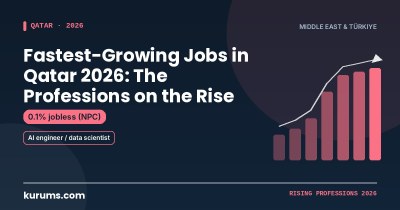
Fastest-Growing Jobs in Qatar 2026: The Professions on the Rise
Which professions are rising in Qatar in 2026? A ranked guide to AI, data-centre, LNG engineering, cybersecurity and healthcare roles, with QAR pay ranges, demand drivers and an employer playbook.

Fastest-Growing Jobs in the UAE 2026: The Professions on the Rise
Which professions are rising in the UAE in 2026? A ranked guide to AI, data-centre, tax, compliance and construction roles, with 2026 AED pay ranges, demand drivers and an employer playbook.
Fastest-Growing Jobs in Saudi Arabia 2026: The Professions on the Rise
AI and data engineers, BIM coordinators, cybersecurity and HSE specialists lead Saudi Arabia’s rising professions in 2026. Sourced ranking, pay, skills and employer playbook.
Fastest-Growing Jobs in Türkiye 2026: The Professions on the Rise
AI engineers, cybersecurity specialists and software developers lead Türkiye’s rising professions in 2026, with defence, renewables, e-commerce logistics, gaming and health close behind. Pay, skills and hiring playbook inside.
05 Asia-Pacific
Eleven Asia-Pacific markets
India’s GCC and semiconductor wave, China’s new-occupation catalogue, Japan’s Specified Skilled Worker sectors, South Korea’s chip and shipbuilding clusters, Singapore’s shortage list, Australia’s Core Skills Occupation List, plus Indonesia, Vietnam, the Philippines, Malaysia and New Zealand.
Fastest-Growing Jobs in New Zealand 2026: The Professions on the Rise
Which jobs are rising fastest in New Zealand in 2026? A ranked guide to health, engineering, trades, cyber and data roles, with sourced pay, credentials, Green List and AEWV routes and an employer hiring playbook.
Fastest-Growing Jobs in the Philippines 2026: The Professions on the Rise
AI engineers, data analysts, cybersecurity specialists, nurses and infrastructure engineers lead the Philippines’ 2026 rising professions. Ranked list, PHP pay ranges, credentials, regional hotspots and a hiring playbook.
Fastest-Growing Jobs in Malaysia 2026: The Professions on the Rise
Data-centre engineers, AI specialists and semiconductor process engineers lead Malaysia’s 2026 rising professions. Ranked list, 2026 pay ranges, MyCOL shortages, new Employment Pass rules and a hiring playbook.
Fastest-Growing Jobs in Vietnam 2026: The Professions on the Rise
AI engineers, data engineers and semiconductor IC designers lead Vietnam’s 2026 rising professions. Ranked list, VND pay ranges, credentials, Decree 219 work-permit rules and an employer hiring playbook.
Fastest-Growing Jobs in Indonesia 2026: The Professions on the Rise
AI engineers, cybersecurity analysts, nutritionists, data-centre and battery-materials engineers lead Indonesia’s 2026 rising professions. Ranked list, IDR pay ranges, credentials, RPTKA rules and a hiring playbook.
Fastest-Growing Jobs in Singapore 2026: The Professions on the Rise
AI engineers, fab engineers, private bankers, nurses and carbon specialists lead Singapore’s 2026 rising professions. Ranked list, 2026 pay ranges, COMPASS shortage-list routes and a hiring playbook.
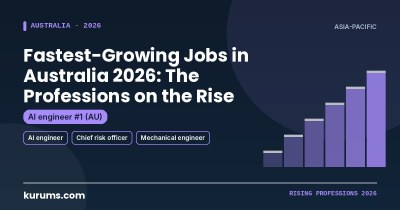
Fastest-Growing Jobs in Australia 2026: The Professions on the Rise
Which jobs are rising fastest in Australia in 2026? A ranked guide to AI, risk, engineering, clean energy, health and care roles, with sourced pay, credentials, visa routes and an employer hiring playbook.
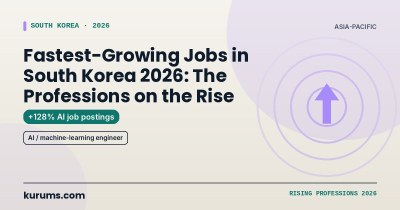
Fastest-Growing Jobs in South Korea 2026: The Professions on the Rise
Which jobs are rising fastest in South Korea in 2026? A sourced ranking of AI, semiconductor, care, shipbuilding and defense roles, with pay in won and dollars, credentials, hotspots and an HR hiring playbook.
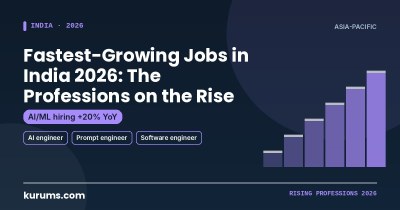
Fastest-Growing Jobs in India 2026: The Professions on the Rise
Which jobs are rising fastest in India in 2026? A ranked guide to AI, semiconductor, clean energy, EV and healthcare roles, with sourced INR and USD pay, credentials, regional hotspots and an employer hiring playbook.
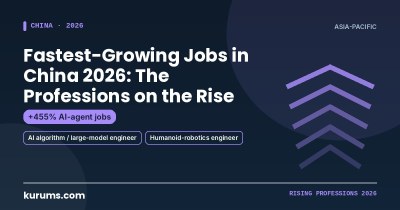
Fastest-Growing Jobs in China 2026: The Professions on the Rise
China’s fastest-growing jobs in 2026, ranked from MOHRSS, NBS and Zhaopin data: AI agents, humanoid robots, drones and elder care, with pay in CNY and USD.
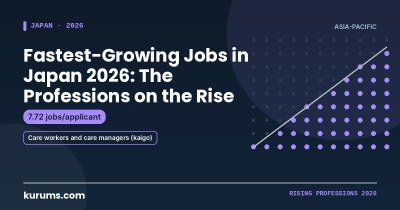
Fastest-Growing Jobs in Japan 2026: The Professions on the Rise
Which professions are rising fastest in Japan in 2026? A ranked guide to care, construction, semiconductor, AI and logistics roles, what they pay in yen and dollars, and how employers should hire for them.
06 Latin America & Africa
Seven markets across Latin America and Africa
Nearshoring and the USMCA review, Brazil’s renewables and data-centre push, Nigeria’s fintech and technical-talent programmes, South Africa’s critical-skills list, Colombia’s BPO and IT hubs, Chile’s lithium and copper build-out, and Kenya’s digital-jobs and geothermal story.

Fastest-Growing Jobs in Kenya 2026: The Professions on the Rise
Kenya’s rising professions for 2026, ranked from MyJobMag, KNBS and government data: teachers, sales and BD, insurance, legal and finance roles, plus tech, health, BPO and geothermal jobs, with pay in KES and USD.

Fastest-Growing Jobs in Chile 2026: The Professions on the Rise
AI engineers, data engineers and cybersecurity specialists lead Chile’s rising professions in 2026. Ranked list, mining, lithium and energy drivers, pay in CLP and USD, credentials, hotspots and an HR hiring playbook.
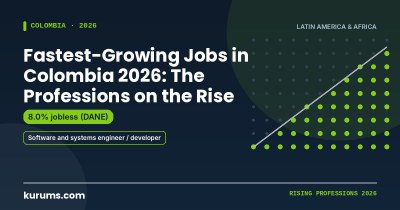
Fastest-Growing Jobs in Colombia 2026: The Professions on the Rise
Software engineers, data specialists and cybersecurity experts lead Colombia’s rising professions in 2026. Ranked list, nearshoring and labor-reform drivers, pay in COP and USD, credentials, hotspots and an HR playbook.
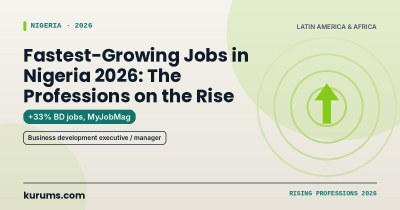
Fastest-Growing Jobs in Nigeria 2026: The Professions on the Rise
Nigeria’s rising professions for 2026, ranked from job-board, NISER, NBS and WEF data: business development, software and security engineers, data analysts, nurses and refinery trades, with pay in naira and USD.

Fastest-Growing Jobs in Mexico 2026: The Professions on the Rise
AI engineers, supply-chain managers and cybersecurity architects lead Mexico’s rising professions in 2026. Ranked list, nearshoring drivers, pay in MXN and USD, credentials, hotspots and an HR hiring playbook.
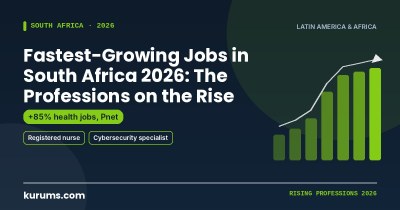
Fastest-Growing Jobs in South Africa 2026: The Professions on the Rise
Nurses, cybersecurity and data engineers, civil engineers and artisans lead South Africa’s rising professions in 2026. Ranked list, drivers, pay in ZAR and USD, credentials, hotspots and an HR hiring playbook.

Fastest-Growing Jobs in Brazil 2026: The Professions on the Rise
AI engineers, nursing technicians and financial planners lead Brazil’s rising professions in 2026. Ranked list, drivers, pay in BRL and USD, credentials, regional hotspots and an HR hiring playbook.
? FAQ
Questions readers ask about rising professions
What counts as a “rising profession” in these guides?
A profession we list is one that appears in at least one 2025–2026 source that measures growth or shortage: an official employment projection (such as the BLS 2024–34 or Canada’s COPS), a government shortage-occupation list, LinkedIn’s 2026 Jobs on the Rise list, or a national employment-agency survey of hard-to-fill vacancies. Every row in every table names its source. The methodology guide explains how the sources differ.
Which professions are rising in almost every country?
AI and machine-learning engineers, data analysts and engineers, cybersecurity specialists, cloud and infrastructure engineers, renewable-energy and grid technicians, electricians and industrial technicians, nurses and care workers, and compliance or risk specialists appear in most of the country guides. The global overview ranks them by how many markets they appear in.
Are the salary figures reliable?
They are typical advertised ranges reported by named 2026 salary guides, job platforms or statistics offices, given in local currency with an approximate US-dollar equivalent. They are not offers or guarantees; pay varies by city, seniority and employer. The salary comparison explains how to benchmark properly.
How should an employer use these guides?
Use the ranked table to see where you will compete hardest for talent, the pay section to benchmark offers, the credentials section to design upskilling and apprenticeship routes, and the hiring playbook for shortage-list visas and employer-of-record options. Pair each guide with our Finding the Right Person country playbooks on where to post and which recruiters to use.
How often is the hub updated?
Country guides are reviewed when their main sources publish new editions — most national projections and LinkedIn’s lists update annually, salary guides every six to twelve months. Each guide shows its last-checked date in the footer.
Last Updated: November 2026 · Reviewed by the Kurums HR editorial team. Growth figures and pay ranges are as reported by the cited sources; this hub is general information, not career, legal or immigration advice.
Kurums guides are general information for business readers, not professional advice. Figures and rules change; check primary sources before acting.