
Human Resources & People Strategy
Three hundred practitioner guides on hiring, pay, performance, engagement, workforce planning, people analytics and HR technology, plus employment-law and payroll guides for 28 countries. Written for HR leaders, people managers and the finance teams who fund them.
Nine in-depth HR pillar guides
Each pillar brings together every kurums.com guide on one area of HR — organised as a learning path, with practical frameworks, templates and software comparisons. Start with the area you need today.
Pick the job you are trying to do
Each route jumps to a focus area on this page with its latest guides. Every focus area also has a full category archive with all articles.
Recruitment & Hiring
From recruitment needs analysis and job descriptions to sourcing, structured interviews, offers and reducing bias. The full hiring workflow, with 2026 rules on ghost postings and AI screening covered in the compliance area.
Culture Fit or Comfort Fit? The Psychology of Hiring People Like Us
Fit with an organisation’s values does predict satisfaction and retention. But in most interviews “fit” means “like me”. This guide separates the two and shows how to test for the real thing.
Job Offer Psychology: Why Good Candidates Say No
Candidates do not weigh offers like spreadsheets. They compare against a reference point, feel losses more than gains and read meaning into every delay. Here is how to make offers people accept.
The Psychology of Rejecting Candidates Without Losing Them
Most people you interview will not get the job. How they are told shapes what they say about you, whether they reapply and whether they stay customers.
Why Structured Interviews Beat Gut Feeling: The Evidence
Structured interviews roughly double the predictive power of a casual conversation. This guide explains the research, why managers resist it and how to build a structured interview in an afternoon.
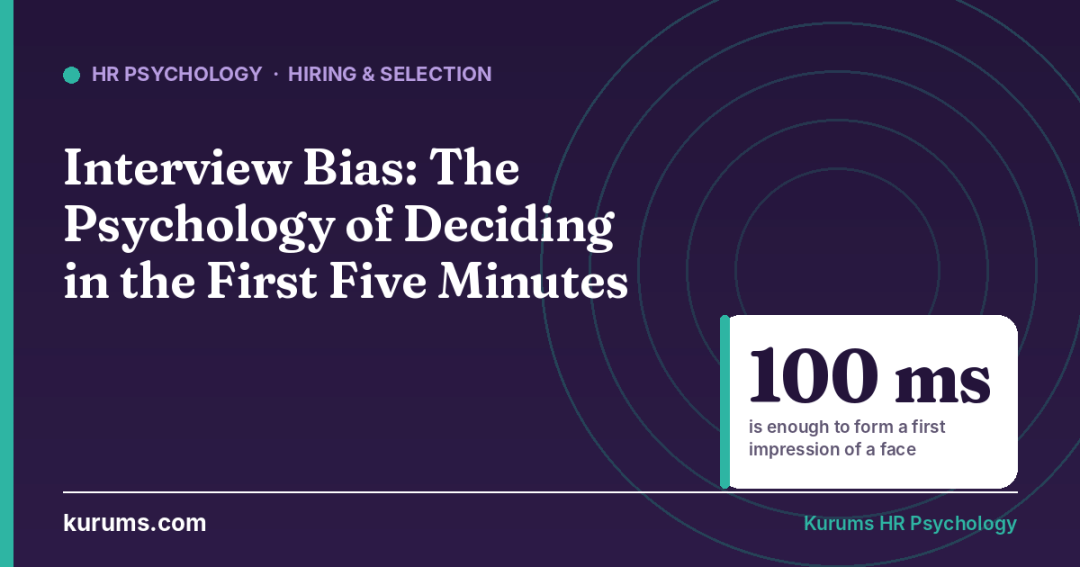
Interview Bias: The Psychology of Deciding in the First Five Minutes
Most interviewers form a view of a candidate within minutes and then collect evidence for it. Here is what the research says about the biases at work and how to design them out.
HR Consulting and Recruitment Firms Worldwide: Global Networks, Types of Firm and How to Choose
The six types of recruitment and HR firm, how each gets paid, the global networks you meet in every market, and how to choose, with an index of 20 country guides.
Performance, Engagement & Retention
Setting goals, running reviews that people trust, giving feedback, and the culture, recognition and wellbeing practices that keep the people you want to keep.
Performance management
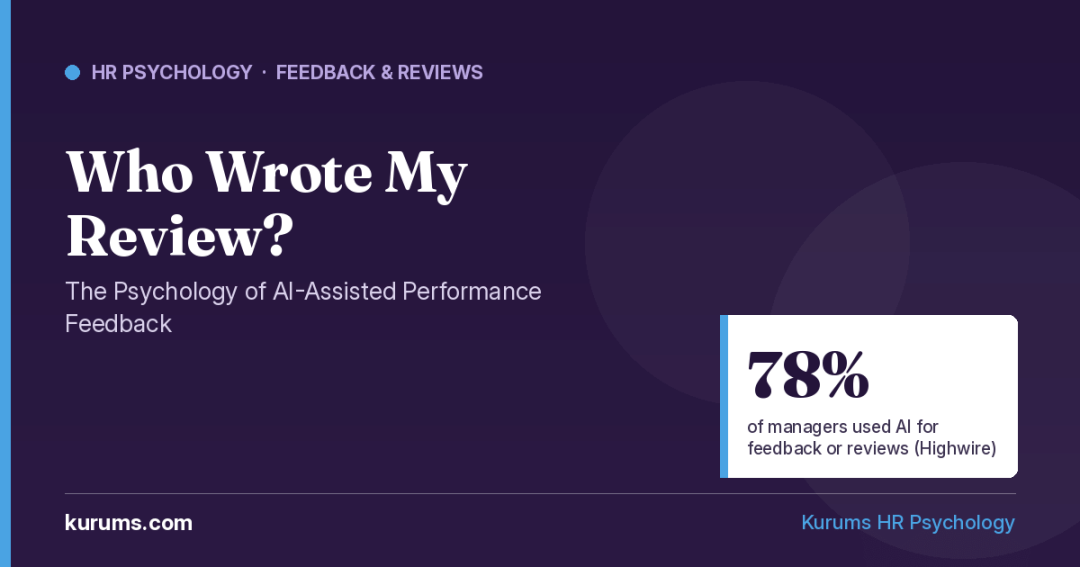
Who Wrote My Review? The Psychology of AI-Assisted Performance Feedback
Most managers now use AI somewhere in the performance review, yet few employees are told. Here is why the same feedback lands worse when people think a machine wrote it, and how to use AI without hollowing out the review.
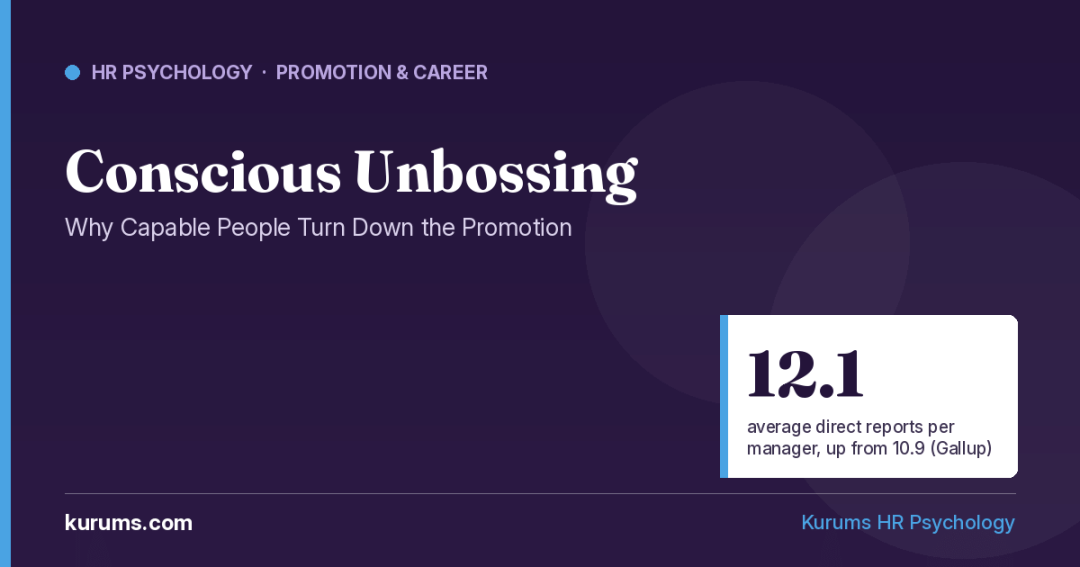
Conscious Unbossing: Why Capable People Turn Down the Promotion
More capable people are declining management roles. The psychology suggests most are not short of ambition but are reading a flatter, heavier manager job accurately, and organisations can respond by redesigning it.
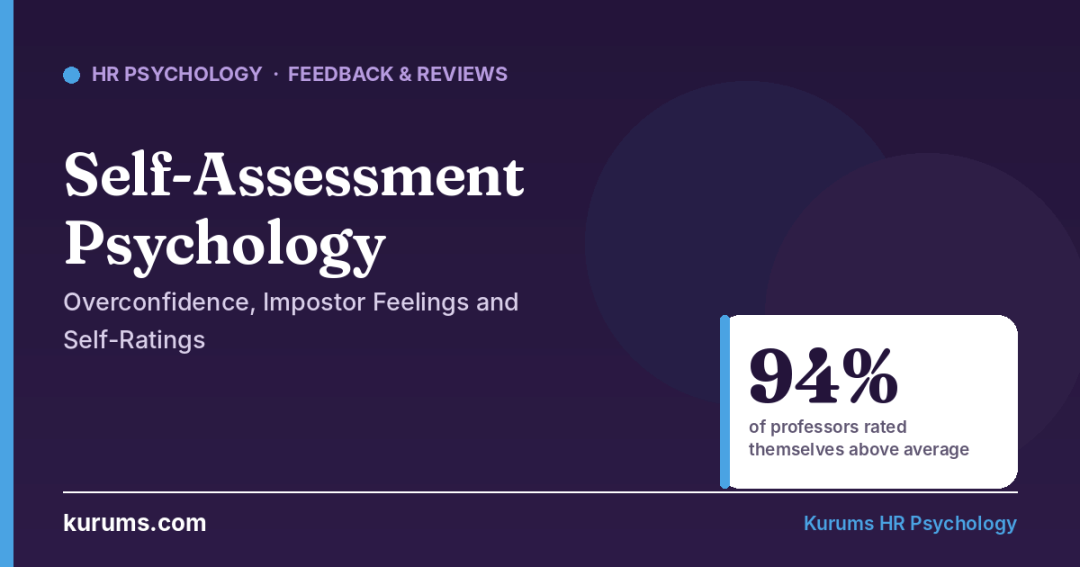
Self-Assessment Psychology: Overconfidence, Impostor Feelings and Self-Ratings
Self-ratings agree only modestly with managers’ ratings, and the gaps are systematic. What research shows about overconfidence, impostor feelings and self-assessments in reviews.
Employee engagement & retention → pillar guide
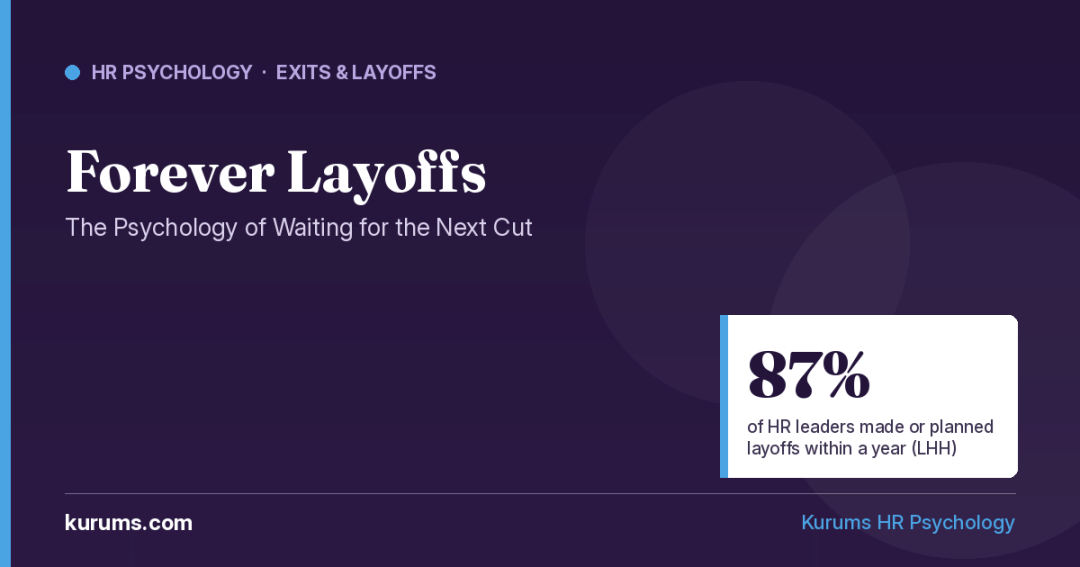
Forever Layoffs: The Psychology of Waiting for the Next Cut
Rolling layoffs and AI restructuring keep whole workforces waiting for the next cut. Here is why anticipatory job insecurity can hurt more than the cut itself, and what managers can do about it.
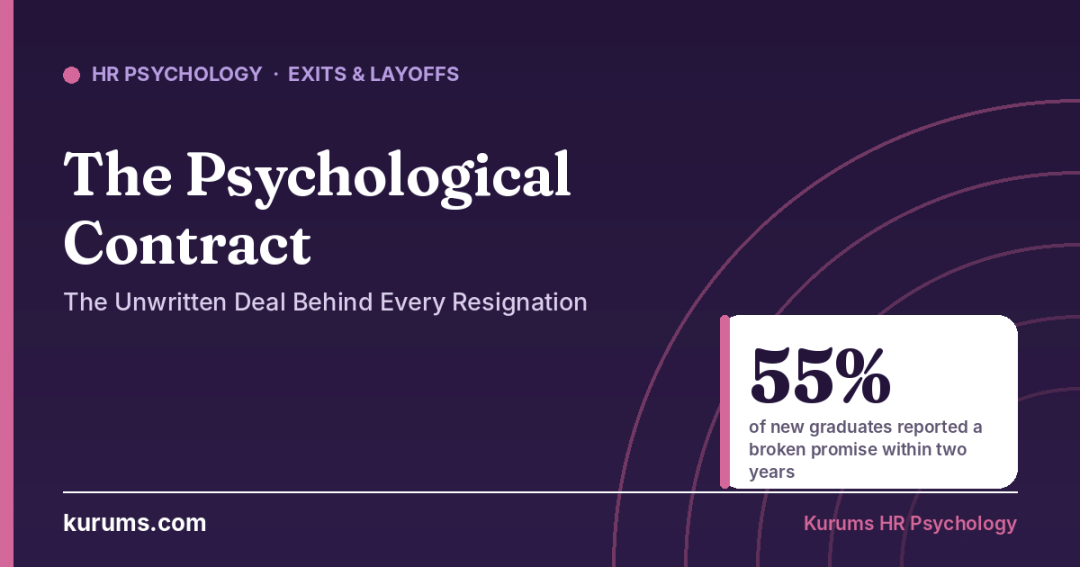
The Psychological Contract: The Unwritten Deal Behind Every Resignation
Alongside every employment contract there is an unwritten one: what each side believes it has been promised. Most breakdowns in trust at work are breaches of that second contract.
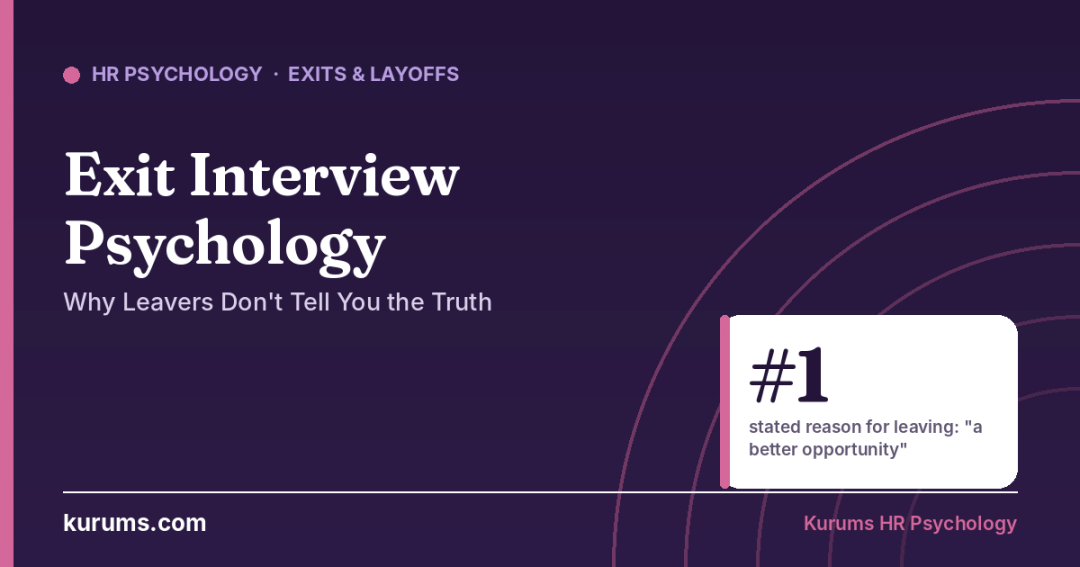
Exit Interview Psychology: Why Leavers Don’t Tell You the Truth
Most exit interviews record “better opportunity” and “career growth”. The real reasons are usually different. Why leavers hold back, and how to design a process that gets closer to the truth.
The Termination Conversation: Ending Employment With Dignity
The dismissal meeting lasts a quarter of an hour and is remembered for years. Research on how people react to being dismissed, and a structure for doing it with clarity and respect.
Layoff Survivor Syndrome: The Psychology of Those Who Stay
Redundancy planning focuses on the people leaving. The people who stay decide whether the organisation recovers. What research shows about survivors, and how to look after them.
Why Employees Really Quit: Shocks, Scripts and the Unfolding Model
People rarely leave because satisfaction slowly ran out. More often a particular event makes them reconsider. Here is what turnover research says about why people quit and why they stay.
Compensation, Benefits & Payroll
Designing pay structures, total rewards, benefits and pay equity, and running payroll across states and countries: multi-state compliance, contractor management and the global payroll platforms that make it work.
Compensation & benefits
Salary Negotiation Psychology for Managers: Anchors, Counteroffers and Who Never Asks
Pay set by negotiation rewards the people most willing to ask, not the people who contribute most. A manager’s guide to the psychology of pay bargaining and how to keep it fair.
Bonus Psychology: When Incentives Backfire
Pay for performance works well for simple, measurable tasks and unpredictably for everything else. A research-based guide to when bonuses motivate and when they do damage.
Pay Transparency Psychology: What Happens When Everyone Knows
Pay transparency laws are spreading. The research shows that knowing what colleagues earn changes satisfaction, effort and bargaining in ways that are not always the ones employers expect.
How to Say No to a Raise Request Without Losing the Employee
When someone asks for more money and the answer is no, what they hear is rarely about money. A guide to declining a raise request in a way that keeps trust, with scripts.
Payroll & global employment
Employer of Record (EOR) Explained: How It Works, Costs, Risks and Alternatives
How an Employer of Record works, EOR vs PEO vs contractor, costs, risks and choosing a provider.
The Payroll Process Step by Step: Gross-to-Net, Controls and Year-End
Payroll step by step: inputs, gross-to-net, controls, in-house vs outsourced, and year-end tasks.

Multi-State Payroll Compliance in 2026: What US Employers Need to Get Right
Payroll Software Pricing in 2026: What You Actually Pay Beyond the Base Fee
Expat HR & Global Mobility: 28 Countries
The employer’s view of hiring, relocating and paying people abroad. Country guides cover the Nordics, DACH, Benelux, Southern Europe, the Gulf, Asia-Pacific and the Americas.
Latest global mobility guides
Thai Employment Law for Expats: The Labour Protection Act, Notice & Severance (2026)
Thailand’s Labour Protection Act protects foreign employees as fully as Thai ones, and the severance bill at twenty years’ service reaches 400 days’ wages.
Relocating to Thailand: TM30, Pink ID, Housing & What Bangkok Really Costs (2026)
Thailand’s arrival sequence punishes anyone who takes it out of order – the TM30, the Pink ID, the bank account, and the school fee that decides the package.
Hiring in Thailand: Foreign Business Act, Work Permits & Employer Compliance (2026)
Thailand lets foreigners own 49% of most service companies. The other 51% is where employers get into trouble – and 2026 made the shortcuts much harder.
Onboarding, Learning & Organisation Design
Getting new hires productive, building a learning culture, reskilling for AI-era work, and structuring teams, spans and reporting lines so the organisation can execute.
Learning & development → pillar guide
Stress and Intonation: How Emphasis and Vocal Melody Change What Your Words Mean
How word stress, sentence stress and intonation change meaning at work: commonly mis-stressed business words, five ways to create emphasis, uptalk, monotone fixes and script markup drills.
How to Sound Better on Video Calls: Microphones, Diction and Presence on Zoom and Teams
Bad audio makes experts sound less credible. Choose and place a microphone, fix room echo, set Zoom and Teams audio correctly, handle lag and look present on camera.
How to Overcome Fear of Public Speaking: An Evidence-Based Plan for Presentation Nerves
How common fear of public speaking really is, what nerves do to your body, and an evidence-based plan: reappraisal, a breathing reset, an exposure ladder and a first-90-seconds script.
Onboarding & employee development

Remote and Virtual Onboarding: A Complete Guide for Distributed Teams
How to onboard remote and hybrid employees: pre-boarding, first-week plan, relationships, knowledge transfer, tools and compliance.

30-60-90 Day Onboarding Plan: A Practical Template for HR and Managers
A practical 30-60-90 day onboarding plan template: phase goals, role examples, ownership and check-in questions.

How Do You Support Career Development and Progression?
A practical guide to career development and progression — why it drives retention, building career paths, growth conversations, internal mobility, and supporting employees’ advancement.
Organisation design

Change Management Models: Lewin, Kotter, ADKAR, 7-S and Bridges Explained
Compare Lewin, Kotter, ADKAR, 7-S and Bridges, and learn how HR can combine them for real change.

Centralisation vs Decentralisation: Where Decisions Should Sit
How organisations decide where authority should sit, weighing the trade-offs between centralised and decentralised decision-making and matching the balance to the situation.
Spans of Control and Reporting Lines: Getting Them Right
How spans of control and reporting lines shape an organisation, with the trade-offs of wide versus narrow spans, tall versus flat structures, and how to decide.
HR Strategy, Workforce Planning & Analytics
Building an HR strategy the CFO will fund: operating models, strategic workforce planning, people analytics dashboards, and the policies that make remote and hybrid work sustainable.
HR strategy & operating model
HR Technology Stack: Building, Selecting and Integrating HR Systems
Build and integrate an HR tech stack that works — HRIS, suites vs specialists, selection, AI and value.
HR Budget Planning: Categories, Step-by-Step Process and Business Cases
Build a driver-based HR budget, use benchmarks wisely and make business cases finance will support.
Change Management Models: Lewin, Kotter, ADKAR, 7-S and Bridges Explained
Compare Lewin, Kotter, ADKAR, 7-S and Bridges, and learn how HR can combine them for real change.
Succession Planning: How to Identify Critical Roles and Build a Leadership Pipeline
Identify critical roles, assess successor readiness and develop a leadership pipeline that reduces risk.
HR Operating Models Explained: HRBP, Shared Services and Centres of Excellence
The Ulrich model and what replaced it: how to design HR business partners, shared services and centres of excellence for a 2026 organisation, with ratios and costs.
Strategic Workforce Planning: How to Forecast Headcount, Skills and Cost
How to turn business strategy into a three-year headcount, skills and cost plan that finance will sign, with models, scenarios and the KPIs that keep it honest.
People analytics
How to Build a People Analytics Dashboard: Metrics, Data Model and Governance
The metrics, data model, tool choices and governance you need to build a people analytics dashboard executives actually use.
Agentic People Analytics in 2026: When HR Software Stops Reporting and Starts Acting
People analytics is HR’s top AI priority for 2026 — how agentic analytics moves systems from dashboards to autonomous action, and where the risks are.
15 People Analytics Metrics Every HR Leader Should Track in 2026
📈 Part of the Performance Management & People Analytics Guide — the kurums.com hub for goals, feedback, reviews...

People Analytics: A Getting-Started Guide for HR Teams
📈 Part of the Performance Management & People Analytics Guide — the kurums.com hub for goals, feedback, reviews...
Remote & hybrid work
Remote Work Stipends, Equipment and Expense Reimbursement: The 2026 Policy Guide
Benchmarks, legal reimbursement duties, tax treatment and a ready-to-adapt policy for home office stipends, equipment and internet costs.
Remote Employee Monitoring: What Employers Can Legally Track in 2026
Which monitoring is legal, which is toxic, and how to write a remote monitoring policy that survives GDPR, US state notice laws and your own employees.

Remote Work Policies and Culture: Building Both Deliberately
How organisations build effective remote work policies and sustain culture at a distance, through clear expectations, fair principles, trust, and deliberate connection.
Managing Hybrid Teams: Making the Mixed Model Work
How to manage hybrid teams fairly and effectively, avoiding proximity bias, using office time well, communicating across the split, and keeping everyone included.
HR Software & Tools: Buyer’s Guides
Independent comparisons of HRIS, payroll, applicant tracking, background checks, PEOs, LMS, engagement, scheduling, time tracking, compensation and OKR software, with pricing and fit-by-company-size verdicts.
Best Workforce Planning Software in 2026: Pricing & Comparison
Buyer's guide · HR Best Workforce Planning Software in 2026: Pricing & Comparison We compared four workforce planning...
Best Employee Experience Software in 2026: Pricing & Comparison
Buyer's guide · HR Best Employee Experience Software in 2026: Pricing & Comparison We compared four employee...
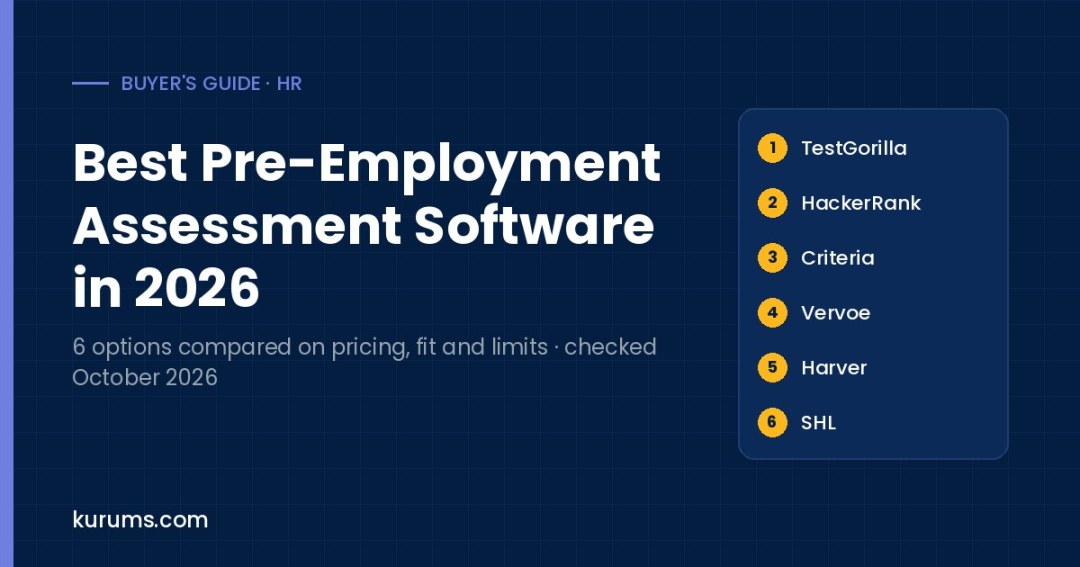
Best Pre-Employment Assessment Software in 2026: Skills Tests Compared
Six pre-employment assessment platforms compared on pricing, free plans and trials, test libraries, AI scoring and the hiring volumes they suit.
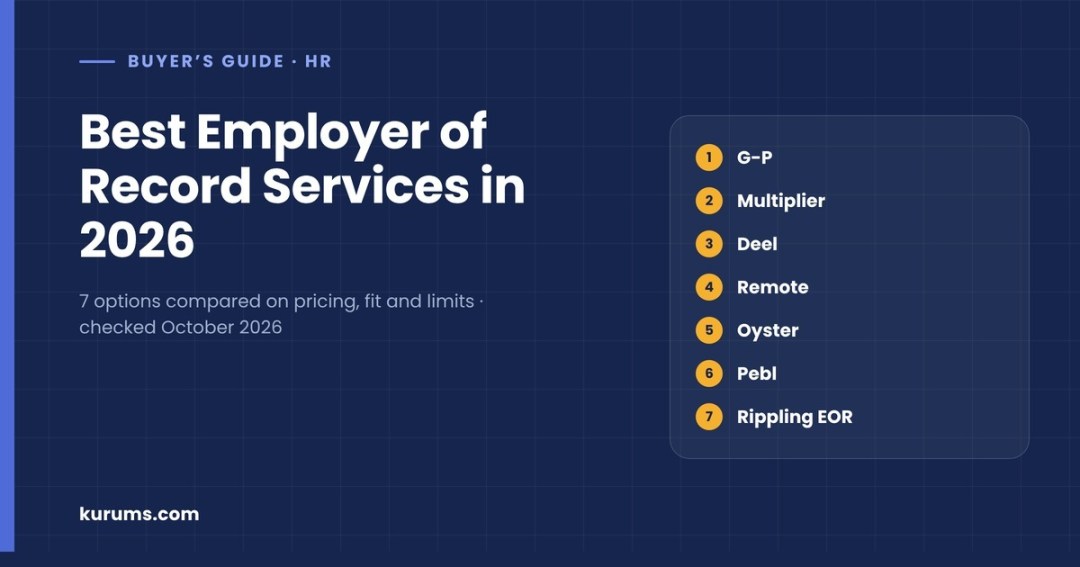
Best Employer of Record Services in 2026: Pricing and Coverage Compared
Seven employer of record services compared on published per-employee fees, country coverage, entity ownership and billing terms, with notes on what to confirm before you sign.
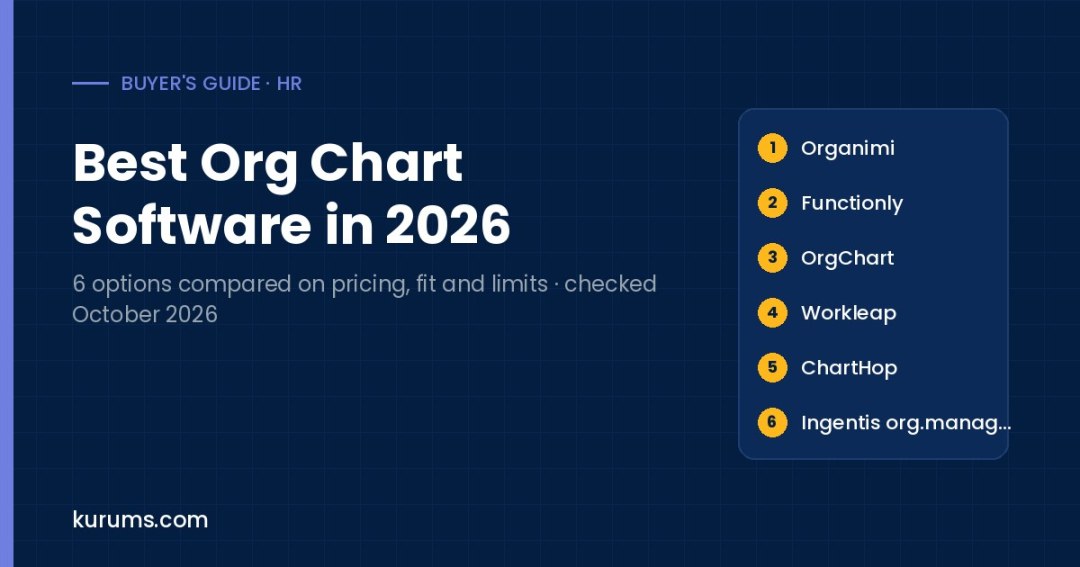
Best Org Chart Software in 2026: Charting and Workforce Planning Compared
Six org chart platforms compared on published pricing, trials, HRIS data sync, scenario and headcount planning, and the company sizes they suit.
Best Video Interviewing Software in 2026: One-Way and Live Tools Compared
Six video interviewing platforms compared on published pricing, one-way and live interview support, AI features, security and the hiring teams they suit.
Best HR Case Management Software in 2026: HR Help Desks Compared
Six HR case management and HR help desk tools compared on pricing, free plans and trials, confidentiality controls, self-service and employee relations depth.

Best OKR Software in 2026: Pricing & Comparison
Compare Weekdone, Lattice Goals & OKRs and 15Five Perform on published 2026 pricing, free limits and best-fit use cases for OKR programs. Order is not a quality ranking.

Best Payroll Software in 2026: Pricing & Comparison
Compare Gusto, OnPay, Deel and Rippling. Public packaging checked 14 September 2026.
HR Compliance, AI Regulation & the Future of Work
Pay transparency directives, AI hiring rules, the EU AI Act deadline, monitoring law, misconduct rules and layoffs documentation, alongside analysis of how agentic AI, return-to-office mandates and skills-based hiring are changing the workforce.
HR compliance & employment law
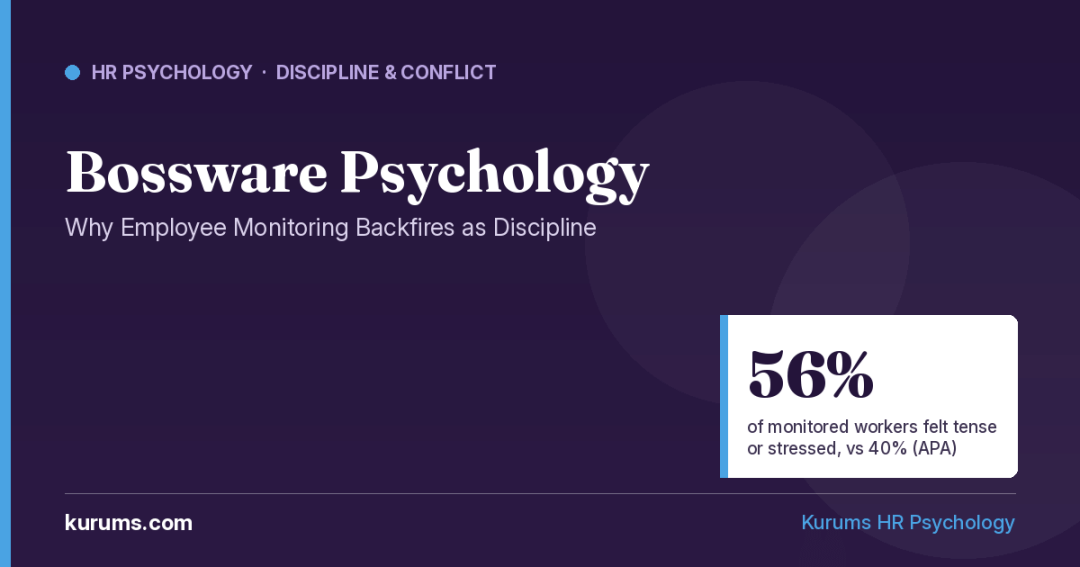
Bossware Psychology: Why Employee Monitoring Backfires as Discipline
Monitoring software produces numbers that look like evidence, and those numbers are ending up in disciplinary files. Here is what the research says surveillance does to trust and behaviour, and how to use monitoring data without causing conflict.
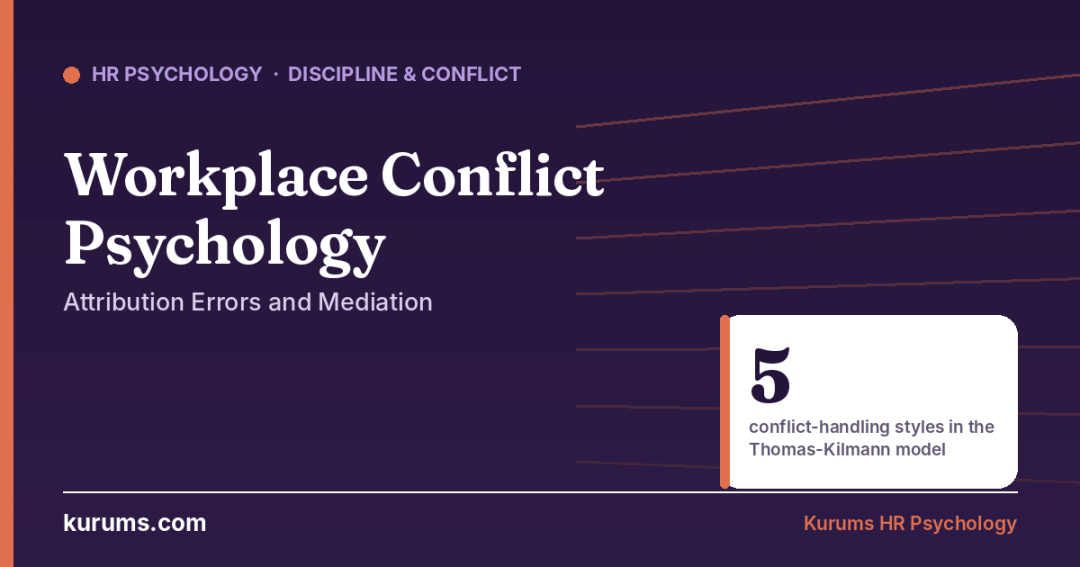
Workplace Conflict Psychology: Attribution Errors and Mediation
Conflict between colleagues usually begins when one person explains another’s behaviour by their character instead of their situation. A guide to the psychology and to mediating a dispute.
The Psychology of a PIP: Rescue Plan or Exit Ramp?
A performance improvement plan is meant to help someone improve. Most recipients experience it as a formal warning that the end is near. The psychology on both sides, and how to be honest about it.
Difficult Conversations at Work: The Psychology of Threat and Defensiveness
A difficult conversation is difficult because it threatens status, security and identity on both sides. Understanding that is the first step to having one that works.
AI & the future of work
How to Read Job-Growth Data: Which Sources Actually Predict the Rising Professions?
Which job-growth data sources actually predict the rising professions of 2026? A planner’s comparison of projections, postings, profile data and shortage lists, with cadence, biases and a watchlist method.
The Skills Behind 2026’s Rising Jobs: What AI, Green and Care Careers Have in Common
AI engineers, wind technicians and nurses are hired for overlapping skills in 2026. A sourced skills matrix, the durable vs perishable framework, and how HR should assess them.
What Do the Rising Jobs of 2026 Pay? A Country-by-Country Salary Comparison
Sourced 2026 salary ranges for ten rising professions across the US, UK, Germany, Türkiye, UAE, India, Singapore, Australia, Brazil, Poland, Japan and Canada, with USD conversions and purchasing-power context.
The Rising Professions of 2026: Which Jobs Are Growing Fastest Worldwide?
AI engineers top every 2026 list, but nurses, electricians and cyber specialists rise just as widely. A cross-country index of the professions growing fastest worldwide, and the five engines behind them.
How is AI being applied in HR software?
Workday, SAP, Oracle and a wave of recruiting start-ups now sell AI agents that screen candidates, answer payroll questions and draft reviews. Here is what ships, what it costs and where the evidence is still thin.

How HR Software Companies Apply AI in 2026 — Agents, Screening and What Actually Works
Workday, SAP, Oracle and recruiting start-ups now sell AI agents for screening, self-service and payroll. What ships, what it costs and where evidence is thin.
HR terms, translated.
Quiet quitting, PIPs, onboarding, attrition, total comp and 360 reviews: what HR says, and what it means for you.
Psychological safety, Decoded: What It Actually Means
Psychological safety is a shared belief within a team that you can speak up, ask questions, admit mistakes or disagree without being embarrassed, punished or pushed aside. It does not mean everyone is always nice; it means honest input is treated as useful, so problems surface early instead of being hidden.
Remote work policy, Decoded: What It Actually Means
A remote work policy is a company document that sets out who can work away from the office, how often, from where and under what conditions. It usually covers eligibility, required office days, working hours, equipment, data security and expenses, and it is how a company turns vague flexibility into rules everyone can check.
Exit interview, Decoded: What It Actually Means
An exit interview is a conversation or survey with an employee who is leaving, usually run by HR, to learn why they are going and what the company could improve. It covers things like management, pay, workload and culture, and the answers are meant to be combined with other leavers’ feedback to spot patterns.
Test your HR skills in two minutes
Free browser games built on the same topics as our HR guides. Each one teaches a single idea by letting you make the call.
Sign in to save your XP and streak, and see where you stand on the leaderboard.
Latest HR News & Analysis
Short daily briefings on employment law, HR technology and workforce trends from the Kurums HR desk.
Hub-Based Return to Office: What Humana’s 45-Minute Commute Rule Teaches HR
Humana will require leaders near nine Talent Hubs to work in person three days a week from 2027. A design guide for HR teams weighing a hub-and-commute-radius policy.
Performance-Based Layoffs and the WARN Act: HR Lessons From Qualcomm’s 517 California Cuts
Qualcomm filed California notices for 517 job cuts it describes as performance-based. What that framing changes for notice, selection, severance and trust.
Qualcomm Files WARN Notices for 517 California Job Cuts, November 2026: Notes for HR
Qualcomm filed California WARN notices covering 517 permanent layoffs, including 442 at its San Diego headquarters, with an effective date of January 12, 2027, following a performance-focused reduction announced by the CEO.
Humana Announces Phased Three-Day Office Requirement for Leadership, November 17, 2026: Notes for HR
Humana announced on November 17, 2026, a phased return-to-office policy requiring vice presidents and above within a 45-minute commute of selected Talent Hub offices to work in person at least three days a week starting in early 2027.
Books for HR Teams
Taste Notes on the management books HR leaders actually reuse.
About This Hub
How is the HR department hub organised?
Fifteen focus areas under one Human Resources category: recruitment, performance, engagement and retention, compensation and benefits, payroll and global employment, expat HR for 28 countries, learning and development, onboarding, organisation design, HR strategy, people analytics, remote work, HR software comparisons, HR compliance and AI and the future of work, plus a daily news desk.
Who writes the guides?
The Kurums HR editorial team, with review by practitioners in HR, payroll and employment law. Guides state their last-updated date and are revised when rules change, most recently for the EU Pay Transparency Directive and the EU AI Act.
Are the software comparisons independent?
Yes. Pricing is taken from public vendor pages at the date shown in each guide, all products are compared on the same attributes, and any sponsored listing is labelled. See the methodology note in the Tools area above.
Do the country guides cover employers or employees?
Both. Each country has five guides written from the employer’s side (visa sponsorship, payroll and social security, employment law, relocation support, hiring compliance) that are equally useful to the professional relocating.
How often is the hub updated?
New guides are published weekly, news daily, and the hub page refreshes automatically as articles go live in each category.
Related departments
Speak so the room listens.
Business speaking and diction, trained one instrument at a time: breath, voice, articulation, stress and intonation, pace and pauses, presence. Ten practical guides with two-minute drills, plus a live pace check.
Stress and Intonation: How Emphasis and Vocal Melody Change What Your Words Mean
How word stress, sentence stress and intonation change meaning at work: commonly mis-stressed business words, five ways to create emphasis, uptalk, monotone fixes and script markup drills.
How to Sound Better on Video Calls: Microphones, Diction and Presence on Zoom and Teams
Bad audio makes experts sound less credible. Choose and place a microphone, fix room echo, set Zoom and Teams audio correctly, handle lag and look present on camera.
How to Overcome Fear of Public Speaking: An Evidence-Based Plan for Presentation Nerves
How common fear of public speaking really is, what nerves do to your body, and an evidence-based plan: reappraisal, a breathing reset, an exposure ladder and a first-90-seconds script.
Kurums Book Taste
The HR Shelf
Kurums Book Taste is our business-book review desk: every title gets a Taste Note - what the book argues, and exactly how to use it at work - and curated Tasting Menus chain them into reading routes. This is the shelf we keep stocked for HR teams.
Use it as a manager conversation script for feedback, conflict, and performance moments.
Taste Note - Book TasteRadical CandorKim ScottUse it to train managers who avoid feedback or deliver it too bluntly.
Taste Note - Book TasteThe Five Dysfunctions of a TeamPatrick M. LencioniUse it as a simple team diagnostic before designing a culture or engagement intervention.
Taste Note - Book TasteDriveDaniel H. PinkAudit every if-then bonus in the company and ask: is the task algorithmic or heuristic? Move heuristic roles to base-plus-recognition.
Taste Note - Book TasteThe Culture CodeDaniel CoyleTrain managers on belonging cues explicitly - names, turn-taking, specific thanks - and make them observable behaviors in reviews.
Taste Note - Book TasteWork Rules!Laszlo BockReplace unstructured interviews with rubric-scored behavioral questions and a work-sample per role.
Taste Note - Book TasteThe Coaching HabitMichael Bungay StanierInstall one question per fortnight across your management layer - trigger-scripted, practiced in one-on-ones.
Taste Note - Book TasteNine Lies About WorkMarcus Buckingham and Ashley GoodallPilot the weekly check-in - two questions, every team member, every week - in one function for a quarter.
Taste Note - Book TasteThanks for the FeedbackDouglas Stone and Sheila HeenAdd receiving-skills training beside your giving-skills curriculum - triggers, types, and the 10 percent hunt.
Taste Note - Book TasteWho: The A Method for HiringGeoff Smart and Randy StreetMandate scorecards for every requisition above entry level; no interviews until it's signed.
Taste Note - Book TasteThe Fearless OrganizationAmy C. EdmondsonRun Edmondson's seven-item survey by team and treat low scores as leadership diagnostics, not team flaws.
Taste Note - Book TasteHigh Output ManagementAndrew S. GroveIntroduce a standard one-on-one format owned by the employee, with a fixed cadence for every manager.
Taste Note - Book TastePowerfulPatty McCordTest whether ten random employees can explain your strategy and top three priorities, and use the gaps to rewrite internal communications.
Taste Note - Book TasteMultipliersLiz WisemanAdd Multiplier behaviors such as asking questions, giving ownership and debating before deciding to your manager competency model and 360 surveys.
Run the numbers before the meeting
20 free HR calculators and templates. Type your figures, get a one-page result you can copy or print. No sign-up.
Looking for something else? Browse all 110 business tools across ten departments.