
Taste Note - Amazon Human Resources Best Sellers
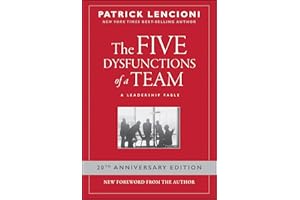
The Five Dysfunctions of a Team: A Team Health Diagnostic
A Taste Note for diagnosing team trust, conflict, commitment, accountability, and results.
Why this book fits Kurums
Use it as a simple team diagnostic before designing a culture or engagement intervention.
For the Kurums HR audience the model's power is diagnostic: five layers, in order, that explain why a team of talented, pleasant professionals can still lose - and where exactly to intervene first.
What the book argues
Lencioni tells it as a fable: new CEO Kathryn takes over DecisionTech, a startup with the best product and the worst team, and rebuilds the executive group through off-sites that expose the model layer by layer. The pyramid's base is absence of trust - not predictive trust, but vulnerability-based: the ability to say 'I was wrong', 'I need help', 'your idea is better'. Without it, everything above is theater.
The layers stack causally. No trust produces fear of conflict: meetings become polite, ideas go untested, and the real debate happens in hallways afterward. Artificial harmony produces lack of commitment: people who did not weigh in will not buy in, so decisions get revisited forever - the fix is conflict first, then clear commitment with deadlines, even without consensus (disagree and commit). Weak commitment makes avoidance of accountability inevitable - peers will not call out behaviors against a plan nobody truly agreed to - and that permits inattention to results: individual status, ego, and departmental budgets quietly outrank the scoreboard.
The field-guide section after the fable supplies the tools: personal-history exercises and behavioral profiles for trust, mining for conflict and real-time permission ('this is good conflict') for the second layer, cascading messaging and commitment clarification for the third, team scoreboards and regular progress reviews for the top two. Lencioni's insistence that the leader goes first - showing vulnerability, tolerating conflict, accepting accountability publicly - is the fable's real plot.
Key ideas, translated to your desk
Vulnerability is the base layer
Teams that cannot admit weakness cannot debate, commit, or hold each other accountable. Start every team fix at the bottom of the pyramid.
Mine for conflict
If meetings are peaceful and decisions keep reopening, the disagreement is happening without you. Assign someone to surface buried objections in the room.
Commitment without consensus
Waiting for everyone to agree is a veto system. Debate hard, decide clearly, and require public commitment - agreement optional, alignment mandatory.
Use it at work
- Run the team assessment in the field guide and score your leadership team on all five layers.
- Open your next off-site with the personal-histories exercise - twenty minutes, disproportionate returns.
- End every decision meeting with commitment clarification: what exactly did we decide, who communicates what.
- Publish one team scoreboard that outranks every departmental metric on it.
Read it if
- Your leadership team is polite in meetings and political after them.
- You facilitate off-sites and need a model that fits on a napkin and survives a year.
- Results are owned by silos and the collective number belongs to no one.
You can skip it if
- You need individual-manager skills - pair Radical Candor instead.
- Business fables annoy you; skip to the model summary and field guide.
- Your dysfunction is one toxic member, not the system - different intervention.
Discover more from Kurums | Business Intelligence
Subscribe to get the latest posts sent to your email.