Sports tourism is now a measurable industry: $111 billion of direct spending and 339 million trips in the United States alone in 2025, with youth and amateur events out-earning professional spectators. How the money moves and who captures it.


Startup · Topic
Stadium financing, Olympic and World Cup economics, host-city impact and the sports tourism industry.
Sports tourism is now a measurable industry: $111 billion of direct spending and 339 million trips in the United States alone in 2025, with youth and amateur events out-earning professional spectators. How the money moves and who captures it.

Host committees promise billions; auditors find fractions of a percent of GDP. Using Super Bowl LX, the Las Vegas Grand Prix, Euro 2024, Paris 2024 and the 2026 World Cup, this guide shows what a mega-event measurably delivers.
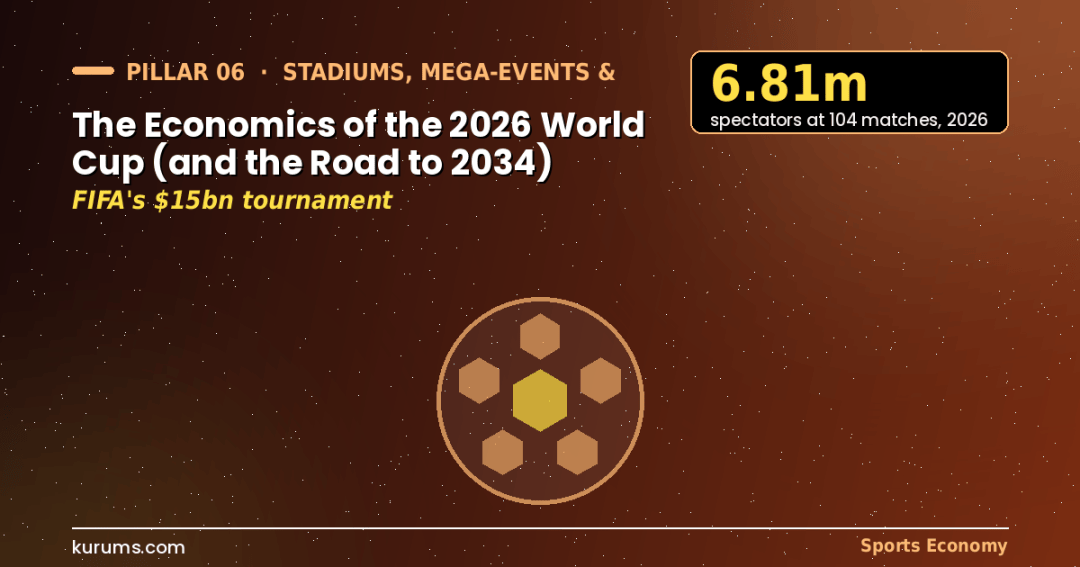
The 2026 World Cup set records on every FIFA line: revenue above $15 billion, 6.8 million spectators, $871 million in prize money, while host cities paid the security bills. The full balance sheet and the road to 2034.
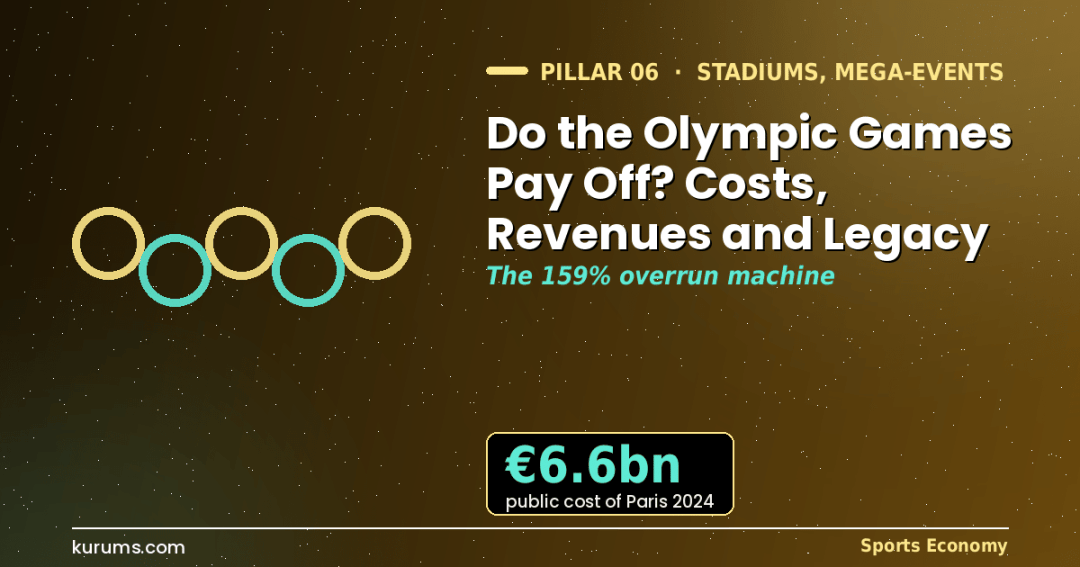
Paris 2024 cost French taxpayers €6.6 billion and lifted GDP by 0.07 points while the IOC banked $7.7 billion. How Olympic costs, revenues and legacy add up for hosts, from Paris and Milan Cortina to LA28 and Brisbane.
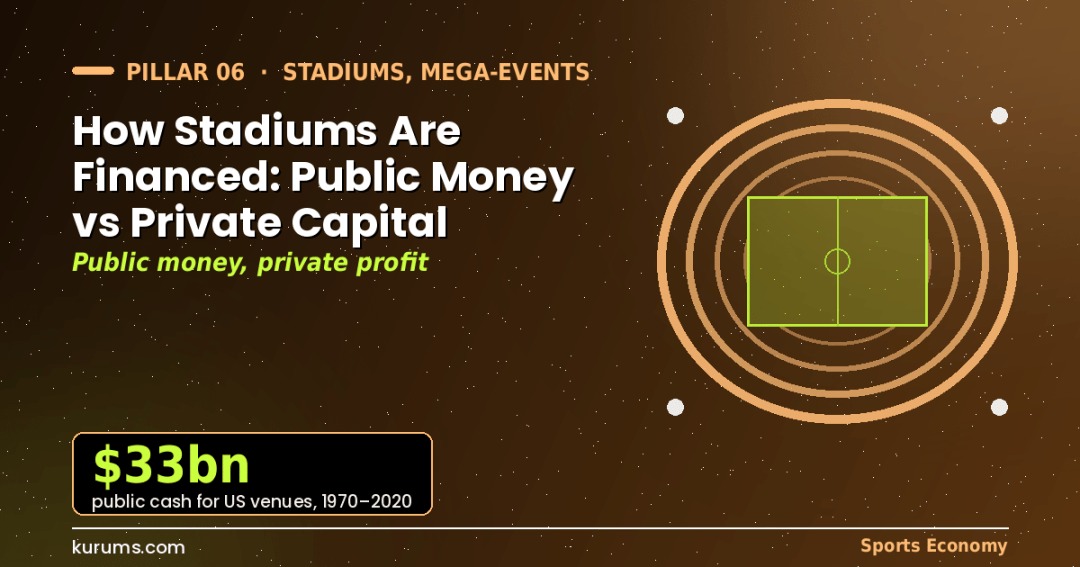
Stadium financing splits into two worlds: American venues built with billions in public bonds, and European grounds funded by club debt, seat licences and revenue-sharing investors. Here is how each capital stack works and who really pays.