
Sourcing Hub
Strategic sourcing, RFx design, supplier evaluation, global trade compliance, freight and carrier contracting, and the trade-finance terms that decide what a purchase really costs. Thirty-six practitioner guides, organised into five focus areas.
Explore Sourcing by focus area
Sourcing is where procurement strategy meets the physical and legal realities of moving goods across borders. Each area below groups the guides you need for one stage of that journey.
How strategic sourcing works
Strategic sourcing is the discipline of treating every significant spend category as a portfolio to be managed rather than a series of purchase orders to be placed. Instead of reacting to requisitions, the sourcing team profiles the category, studies the supply market, chooses a strategy that fits the risk and leverage of that category, runs a structured competitive event, and then governs the resulting supplier relationship against measurable targets. Done well, it typically releases 5–15% of addressable spend in the first cycle and, more importantly, replaces guesswork with a defensible decision record.
The seven-step model below is the operating backbone used across the guides in this hub. Steps one to three are covered in depth in Strategic Sourcing: The Complete Procurement Guide and Category Management in Procurement; steps four and five in RFP, RFQ and RFI and Supplier Evaluation Criteria; steps six and seven connect to the Vendor Management and Cost Reduction pillars.
- Profile the categoryMap total spend, volumes, specifications, current suppliers, contract end dates and internal stakeholders. Cleansed spend data is the non-negotiable input.
- Analyse the supply marketSize the market, identify capable suppliers on three continents, study cost drivers (commodities, labour, energy, tariffs) and assess switching costs.
- Set the sourcing strategyPosition the category on a Kraljic-style matrix: leverage, strategic, bottleneck or routine. Decide single vs dual sourcing, regional vs global, and make-or-buy.
- Choose and run the RFxSelect RFI, RFP or RFQ based on how well the requirement is specified; publish weighted criteria before bids arrive so evaluation is auditable.
- Negotiate and selectCompare total landed cost, not unit price. Include duties, freight, payment terms, currency, inventory and quality cost in every scenario.
- Implement and transitionContract, onboard, load master data, run parallel supply where continuity matters, and communicate the change to every requisitioner.
- Monitor and benchmarkTrack realised savings against identified savings, supplier performance, compliance to contract and market movements — then reopen the cycle.
RFI vs RFP vs RFQ — which sourcing event fits?
| Event | Use it when | What you get back | Typical timeline |
|---|---|---|---|
| RFI | You are still learning the market, the specification is open, or you need to shortlist from a long list of unknown suppliers. | Capability statements, indicative pricing, references — information, not offers. | 2–4 weeks |
| RFP | The outcome is defined but the solution is not; you want suppliers to propose how to deliver it and will weigh quality, approach and risk alongside price. | Binding proposals scored against published weighted criteria. | 6–12 weeks |
| RFQ | The specification is fixed and comparable — parts, commodities, standard services — and price plus lead time decide the award. | Firm quotations, often line-by-line, suitable for reverse auction. | 1–3 weeks |
Sourcing KPIs worth tracking
Sourcing Strategy & RFx
The core playbook: how to build a category strategy, discover and qualify suppliers, run a clean RFP/RFQ/RFI process, select on evidence and manage sourcing risk in a tariff-volatile world.
Agentic AI Is Turning Procurement From Reactive Sourcing Into Continuous Intelligence
With AI adoption in procurement projected to hit 86% by the end of 2026, agentic systems are shifting the function from periodic audits to round-the-clock anomaly detection and supplier risk monitoring.
Global Sourcing Risk Management: Tariffs, Continuity, and Supplier Exposure
A practical procurement guide to global sourcing risk management, with TL;DR, pro tips, operating steps and internal links for the Sourcing pillar.
Supplier Evaluation Criteria: How to Select the Right Vendor
A practical procurement guide to supplier evaluation criteria, with TL;DR, pro tips, operating steps and internal links for the Sourcing pillar.
Category Management in Procurement: Building a Sourcing Strategy
A practical procurement guide to category management for procurement, with TL;DR, pro tips, operating steps and internal links for the Sourcing pillar.
RFP, RFQ, and RFI: How to Run a Better Procurement Process
A practical procurement guide to RFP RFQ and RFI process design, with TL;DR, pro tips, operating steps and internal links for the Sourcing pillar.
Supplier Discovery and Market Intelligence for Strategic Sourcing
A practical procurement guide to supplier discovery and market intelligence, with TL;DR, pro tips, operating steps and internal links for the Sourcing pillar.
Strategic Sourcing: The Complete Procurement Guide
A practical procurement guide to strategic sourcing operating model, with TL;DR, pro tips, operating steps and internal links for the Sourcing pillar.
Customs, Duties & Trade Compliance
What decides the landed cost and legal exposure of an import: certificates of origin, ATA carnets, bonded cargo chains, blanket bonds, consumption entries, ad valorem and anti-dumping duties, and the governance of the forwarders who file on your behalf.

Certificate of Origin: Trade Preference, Verification and Supplier Data Controls
A procurement guide to CERTIFICATE OF ORIGIN controls, preference eligibility, supplier evidence, verification and customs-ready records.

Carnet: Temporary Import, Re-Export and Customs Guarantee Controls
A procurement guide to CARNET and ATA Carnet controls for temporary import, duty relief, re-export, inventory and customs evidence.

Blanket Bonds and Customs Coverage: Continuous Import Security Controls
A procurement guide to blanket bonds, continuous customs coverage, surety controls, broker authority, in-bond transport and renewal governance.

Ad Valorem Customs Value: Percentage-Duty Controls for Procurement
A procurement guide to ad valorem customs duties, transaction value, valuation adjustments, related parties, assists and landed-cost governance.

Anti-Dumping Duty: Supplier Sourcing and Landed-Cost Controls
A procurement guide to anti-dumping duty, product scope, country and producer exposure, supplier declarations, customs evidence and price risk.

CLECAT and European Forwarder Governance: Procurement Signals for Customs and Logistics
A procurement guide to CLECAT, European forwarders, customs agents, logistics associations, vendor governance and regulatory-change monitoring.

Consumption Entry (CE): Customs Release Controls for Procurement
A procurement guide to Consumption Entry (CE), entry summaries, immediate delivery, release evidence and the controls that prevent customs surprises.
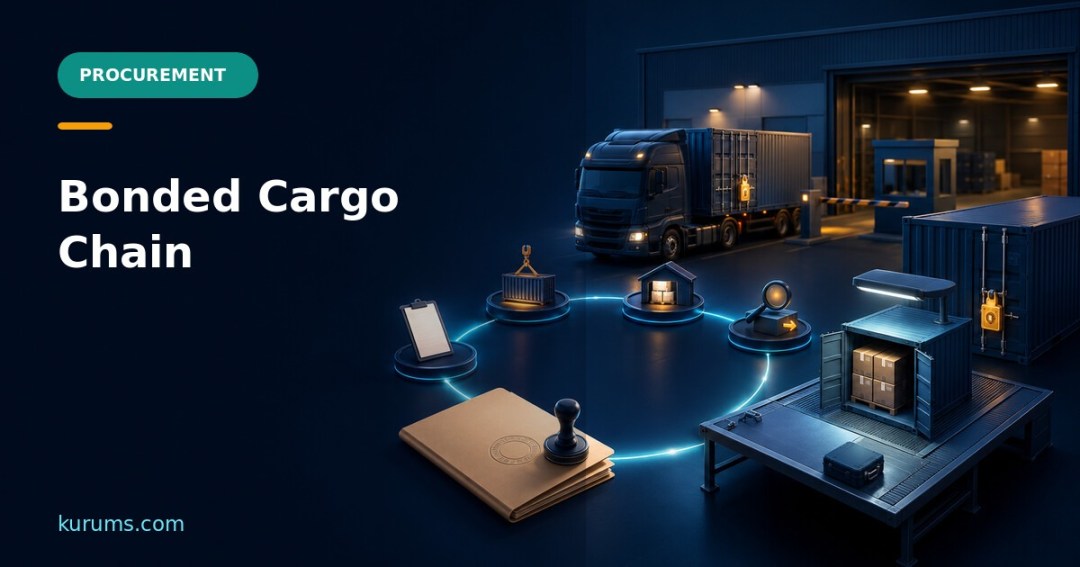
Bonded Cargo Chain: ATF, Bond Port, Cartment and Appraiser’s Stores
A procurement operating guide to bonded cargo receipts, customs custody, bond ports, cartment movements and appraiser evidence.

Customs Documents for Procurement: A.TR, ATA Carnet, Origin and Bonded Warehouses
A practical procurement guide to A.TR movement certificates, ATA Carnets, certificates of origin, customs value, anti-dumping exposure and bonded storage.
Freight Contracts & Carrier Selection
Contracting the movement: how to qualify carriers, choose between common and contract carriage, read commodity and blanket tariffs, control broker commissions and keep lane master data reliable.

Brokerage and Freight Commission: Intermediary Fee, Conflict and Carrier-Selection Controls
A procurement guide to brokerage: compare net and gross freight, disclose carrier relationships, protect selection integrity and audit intermediary fees.
Common Carrier vs Contract Carrier: Service Scope, Tariffs and Procurement Risk
A procurement guide to COMMON CARRIER and contract-carrier choices: service scope, tariffs, authority, liability, capacity, rates and remedies.

Commodity Rate: Specific-Cargo Tariffs, Classification and Audit Controls
A procurement guide to COMMODITY RATE: specific-cargo pricing, classification evidence, scope, validity, exceptions and freight audit.

Main Route: Lane Master Data, Resilience and Route-Change Controls
A procurement guide to ANA GÜZERGAH: route master data, carrier obligations, resilience, alternates, disruptions and total landed cost.

Carrier Qualification: Contract Scope, Capacity and Claims Controls
A procurement guide to CARRIER qualification, contract scope, capacity, compliance, subcontracting, claims and scorecards.

Blanket Rates: Mixed-Commodity Tariff Scope and Audit Controls
A procurement guide to BLANKET RATE, mixed-commodity freight pricing, scope, minimums, exceptions and rate-card governance.

A.T.A. and Road Carrier Qualification: Procurement Controls for Motor Freight
A procurement guide to A.T.A., carrier qualification, FMCSA evidence, insurance, subcontractor controls, lane awards and motor-freight SLAs.

Freight Contracts and Parties: Carrier, Forwarder, Broker, BCO and Charter Party
A procurement guide to the roles, authority, liability and contract structure of carriers, freight forwarders, brokers, agents, BCOs and charter-party participants.
Ocean Shipping & Charter Terms
For teams that contract ocean capacity directly: BCO contracting, bareboat and ballast-bonus charter terms, cabotage rules, mixed-use vessels, classification certificates and warranty-limit controls.

BCO (Beneficial Cargo Owner): Direct Ocean Contracting, Data and Service Controls
A procurement guide to BCO controls: direct ocean contracting, NVOCC relationships, shipment identity, service levels, invoices and cargo visibility.
AWWL (Always Within Institute Warranty Limits): Marine Trading-Risk Controls
A procurement guide to AWWL, legacy Institute Warranty Limits, International Navigating Limits, charter-party routes and marine insurance approvals.

Cabotage and Coastwise Shipping: Domestic Maritime Sourcing Controls
A procurement guide to cabotage, coastwise shipping, vessel eligibility, route screening, waivers, documentation and domestic maritime contingency planning.
Combination Passenger and Cargo Ships: Mixed-Use Vessel Procurement Controls
A procurement guide to combination passenger and cargo ships, mixed-use capacity, SOLAS evidence, cargo segregation, passenger safety and port readiness.

Ballast Bonus, Bareboat and Bar-Bound: Decoding BB Charter Terms
A procurement guide to BB charter terminology, ballast bonus, bareboat chartering, bar-bound grain clauses and contract risk allocation.

Ocean Vessel Classification and Certificates: ABS Controls for Procurement
A procurement guide to ABS, vessel classification, certificates, surveys and evidence when buying marine transport or ship services.
Trade Finance & Supplier Terms
The commercial terms behind the shipment: documentary collections and collecting banks, bilateral supplier commitments, CKD equipment sourcing, timber measurement conventions, outsourced export channels and development-funded local procurement.

Bilateral: Mutual Supplier Commitments, Notice and Change Controls
A procurement guide to BILATERAL agreements: reciprocal commitments, governance, notice, change orders, performance and exit evidence.

Board Feet: Timber Measurement, Grade and Supplier Invoice Controls
A procurement guide to BOARD FEET, timber measurement, grade, conversion factors, yield, moisture and supplier payment controls.

Collecting Banks and Documentary Collection: Payment, Document and Release Controls
A procurement guide to collecting banks, remitting banks, documentary collection, D/P, D/A, document release and payment risk.

CKD (Completely Knocked Down): Equipment Sourcing, Packaging and Assembly Controls
A procurement guide to CKD equipment, disassembled shipments, bill of material control, packaging, customs, assembly quality and warranty evidence.

A.I.D. and Local Procurement: Development-Funded Supplier Controls
A practical procurement guide to A.I.D., local procurement, USAID flow-downs, supplier due diligence, competition and audit evidence.

Combination Export Managers: Governance for Outsourced Export Channels
A procurement guide to combination export managers, export intermediaries, channel authority, commission, compliance and supplier protection.
Related Procurement pillars & tools
Sourcing hands off to these pillars once a supplier is selected. Use the tools comparisons to shortlist e-sourcing, spend-analysis and supplier-management software.
Sourcing questions procurement teams ask
What is the difference between sourcing and procurement?
Procurement is the end-to-end function — from identifying a need through payment and supplier management. Sourcing is the upstream, strategic part of it: analysing the category and the supply market, selecting suppliers through a competitive process and setting the commercial terms. Purchasing (raising and expediting orders) is the downstream, transactional part.
When should I use an RFP instead of an RFQ?
Use an RFQ when the specification is fixed and offers are directly comparable on price and lead time. Use an RFP when the outcome is defined but suppliers should propose how to deliver it, and you will score approach, quality, risk and price together. If you cannot yet write the specification, start with an RFI.
What is total landed cost and why does it matter in sourcing?
Total landed cost is the full cost of getting a product to your door: purchase price plus freight and surcharges, insurance, customs duties (including anti-dumping or countervailing duties), brokerage and documentation fees, financing cost of payment terms, and the inventory carried to cover transit. Awards made on unit price alone frequently reverse once these are added, which is why the customs and freight guides in this hub sit alongside the strategy guides.
Should we single-source or dual-source a category?
Single sourcing maximises leverage and simplifies management but concentrates risk. Dual or multi-sourcing is justified for bottleneck and strategic categories, for items exposed to tariffs or geopolitical disruption, and wherever a supply interruption would stop production. A common compromise is a primary supplier with 70–80% of volume and a qualified secondary carrying the remainder so it is ready to scale.
How do we measure whether sourcing is actually saving money?
Track realised savings against identified savings, agreed with finance on a defined baseline (previous price, market index or budget). Add compliance to contract (maverick spend), supplier performance and landed-cost accuracy. Savings that finance cannot see in the ledger are not savings.


