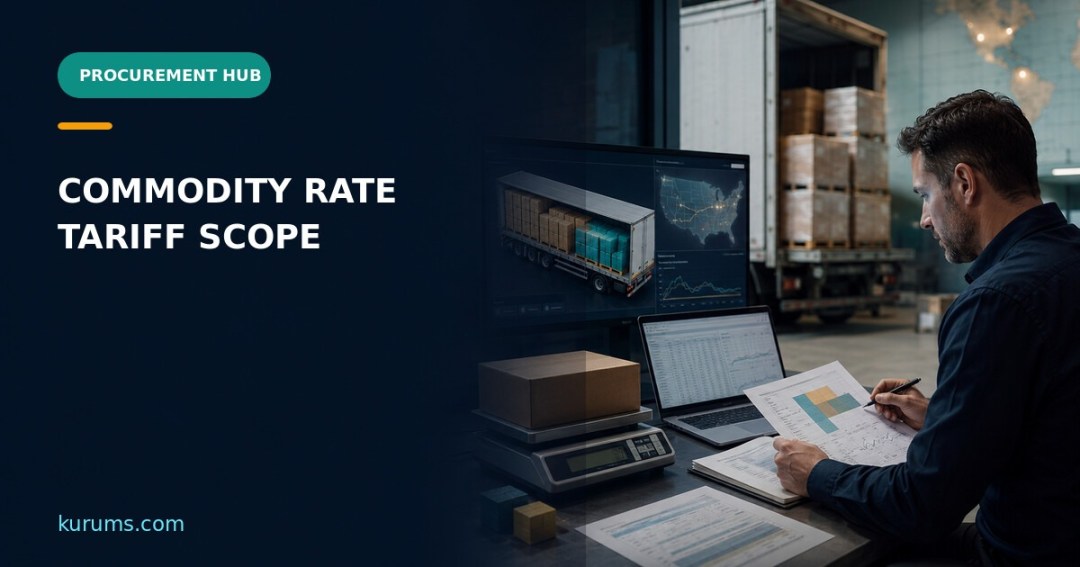
A COMMODITY RATE is a transport charge published or negotiated for a defined commodity or cargo class. It is narrower than a blanket rate and depends on the cargo description, packaging, density, handling, lane, equipment, volume and validity. Procurement should preserve the assumptions so the rate can be compared, applied and audited fairly.
- Define the commodity and shipment profile that the rate covers instead of relying on a product nickname.
- Record classification, density, packaging, handling, hazardous status, equipment, lane and minimums.
- Separate base commodity rate from fuel, security, terminal, storage, detention and special-handling charges.
- Version rate changes and test representative shipments before adding a new commodity or lane.
A Commodity Rate Is a Scoped Price
The SSDER glossary defines COMMODITY RATE as a transport charge for particular cargo items. The rate is useful because it recognises cargo-specific cost, but it can be misapplied when a supplier uses a broad product name or moves a different package, density, route or service through the same tariff row.
The rate record should include commodity family, exact description, classification reference, origin, destination, mode, equipment, service, weight or cube basis, minimum, currency, validity, fuel basis and accessorial treatment. A rate without scope is a dispute waiting to happen.
Build the Commodity and Classification Evidence
Capture dimensions, gross weight, density, stackability, packaging, value, handling, temperature, dangerous-goods status and loading method. Where a formal freight or customs classification applies, retain the source, effective date, decision owner and any exception. A product name alone is not enough for a comparable bid.
Test the rate against light, dense, irregular, oversized and accessorial-prone shipments. The bidder should show whether the rate is per kilogram, cubic metre, linear metre, pallet, package, carload or another unit, and which conversion or rounding rule applies.
Keep Rate Components Auditable
Separate the commodity rate from fuel, currency, security, terminal, pickup, delivery, storage, detention, toll, lift, inspection and special-handling charges. If the supplier quotes one through amount, preserve the component formula and the event that activates an exception.
Link each invoice line to rate version, commodity, shipment, weight or cube, service, accessorial event and approval. A freight-audit team should be able to reproduce the amount from the source data without asking the carrier to explain a spreadsheet row.
Govern New Cargo and Market Change
When a supplier introduces a new product, package, route or volume, run a scope test before applying the existing commodity rate. Version the tariff and identify affected open bookings. Do not edit an old row in place; historical invoice and performance records need the original terms.
Review market changes, fuel or currency formulas, carrier service and capacity. A lower commodity rate may be offset by minimums, reduced frequency, a slower terminal or more accessorial exposure. Compare service-adjusted landed cost, not the headline number only.
Worked Example: Same Product, Different Density
A carrier quotes one commodity rate for polymer pellets. The supplier later changes from dense sacks to low-density bags, doubling cube while weight stays similar. The carrier applies a dimensional minimum and adds handling, while the buyer expects the original rate.
The corrected award defines package, density range, measurement basis, minimum and change notice. Three sample shipments validate the rate before rollout. The buyer can decide whether to change packaging, equipment, consolidation or price rather than debate an undefined commodity label.
Metrics and Governance
For commodity rate procurement controls, measure both service and evidence quality. Useful indicators include first-pass acceptance, exception rate, response time, unplanned cost, document completeness, damage or discrepancy rate, and the percentage of shipments that follow the approved process. A dashboard should distinguish a supplier failure from a carrier, terminal, broker or internal master-data failure.
Review the metric trend with procurement, logistics, finance, quality and the responsible specialist. Use a monthly exception sample to test whether the control worked in a real transaction, not just whether a field was filled. Repeated exceptions should change the sourcing strategy, contract, lane design or supplier development plan.
Keep the control proportionate to risk. High-value, regulated, time-critical or safety-sensitive cargo needs stronger evidence and faster escalation than a routine shipment. Record the decision owner, approval date, source documents and follow-up action so the next buyer can understand the operating history.
Supplier and Carrier Questions
- Which COMMODITY RATE or related glossary condition is assumed in your quotation, procedure or service description?
- Which party owns each data field, physical handoff, inspection, document and exception?
- What evidence will be available before release, loading, movement, receipt, invoice approval or claim?
- What changes require advance notice, requalification, a revised price or a new risk decision?
- How will the supplier report incidents, delays, mismatches and corrective actions, and within what response time?
Implementation Sequence
Implement the control in a small, representative lane first. Capture the baseline process, test the required data and evidence, run a real transaction, and review every exception with the people who performed the work. Do not declare the control effective only because a supplier signed a procedure.
After the first three shipments or operating cycles, update the purchase-order clause, work instruction, scorecard and training. Scale the control to other suppliers only when the evidence is repeatable and the owner can explain what happens when the normal path fails.
Common Mistakes to Avoid
- Applying a commodity rate to a product nickname without classification or packaging evidence.
- Comparing a base rate while hiding minimums, fuel, density, handling and terminal charges.
- Using estimated dimensions, weight or cube instead of measured shipment data.
- Editing a rate row without preserving validity, scope, approval and affected bookings.
- Assuming a lower rate is cheaper after service, dwell, accessorial and failure cost.
Procurement Implementation Checklist
- Define commodity, classification, lane, mode, equipment, service and validity.
- Capture weight, cube, density, packaging, stackability and handling assumptions.
- State unit, minimum, conversion, rounding, fuel and accessorial formulas.
- Link rate version, shipment, event, invoice and approval evidence.
- Test new cargo, package, route, volume and carrier changes before application.
- Measure invoice accuracy, utilisation, accessorials, dwell, claims and service-adjusted cost.
Frequently Asked Questions
What is a commodity rate?
It is a freight charge scoped to a defined commodity or cargo class and its agreed shipment conditions.
How is it different from a blanket rate?
A commodity rate is usually tied to a specific cargo scope; a blanket rate can cover a defined family of shipments or mixed lines under broader rules.
Which data drives the rate?
Commodity description, classification, weight, cube, density, packaging, handling, lane, equipment, service and minimums commonly matter.
Can a new package use the old rate?
Only after the scope and measurement basis are checked and the rate owner approves any change or exception.
What should a freight audit reproduce?
The rate version, shipment data, unit conversion, minimum, accessorial event, invoice line and approval should reproduce the billed amount.
Related Kurums Guides
- Declared Value Controls
- Cargo Manifest Controls
- Customs EDI and Entry Data
- Collecting Banks and Documentary Collection
- Combination Rates
- Blanket Rates
Standards and Authoritative Sources
- World Customs Organization — Harmonized System
- Surface Transportation Board
- FHWA — Freight Management and Operations
- U.S. Federal Maritime Commission
Glossary terms covered: COMMODITY RATE, commodity, specific cargo, tariff, classification, density, accessorial
Kurums.com · Procurement, sourcing and business operations
Discover more from Kurums | Business Intelligence
Subscribe to get the latest posts sent to your email.