Brand Ambassadors
& Advocacy
Ambassador programs, creator and influencer partnerships, employee advocacy and customer referral. This hub explains how advocacy programs are designed, paid for, disclosed and measured — then routes you into the detailed guides.
Explore brand advocacy by focus area
Advocacy is one discipline with four very different operating models. Pick the one you are actually building — the recruiting, the contracts and the metrics change completely between them.
How an ambassador program actually works
Programs fail in predictable places: recruiting people for reach instead of affinity, sending product with no brief, and measuring impressions because revenue is harder to trace. The five stages below are the sequence that separates a working program from a seeding budget.
- Define the jobDecide what the program is for — trust and category education, content supply, or tracked revenue. One primary objective; the others are side effects. This choice determines who you recruit and how you pay.
- Recruit for affinityStart inside your existing customer base, community and employees. Affinity and repeat purchase predict ambassador performance far better than follower count, and the cost of acquisition is close to zero.
- Enable properlyProduct, a short brief with the claims they may and may not make, disclosure training, brand assets, a named contact and a place to ask questions. Under-enabled ambassadors go quiet within a month.
- Amplify what worksReuse ambassador content in paid social, on product pages and in email — with written usage rights. This is usually where a program earns back its cost, not in the organic reach itself.
- Measure and renewReview quarterly on activation, active ratio, tracked revenue and retention. Graduate strong ambassadors to paid tiers, retire inactive ones, and keep the cohort small enough to manage personally.
Ambassador, influencer, affiliate or advocate?
These four words are used interchangeably in briefs and almost never mean the same thing in a contract. The differences decide how you pay, how you disclose and what you can measure.
| Model | Relationship | Typical compensation | Best for | Main risk |
|---|---|---|---|---|
| Brand ambassadorLong-term, named | Ongoing contract, often 6–12 months, exclusive within the category | Free product plus a retainer, commission or tiered rewards | Sustained trust, category education, always-on presence | Slow to scale; needs real relationship management |
| Influencer / creatorCampaign-based | Per-campaign paid placement, no ongoing obligation | Flat fee per deliverable, sometimes plus usage fee | Reach at launch moments, fast awareness | Rented audience; disclosure and claim liability sits with you |
| AffiliatePerformance only | Open programme, tracked by link or code | Percentage commission on attributed sales | Bottom-funnel revenue with measurable payback | Coupon and last-click leakage; brand-bidding on your own terms |
| Employee advocateInternal | Voluntary, part of the employment relationship | Usually none — recognition, not payment | B2B credibility, recruiting, seller-led pipeline | Coercion and consent problems if participation is pushed |
| Customer referrerOne-to-few | Transactional, triggered by a purchase | Account credit or discount per converted referral | Low-CAC acquisition from people who already bought | Volume ceiling; incentive can attract low-value sign-ups |
Most mature programs run two or three of these at once, with one team and one disclosure standard across all of them.
Brand ambassador guides
The core cluster: what ambassadors are and how they differ from influencers, how to build and run a program end to end, and how employee advocacy works in practice. These are the primary internal links from any related Marketing article.
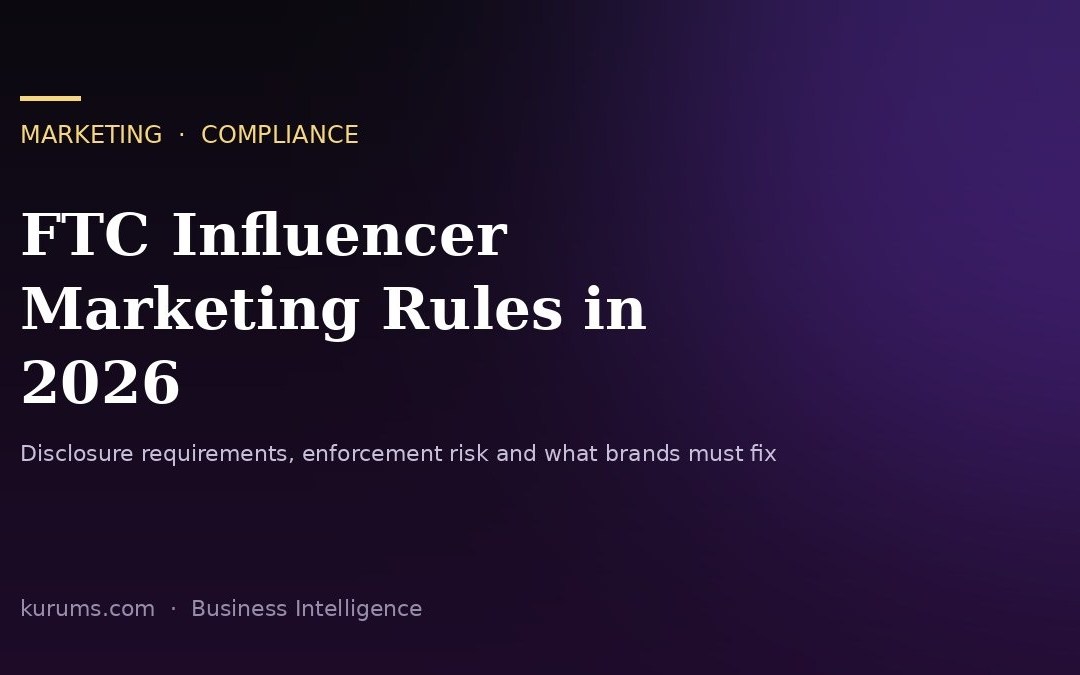
FTC Influencer Marketing Rules in 2026: Disclosure Requirements, Enforcement Risk, and What Brands Must Fix Now
The FTC hasn’t passed sweeping new influencer marketing law in 2026, but enforcement of its Endorsement Guides has intensified sharply, with penalties up to $53,088 per violation. Here’s what brands need to fix in their disclosure workflows now.

Employee Brand Advocacy: Turning Your Team Into Ambassadors
How employee brand advocacy works, why employees can be a brand’s most credible ambassadors, and how to encourage authentic advocacy without forcing or faking it.
Building a Brand Ambassador Program That Works
How to build a brand ambassador program, from setting clear goals and recruiting the right advocates to supporting them well and measuring what actually matters.
Brand Ambassadors Explained: How They Build Real Influence
What brand ambassadors are, how they differ from influencers and affiliates, why authentic advocacy builds trust, and how brands work with ambassadors effectively.

What Is Influencer Marketing and How Does It Work?
A practical guide to influencer marketing — how it works, why micro-influencers often outperform celebrities, how to find the right partners, and how to run campaigns that deliver.
The Rise of Authentic Brand Ambassadors in Modern Marketing
Want to harness the power of authentic brand ambassadors? Dive into our ultimate guide on building genuine connections, driving engagement, and skyrocketing sales. Click now to unlock proven strategies and transform your marketing game!
Creator, influencer and affiliate programs
Where advocacy meets paid media and commission. Creator marketing buys reach, affiliate programs buy outcomes, and TikTok Shop has collapsed the two into a single checkout. The guides below cover recruiting creators, structuring commission and managing an affiliate roster at scale.
TikTok Growth Models Compared: Ads vs Affiliates vs Partners
A side-by-side comparison of TikTok growth models — ads, affiliates, and partners — across cost, control, scalability, and risk to choose the right mix.
How to Manage a TikTok Affiliate Program at Scale
Turn a passive TikTok affiliate plan into a managed sales engine — systematic recruitment, tiered commissions, creator enablement, tracking, and retention.
TikTok Marketing Partner Program: When to Hire a Certified Partner
A guide to the TikTok Marketing Partner program — what certified partners are, the categories, how they help a business, and how to evaluate the right fit.
How to Become a TikTok Shop Affiliate: A Creator’s Guide to Commission Income
Everything creators need to become a TikTok Shop affiliate — eligibility, choosing products, the sample request system, content that converts, and payouts.
TikTok Shop Affiliate Program: A Seller’s Guide to Creator-Driven Sales
A seller’s guide to the TikTok Shop Affiliate program — how it works, open vs targeted plans, commission strategy, and recruiting creators profitably.
TikTok Marketing Analytics: The Metrics That Actually Drive Sales
A CFO-grade framework for measuring TikTok marketing — funnel-stage metrics, attribution, ROAS vs margin, and converting analytics into optimization decisions.
What to measure, and what a program costs
Advocacy is measurable, but not with the metrics most programs report. Impressions and earned media value describe activity, not outcome, and neither survives contact with a finance review. The set below is the minimum a program needs to defend its budget, and each one can be produced from an affiliate platform, a UTM convention and a spreadsheet.
| Metric | What it tells you | Healthy signal |
|---|---|---|
| Activation rate | Share of recruited ambassadors who publish within 30 days of onboarding | 60%+ — below that, the brief or the seeding is broken |
| Monthly active ratio | Share of the roster that posted at least once in the last 30 days | 40–50% sustained is normal for an unpaid program |
| Content output per ambassador | Assets produced per quarter, and how many you are licensed to reuse | Enough to cover paid social and product pages without a studio shoot |
| Tracked revenue per ambassador | Sales attributed to a personal code or link, against fully loaded cost | Positive contribution within two quarters for commission tiers |
| Referral conversion rate | How advocate-sourced traffic converts versus paid social | Typically several times higher — if not, the audience is mismatched |
| 12-month retention | Share of ambassadors still active a year in | 50%+ — retention is the clearest signal of program quality |
| Earned reach / EMV | Directional awareness only | Report it, never forecast revenue from it |
The real cost line
Budgeting for advocacy goes wrong when only the product cost is counted. A realistic model has five lines: seeded product at cost of goods, management time, platform fees, incentives or commission, and content usage rights. Management time is the one that surprises people — personal relationships do not scale, and one coordinator can keep roughly 100–150 ambassadors genuinely engaged before the program turns into a mailing list.
The economics work when ambassador content is reused. A roster producing forty usable assets a quarter replaces a production budget, and the licensed content keeps working in paid channels long after the post has scrolled away. Programs that treat organic reach as the only return almost always look expensive; programs that treat the content library as an asset rarely do.
Disclosure is the brand's problem, not the ambassador's
Under US Federal Trade Commission rules, any material connection between a brand and someone endorsing it must be disclosed clearly and conspicuously — and free product counts as a material connection just as much as cash. Enforcement attention has moved towards the advertiser: the brand is expected to train its advocates, monitor what they publish and act when a disclosure is missing. A programme with no written disclosure standard and no monitoring log is the risk, not a single sloppy post.
The same discipline now applies to the claims themselves. Sustainability and health statements made by an ambassador are treated as the brand's claims, and in the EU they must be substantiated before publication. Build the guardrails into the contract: mandatory disclosure wording, a list of claims that may never be made, content usage rights, exclusivity scope, and a termination clause you can actually use.
Software that runs ambassador and creator programs
A program of twenty people runs on a spreadsheet. Past roughly a hundred advocates, tracking, payouts and community management need real tooling. Our independently researched comparisons cover the four categories that matter here.
Related Marketing pillars
Brand ambassador questions marketers ask
What is a brand ambassador?
A brand ambassador is someone who represents a brand over an extended period, usually under a written agreement, and speaks about it to their own audience or network. Unlike a one-off paid post, the relationship is ongoing and reciprocal: the ambassador receives product, access, a fee or commission, and the brand receives sustained, credible advocacy. Ambassadors can be customers, creators, employees or subject-matter experts.
What is the difference between a brand ambassador and an influencer?
Duration and relationship. An influencer partnership is a campaign purchase — agreed deliverables, a fee, and no obligation afterwards. An ambassador relationship runs for months, usually carries category exclusivity, and is built on genuine affinity with the product. Influencers are typically recruited for reach; ambassadors are recruited for credibility and retention. Both must disclose the connection.
How much do brand ambassadors get paid?
There is no single rate. Customer and employee ambassadors are often unpaid, receiving product, early access and recognition. Contracted ambassadors with an audience are usually paid a monthly retainer plus commission, or a per-deliverable fee benchmarked against creator rates for their follower tier and format. The practical approach is to start with product and a tracked commission, then graduate consistent performers onto a retainer.
How do you recruit brand ambassadors?
Look first at people who already buy: repeat customers, loyalty members, community moderators and employees. Screen for genuine product use, audience relevance and a clean posting history rather than follower count, then run a small pilot cohort of twenty to fifty people before opening applications. Programs that start inside the customer base retain far better than those recruited from outreach lists.
Do brand ambassadors have to disclose the relationship?
Yes. Where a material connection exists — payment, commission, free product, or even a long-term relationship — it must be disclosed clearly and conspicuously in each piece of content. Vague tags are not enough, and the disclosure must be visible without expanding a caption. The advertiser is expected to train advocates and monitor compliance, so the practical risk sits with the brand.
How do you measure the ROI of an ambassador program?
Issue every advocate a unique code or link from day one, then measure tracked revenue and referral conversion against the fully loaded cost: product at cost of goods, management time, platform fees and incentives. Add the replacement value of licensed content reused in paid channels, which is often the largest single return. Treat earned reach and EMV as directional context, not as revenue.
How many ambassadors should a program start with?
Twenty to fifty. A pilot that size is large enough to show whether the brief, the seeding and the attribution work, and small enough that one person can maintain real relationships. Scale only after activation and 90-day retention look healthy — a roster of five hundred disengaged ambassadors is worth less than fifty active ones and costs considerably more to run.