
Vendor Management Hub
Supplier onboarding, performance scorecards, vendor risk, payment controls, contract evidence and the governance of carriers, forwarders and 3PLs. 65 practitioner guides, organised into six focus areas that follow a supplier from first due-diligence check to final claim.
Explore Vendor Management by focus area
Choosing a supplier is a single decision; managing it is a daily one. Each area below groups the guides for one layer of control — from the operating model itself to the payments, contracts, logistics providers and shipment data that expose you to supplier risk.
How vendor management works: the supplier lifecycle
Vendor management starts where sourcing ends. Once a supplier has been awarded business, procurement has to make sure the promised price, quality, delivery and compliance actually materialise — for months or years, across hundreds of purchase orders and invoices. Without a structured model, supplier performance is judged by whoever complains loudest, risk is discovered only when a delivery fails, and contracts are renewed on autopilot.
The seven-stage lifecycle below is the backbone used across this hub. Stages one and two are covered in Vendor Management: The Complete Procurement Guide and the Supplier Onboarding Checklist; stage four in Supplier Performance Scorecards; stage five in Vendor Risk Management; stage six in Supplier Relationship Management; and stage seven in Vendor Contract Compliance. Upstream decisions live in the Sourcing pillar.
- Onboard with due diligenceCollect legal entity, tax, bank, ownership, sanctions, insurance and certification evidence before the first PO. Verify bank details independently.
- Segment the supplier baseTier every vendor by spend, criticality and risk so effort goes where exposure is highest — not spread evenly across thousands of suppliers.
- Set expectations in the contractTranslate the award into SLAs, KPIs, service credits, change-control and exit clauses that can be measured and enforced.
- Measure performanceRun scorecards on delivery, quality, cost and responsiveness, with the cadence set by tier. Share results with the supplier.
- Monitor risk continuouslyTrack financial health, cyber, sanctions, ESG, concentration and geopolitical exposure; react to trigger events immediately.
- Develop strategic relationshipsFor the few suppliers that matter most, run joint business plans, executive reviews and improvement or innovation roadmaps.
- Renew, remediate or exitUse the evidence file to renegotiate, issue corrective-action plans or run a controlled exit — never let renewals happen by default.
Vendor segmentation: how much control does each supplier need?
| Tier | Typical profile | Controls that apply | Review cadence |
|---|---|---|---|
| Strategic | High spend and high criticality; hard to replace; often sole or single source. | Full SRM, joint business plan, continuous risk monitoring, executive sponsor, contingency plan. | Monthly ops / quarterly business review |
| Preferred | Significant spend in competitive categories; alternatives exist but switching has cost. | Scorecard, contract KPIs with service credits, annual risk reassessment, price benchmarking. | Quarterly |
| Approved | Moderate spend or project-based supply; readily substitutable. | Onboarding due diligence, insurance and certificate expiry tracking, exception-based monitoring. | Annual |
| Transactional | Low spend, one-off or catalogue purchases. | Minimum onboarding, sanctions screening, bank-detail verification, P-card or catalogue controls. | On renewal or trigger |
Vendor management KPIs worth tracking
Vendor Management Fundamentals
The core operating model: how to onboard suppliers, score their performance, control vendor risk, run supplier relationship management and keep contracts compliant after award.

Vendor Contract Compliance: Managing SLAs, Renewals, and Obligations
A practical procurement guide to vendor contract compliance, with TL;DR, pro tips, operating steps and internal links for the Vendor Management pillar.
Supplier Relationship Management: Turning Vendors into Strategic Partners
A practical procurement guide to supplier relationship management, with TL;DR, pro tips, operating steps and internal links for the Vendor Management pillar.
Vendor Risk Management in Procurement: Financial, Operational, and Compliance Controls
A practical procurement guide to vendor risk management, with TL;DR, pro tips, operating steps and internal links for the Vendor Management pillar.
Supplier Performance Scorecards: KPIs Procurement Teams Should Track
A practical procurement guide to supplier performance scorecards, with TL;DR, pro tips, operating steps and internal links for the Vendor Management pillar.

Supplier Onboarding Process: A Practical Procurement Checklist
A practical procurement guide to supplier onboarding process, with TL;DR, pro tips, operating steps and internal links for the Vendor Management pillar.
Vendor Management: The Complete Procurement Guide
A practical procurement guide to vendor management operating model, with TL;DR, pro tips, operating steps and internal links for the Vendor Management pillar.
Supplier Payment & Invoice Controls
Where vendor management meets cash: letters of credit and advising banks, bills of exchange, beneficiary change control, cash on delivery, commercial-invoice matching and freight pass-through charges.

Letter of Credit: Conditional Payment, Document Presentation and Procurement Controls
A procurement guide to LETTER OF CREDIT controls: roles, documentary conditions, dates, presentation, discrepancies, amendments and payment release.

Beneficiary: Payment-Party Identity, Change Control and Release Authority
A procurement guide to BENEFICIARY controls: legal identity, bank account verification, letters of credit, guarantees, sanctions and change approval.

COD (Cash on Delivery): Delivery-Payment Release and Fraud Controls
A procurement guide to COD Cash on Delivery: delivery evidence, payment authority, collection risk, returns, fraud and invoice reconciliation.

Commercial Invoice: Supplier Data, Customs Consistency and Three-Way Match Controls
A procurement guide to COMMERCIAL INVOICE controls for supplier billing, customs data, three-way match, corrections and release.
Bill of Exchange: Draft Acceptance, Due Dates and Payment-Evidence Controls
A procurement guide to BILL OF EXCHANGE controls for trade drafts, acceptance, due dates, endorsements, disputes and payment evidence.
Advising Bank: Letter-of-Credit Communication and Document Controls
A procurement guide to ADVISING BANK controls for letters of credit, document presentation, amendments, discrepancies and supplier payment risk.
Bunkers and Bunker Charges: Marine Fuel Procurement and Quality Controls
A procurement guide to bunkers, bunker charges, MARPOL fuel limits, bunker delivery notes, sampling, quality, quantity and supplier liability.

Advanced Charges and Pass-Through Freight: Invoice Controls for Procurement
A procurement guide to advanced charges, pass-through freight, third-party transport fees, approvals, invoice evidence and landed-cost control.
Supplier Contracts, Claims & Legal Evidence
The evidence file behind every supplier dispute: acceptance and acquiescence, bilateral commitments, freight claims, title transfer, marine incident records, certificates and competition-law exposure.
Acceptance: Contract, Payment and Operational Release Gates
A procurement guide to ACCEPTANCE: contract language, inspection, proof of delivery, technical approval, payment and warranty controls.

Bilateral: Mutual Supplier Commitments, Notice and Change Controls
A procurement guide to BILATERAL agreements: reciprocal commitments, governance, notice, change orders, performance and exit evidence.
Acquiescence: Silent Acceptance, Reservations and Document Controls
A procurement guide to ACQUIESCENCE, silent acceptance, document review, reservations, receipt exceptions and evidence preservation.

Freight Claims: Notice, Evidence and Recovery Controls
A procurement guide to freight CLAIMS, notice deadlines, evidence chains, liability, recovery, settlement and corrective action.

Certificates: Validity, Scope and Supplier Compliance Evidence
A procurement guide to CERTIFICATES as controlled compliance evidence: issuer, scope, validity, accreditation, renewal and audit readiness.

Common-Law Procurement Contracts: Precedent, Notice and Evidence Controls
A procurement guide to common law, contract precedent, notice, implied terms, records, change control and jurisdictional risk.

Bill of Sale and Title Transfer: Handover Controls for Cargo and Equipment
A procurement guide to bill of sale, title transfer, acceptance, liens, risk, serial-number evidence and equipment handover.
Captain’s Protest and Barratry: Marine Incident Evidence for Procurement
A procurement guide to captain’s protest, barratry, marine casualty evidence, notice, survey, vessel records and incident governance.
Cargo Abandonment and Acquittance: Controlled Release, Disposal and Claim Closure
A procurement guide to cargo abandonment, acquittance, disposal, salvage, customs custody, insurance notification and claim closure.
Carrier, Forwarder & 3PL Governance
Logistics providers are vendors too. Qualify carriers, control forwarder and agent authority, govern 3PL warehouses, CFS operators, cross-docks and outsourced export channels.

Agent Appointment and Delegated Authority: Forwarder Representation and Fee Controls
A procurement guide to agent appointment: define representation, signing authority, fee transparency, local service duties and transition evidence.

Contracted Warehouse: 3PL Site, SLA and Inventory-Custody Controls
A procurement guide to ANLAŞMALI DEPO: 3PL warehouse scope, SLA design, inventory custody, records, security and transition planning.

Carrier Qualification: Contract Scope, Capacity and Claims Controls
A procurement guide to CARRIER qualification, contract scope, capacity, compliance, subcontracting, claims and scorecards.

Agency Tariffs and Agent Authority: Forwarder Fee Governance
A procurement guide to agency tariffs, agent authority, delegated logistics work, fee transparency, conflicts and evidence of representation.
Transfer Centers and Cross-Dock Handoffs: Dwell and Scan Controls
A procurement guide to AKTARMA MERKEZİ, AKTARMA, cross-docking, handoffs, dwell time, scanning and delivery accountability.
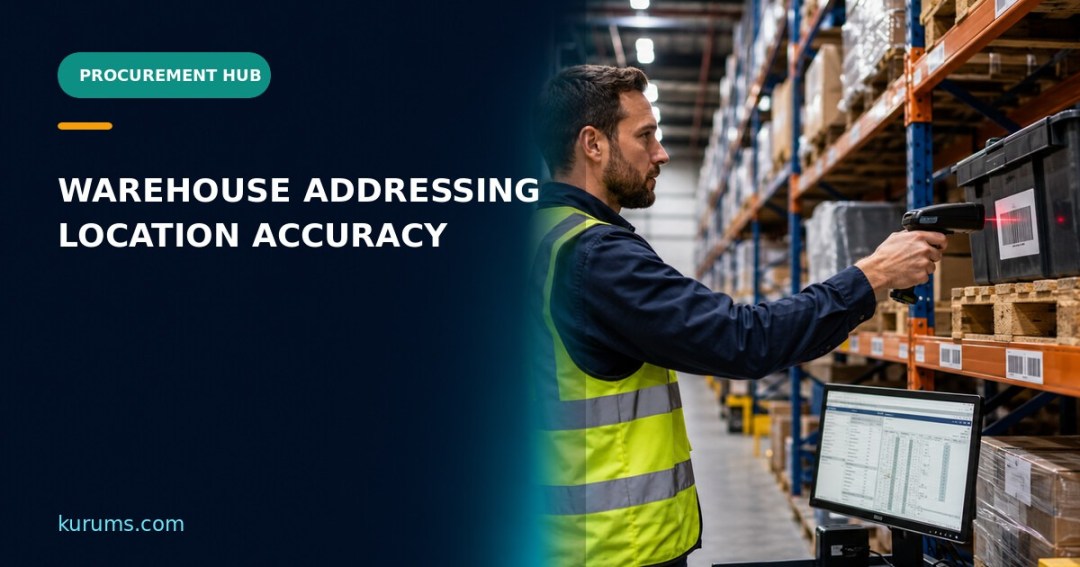
Warehouse Addressing and Location Accuracy: Slotting and Cycle-Count Controls
A procurement guide to warehouse addressing, slotting, location master data, barcode scans, cycle counts and stock accuracy.

Blind Shipments and Confidential Routing: Need-to-Know Transport Data
A procurement guide to blind shipments, confidential routing, manifest data, access controls, carrier instructions and exception governance.
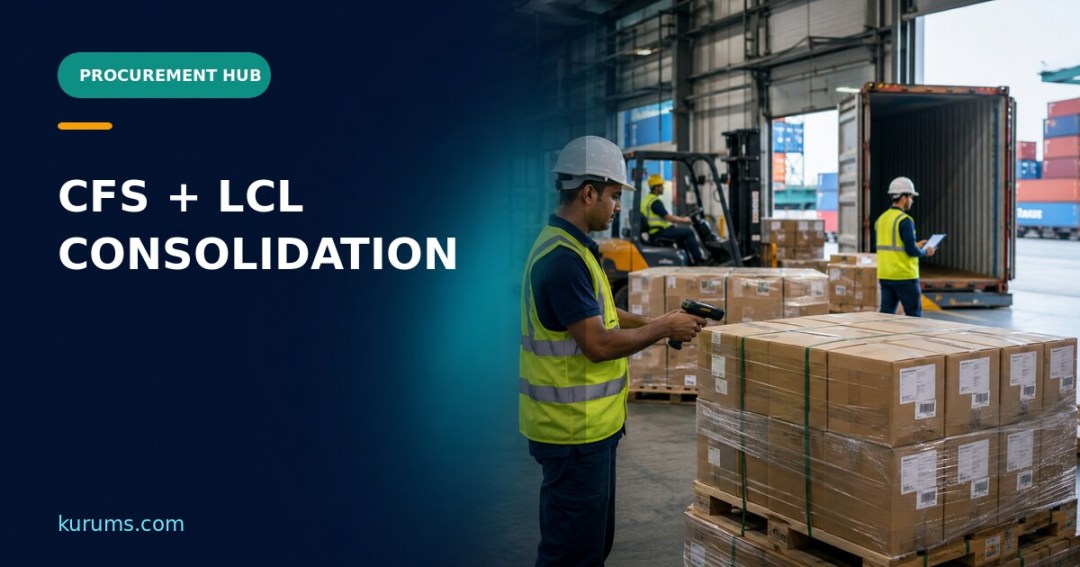
Container Freight Stations and LCL Consolidation: CFS Procurement Controls
A procurement guide to CFS operations, LCL consolidation, receiving, cargo segregation, cut-offs, security, deconsolidation and proof of custody.

CLECAT and European Forwarder Governance: Procurement Signals for Customs and Logistics
A procurement guide to CLECAT, European forwarders, customs agents, logistics associations, vendor governance and regulatory-change monitoring.
Cargo Security, Handling & Stowage
The physical controls suppliers and carriers must evidence: seals and security hardware, restraint and segregation, centre of gravity, breakbulk, dangerous goods and intermodal equipment.

Car Seals: Tamper Evidence, Handoff Records and Cargo-Integrity Controls
A procurement guide to CAR SEAL controls: high-security specifications, serial records, application, inspection, broken seals, customs and claims.
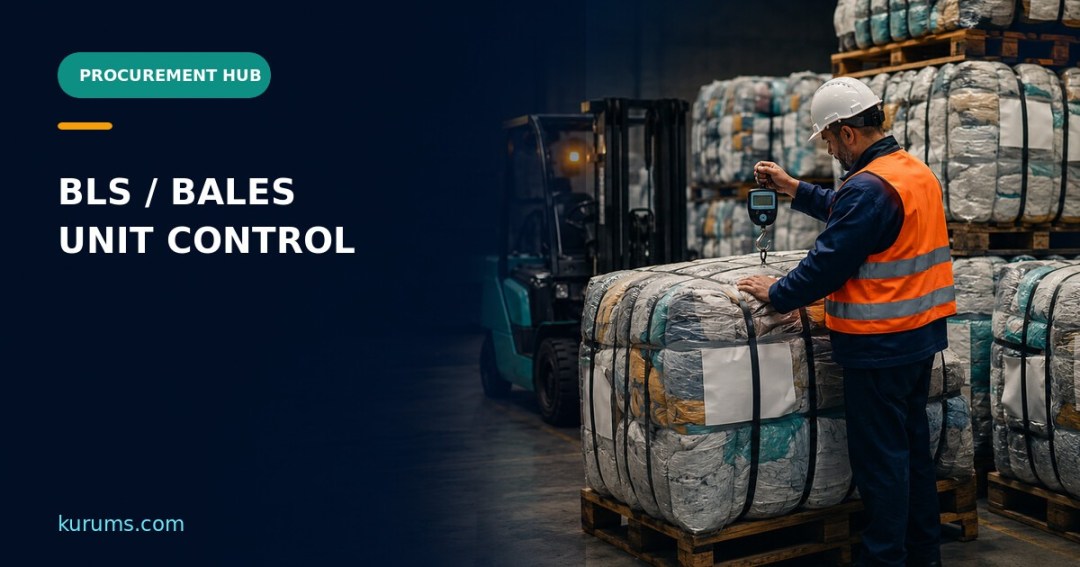
BLS (Bales): Unitization, Count and Freight-Data Controls
A procurement guide to BLS, the bales unit: packaging integrity, count, dimensions, weight, marks, handling and freight billing.
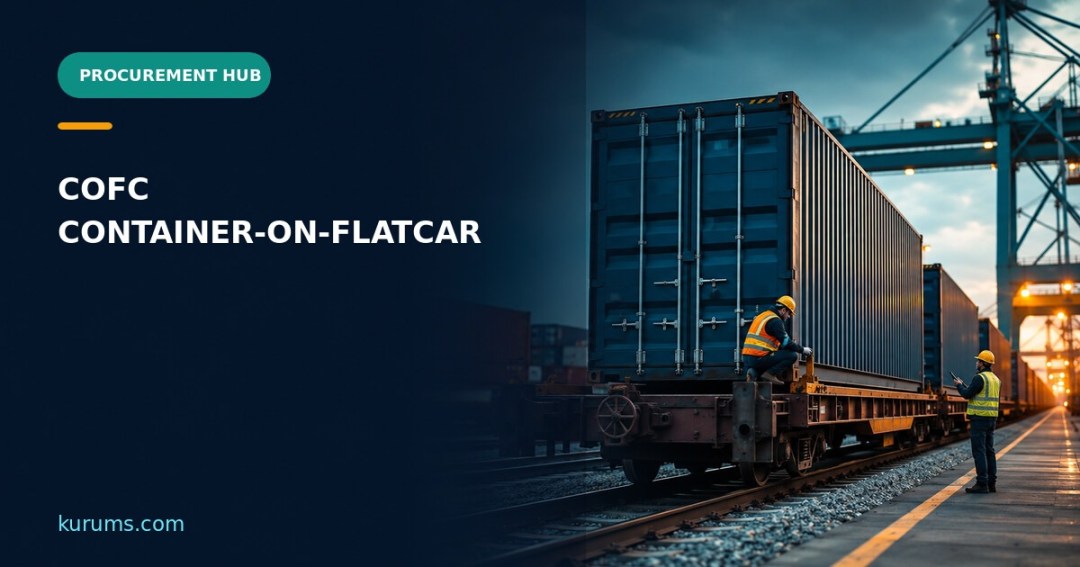
COFC: Container-on-Flatcar Procurement and Intermodal Handoff Controls
A procurement guide to COFC—container on flatcar—covering equipment fit, rail terminal handoffs, drayage, interchange and cost evidence.
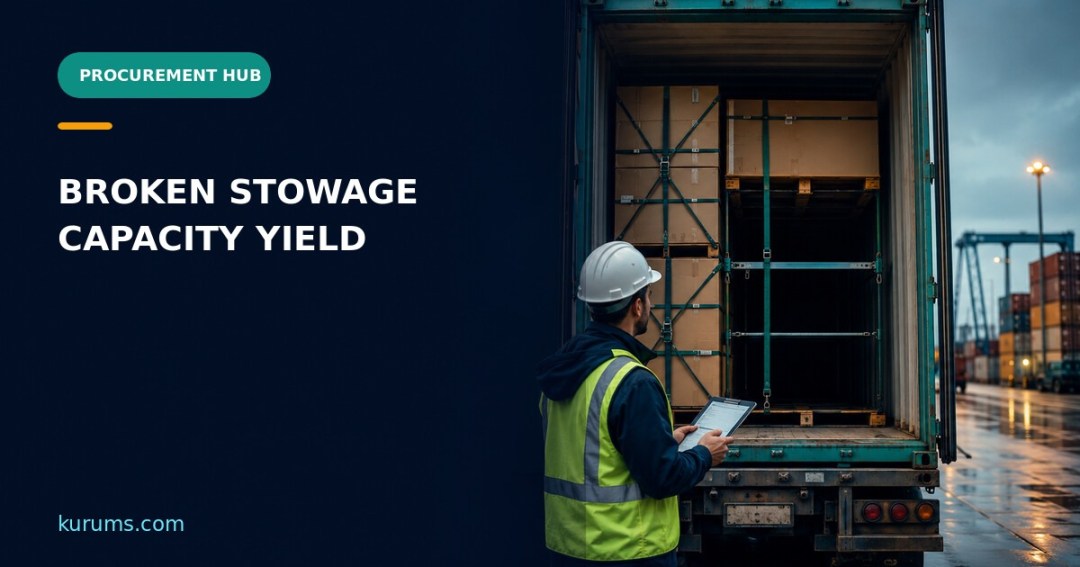
Broken Stowage: Unused Capacity, Stowage Yield and Freight-Cost Controls
A procurement guide to BROKEN STOWAGE: unused space, cube utilisation, packaging, compatibility, load plans and freight-cost recovery.
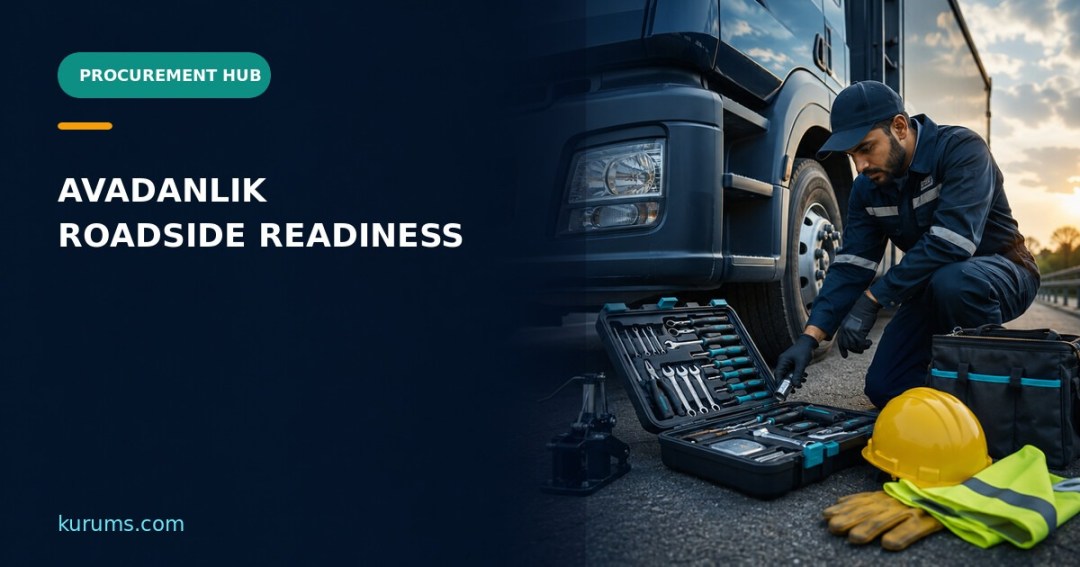
Avadanlık: Vehicle Tool-Kit, Roadside Readiness and Maintenance Controls
A procurement guide to AVADANLIK: vehicle tool kits, roadside readiness, inspection, maintenance, secure storage and carrier accountability.

Active Stowage: Dynamic Warehouse Placement and Work-in-Progress Controls
A procurement guide to ACTIVE STOWAGE: dynamic placement, work-in-progress locations, safe access, scan evidence and release controls.
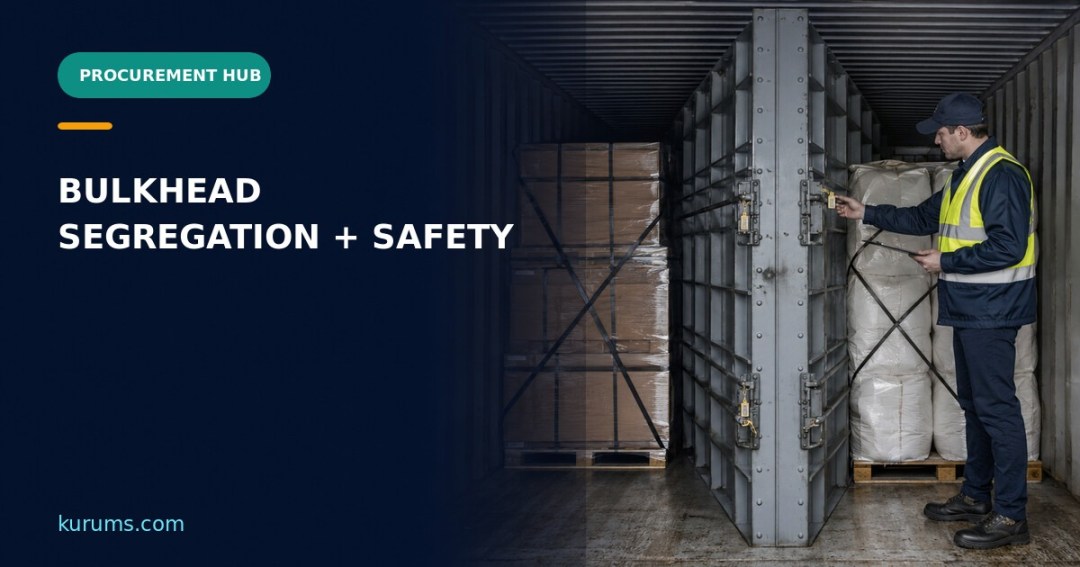
Bulkhead: Cargo Segregation, Structural Separation and Compatibility Controls
A procurement guide to BULKHEAD controls for cargo segregation, pressure and structural boundaries, contamination prevention, inspection and maintenance.

Chocks: Anti-Rolling Cargo Restraint and Load-Securing Controls
A procurement guide to CHOCKS for anti-rolling restraint, blocking, friction, lashing, inspection and carrier acceptance.

Center of Gravity: Balance, Payload and Safe-Stowage Controls
A procurement guide to CENTER OF GRAVITY, payload balance, axle limits, verified mass, stowage plans and load-securing evidence.
Shipment Documents, Data & Cold Chain
The data trail that proves delivery: air waybills, CMR/eCMR, manifests, customs EDI and consumption entries, barcodes, arrival notices and temperature-controlled transport.

Barcode: Item Identity, Scan Events and Supplier Traceability Controls
A procurement guide to BARCODE controls: GS1 identifiers, label data, lot and serial traceability, scan events, packaging and exceptions.
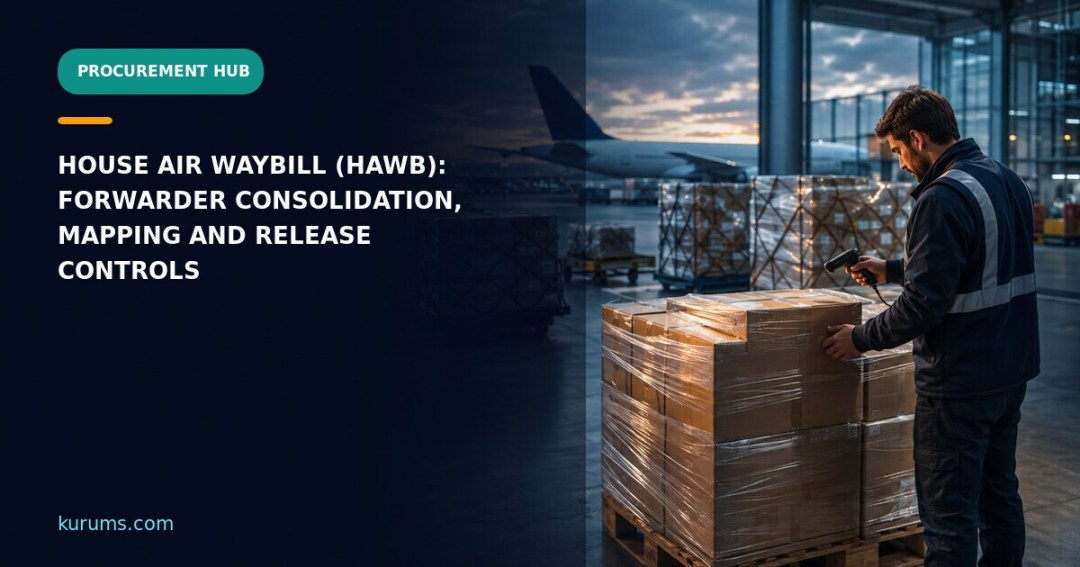
House Air Waybill (HAWB): Forwarder Consolidation, Mapping and Release Controls
A procurement guide to the HOUSE AIR WAYBILL (HAWB): forwarder consolidation, master mapping, party data, customs, charges and release.

Clearance: Customs Release, Dimensional Fit and Route-Access Controls
A procurement guide to CLEARANCE: customs release, bridge and tunnel fit, route access, permits, dimensions and shipment readiness.
CMR and eCMR: Road Consignment Data, Signatures and Handoff Controls
A procurement guide to CMR and eCMR: consignment-note data, electronic signatures, reservations, handoffs, delivery proof and retention.

Ambient Temperature: Operating Ranges, Monitoring and Excursion Controls
A procurement guide to AMBIENT TEMPERATURE, operating ranges, monitoring, packaging, temperature excursions and release decisions.

Cleaning in Transit: Rework, Contamination and Chain-of-Custody Controls
A procurement guide to CLEANING IN TRANSIT, in-transit rework, contamination control, authorised facilities, inspection and release evidence.

Cargo Manifest: Shipment Master Data, Screening and Release Controls
A procurement guide to CARGO MANIFEST data, shipment reconciliation, screening, amendments, holds and release evidence.

Carrier Certificates and Cartment: In-Bond Transit Evidence for Procurement
A procurement guide to carrier certificates, cartment, in-bond transport, custody handoffs, route controls and proof of arrival.

Advice of Shipment and Arrival Notice: Pre-Arrival Visibility Controls
A procurement guide to advice of shipment, arrival notice, pre-alert data, customs readiness, receiving appointments and exception escalation.
Compare vendor management software
Once the supplier base passes a few hundred active vendors, spreadsheets stop scaling. These independent comparisons cover features, pricing models and fit for the platforms procurement teams shortlist most often.
Related Procurement pillars
Vendor management receives suppliers from Sourcing and hands renewals back to Contract Negotiation. These pillars complete the procurement cycle.
Vendor management questions procurement teams ask
What is vendor management in procurement?
Vendor management is the set of processes procurement uses to control suppliers after they are selected: onboarding and due diligence, performance measurement, risk monitoring, relationship management, contract compliance and, eventually, renewal or exit. Sourcing decides who you buy from; vendor management makes sure the supplier delivers what the contract promised at the agreed cost and risk level.
What is the difference between vendor management and supplier relationship management (SRM)?
Vendor management covers every supplier and is mostly about control: compliance, performance and risk. Supplier relationship management is a subset reserved for the small group of strategic suppliers where joint planning, innovation and executive-level governance create more value than transactional oversight. Most organisations run SRM for 5–10% of suppliers that account for a large share of spend or risk.
Which KPIs should a supplier scorecard include?
A practical scorecard balances four dimensions: delivery (on-time in-full), quality (defect rate or PPM, corrective-action closure), cost (price variance against contract, invoice accuracy) and responsiveness or risk (lead-time reliability, compliance with certifications and insurance). Weight them by category, keep the scorecard to 6–10 measures, and review strategic suppliers quarterly.
How often should vendor risk be reassessed?
Tie the frequency to the supplier tier. Strategic and high-risk vendors warrant continuous monitoring of financial, cyber, sanctions and adverse-media signals plus a formal review at least annually; approved vendors every one to two years; transactional vendors at onboarding and on renewal. Any trigger event — ownership change, a failed audit, a payment-detail change or a major incident — should force an immediate reassessment.
Why do payment-detail changes need special vendor controls?
Changing a supplier’s bank account or beneficiary is the most common route for invoice and payment fraud. Controls should require a written request, call-back verification to a number already on file (never the one in the request), dual approval in the vendor master and a hold period before the first payment to the new account. The guides in the Supplier Payment area cover these controls in detail.
Should logistics providers be managed as vendors?
Yes. Carriers, freight forwarders, customs agents and 3PL warehouses hold your goods, file declarations in your name and generate a significant share of indirect spend and claims. They need the same onboarding, authority limits, SLAs, scorecards and insurance checks as any product supplier, which is why this hub includes dedicated carrier, cargo and shipment-data areas.