
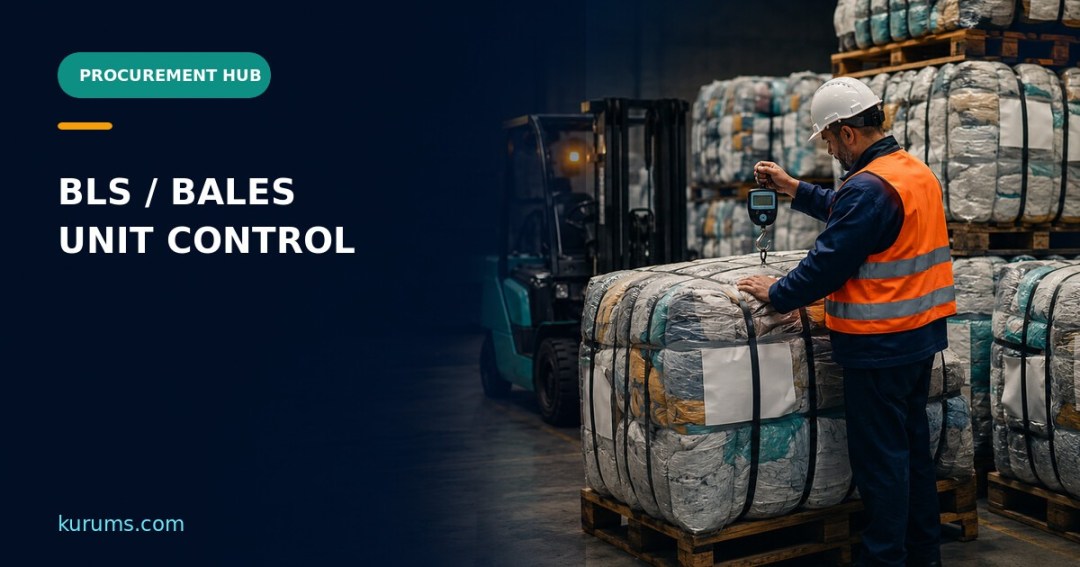
SSDER uses BLS for bales. A bale is a compressed, bound handling unit, not merely a count abbreviation. Procurement should specify material, compression, dimensions, gross and net weight, binding, moisture, marks, stackability, handling, inspection and the conversion used in freight or inventory records.
- Define whether BLS means a count of bales, a rate unit, an inventory unit or all three.
- Set dimensions, gross/net weight, compression, binding, moisture and packaging limits by commodity.
- Require marks, labels, handling and inspection evidence that survives warehouse and transport handoffs.
- Reconcile bale count and condition to purchase order, packing list, manifest, receipt and invoice.
Bales Are Physical Units with Commercial Consequences
The SSDER glossary lists BLS as Bales. A bale can be cotton, fibre, paper, textiles, scrap, agricultural material or another compressed commodity. Its shape, density, binding and moisture affect safe handling, cubic utilisation, damage risk, storage and freight pricing. The abbreviation should never be the only cargo description.
Define the unit relationship: one bale, bundle, pallet, lot, kilogram, cubic metre and freight unit. State whether the supplier bills by bale, weight or another basis and which quantity controls inventory, customs, transport and payment when the fields differ.
Specify Compression, Integrity and Condition
The RFQ should state target dimensions, gross and net weight, density or compression, binding material, number of bands, wrapping, edge protection, moisture limit, contamination tolerance and permitted deformation. For a high-density or fragile commodity, the safe stack height and lifting method may be as important as the bale count.
Define acceptance at pickup and receipt. Record bale ID or lot, marks, count, weight, dimensions, broken bands, wetness, contamination, tears and photographs. The carrier and warehouse should not repack or rebind a bale without recording the cause, new weight and responsible party.
Build Bale Data into the Freight Record
Use measured count, weight and dimensions in the booking, packing list, manifest and rate calculation. A catalogue weight can produce wrong chargeable weight, vehicle loading, customs data and invoice. If the carrier reweighs, retain both measurements, scale evidence, unit and conversion rule.
Use standard marks and a scan or label where the supply chain needs lot, origin, quality, moisture or destination traceability. A bale that looks identical to another bale can still have different quality, ownership or customs status.
Price Handling and Exceptions
The contract should allocate loading, weighing, re-baling, wrapping, storage, fumigation, moisture protection, damaged-band replacement and disposal. Separate normal handling from supplier packaging failure, carrier damage, weather exposure and warehouse rework. Each event should reference bale or lot, quantity, time, evidence and approved rate.
Review utilisation and safety together. Compressing a bale more tightly may reduce cube but increase damage or unloading risk. The right improvement may be palletisation, a different trailer, better marks or a revised rate rather than maximum density.
Worked Example: Count Matches, Weight Does Not
A supplier ships 100 bales at the contracted per-bale price. The carrier weighs the load and finds that each bale is 8% heavier than the rate assumption, while several bands are loose. The buyer faces an invoice adjustment and a potential loading-limit problem.
The corrected specification sets gross and net tolerance, compression, binding and scale evidence. The supplier sends a pre-dispatch weight file, the carrier confirms payload, and the buyer codes re-baling and excess-weight cost to the responsible cause.
Metrics and Governance
For BLS bales freight procurement controls, measure both service and evidence quality. Useful indicators include first-pass acceptance, exception rate, response time, unplanned cost, document completeness, damage or discrepancy rate, and the percentage of shipments that follow the approved process. A dashboard should distinguish a supplier failure from a carrier, terminal, broker or internal master-data failure.
Review the metric trend with procurement, logistics, finance, quality and the responsible specialist. Use a monthly exception sample to test whether the control worked in a real transaction, not just whether a field was filled. Repeated exceptions should change the sourcing strategy, contract, lane design or supplier development plan.
Keep the control proportionate to risk. High-value, regulated, time-critical or safety-sensitive cargo needs stronger evidence and faster escalation than a routine shipment. Record the decision owner, approval date, source documents and follow-up action so the next buyer can understand the operating history.
Supplier and Carrier Questions
- Which BLS or related glossary condition is assumed in your quotation, procedure or service description?
- Which party owns each data field, physical handoff, inspection, document and exception?
- What evidence will be available before release, loading, movement, receipt, invoice approval or claim?
- What changes require advance notice, requalification, a revised price or a new risk decision?
- How will the supplier report incidents, delays, mismatches and corrective actions, and within what response time?
Implementation Sequence
Implement the control in a small, representative lane first. Capture the baseline process, test the required data and evidence, run a real transaction, and review every exception with the people who performed the work. Do not declare the control effective only because a supplier signed a procedure.
After the first three shipments or operating cycles, update the purchase-order clause, work instruction, scorecard and training. Scale the control to other suppliers only when the evidence is repeatable and the owner can explain what happens when the normal path fails.
Common Mistakes to Avoid
- Using BLS as a count without defining the bale's physical and commercial basis.
- Ignoring compression, bands, moisture, contamination, density and safe stacking.
- Using estimated weights or dimensions in the booking and invoice audit.
- Allowing re-baling or repacking without preserving original count, condition and cause.
- Optimising cube while increasing product damage, handling or payload risk.
Procurement Implementation Checklist
- Define bale commodity, unit relationship, count, weight and rate basis.
- Specify dimensions, compression, binding, wrapping, moisture and contamination limits.
- Set marks, IDs, handling, stack, lift, inspection and photo requirements.
- Reconcile bale data across PO, packing list, booking, manifest, receipt and invoice.
- Define re-baling, rewrap, damage, storage, weighing and exception cost rules.
- Measure count accuracy, weight variance, damage, utilisation and rework by supplier.
Frequently Asked Questions
What does BLS mean in the glossary?
BLS is used for bales, compressed and bound physical units of cargo.
Is one bale always one freight unit?
No. A bale may be priced, stored or transported by count, weight, cube, pallet or another defined unit. The contract should state the controlling basis.
Which bale data matters most?
Count, gross/net weight, dimensions, compression, binding, moisture, condition, marks and handling requirements should be matched to the commodity.
Who pays for re-baling?
The agreed cause and evidence determine responsibility. Separate normal service from supplier packaging failure, carrier damage and warehouse rework.
Can bales be stacked to improve utilisation?
Only within the commodity, packaging, equipment, floor-load, safety and handling limits defined by the qualified owner.
Related Kurums Guides
- Declared Value Controls
- Cargo Manifest Controls
- Customs EDI and Entry Data
- Collecting Banks and Documentary Collection
- Combination Rates
- Blanket Rates
Standards and Authoritative Sources
- IMO — CTU Code
- NIST — SI Units
- ISO — Packaging Distribution Symbols
- OSHA — Materials Handling and Storage
Glossary terms covered: BLS, BALES, bale, unitization, compression, marks, weight
Kurums.com · Procurement, sourcing and business operations
Discover more from Kurums | Business Intelligence
Subscribe to get the latest posts sent to your email.