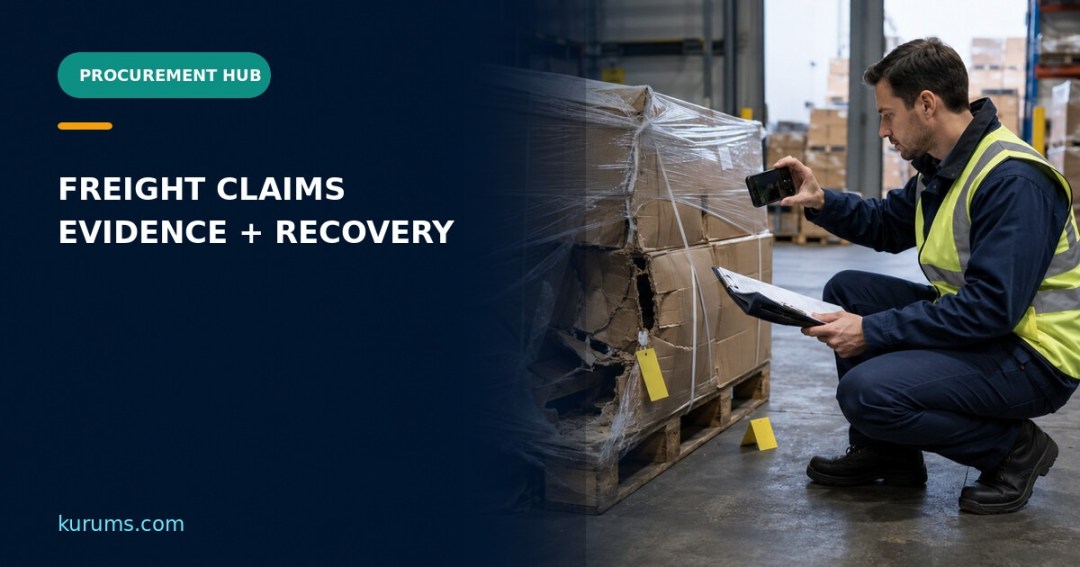
A freight CLAIM is a formal request for compensation or another remedy after loss, damage, shortage, delay or service failure. Procurement should distinguish a claim from a complaint or delivery exception, preserve evidence, meet notice deadlines, allocate liability and track recovery through settlement and root-cause closure.
- Define when an incident becomes a claim, who opens it, and which notice clock and contract apply.
- Preserve condition, packaging, seals, documents, photographs, temperature, timestamps and chain-of-custody evidence.
- Set liability, deductible, reserve, settlement authority and recovery responsibilities across supplier, carrier and insurer.
- Use claim data to change packaging, lane design, carrier selection and contract controls rather than only closing cases.
A Claim Is a Controlled Recovery Process
The SSDER glossary defines CLAIM as a demand for compensation for loss, damage or another failure. A complaint asks for attention; a delivery exception records what happened; a claim asserts a remedy under a contract, transport convention, insurance policy or other rule. Keeping those states separate prevents a carrier’s informal email response from being mistaken for a preserved legal claim.
Procurement should map the claim lifecycle from incident to closure: detect, contain, notify, investigate, value, reserve, submit, negotiate, settle or deny, recover and improve. The process must identify the transport document, contract, governing law, notice period and accountable case owner.
Open the Case with a Minimum Evidence Set
At receipt, record shipment and purchase-order references, package count, seal and equipment IDs, condition, shortage or damage description, photographs, delivery receipt annotations, temperature or shock data where relevant, witness details and the time and place of discovery. Preserve packaging and product until the inspection or carrier instruction is complete.
Link the evidence to the exact unit, lot, pallet or serial number. A photograph without an ID or timestamp is weak; a signed receipt that says “subject to inspection” may not meet a contract’s notice rule. Train warehouses and drivers on a simple exception form so the claim owner receives usable facts quickly.
Control Notice, Liability and Valuation
Notice deadlines vary by contract and transport regime. CMR, bills of lading, air waybills, carrier tariffs and insurance policies can require different forms, periods and supporting documents. The buyer should not wait for a final value calculation before sending a protective notice when the clock is short.
Value the actual loss under the applicable rule, including salvage, repair, replacement, freight, duty, mitigation and deductible treatment. Avoid double recovery between carrier and insurer. Finance should maintain a reserve while procurement or claims specialists determine liability and settlement authority.
Negotiate, Recover and Close
Submit a coherent claim pack with the contract, transport document, invoice, packing evidence, receipt exception, survey or repair report, value calculation and requested remedy. Record carrier acknowledgements, requests for information, offers, denials, payment dates and recovery reference numbers. Escalate a missed response clock or disputed liability through the contract path.
Closure requires more than payment. Confirm that the ledger is reconciled, damaged goods are disposed of or returned, insurance and carrier recoveries are allocated, and the root cause has an owner. Trend cases by supplier, carrier, route, packaging, handoff, commodity and failure mode.
Worked Example: A Shortage Hidden by a Clean Receipt
A warehouse signs for ten pallets because the driver presents a delivery note showing ten. During put-away, the team discovers only nine pallets and cannot identify whether the shortage occurred at the supplier, cross-dock or final delivery. The carrier rejects the claim because the receipt is unqualified and notice was sent after the contractual period.
The corrected control counts and photographs each pallet at handoff, records seal condition and adds a “quantity subject to count” process for high-risk shipments. The claim form is opened the same day, a protective notice is sent, and the carrier, supplier and warehouse review the chain of custody. Procurement uses the result to change the packaging and receipt clause.
Metrics and Governance
For freight claim procurement controls, measure both service and evidence quality. Useful indicators include first-pass acceptance, exception rate, response time, unplanned cost, document completeness, damage or discrepancy rate, and the percentage of shipments that follow the approved process. A dashboard should distinguish a supplier failure from a carrier, terminal, broker or internal master-data failure.
Review the metric trend with procurement, logistics, finance, quality and the responsible specialist. Use a monthly exception sample to test whether the control worked in a real transaction, not just whether a field was filled. Repeated exceptions should change the sourcing strategy, contract, lane design or supplier development plan.
Keep the control proportionate to risk. High-value, regulated, time-critical or safety-sensitive cargo needs stronger evidence and faster escalation than a routine shipment. Record the decision owner, approval date, source documents and follow-up action so the next buyer can understand the operating history.
Supplier and Carrier Questions
- Which CLAIM or related glossary condition is assumed in your quotation, procedure or service description?
- Which party owns each data field, physical handoff, inspection, document and exception?
- What evidence will be available before release, loading, movement, receipt, invoice approval or claim?
- What changes require advance notice, requalification, a revised price or a new risk decision?
- How will the supplier report incidents, delays, mismatches and corrective actions, and within what response time?
Implementation Sequence
Implement the control in a small, representative lane first. Capture the baseline process, test the required data and evidence, run a real transaction, and review every exception with the people who performed the work. Do not declare the control effective only because a supplier signed a procedure.
After the first three shipments or operating cycles, update the purchase-order clause, work instruction, scorecard and training. Scale the control to other suppliers only when the evidence is repeatable and the owner can explain what happens when the normal path fails.
Common Mistakes to Avoid
- Treating a complaint, delivery exception and formal claim as the same status.
- Waiting for a final valuation before sending a time-sensitive protective notice.
- Discarding packaging, seals or temperature data before inspection and liability review.
- Submitting a claim without tying evidence to a shipment, pallet, lot or serial number.
- Closing the case after payment without root-cause action and recovery reconciliation.
Procurement Implementation Checklist
- Map claim states, owners, contracts, notice clocks and escalation paths.
- Train receipt teams to record condition, quantity, seals, photos and timestamps.
- Preserve packaging, product, transport records and chain-of-custody evidence.
- Calculate loss, reserve, deductible, salvage and recovery without double counting.
- Track acknowledgement, requests, settlement, payment and denial reasons.
- Trend claims by supplier, carrier, lane, handoff, packaging and root cause.
Frequently Asked Questions
What is a freight claim?
It is a formal demand for compensation or another remedy after transport loss, damage, shortage, delay or service failure, under the applicable contract or rule.
Is a delivery exception the same as a claim?
No. An exception records an event; a claim invokes a remedy. The exception should trigger the claim workflow when the contract or value threshold requires it.
When should notice be sent?
As soon as the loss or damage is discovered, and within the shortest applicable contractual or legal period. Send a protective notice before the full evidence pack is complete if needed.
Who pays a claim?
Liability depends on the transport contract, convention, insurance and facts. Supplier, carrier, broker and insurer responsibilities should be allocated before shipment.
What closes a claim?
A closed case has an approved remedy, financial reconciliation, evidence archive, recovery allocation and a corrective action or documented reason why none is required.
Related Kurums Guides
- Cargo Manifest Controls
- Billed Weight and VGM Controls
- Shipping Documents for Procurement
- Customs Documents for Procurement
- Container Types and Load Securing
- Freight Contracts and Parties
Standards and Authoritative Sources
- UNECE — CMR Convention
- FIATA — Resources
- U.S. Federal Maritime Commission — Ocean Transportation Intermediaries
- IMO — Cargo Information and Securing
Glossary terms covered: CLAIM, freight claim, notice, shortage, damage, liability, recovery
Kurums.com · Procurement, sourcing and business operations
Discover more from Kurums | Business Intelligence
Subscribe to get the latest posts sent to your email.