
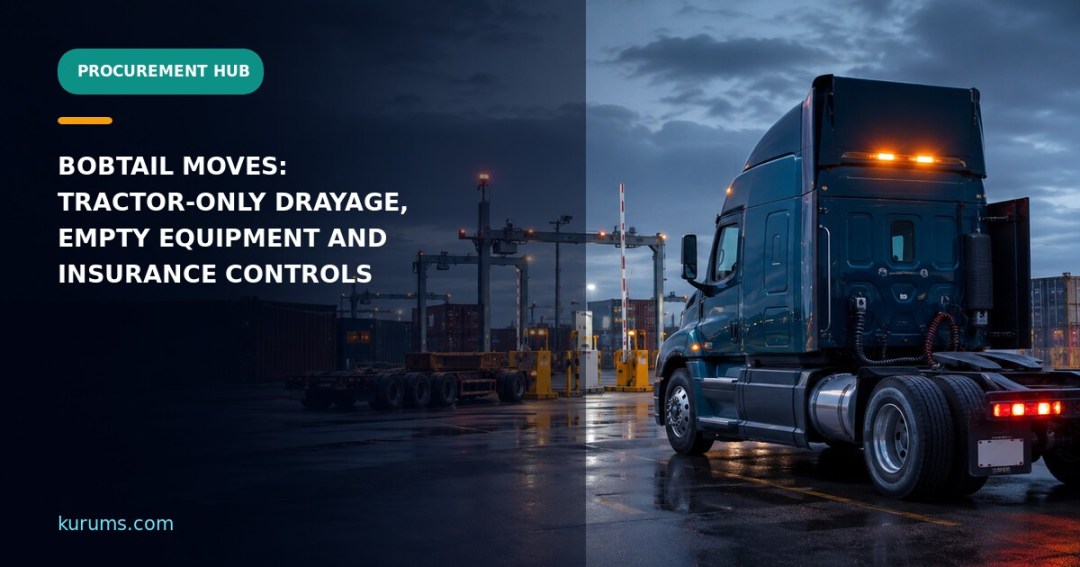
BOBTAIL describes a tractor operating without a trailer. In intermodal procurement, a bobtail leg can be necessary to collect or return equipment, reposition a chassis or recover from a failed appointment, but it can also create unplanned mileage, safety and insurance exposure. Define when it is authorised and how it is evidenced and priced.
- Distinguish loaded drayage, bobtail, empty-container, chassis-only and dry-run events in the transport data.
- Set appointment, terminal, equipment, route and exception rules before a tractor-only move is dispatched.
- Confirm carrier authority, lease, insurance and driver or equipment responsibilities for the actual movement.
- Pay only supported bobtail and waiting charges linked to a booking, gate event, reason code and approved rate.
What a Bobtail Move Is
The SSDER glossary defines bobtail as a tractor travelling on the road without a trailer. That simple description becomes commercially important when a drayage provider sends a tractor to a terminal, returns an empty container, moves a chassis or arrives for a pickup that cannot proceed. A bobtail may be planned, incidental to another move or caused by a failed handoff.
Procurement should create separate event codes for loaded trip, empty container, bobtail, chassis-only, dry run, no-show, reattempt and waiting. If all events appear as ‘drayage’, the buyer cannot tell whether a charge resulted from a carrier planning decision, a terminal restriction, a shipper delay or an unavailable appointment.
Set Dispatch and Appointment Conditions
A bobtail dispatch should reference the booking, container or chassis number, terminal, appointment, time window, driver, equipment provider and purpose. The provider should confirm that the equipment is available and the terminal will accept the intended move before the tractor is released. If the appointment changes, the driver needs an authorised alternative, not an informal instruction at the gate.
The contract should define who pays for a dry run or bobtail when cargo is not available, a terminal closes, an appointment cannot be obtained or the wrong equipment is presented. Require gate timestamps, appointment records, status screenshots or terminal notices proportionate to the value of the charge. A driver statement alone may be useful, but it should not be the only evidence for a disputed invoice.
Control Chassis, Safety and Insurance
Tractor-only operations still carry equipment and road risk. Confirm the carrier’s authority, driver qualification, inspection process, cargo or equipment responsibility and the applicable interchange or lease terms. If the move involves a chassis, record provider, serial number, condition, damage, interchange time and return location. The chassis is not simply an invisible part of the ocean rate.
Leasing and interchange documents should allocate insurance for the vehicle, equipment, cargo, bobtail operation, physical damage and third-party liability. U.S. motor-carrier rules expressly contemplate that a lease may address bobtail insurance, but the governing jurisdiction and contract control the result. Procurement should obtain current certificates and check exclusions instead of relying on a generic carrier promise.
Price Bobtail and Exceptions Transparently
A rate card can price bobtail per movement, by mileage, by time, as part of an empty-return allowance or through a bundled drayage service. State whether the quote includes fuel, tolls, chassis, terminal, appointment, waiting, repositioning and reattempt costs. A minimum charge should have a defined trigger and should not be applied automatically to a move already included in a loaded-trip price.
Use a reason-code matrix for exceptions: cargo unavailable, terminal unavailable, carrier error, shipper delay, customs hold, equipment mismatch, weather, road restriction or customer change. Route high-cost or repeated bobtail events to a root-cause review. The best savings may come from appointment design or terminal coordination rather than a lower tractor rate.
Worked Example: Empty Return After a Terminal Closure
A carrier delivers an import container and is instructed to return the empty on the next day. The receiving terminal closes unexpectedly. The truck returns without an accepted empty, then makes a second trip after an appointment opens. The carrier invoices bobtail, chassis use, waiting and a reattempt, but the shipment record stores only the original delivery.
The corrected process records the closure notice, attempted gate event, chassis and container condition, return appointment and authorised reattempt. The rate card pays only the supported event and applies the contract’s exception rule. The monthly review asks whether a different empty depot, appointment window or carrier instruction would have prevented the cost.
Metrics and Governance
For bobtail drayage procurement controls, measure both service and evidence quality. Useful indicators include first-pass acceptance, exception rate, response time, unplanned cost, document completeness, damage or discrepancy rate, and the percentage of shipments that follow the approved process. A dashboard should distinguish a supplier failure from a carrier, terminal, broker or internal master-data failure.
Review the metric trend with procurement, logistics, finance, quality and the responsible specialist. Use a monthly exception sample to test whether the control worked in a real transaction, not just whether a field was filled. Repeated exceptions should change the sourcing strategy, contract, lane design or supplier development plan.
Keep the control proportionate to risk. High-value, regulated, time-critical or safety-sensitive cargo needs stronger evidence and faster escalation than a routine shipment. Record the decision owner, approval date, source documents and follow-up action so the next buyer can understand the operating history.
Supplier and Carrier Questions
- Which BOBTAIL or related glossary condition is assumed in your quotation, procedure or service description?
- Which party owns each data field, physical handoff, inspection, document and exception?
- What evidence will be available before release, loading, movement, receipt, invoice approval or claim?
- What changes require advance notice, requalification, a revised price or a new risk decision?
- How will the supplier report incidents, delays, mismatches and corrective actions, and within what response time?
Implementation Sequence
Implement the control in a small, representative lane first. Capture the baseline process, test the required data and evidence, run a real transaction, and review every exception with the people who performed the work. Do not declare the control effective only because a supplier signed a procedure.
After the first three shipments or operating cycles, update the purchase-order clause, work instruction, scorecard and training. Scale the control to other suppliers only when the evidence is repeatable and the owner can explain what happens when the normal path fails.
Common Mistakes to Avoid
- Hiding bobtail, dry-run, empty-return and chassis-only events inside one generic drayage code.
- Dispatching before confirming cargo availability, terminal access, appointment and equipment compatibility.
- Assuming an ocean rate includes the tractor, chassis, empty return, waiting and reattempt obligations.
- Accepting an insurance certificate without checking bobtail, equipment, cargo and third-party exclusions.
- Paying repeated exception charges without identifying the terminal, shipper, carrier or data root cause.
Procurement Implementation Checklist
- Define bobtail, loaded, empty, chassis-only, dry-run, reattempt and waiting event codes.
- Link dispatch to booking, container or chassis, appointment, terminal, driver and purpose.
- Confirm carrier authority, inspection, interchange, lease, insurance and equipment responsibility.
- Publish rate, minimum, fuel, toll, chassis, waiting and exception-charge rules.
- Require gate, appointment, terminal, closure and equipment evidence for disputed events.
- Review recurring bobtail and empty-return costs by cause, lane, terminal and provider.
Frequently Asked Questions
What does bobtail mean in trucking?
It means a tractor is operating without a trailer. The movement may be planned or may result from an empty return, failed pickup or equipment repositioning.
Is a bobtail move the same as a dry run?
Not exactly. Bobtail describes the vehicle configuration; dry run describes an unsuccessful or non-productive trip. A dry run may be bobtail or may involve a trailer.
Who pays for bobtail charges?
The rate card and exception rule should allocate them based on the cause and required evidence, rather than assigning every event automatically to the shipper.
What insurance should be checked?
Review motor liability, cargo, physical damage, equipment or chassis responsibility and any bobtail-specific coverage under the applicable lease and law.
What evidence supports a bobtail invoice?
Use the dispatch, booking, equipment ID, appointment, gate event, terminal notice, reason code, time and approved rate or exception rule.
Related Kurums Guides
- Freight Rates and Surcharges
- Freight Contracts and Parties
- Freight Network Design
- Cargo Security Hardware
- Billed Weight and VGM
- Waiting-Time and Arrival Controls
Standards and Authoritative Sources
- eCFR — 49 CFR § 376.12 lease requirements
- eCFR — 49 CFR Part 376 lease and interchange
- FMCSA — Registration and operating authority
- UIIA — Intermodal equipment interchange
Glossary terms covered: BOBTAIL, tractor-only move, drayage, empty return, chassis, appointment, insurance, detention
Kurums.com · Procurement, sourcing and business operations
Discover more from Kurums | Business Intelligence
Subscribe to get the latest posts sent to your email.