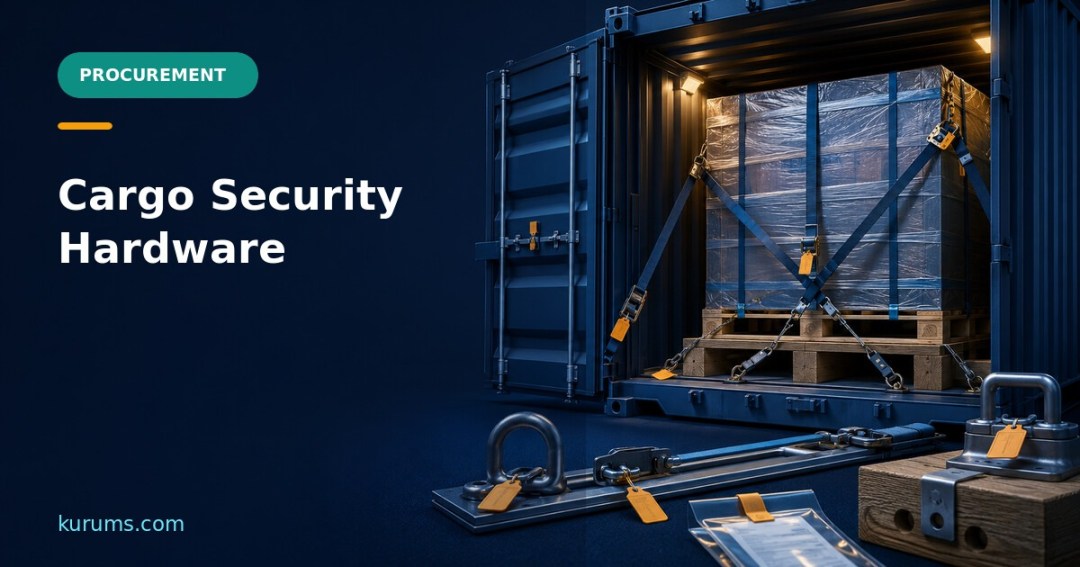
Cargo security is a system of equipment, loading design, inspection and records. A seal proves a condition at a point in time; it does not replace proper stowage, lashing, blocking, bracing or chain-of-custody controls.
- Select seal and securing hardware for the equipment, commodity and route—not only for price.
- Record seal numbers, condition and handoff evidence at every custody change.
- Use bull rings, cleats, side rails, blocking and bracing within an approved load plan.
- Measure broken stowage, damage and seal exceptions as supplier and carrier performance indicators.
A Seal Is Evidence, Not Engineering
The glossary defines a car seal as a numbered metal or plastic seal placed on a container, railcar or other transport unit. It helps show whether an opening occurred after a handoff, but it does not prove that the cargo was correctly loaded or secured. Procurement should buy seals as part of a custody process.
The purchase order should specify seal type, numbering, authorised issuer, application point, photograph, handoff signature and response to a broken or mismatched seal. A seal number must link to the shipment, unit and transport document.
Understand the Hardware
Bull rings are attachment points used to restrain cargo. Cleats are strips or fittings that increase resistance or durability. Bottom side rails are longitudinal structural elements at the base of a container. These components have a capacity, condition and intended use; they are not generic tie-down points.
Ask the carrier or packer to provide a load plan showing the attachment points, lashing angle, blocking, bracing, chocks, friction assumptions and weight distribution. For high-consequence loads, require engineering review and a Cargo Securing Manual reference.
Block Stowage and Broken Stowage
Block stowage prevents unintended movement by placing cargo in a stable block or using suitable void fillers. Broken stowage is the unusable space created by cargo shape, package variation or poor planning. Both affect safety and cost: a moving load can damage itself, while unused space can force a larger unit or additional handling.
Procurement should request a packing layout, cube utilisation, void-filling method and inspection criteria. Do not reward a supplier for a nominally cheap load that leaves unstable voids or creates avoidable broken stowage.
Inspection and Handoff
The loader checks equipment condition, fittings, package integrity, seal application, marks and the physical load. The carrier records receipt and transfer. The consignee checks seal, unit, damage and quantity before opening. Each step should have a simple record, not only a verbal confirmation.
When a seal is broken, stop the normal workflow long enough to establish who broke it, why, when, under whose authority and with what evidence. The commercial response can then be proportionate to the verified risk.
Worked Example: A Mismatched Seal
A container arrives with a seal number one digit different from the booking record. The cargo is urgent, so the receiving team cuts the seal and unloads without photographing the unit or counting packages. A shortage is discovered later and each party claims the discrepancy occurred earlier.
The corrected process uses scan validation at gate-in, seal photographs, two-person verification for exceptions, a controlled opening record and package-count evidence. Procurement includes the process in the carrier and warehouse SLA.
Metrics and Governance
For cargo security hardware, measure both service and evidence quality. Useful indicators include first-pass acceptance, exception rate, response time, unplanned cost, document completeness, damage or discrepancy rate, and the percentage of shipments that follow the approved process. A dashboard should distinguish a supplier failure from a carrier, terminal, broker or internal master-data failure.
Review the metric trend with procurement, logistics, finance, quality and the responsible specialist. Use a monthly exception sample to test whether the control worked in a real transaction, not just whether a field was filled. Repeated exceptions should change the sourcing strategy, contract, lane design or supplier development plan.
Keep the control proportionate to risk. High-value, regulated, time-critical or safety-sensitive cargo needs stronger evidence and faster escalation than a routine shipment. Record the decision owner, approval date, source documents and follow-up action so the next buyer can understand the operating history.
Supplier and Carrier Questions
- Which CAR SEAL or related glossary condition is assumed in your quotation, procedure or service description?
- Which party owns each data field, physical handoff, inspection, document and exception?
- What evidence will be available before release, loading, movement, receipt, invoice approval or claim?
- What changes require advance notice, requalification, a revised price or a new risk decision?
- How will the supplier report incidents, delays, mismatches and corrective actions, and within what response time?
Implementation Sequence
Implement the control in a small, representative lane first. Capture the baseline process, test the required data and evidence, run a real transaction, and review every exception with the people who performed the work. Do not declare the control effective only because a supplier signed a procedure.
After the first three shipments or operating cycles, update the purchase-order clause, work instruction, scorecard and training. Scale the control to other suppliers only when the evidence is repeatable and the owner can explain what happens when the normal path fails.
Common Mistakes to Avoid
- Treating a seal as proof of cargo quality or correct stowage.
- Using bull rings, cleats or side rails beyond their rated or intended function.
- Ignoring broken stowage and void movement in the packing design.
- Allowing a seal discrepancy to be corrected without evidence.
- Buying low-cost hardware without checking compatibility with the equipment and load plan.
Procurement Implementation Checklist
- Specify seal type, issuer, numbering and exception process.
- Require a load plan with hardware, blocking, bracing and void controls.
- Verify fitting condition and equipment suitability before loading.
- Record seals, photos, signatures and package counts at handoffs.
- Define who may open a unit and how the opening is documented.
- Measure seal exceptions, damage, broken stowage and cube utilisation.
Frequently Asked Questions
What does a car seal prove?
It provides evidence of whether an access point appears to have been opened after the seal was applied. It does not prove correct stowage or cargo condition.
What are bull rings used for?
They are securing attachment points used to restrain cargo when the equipment and load plan permit their use.
What is block stowage?
It is a method of arranging cargo in a stable block or using supports so the load does not move unintentionally.
What is broken stowage?
It is unusable space created by cargo shape, package variation or loading layout. It can affect both stability and freight cost.
Who should approve a non-standard securing method?
The carrier, packer or qualified cargo specialist should approve it based on the equipment, cargo and applicable securing requirements; procurement controls the evidence and contract.
Related Kurums Guides
- ABC Inventory Analysis in Procurement
- Shipping Documents for Procurement
- Customs Documents for Procurement
- Freight Contracts and Parties
- Freight Network Design for Procurement
- Container Types and Load Securing
Standards and Authoritative Sources
- IMO — Code of Safe Practice for Cargo Stowage and Securing
- IMO — SOLAS Convention, cargo stowage requirements
- UNECE — CTU Code
- Kurums — Container Types and Load Securing
Glossary terms covered: CAR SEAL, BULL RINGS, BOTTOM SIDE RAILS, CLEAT, BLOCK STOWAGE, BLOCKING OR BRACING, BROKEN STOWAGE
Kurums.com · Procurement, sourcing and business operations
Discover more from Kurums | Business Intelligence
Subscribe to get the latest posts sent to your email.