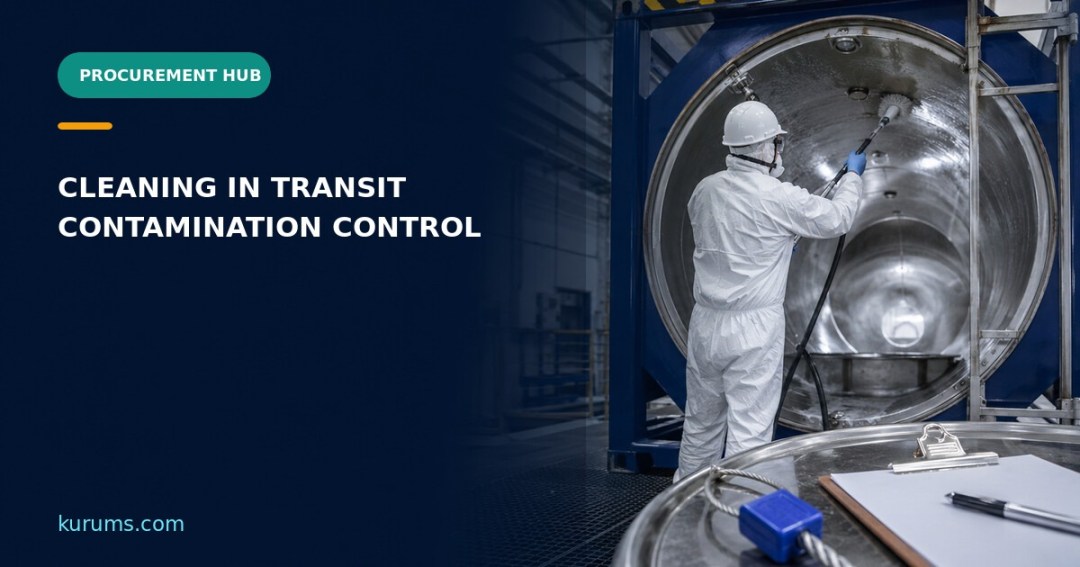
CLEANING IN TRANSIT is the cleaning, reconditioning or related rework performed while goods or transport equipment are moving through the supply chain. Procurement should define the trigger, approved facility, method, chemicals, inspection, residue and waste controls, chain of custody and release evidence before authorising the activity.
- Distinguish routine equipment cleaning from product rework, decontamination and a regulatory sanitation requirement.
- Define contamination hazards, acceptance criteria, authorised facilities, cleaning method, chemicals and waste handling.
- Keep the load, container or tank identified through cleaning, inspection, seal replacement and release.
- Require deviation, residue, temperature, damage and disposal evidence before the next movement or customer release.
Cleaning in Transit Is a Controlled Handoff
The SSDER glossary describes CLEANING IN TRANSIT as cleaning performed while goods are in transit. In practice, the work may involve a tank wash, container clean, spill response, re-packing, removal of contamination, dry-cleaning of equipment or a controlled rework operation at a cross-dock. It changes the condition of the shipment and therefore belongs in procurement and quality controls.
Start by defining what the term means for the lane. Cleaning an empty container before loading is different from cleaning a loaded food product’s outer packaging, and both differ from reworking a defective component. The purchase order, carrier instruction and quality plan should use a clear scope and prohibit unapproved handling.
Assess Contamination and Product Risk
Identify the hazard: previous cargo residue, allergen, chemical, pest, dust, water, fuel, odour, biological contamination, foreign material or a damaged package. Consider whether the product is food, pharmaceutical, medical, chemical, hazardous, temperature-sensitive or merely industrial. The risk assessment determines whether cleaning is allowed, which method is suitable and who may release the goods.
Define acceptance criteria in observable terms: clean and dry, no odour, no visible residue, compatible pH, swab or rinse result, intact packaging, correct temperature and an approved seal. Do not rely on a generic “washed” statement when the product or customer needs a measurable result.
Select an Approved Facility and Method
The provider should identify its facility, equipment, trained personnel, chemicals, water quality, drainage, waste route, calibration and emergency response. For food or animal feed, the applicable sanitary-transport rules and product-specific controls must be checked with the responsible quality and regulatory teams. For hazardous cargo, ensure the method and waste handling comply with the relevant safety requirements.
The instruction should say whether the unit is emptied, isolated, ventilated, cleaned, dried, inspected, re-packed and resealed. A carrier should not substitute a wash facility or chemical without approval. Procurement can prequalify a network of authorised facilities and set response times for an incident at a cross-dock or port.
Preserve Chain of Custody and Release Evidence
Use the container, tank, pallet, lot or seal ID throughout the event. Record arrival condition, photographs, cleaning start and finish, method and chemical batch, operator, inspection result, sample or swab, waste document, new packaging, replacement seal and release authority. Link the record to the transport document and purchase order.
If a result fails, place the goods on hold and define re-clean, rework, destruction, return or customer-notification decisions. A clean unit is not proof that the goods remained in specification; quality, temperature and packaging checks still apply. Retain the evidence for the required customer, regulatory and insurance period.
Worked Example: Residue at a Cross-Dock
A tank container arrives at a cross-dock with a visible residue from the previous load. The carrier proposes a nearby wash, but the facility cannot provide the chemical certificate or a dry-and-clean inspection record. The buyer authorises the work to protect the schedule, and the next customer rejects the load because of odour.
The corrected contract names approved wash facilities, accepted chemicals, inspection and release criteria, seal controls and a no-substitution rule. The shipment remains on hold until the authorised operator supplies the record. Procurement tracks cleaning events, failed inspections, delay cost and customer complaints by facility and carrier.
Metrics and Governance
For cleaning in transit procurement controls, measure both service and evidence quality. Useful indicators include first-pass acceptance, exception rate, response time, unplanned cost, document completeness, damage or discrepancy rate, and the percentage of shipments that follow the approved process. A dashboard should distinguish a supplier failure from a carrier, terminal, broker or internal master-data failure.
Review the metric trend with procurement, logistics, finance, quality and the responsible specialist. Use a monthly exception sample to test whether the control worked in a real transaction, not just whether a field was filled. Repeated exceptions should change the sourcing strategy, contract, lane design or supplier development plan.
Keep the control proportionate to risk. High-value, regulated, time-critical or safety-sensitive cargo needs stronger evidence and faster escalation than a routine shipment. Record the decision owner, approval date, source documents and follow-up action so the next buyer can understand the operating history.
Supplier and Carrier Questions
- Which CLEANING IN TRANSIT or related glossary condition is assumed in your quotation, procedure or service description?
- Which party owns each data field, physical handoff, inspection, document and exception?
- What evidence will be available before release, loading, movement, receipt, invoice approval or claim?
- What changes require advance notice, requalification, a revised price or a new risk decision?
- How will the supplier report incidents, delays, mismatches and corrective actions, and within what response time?
Implementation Sequence
Implement the control in a small, representative lane first. Capture the baseline process, test the required data and evidence, run a real transaction, and review every exception with the people who performed the work. Do not declare the control effective only because a supplier signed a procedure.
After the first three shipments or operating cycles, update the purchase-order clause, work instruction, scorecard and training. Scale the control to other suppliers only when the evidence is repeatable and the owner can explain what happens when the normal path fails.
Common Mistakes to Avoid
- Using cleaning in transit as a vague synonym for any cross-dock handling or rework.
- Choosing a facility based only on proximity or price without method, waste and inspection evidence.
- Failing to identify previous cargo, allergen, chemical, odour and water risks.
- Breaking the chain of custody when a container, pallet, seal or lot is reassigned.
- Releasing the shipment on a wash ticket without quality, packaging, temperature and residue checks.
Procurement Implementation Checklist
- Define the cleaning, decontamination, rework and sanitation scope for the lane.
- Assess cargo, previous-load, chemical, allergen, temperature and waste hazards.
- Prequalify facilities, methods, operators, chemicals and emergency response.
- Set inspection, sampling, drying, packaging, seal and release criteria.
- Link equipment, lot, transport, cleaning, waste and deviation records.
- Trend failed cleans, holds, delays, complaints, damage and facility performance.
Frequently Asked Questions
What is cleaning in transit?
It is cleaning, reconditioning or related controlled rework performed while goods or transport equipment move through the supply chain.
Is a wash certificate enough to release a load?
Not always. Confirm the method, facility, equipment ID, inspection result, residue or sample criteria, packaging, seal and responsible release authority.
Who approves the cleaning method?
The product owner and quality or regulatory authority should approve the method; the carrier or facility performs it under the agreed instruction.
Can a carrier substitute a cleaning facility?
Only under the contract’s change process, with equivalent approval, capability, evidence and waste controls.
What if contamination cannot be removed?
Hold the goods and follow the approved decision tree for re-cleaning, rework, destruction, return, insurance and customer notification.
Related Kurums Guides
- Cargo Manifest Controls
- Billed Weight and VGM Controls
- Shipping Documents for Procurement
- Customs Documents for Procurement
- Container Types and Load Securing
- Freight Contracts and Parties
Standards and Authoritative Sources
- IMO — CTU Code
- U.S. FDA — Sanitary Transportation of Human and Animal Food
- FIATA — Resources
- IMO — Cargo Stowage and Securing Code
Glossary terms covered: CLEANING IN TRANSIT, cleaning, rework, contamination, sanitary transport, chain of custody, release
Kurums.com · Procurement, sourcing and business operations
Discover more from Kurums | Business Intelligence
Subscribe to get the latest posts sent to your email.