
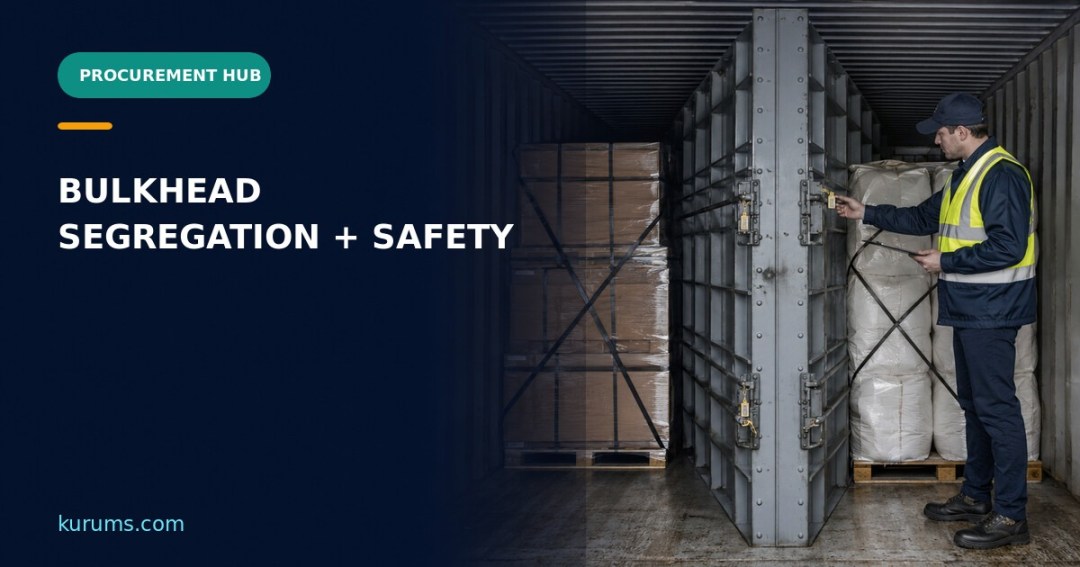
A BULKHEAD is a partition or structural separation in a vessel, container, railcar or other transport unit. Procurement should define whether it is a load divider, pressure boundary, fire or contamination barrier, then verify strength, compatibility, access, inspection and maintenance instead of treating every bulkhead as interchangeable.
- State the bulkhead's function: separation, pressure, fire, stability, contamination or cargo restraint.
- Match material, rating, dimensions, seals, drains, access and load path to the cargo and equipment.
- Control segregation of incompatible products, hazardous materials, temperatures, liquids, odours and residues.
- Require inspection, damage, repair, cleanliness and approval evidence before loading and after a structural change.
Bulkhead Has More Than One Procurement Meaning
The SSDER glossary describes BULKHEAD as a divider in a container, railcar or transport unit that keeps goods separate. In practice, a bulkhead may also be a structural wall, tank partition, fire boundary, pressure boundary or cargo-supporting surface. A sourcing request that says “bulkhead required” is incomplete until the function and load are stated.
The procurement control is to connect the divider to the cargo risk. A pallet partition may protect packages from shifting; a tank bulkhead may control liquid movement; a vessel bulkhead may contribute to strength or watertight integrity. The approval, inspection and maintenance standard will differ for each case.
Define Function, Load and Compatibility
Specify cargo mass, density, liquid head, pressure, temperature, chemical compatibility, impact, vibration, fire exposure, cleaning method and expected load direction. State whether the bulkhead carries load, only separates cargo, or must remain intact for containment. Include dimensions, clearances, fasteners, seals, drains, vents and inspection access.
For mixed cargo, define prohibited adjacency and the required barrier. Food, chemicals, allergens, odorous goods, hazardous materials and temperature-sensitive products may need segregation, isolation or different equipment. A bulkhead cannot correct an incompatible cargo plan if residues, vapour or heat can pass around it.
Connect Bulkheads to Securing and Stability
The bulkhead should be part of the stowage and securing calculation, not a substitute for blocking, bracing, chocks or lashings. Check the connection to the floor, side rails, deck, tank shell or vehicle frame, and confirm that loads will not transfer beyond the design. The CTU Code and CSS Code support a systematic approach to packing and securing.
For marine solid bulk cargoes, the IMSBC Code addresses hazards from improper distribution, loss of stability and cargo reactions. For a liquid or tank application, the relevant tank, dangerous-goods, class or manufacturer requirements may be more specific. Procurement should identify the applicable standard and qualified reviewer before award.
Inspect, Clean and Maintain the Boundary
At loading, inspect the bulkhead for cracks, deformation, corrosion, loose fasteners, damaged seals, residue, blocked drains and unauthorised holes. Record the equipment ID, condition, photographs and acceptance. After unloading or cleaning, check whether impact, chemical exposure or pressure changed the condition before the unit is offered for another load.
Set defect categories and stop-use criteria. A minor cosmetic mark may be recorded, while a leak, bent support, failed seal or compromised fire boundary requires quarantine and technical review. The contract should allocate inspection, repair, replacement, cleaning, downtime and evidence responsibility.
Worked Example: A Divider That Is Not a Pressure Wall
A carrier proposes a removable metal bulkhead to separate two liquid products in a tank unit. The buyer assumes it can resist liquid movement, but the design is only a package divider and has no approved pressure rating or compatible seal. The load is delayed while the carrier finds a different unit.
The corrected specification distinguishes tank compartments, cargo compatibility, pressure, venting, cleaning and certification. The supplier provides a drawing and inspection record; the carrier confirms the equipment; and procurement rejects substitutions that preserve visual separation but not containment or safety performance.
Metrics and Governance
For bulkhead cargo segregation procurement controls, measure both service and evidence quality. Useful indicators include first-pass acceptance, exception rate, response time, unplanned cost, document completeness, damage or discrepancy rate, and the percentage of shipments that follow the approved process. A dashboard should distinguish a supplier failure from a carrier, terminal, broker or internal master-data failure.
Review the metric trend with procurement, logistics, finance, quality and the responsible specialist. Use a monthly exception sample to test whether the control worked in a real transaction, not just whether a field was filled. Repeated exceptions should change the sourcing strategy, contract, lane design or supplier development plan.
Keep the control proportionate to risk. High-value, regulated, time-critical or safety-sensitive cargo needs stronger evidence and faster escalation than a routine shipment. Record the decision owner, approval date, source documents and follow-up action so the next buyer can understand the operating history.
Supplier and Carrier Questions
- Which BULKHEAD or related glossary condition is assumed in your quotation, procedure or service description?
- Which party owns each data field, physical handoff, inspection, document and exception?
- What evidence will be available before release, loading, movement, receipt, invoice approval or claim?
- What changes require advance notice, requalification, a revised price or a new risk decision?
- How will the supplier report incidents, delays, mismatches and corrective actions, and within what response time?
Implementation Sequence
Implement the control in a small, representative lane first. Capture the baseline process, test the required data and evidence, run a real transaction, and review every exception with the people who performed the work. Do not declare the control effective only because a supplier signed a procedure.
After the first three shipments or operating cycles, update the purchase-order clause, work instruction, scorecard and training. Scale the control to other suppliers only when the evidence is repeatable and the owner can explain what happens when the normal path fails.
Common Mistakes to Avoid
- Treating every bulkhead as a simple wooden or metal divider.
- Ignoring pressure, liquid movement, fire, chemical, temperature and residue compatibility.
- Using a bulkhead instead of a complete stowage, blocking, bracing and lashing plan.
- Failing to inspect seals, drains, fasteners, corrosion, deformation and unauthorised openings.
- Accepting a visually similar substitute without checking rating, certification and load path.
Procurement Implementation Checklist
- Define bulkhead function, cargo, load direction, pressure and compatibility.
- Specify material, dimensions, seals, drains, vents, fasteners and access.
- Identify applicable CTU, CSS, IMSBC, dangerous-goods or equipment standards.
- Integrate bulkhead with stowage, blocking, bracing, friction and lashing.
- Inspect condition, cleanliness, seals, repairs and equipment ID at each cycle.
- Track failures, contamination, damage, downtime, repairs and substitute equipment.
Frequently Asked Questions
What is a bulkhead?
It is a partition or structural separation in a transport unit, vessel, tank or vehicle used to divide cargo or provide a defined boundary.
Is a bulkhead a load-securing device?
It may contribute to restraint, but it is not automatically a substitute for blocking, bracing, friction control or lashings.
Can a bulkhead contain liquid pressure?
Only if it is designed, rated, sealed and approved for that pressure and product. A package divider cannot be assumed to be a tank boundary.
Why does compatibility matter?
Products can react, contaminate, transfer odour, create vapour or damage the divider. Segregation must address the actual hazard and path of exposure.
What evidence should procurement request?
A drawing or specification, rating, material and seal information, applicable certification, inspection record, cleaning evidence and substitution approval.
Related Kurums Guides
- Center of Gravity Controls
- Cargo Manifest Controls
- Shipping Documents for Procurement
- Freight Measurement and Pricing
- Cargo Insurance and Claims
- Freight Contracts and Parties
Standards and Authoritative Sources
Glossary terms covered: BULKHEAD, segregation, divider, structural boundary, pressure, compatibility, inspection
Kurums.com · Procurement, sourcing and business operations
Discover more from Kurums | Business Intelligence
Subscribe to get the latest posts sent to your email.