
Description
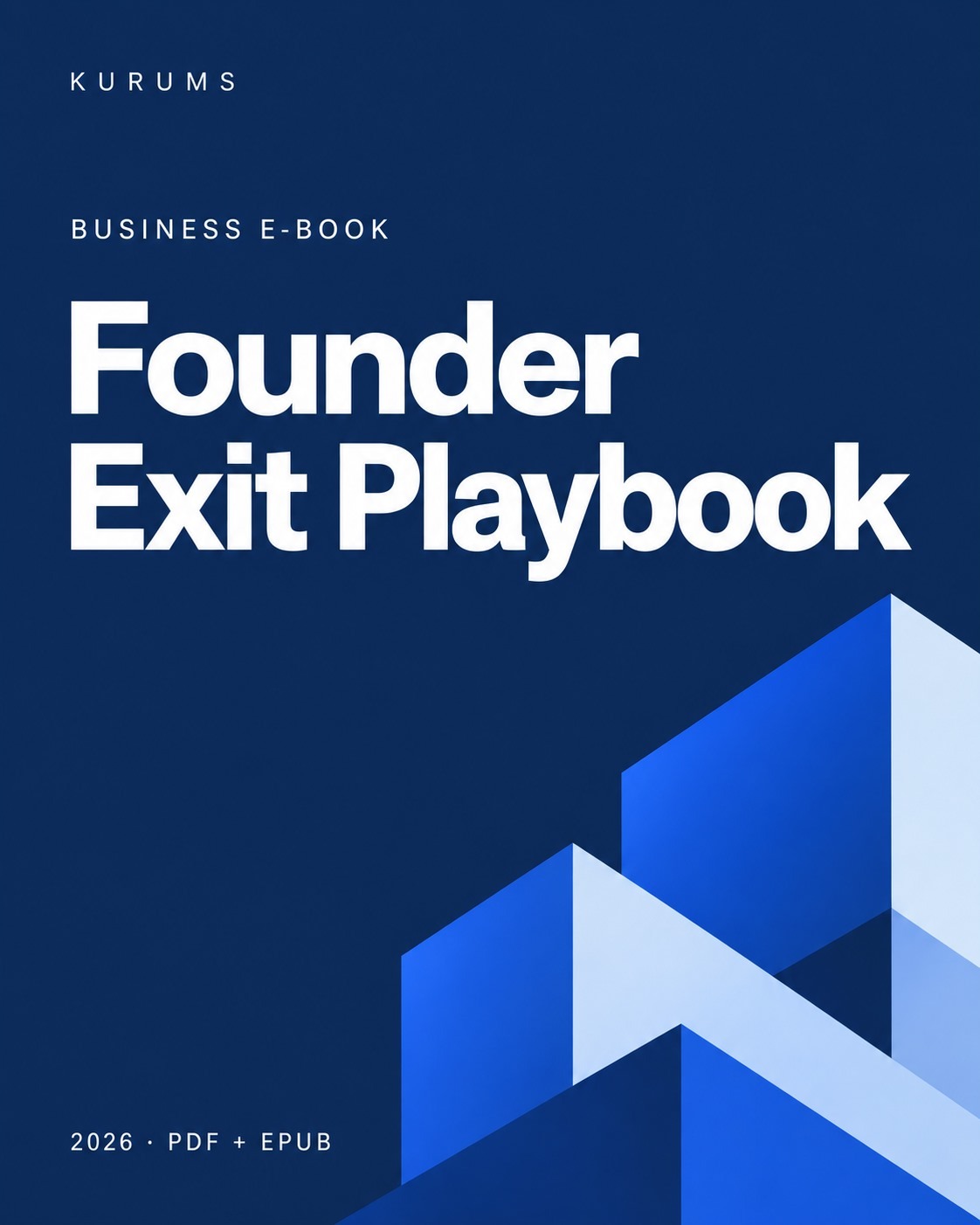
The 2026 edition of the Kurums Founder Exit Playbook, written from the founder’s side of the table: when to start, which exit route fits your company, what it is worth to each kind of buyer, what the diligence team will find in your data room, which clauses in the purchase agreement quietly move money, and how a headline price becomes the amount that actually reaches your bank account after preferences, escrow, earnouts, fees and tax. Eleven chapters, 33 real, dated and sourced exit cases, about 61,000 words and 206 pages, with figures as of October 2026.
What’s inside
- Chapter 1 – the map. The eight routes compared on timeline, price, founder control and certainty of close; the 2025-26 exit market in numbers; readiness signals and how to build an 18-24 month exit timeline. Cases: WhatsApp, Mojang, Spotify.
- Chapter 2 – valuation. ARR and EBITDA multiples, precedent transactions, DCF, the strategic premium over financial buyers, 2025-26 benchmarks by growth band, and a worked waterfall from a $100M headline to the founder’s net. Cases: Supercell, WeWork, Slack.
- Chapter 3 – due diligence and legal preparation. The data-room checklist by workstream, reverse diligence, LOI and exclusivity, SPA anatomy (reps, indemnity caps, escrow versus RWI, MAC, earnouts, non-competes, 280G), antitrust and FDI screening, and the deal-killers buyers find. Cases: HP/Autonomy, Adobe/Figma, Twitter.
- Chapter 4 – strategic sale. Why corporates pay the premium, running a banker-led process, deal structures and retention, and the shift to licence-and-hire deals. Cases: Instagram, Flipkart, Paystack.
- Chapter 5 – private equity. Growth equity, buyouts and take-privates; how sponsors price; the rollover “second bite”; leverage and life as a sponsor-backed CEO. Cases: Dell, Zendesk, Visma.
- Chapter 6 – merger. Exchange ratios, mergers of equals, governance and who really ends up in charge. Cases: GoTo, Just Eat Takeaway, Wolt/DoorDash.
- Chapter 7 – acqui-hire. Per-head pricing, who gets what between investors, founders and staff, and the 2024-26 licensing deals. Cases: FriendFeed, Inflection, Windsurf.
- Chapter 8 – secondary sale. Founder secondaries, tender offers, pricing versus the last round, ROFR politics and tax. Cases: Stripe, Revolut, OpenAI.
- Chapter 9 – IPO, direct listing and SPAC. Readiness, process, costs, lock-ups, dual-class control and the 2025-26 window. Cases: Airbnb, Klarna, Grab.
- Chapter 10 – MBO, ESOP and EOT. Management buyouts, founder-led investor buyouts, US ESOPs and UK employee ownership trusts. Cases: Wistia, Richer Sounds, Bob’s Red Mill.
- Chapter 11 – wind-down and asset sale. Deciding, the payment waterfall, ABC versus bankruptcy, director duties on insolvency and the orderly shutdown checklist. Cases: Quibi, Convoy, Jawbone.
Who it is for
Founders and co-founders from seed to late stage, founder-CEOs preparing a process, CFOs and finance leads running a data room, and early employees or angels trying to understand what a term sheet means for their own shares.
Format
Instant download after checkout: PDF (6.31 x 9.44 in, 206 pages) and EPUB (zipped). Unlimited downloads, no expiry. General information, not legal, tax or investment advice; rules vary by jurisdiction. The online series remains free at kurums.com/founder-exit-playbook/; the book adds an introduction, a continuous print layout and a consolidated source appendix.
Discover more from Kurums | Business Intelligence
Subscribe to get the latest posts sent to your email.
Reviews
There are no reviews yet.