
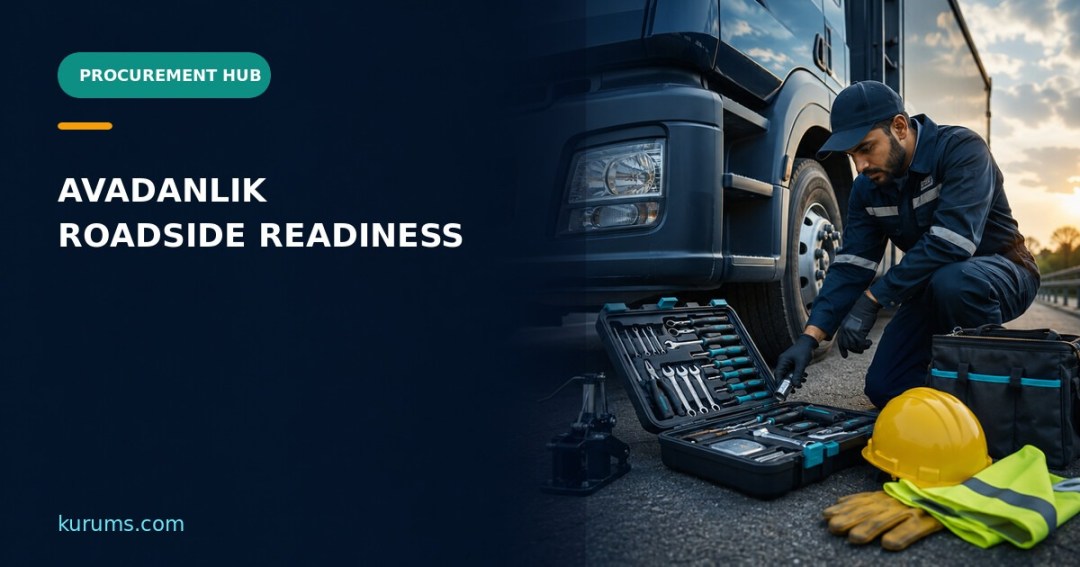
AVADANLIK is the vehicle equipment or tool kit carried for operational needs. In transport procurement, it should be specified as a controlled readiness package: required tools, safety equipment, condition, storage, inspection, replenishment and evidence. It supports recovery but does not replace a compliant inspection, repair and maintenance program.
- Define a risk-based tool and emergency-equipment list by vehicle, cargo and route.
- Separate driver-accessible tools from regulated safety equipment and specialist repair capability.
- Require pre-trip checks, replenishment, defect escalation and maintenance records.
- Make roadside events, substitutions and recovery time visible in the carrier scorecard.
Avadanlık Is a Readiness Package
The SSDER glossary uses AVADANLIK for the tools and equipment carried on a vehicle. A procurement specification should translate that broad term into a list matched to vehicle type, cargo, route, weather and customer site. A tractor-trailer carrying high-value machinery may need different equipment from a local van or a tanker.
The list can include jacks, wheel equipment, basic tools, lighting, warning devices, spill response, personal protective equipment, securing aids and communication equipment. Mark which items are mandatory, optional, disposable, calibrated, sealed or restricted to trained personnel.
Connect the Kit to the Maintenance Program
A tool kit cannot make an unroadworthy vehicle safe. Require the carrier to maintain inspection, repair and maintenance records, defect reporting, preventive schedules and qualified technicians. The U.S. FMCSA maintenance rule illustrates the principle that commercial vehicles must be systematically inspected, repaired and maintained; the applicable local law governs the lane.
The buyer should verify that the vehicle can be stopped when a critical defect exists. A driver should not be pressured to continue because a replacement vehicle or roadside contractor is expensive. Contractual availability, response time and recovery authority must support the safety decision.
Control Inventory and Condition
Create a kit ID or vehicle checklist with item, quantity, condition, expiry, calibration, seal and last inspection. Store heavy or sharp tools so they cannot become cargo or cab hazards. After an incident, replace used consumables and document who approved the vehicle’s return to service.
Spot checks should reconcile the physical kit, the list and the maintenance system. A missing warning triangle, damaged strap or expired extinguisher is not a minor stock variance if it changes roadside safety. Set a stop-use or dispatch-hold rule for critical omissions.
Roadside Recovery and Cost Controls
Define who may call roadside assistance, which providers are approved, what evidence starts chargeability and how waiting, towing, repair, replacement vehicle and customer delay are recorded. The carrier should provide an incident timeline, location, defect, action, parts, photographs and release status.
Separate normal maintenance from supplier-caused failure, cargo-related damage, road hazard and force majeure. Procurement can then negotiate a fair recovery rule and trend failure modes. A low line-haul price is not attractive if poor readiness causes repeated premium recovery moves.
Worked Example: The Missing Wheel Tool
A truck suffers a tyre problem on a night delivery. The driver has no compatible wheel tool, the roadside contractor arrives after the receiving window and the carrier invoices emergency handling. The buyer learns that the tool was removed from another vehicle and never replenished.
The corrected contract defines vehicle-specific kit contents, pre-trip inspection, replacement responsibility, incident notice and recovery-time targets. The carrier’s audit shows the kit seal and checklist before dispatch. The buyer can distinguish a road hazard from a preventable readiness failure.
Metrics and Governance
For avadanlık vehicle maintenance procurement controls, measure both service and evidence quality. Useful indicators include first-pass acceptance, exception rate, response time, unplanned cost, document completeness, damage or discrepancy rate, and the percentage of shipments that follow the approved process. A dashboard should distinguish a supplier failure from a carrier, terminal, broker or internal master-data failure.
Review the metric trend with procurement, logistics, finance, quality and the responsible specialist. Use a monthly exception sample to test whether the control worked in a real transaction, not just whether a field was filled. Repeated exceptions should change the sourcing strategy, contract, lane design or supplier development plan.
Keep the control proportionate to risk. High-value, regulated, time-critical or safety-sensitive cargo needs stronger evidence and faster escalation than a routine shipment. Record the decision owner, approval date, source documents and follow-up action so the next buyer can understand the operating history.
Supplier and Carrier Questions
- Which AVADANLIK or related glossary condition is assumed in your quotation, procedure or service description?
- Which party owns each data field, physical handoff, inspection, document and exception?
- What evidence will be available before release, loading, movement, receipt, invoice approval or claim?
- What changes require advance notice, requalification, a revised price or a new risk decision?
- How will the supplier report incidents, delays, mismatches and corrective actions, and within what response time?
Implementation Sequence
Implement the control in a small, representative lane first. Capture the baseline process, test the required data and evidence, run a real transaction, and review every exception with the people who performed the work. Do not declare the control effective only because a supplier signed a procedure.
After the first three shipments or operating cycles, update the purchase-order clause, work instruction, scorecard and training. Scale the control to other suppliers only when the evidence is repeatable and the owner can explain what happens when the normal path fails.
Common Mistakes to Avoid
- Treating a generic tool list as suitable for every vehicle and route.
- Using roadside tools as a substitute for legally required inspection and maintenance.
- Failing to replace consumed, expired, damaged or missing equipment.
- Allowing a driver to continue with a critical defect because recovery is inconvenient.
- Accepting recovery invoices without a defect, timeline, provider and release record.
Procurement Implementation Checklist
- Define vehicle-, cargo- and route-specific tool and emergency-equipment contents.
- Mark mandatory, calibrated, expiry-controlled and trained-user items.
- Link kit inspection to pre-trip, maintenance and dispatch-release records.
- Set critical omission, defect, replacement and replenishment rules.
- Define roadside provider, authority, evidence, response and cost allocation.
- Trend failures, recovery time, premium cost, repeat defects and readiness audits.
Frequently Asked Questions
What does avadanlık mean in transport?
It refers to the tools or equipment carried with a vehicle for operational, safety or roadside needs.
Does a tool kit prove a vehicle is compliant?
No. It supports readiness but does not replace the applicable inspection, repair, maintenance, driver and safety obligations.
Who owns kit replenishment?
The carrier or vehicle operator should own it unless the contract expressly assigns a specific item to the buyer or driver.
What should happen when a critical item is missing?
Apply the agreed dispatch-hold or replacement rule, record the exception and release only after the responsible owner verifies readiness.
How should roadside cost be allocated?
Use the documented cause, response timeline, contract rate and evidence to separate normal maintenance, preventable readiness failures and external events.
Related Kurums Guides
- Cargo Manifest Controls
- Aggregate Shipment Controls
- Ambient Temperature Controls
- Center of Gravity Controls
- Container Types and Load Securing
- Freight Network Design
Standards and Authoritative Sources
- FMCSA — 49 CFR § 396.3 Inspection, Repair and Maintenance
- FMCSA — Cargo Securement Rules
- CVSA — Commercial Vehicle Safety Alliance
- OSHA — Motor Vehicle Safety
Glossary terms covered: AVADANLIK, vehicle tool kit, roadside readiness, maintenance, inspection, repair, recovery
Kurums.com · Procurement, sourcing and business operations
Discover more from Kurums | Business Intelligence
Subscribe to get the latest posts sent to your email.