
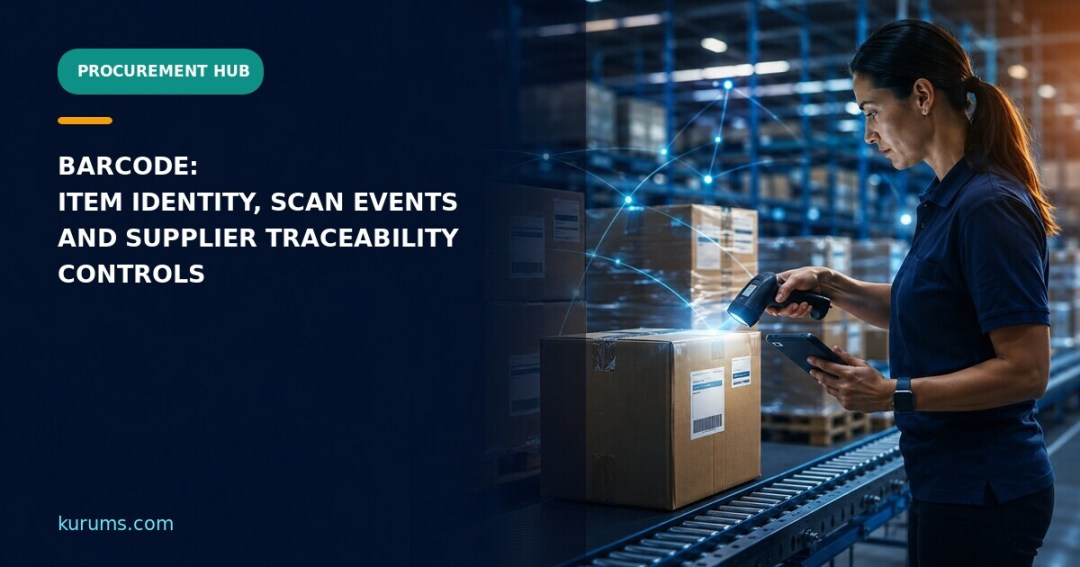
A BARCODE is a machine-readable carrier for an identifier or data element; it is not automatically a complete traceability system. Procurement should specify the identifier owner, symbology, data fields, packaging level, print quality, scan events, supplier validation and the fallback process when a label is missing or wrong.
- Choose the identifier and data structure before asking a supplier simply to “add a barcode.”
- Separate item, package, pallet, location, lot, serial, expiry and shipment identifiers.
- Test labels at the real receiving, warehouse, production and carrier scan points.
- Treat duplicate, unreadable, reused or unauthorised codes as controlled exceptions.
A Barcode Is an Identity Control
The SSDER glossary uses barcode for a machine-readable product mark. In procurement, the value comes from the identifier behind the bars or matrix and the event recorded when it is scanned. A visually clear label can still identify the wrong item, omit the lot or collide with another supplier’s code.
Start with the business question: identify a trade item, logistic unit, location, asset, lot, serial, expiry or shipment. Define who allocates the identifier, where the source of truth sits, and how the code is linked to the purchase order, packing list, transport record and receipt.
Specify Symbology and Data at Each Level
A product label, inner pack, case, pallet and shipment may need different identifiers. GS1 systems provide keys such as GTIN, GLN and SSCC, while the chosen barcode or two-dimensional symbol carries the required data under the applicable specification. Do not put an uncontrolled free-text description in place of an approved key.
The supplier specification should state symbol type, dimensions, quiet zone, contrast, human-readable text, placement, material, environmental resistance and data encoding. Include lot, serial, expiry or quantity only where the process can capture and use them consistently.
Validate Labels Before and After Award
Request a sample label and test it with the scanners, lighting, conveyor speed, mobile device and label material used at the receiving or production site. Check check digits, character set, duplicate detection, master-data match and the behaviour when a field is missing.
After award, validate the first production run and a periodic sample. Suppliers should report printer, artwork, software or packaging-line changes before they affect a shipment. A change to label content can alter customs, safety, recall or inventory transactions even when the physical item is unchanged.
Connect Scan Events to Traceability
A scan event should answer who, what, when, where and why: receive, move, pick, pack, load, ship, install, consume, return or quarantine. Store the operator or system, location, device, event time and transaction outcome. If a scan fails, the manual fallback must preserve the same identity and reason.
Use exception analytics to find supplier, item, plant or packaging patterns. Measures include first-pass scan rate, duplicate rate, manual-entry rate, unreadable labels, lot or serial completeness and time to correct. The goal is a trusted flow of identity, not a higher count of labels printed.
Worked Example: A Case Label Collision
Two suppliers print the same internal case number on different parts. Receiving scans the first shipment correctly, but the second overwrites the inventory record and a later recall cannot identify which lot was consumed. Both labels look readable and the invoice totals are correct.
The corrected requirement assigns a globally unique or governed key, validates the supplier prefix and check digit, and links case, lot, serial and purchase-order data at receipt. A duplicate scan blocks the transaction and opens a supplier correction before the material enters production.
Metrics and Governance
For barcode procurement traceability controls, measure both service and evidence quality. Useful indicators include first-pass acceptance, exception rate, response time, unplanned cost, document completeness, damage or discrepancy rate, and the percentage of shipments that follow the approved process. A dashboard should distinguish a supplier failure from a carrier, terminal, broker or internal master-data failure.
Review the metric trend with procurement, logistics, finance, quality and the responsible specialist. Use a monthly exception sample to test whether the control worked in a real transaction, not just whether a field was filled. Repeated exceptions should change the sourcing strategy, contract, lane design or supplier development plan.
Keep the control proportionate to risk. High-value, regulated, time-critical or safety-sensitive cargo needs stronger evidence and faster escalation than a routine shipment. Record the decision owner, approval date, source documents and follow-up action so the next buyer can understand the operating history.
Supplier and Carrier Questions
- Which BARKOD or related glossary condition is assumed in your quotation, procedure or service description?
- Which party owns each data field, physical handoff, inspection, document and exception?
- What evidence will be available before release, loading, movement, receipt, invoice approval or claim?
- What changes require advance notice, requalification, a revised price or a new risk decision?
- How will the supplier report incidents, delays, mismatches and corrective actions, and within what response time?
Implementation Sequence
Implement the control in a small, representative lane first. Capture the baseline process, test the required data and evidence, run a real transaction, and review every exception with the people who performed the work. Do not declare the control effective only because a supplier signed a procedure.
After the first three shipments or operating cycles, update the purchase-order clause, work instruction, scorecard and training. Scale the control to other suppliers only when the evidence is repeatable and the owner can explain what happens when the normal path fails.
Common Mistakes to Avoid
- Treating a barcode image as traceability without an identifier owner and event model.
- Reusing internal case or pallet numbers across suppliers, plants or time periods.
- Specifying symbology but not data fields, packaging level, placement or environmental resistance.
- Skipping scanner, check-digit, duplicate and manual-fallback testing.
- Changing label artwork or software without assessing inventory, recall, customs and receiving impact.
Procurement Implementation Checklist
- Define the identity question, key owner, source of truth and packaging level.
- Specify symbology, encoded fields, human-readable text, size, placement and durability.
- Validate sample labels with real scanners, lighting, devices and workflows.
- Link item, package, lot, serial, expiry, shipment and location events.
- Block duplicates and preserve controlled manual fallback and correction evidence.
- Measure scan yield, manual entry, duplicate, unreadable and supplier-change rates.
Frequently Asked Questions
What is a barcode?
It is a machine-readable representation of an identifier or data element. The surrounding master data and scan events create the traceability process.
What is GTIN?
GTIN is a GS1 identification key used to identify trade items. The correct key and allocation rules depend on the product and organisation.
Should every package have a different barcode?
It depends on the packaging level and whether the process needs item, case, pallet, lot or serial identity. Define the requirement before selecting the symbol.
Can a barcode replace a packing list?
No. It can support automated identification, but the commercial and transport documents and required data still need to be controlled.
What should happen when a barcode will not scan?
Use the approved fallback, preserve the identity and reason, quarantine or control the transaction as required, and correct the root cause.
Related Kurums Guides
- ABC Inventory Analysis
- Shipping Documents
- Cargo Manifest Controls
- Commercial Invoice Controls
- Advising Bank Controls
- Cash in Advance Controls
Standards and Authoritative Sources
Glossary terms covered: BARKOD, BARCODE, GTIN, GLN, SSCC, lot, serial, traceability
Kurums.com · Procurement, sourcing and business operations
Discover more from Kurums | Business Intelligence
Subscribe to get the latest posts sent to your email.