
HR Psychology: the human side of every people decision
Hiring, pay rises, promotions, reviews, discipline and exits are processes on paper and experiences in practice. Thirty research-based guides on how people actually react at each of those moments, and what managers and HR teams can do about it.
The same decision, seen from the other chair
HR psychology is the study of how people think, feel and behave at the moments an organisation decides something about them. A pay review is a budget exercise to the employer and an answer to the question “what do they think of me?” to the employee. A promotion fills a vacancy and also ranks colleagues in public. A dismissal ends a contract and is remembered, by the person and by everyone watching, for years.
The research on these moments is extensive and often surprising. Structured interviews predict performance about twice as well as conversations. More than a third of feedback interventions make performance worse. Most of the variation in performance ratings comes from the rater. People who are dismissed with dignity very rarely sue. Each guide in this hub starts from a realistic situation, sets out what the evidence shows and ends with words a manager can actually use.
How people get chosen
Interviewers decide early and justify later. These guides cover the biases at work in the room, why structure beats instinct, what rejection and offers feel like from the candidate’s side, and what “culture fit” usually measures.
The AI Hiring Arms Race: Why Trust Is Collapsing on Both Sides
Candidates use AI to apply in bulk and employers use AI to screen and interview them. This guide explains why that arms race destroys hiring signals, erodes trust in both directions, and what managers can do instead.
Culture Fit or Comfort Fit? The Psychology of Hiring People Like Us
Fit with an organisation’s values does predict satisfaction and retention. But in most interviews “fit” means “like me”. This guide separates the two and shows how to test for the real thing.
Job Offer Psychology: Why Good Candidates Say No
Candidates do not weigh offers like spreadsheets. They compare against a reference point, feel losses more than gains and read meaning into every delay. Here is how to make offers people accept.
The Psychology of Rejecting Candidates Without Losing Them
Most people you interview will not get the job. How they are told shapes what they say about you, whether they reapply and whether they stay customers.
Why Structured Interviews Beat Gut Feeling: The Evidence
Structured interviews roughly double the predictive power of a casual conversation. This guide explains the research, why managers resist it and how to build a structured interview in an afternoon.
What a raise really says
Pay is read as a message about worth. People compare with colleagues and expectations, adapt within months, and react to how the news is delivered. Covers raises, refusals, transparency, bonuses and negotiation.
Merit Differentiation Psychology: Who Pays When the 2027 Pay Pie Stops Growing
With 2027 pay budgets stuck around 3.5% and ‘peanut butter’ raises falling out of favour, the solid middle and long-serving staff absorb the cost of rewarding stars and new hires. Here is how they read it, and what managers can do.
Salary Negotiation Psychology for Managers: Anchors, Counteroffers and Who Never Asks
Pay set by negotiation rewards the people most willing to ask, not the people who contribute most. A manager’s guide to the psychology of pay bargaining and how to keep it fair.
Bonus Psychology: When Incentives Backfire
Pay for performance works well for simple, measurable tasks and unpredictably for everything else. A research-based guide to when bonuses motivate and when they do damage.
Pay Transparency Psychology: What Happens When Everyone Knows
Pay transparency laws are spreading. The research shows that knowing what colleagues earn changes satisfaction, effort and bargaining in ways that are not always the ones employers expect.
How to Say No to a Raise Request Without Losing the Employee
When someone asks for more money and the answer is no, what they hear is rarely about money. A guide to declining a raise request in a way that keeps trust, with scripts.
Who moves up, and who is left
Promotion is a public ranking. These guides look at the colleague who was passed over, why star performers struggle as managers, the identity shift of a first management job, bias in “potential” ratings and the insider-versus-outsider choice.
Conscious Unbossing: Why Capable People Turn Down the Promotion
More capable people are declining management roles. The psychology suggests most are not short of ambition but are reading a flatter, heavier manager job accurately, and organisations can respond by redesigning it.
Internal Promotion vs External Hire: The Psychology on Both Sides
Organisations routinely pay outsiders more for the same job while underrating the people they already have. What the research says, and how to choose well.

Promotion Bias: Potential, Proximity and Who Gets Seen
Promotion decisions rest on judgments about potential and on who decision-makers happen to see. Both are biased in ways the research has measured. Here is how to correct for them.
From Peer to Boss: The Identity Shift of First-Time Managers
New managers do not struggle because they lack techniques. They struggle because the job requires them to become someone different. A guide to the psychology of the first year.
The Peter Principle Is Real: Why Best Performers Become Weak Managers
Promoting the best individual performer is the most common promotion rule and one of the least reliable. The evidence for the Peter Principle and what to do instead.
Why reviews so often misfire
Feedback helps on average and harms surprisingly often. Covers what makes feedback usable, what a rating actually measures, the effects of ranking people against each other, psychological safety and the limits of self-assessment.
Who Wrote My Review? The Psychology of AI-Assisted Performance Feedback
Most managers now use AI somewhere in the performance review, yet few employees are told. Here is why the same feedback lands worse when people think a machine wrote it, and how to use AI without hollowing out the review.
Self-Assessment Psychology: Overconfidence, Impostor Feelings and Self-Ratings
Self-ratings agree only modestly with managers’ ratings, and the gaps are systematic. What research shows about overconfidence, impostor feelings and self-assessments in reviews.
Psychological Safety at Work: What It Is and What It Is Not
Psychological safety is often mistaken for comfort or niceness. It is the shared belief that you can raise a problem, ask a question or admit a mistake without being punished for it.
Forced Ranking Psychology: What Stack Ranking Does to a Team
Ranking employees against each other on a fixed curve changes how they behave toward one another. The evidence on stack ranking and the alternatives that keep standards high.
Performance Review Bias: What a Rating Really Measures
A performance rating tells you a great deal about the manager who gave it. Research on rater bias, the patterns to look for and how to make reviews more accurate.
When something has gone wrong
Sanctions suppress behaviour and teach concealment unless the process is seen as fair. Covers discipline that changes conduct, organisational justice, hard conversations, performance improvement plans and conflict between colleagues.
Bossware Psychology: Why Employee Monitoring Backfires as Discipline
Monitoring software produces numbers that look like evidence, and those numbers are ending up in disciplinary files. Here is what the research says surveillance does to trust and behaviour, and how to use monitoring data without causing conflict.
Workplace Conflict Psychology: Attribution Errors and Mediation
Conflict between colleagues usually begins when one person explains another’s behaviour by their character instead of their situation. A guide to the psychology and to mediating a dispute.
The Psychology of a PIP: Rescue Plan or Exit Ramp?
A performance improvement plan is meant to help someone improve. Most recipients experience it as a formal warning that the end is near. The psychology on both sides, and how to be honest about it.
Difficult Conversations at Work: The Psychology of Threat and Defensiveness
A difficult conversation is difficult because it threatens status, security and identity on both sides. Understanding that is the first step to having one that works.

Organizational Justice: Why Fair Process Matters More Than the Outcome
Decades of research show that employees judge decisions by how they were made and communicated as much as by what was decided. A practical guide to organisational justice.
How people leave, and what stays behind
Most resignations start with a specific event. Layoffs change the people who remain. Covers why employees quit, survivor syndrome, the termination conversation, exit interviews and the unwritten contract behind them all.
Forever Layoffs: The Psychology of Waiting for the Next Cut
Rolling layoffs and AI restructuring keep whole workforces waiting for the next cut. Here is why anticipatory job insecurity can hurt more than the cut itself, and what managers can do about it.
The Psychological Contract: The Unwritten Deal Behind Every Resignation
Alongside every employment contract there is an unwritten one: what each side believes it has been promised. Most breakdowns in trust at work are breaches of that second contract.
Exit Interview Psychology: Why Leavers Don’t Tell You the Truth
Most exit interviews record “better opportunity” and “career growth”. The real reasons are usually different. Why leavers hold back, and how to design a process that gets closer to the truth.
The Termination Conversation: Ending Employment With Dignity
The dismissal meeting lasts a quarter of an hour and is remembered for years. Research on how people react to being dismissed, and a structure for doing it with clarity and respect.
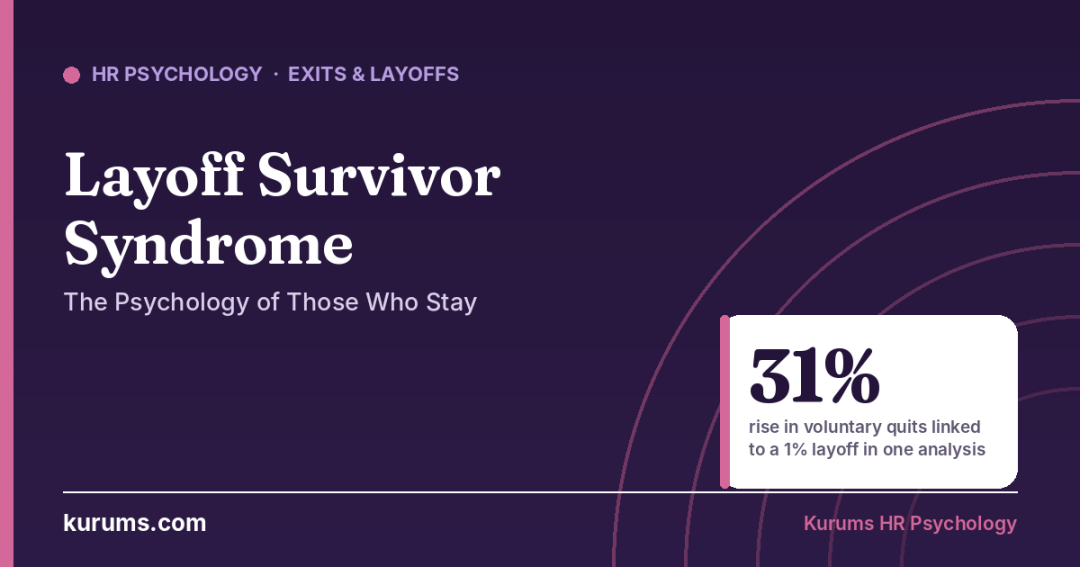
Layoff Survivor Syndrome: The Psychology of Those Who Stay
Redundancy planning focuses on the people leaving. The people who stay decide whether the organisation recovers. What research shows about survivors, and how to look after them.
What do you have to do this week?
Pick the task in front of you. Each guide opens with a realistic case, explains the psychology and gives you the words to use.
Questions about HR psychology
What is HR psychology?
HR psychology applies findings from organisational, social and behavioural psychology to people decisions at work: selection, pay, promotion, performance feedback, discipline and termination. It asks how those decisions are experienced by the people involved and how that experience shapes effort, trust and retention.
Who are these guides written for?
Line managers, HR business partners, founders and finance leaders who make or approve people decisions. No background in psychology is assumed. Each guide names the study behind a claim so that you can check it.
Is the research in these guides reliable?
We cite peer-reviewed studies and well-known books by their authors and year, describe findings cautiously and say where evidence is disputed or comes mainly from company case studies. Single studies are a starting point and effects vary between organisations and countries. The structured interview guide shows how estimates change as methods improve.
Where should I start?
If you manage people, start with organisational justice and feedback psychology, which underpin most of the other guides. If you have a specific task, use the situation list above. To see the ideas tested on real company decisions, try the Business Psychology cases.
Do these guides replace legal advice?
No. They describe psychology and general management practice. Employment law on hiring, pay transparency, discipline, dismissal and redundancy differs between countries. For the legal side see our HR compliance and employment law guides and take local advice.
How does this hub relate to the rest of Kurums HR?
It is the behavioural companion to our practical hubs: Finding the Right Person on where and how to hire, Rising Professions 2026 on labour-market demand, and the Human Resources department hub for everything else.