
The Hotel Industry
Who owns, brands and runs hotels, how they make money, what a room costs to build and sell, which rules apply and which software to shortlist. Written for founders, owners and operators.
- US RevPAR, 2025
- $100.02CoStar; down 0.3% on 2024
- Largest hotel company
- 1.74m roomsMarriott, year-end 2025
- OTA commission
- 15–25%of the room price, typically
- In this hub
- 26 articlesguides, reviews, lists, terms
LOBBY Choose a floor
What is inside this hub?
International tourist arrivals reached a record 1.52 billion in 2025, yet US hotels ended the year with lower occupancy and thinner margins. A hotel is property, a brand and an operating business at the same time, and each part follows different rules. This hub explains them in order: the industry, the money, ownership, the software and the vocabulary.
FLOOR 1 Rooms 101 to 103
Who owns, brands and runs the world's hotels?
The name on the building is rarely the owner. Start with the size of the industry and its fifteen largest companies, then see how franchise, management and lease contracts divide the risk, and how the trade sorts brands from luxury to economy.

Hotel Chain Scales and Brand Tiers Explained: From Luxury to Economy, Soft Brands and Extended Stay
Why does one company need thirty hotel brands? How chain scales from luxury to economy are defined, how they differ from star ratings and service levels, what soft brands and extended-stay hotels are, and how an owner chooses the right tier for a site.
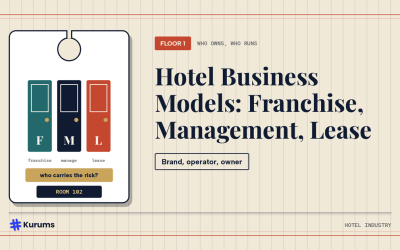
Hotel Business Models: Franchise, Management Contract, Lease and Owner-Operated Compared
The same hotel can be franchised, managed, leased or run by its owner, and each choice moves risk and reward between the parties. How the four models work, what fees a brand and an operator charge, and how to pick the right structure for a property.

The Hotel Industry in 2026: Market Size, Largest Hotel Companies and How the Business Works
Five hotel groups now have more than a million rooms each, yet most of them own almost none of the buildings. How large the industry is, who the biggest companies are, how owners, brands and operators split the work and the money, and what changed in 2025 and 2026.

Spain’s Hotel Groups: From Mallorca to Four Continents
Island families building hotels for northern European tour operators, who escaped that dependence by going to the Caribbean and never stopped.

Pestana: How a Madeira Hotel Family Built a 16-Country Group
Four brands, 16 countries, a state heritage concession and a Ronaldo joint venture. Inside Portugal’s largest hotel group.
FLOOR 2 Rooms 201 to 204
How does a hotel make money?
Four guides follow the money from the top line to the bottom: the indicators every owner reads, how prices are set, what each booking channel costs and where the revenue goes.

Hotel Operating Costs and Profit Margins: Where the Money Goes Between Revenue and the Owner
A hotel can sell every room and still disappoint its owner. The hotel profit-and-loss statement line by line, what labour, distribution and overheads cost, the 2025 margin benchmarks, why profit lags revenue and what owners can do about it.
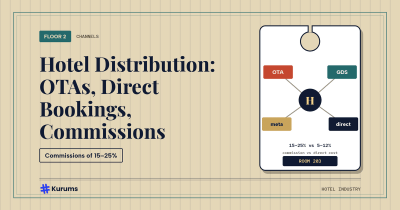
Hotel Distribution: OTAs, Direct Bookings, Commissions and What the EU Parity Rules Changed
Online travel agencies sell about three in ten hotel bookings and charge 15 to 25 percent for doing it. How each channel works and what it costs, what Europe’s rulings on price parity changed, and the practical steps that move bookings to a hotel’s own website.
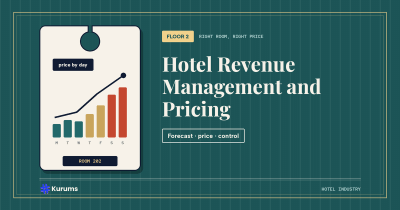
Hotel Revenue Management: How Pricing, Forecasting and Inventory Control Fill the Right Rooms
A hotel room that is empty tonight can never be sold again. How revenue management works in practice: segmenting demand, forecasting, setting and changing prices, controlling inventory with restrictions and overbooking, pricing groups and choosing software.
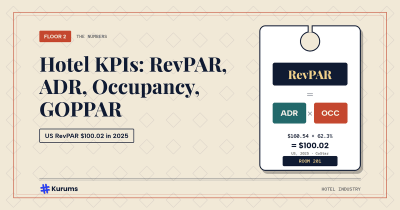
Hotel KPIs Explained: Occupancy, ADR, RevPAR, TRevPAR, GOPPAR and the Benchmarks That Matter
Three numbers describe a hotel’s sales and a handful more describe its profit. The formulas for occupancy, ADR, RevPAR, TRevPAR and GOPPAR, a worked example, the competitive indexes owners use and the 2025 benchmarks to compare against.

Mastering RevPAR: Proven Strategies to Boost Hotel Revenue
Want to boost your hotel’s profits? Click now to learn how mastering RevPAR can fill more rooms, drive up rates, and outpace competitors. Inside: proven dynamic-pricing tactics, real-world success stories, and expert insights to maximize your revenue per available room. Don’t miss out—start optimizing today!
Enter rooms, nights sold, revenue and costs to get occupancy, ADR, RevPAR, TRevPAR, GOPPAR, net RevPAR after commission and the occupancy at which the hotel breaks even.
FLOOR 3 Rooms 301 to 304
What does it take to own and operate a hotel?
Opening a hotel is a development project; buying one is an investment decision; running one depends on connected software and a long list of licences. These guides cover costs per room, valuation, the technology stack and the rules, including Europe's changes on price parity and short-term rentals.

Hotel Rules Explained: Licences, Star Ratings, Booking Platforms and Short-Term Rentals
Hotels are regulated as buildings, as employers, as sellers to consumers and as users of dominant booking platforms. Which licences a hotel needs, who awards stars, what changed for price parity in Europe and how the EU’s short-term rental rules work from 20 May 2026.
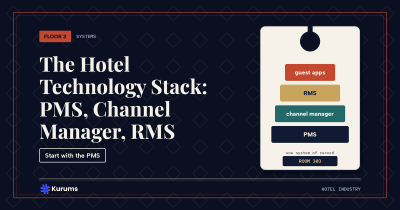
The Hotel Technology Stack: PMS, Channel Manager, Booking Engine and RMS Explained
A hotel runs on a chain of connected systems. What the property management system, channel manager, booking engine, central reservation system and revenue management system each do, how they talk to one another, how vendors charge and how to choose a stack by hotel size.
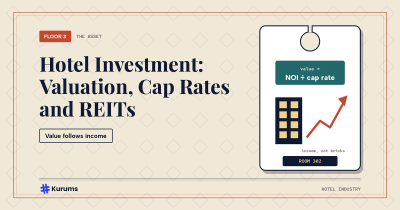
Hotel Investment Explained: Valuation, Cap Rates, Returns and Hotel REITs
A hotel is property whose rent is renegotiated every night. Why that makes it riskier and potentially more rewarding than other real estate, how hotels are valued from their income, what cap rates and price per key tell you, who invests and what to check before buying.

How to Open a Hotel: Costs per Room, Steps, Financing and the First Year
Opening a hotel is a real estate project, a brand decision and a start-up at once. The steps from feasibility to opening day, what a room costs to build or convert, how projects are financed, which permits apply and what goes wrong in the first year.
FLOOR 4 Rooms 401 to 404
Which hotel software have we reviewed?
Kurums Trust reviews look at each product from the buyer's side: how it is priced, what it includes, the contract questions to ask and which hotels it suits. We cover two cloud platforms for independents and groups, the leading distribution specialist and the enterprise standard for chains. No vendor can pay for a badge; see how we review.
Oracle OPERA Cloud Review: Pricing, Features and What Buyers Should Know
Oracle OPERA Cloud is the cloud version of the property management system that large hotel chains have run on for decades. Our buyer-side review covers its modules, its integration platform, how it is priced and whether an independent hotel should consider it.
SiteMinder Review: Pricing, Features and What Buyers Should Know
SiteMinder is the largest listed specialist in hotel distribution, with a channel manager and booking engine used by 56,000 properties. Our buyer-side review covers what it does, how it is priced, what it is not and when an all-in-one system is the better buy.
Mews Review: Pricing, Features and What Buyers Should Know
Mews is a cloud property management system known for automation, embedded payments and a marketplace of more than 1,000 integrations. Our buyer-side review covers its plans, how it is priced, who it suits and the questions to ask before signing.
Cloudbeds Review: Pricing, Features and What Buyers Should Know
Cloudbeds combines a property management system, channel manager, booking engine and payments in one platform for independent properties. Our buyer-side review covers its four plans, how it is priced, what to test and when another system fits better.
FLOOR 5 Rooms 501 to 502
Which systems should you shortlist?
Our Best lists compare eight property management systems by hotel type and eight channel managers, specialist and built-in, with pricing models and the questions to ask. Lists cannot be bought.
Best Hotel Channel Managers in 2027: 8 Options Compared
Eight hotel channel managers compared from the buyer’s side: the specialists SiteMinder, D-EDGE, RateGain, HotelRunner and eviivo, and the channel managers built into Cloudbeds, RoomRaccoon and Little Hotelier.
Best Hotel Property Management Systems in 2027: 8 PMS Compared by Hotel Type
Eight hotel property management systems compared from the buyer’s side: Cloudbeds, Mews, Oracle OPERA Cloud, Apaleo, Stayntouch, RoomRaccoon, Little Hotelier and WebRezPro, with pricing models, strengths and the questions to ask before signing.
FLOOR 6 Rooms 601 to 606
What do hoteliers mean by that?
RevPAR, ADR, GOPPAR, rate parity, OTA and PMS: the abbreviations in every hotel report, explained by Kurums Decoded in plain English.

PMS, Decoded: What It Actually Means
The software that runs a hotel: every reservation, room, check-in and bill lives in it. PMS stands for property management system. It is the core software a hotel uses to manage reservations, room inventory, check-in and check-out, housekeeping status, guest profiles and billing.
OTA, Decoded: What It Actually Means
The websites and apps where most people now compare and book hotels, and which take a cut of every booking they send. OTA stands for online travel agency. It is a website or app that lists hotels and other travel services from many suppliers, lets travellers compare and book them, and earns a commission or margin on each sale.
Rate Parity, Decoded: What It Actually Means
The rule that a hotel room should cost the same wherever you book it, and the reason hotels and booking sites have argued in court for a decade. Rate parity is the practice of selling the same hotel room at the same price on every booking channel. A parity clause is a contract term in which a booking platform requires the hotel not to offer a lower price elsewhere.
GOPPAR, Decoded: What It Actually Means
RevPAR’s more honest cousin: how much operating profit a hotel makes for every room it has, after paying staff, energy and running costs. GOPPAR means gross operating profit per available room. It is a hotel’s gross operating profit divided by the number of available rooms in the period, and it shows how much of the hotel’s revenue is left after the costs of operating it.

ADR, Decoded: What It Actually Means
The average price a hotel actually got for a room on a given night, after all the discounts, deals and corporate rates are mixed together. ADR stands for average daily rate. It is a hotel’s room revenue divided by the number of rooms sold, which gives the average price paid per occupied room. It is one of the two ingredients of RevPAR, alongside occupancy.
RevPAR, Decoded: What It Actually Means
The hotel industry’s favourite number: how much room revenue a hotel earns for every room it has, whether or not anyone slept in it. RevPAR means revenue per available room. It is a hotel’s room revenue divided by the number of rooms available to sell in the same period, so it shows in one figure how well the hotel fills its rooms and how much it charges for them.
A–Z Solutions Directory
Where can you find hotel software companies?
Cloudbeds, Mews, Oracle OPERA Cloud, SiteMinder, Apaleo, IDeaS, Duetto and more in the Kurums Solutions Directory. No position can be bought; companies request a listing by email.
INFO The industry in numbers
What are the key hotel industry figures?
| Measure | Figure | Source |
|---|---|---|
| International tourist arrivals | 1.52 billion in 2025, a record, up 4% | UN Tourism |
| US hotel occupancy | 62.3% in 2025, down 1.2% | CoStar |
| US average daily rate | $160.54 in 2025, up 0.9% | CoStar |
| US RevPAR | $100.02 in 2025, down 0.3% | CoStar |
| Largest hotel company by rooms | Marriott International, 1,740,771 rooms in 9,566 hotels | Hotels magazine, The List 2026 |
| Gross operating profit margin, US sample | 34.8% in 2025 (35.1% in 2024) | CBRE |
| Labour cost, US hotels | About 35% of revenue in 2025 | CoStar |
| Median US development cost | $213,000 per room; luxury above $1.6 million | HVS Development Cost Survey 2026 |
| Booking Holdings' share of European OTA hotel bookings | 68.8% in 2025 | HOTREC |
| EU short-term rental regulation | Applies from 20 May 2026 | Regulation (EU) 2024/1028 |
FAQ Hotel industry
Frequently asked questions
How big is the hotel industry?
There is no single agreed figure. By rooms, the fifteen largest hotel companies each manage or franchise from about 227,000 to 1.74 million rooms, and international tourist arrivals reached 1.52 billion in 2025 according to UN Tourism.
What is the largest hotel company in the world?
By number of rooms, Marriott International, with 1,740,771 rooms in 9,566 hotels at the end of 2025 according to Hotels magazine, followed by Jin Jiang International and Hilton.
Do hotel brands own their hotels?
Mostly not. The large brand companies franchise or manage hotels that are owned by investors, families, funds and real estate investment trusts.
What is RevPAR?
Revenue per available room: room revenue divided by rooms available, or occupancy multiplied by the average daily rate. It was $100.02 in the United States in 2025.
How much commission do booking sites charge hotels?
Online travel agencies typically charge between 15 and 25 percent of the room price, depending on the site, the market and the programme.
How much does it cost to build a hotel?
HVS reported a median of $213,000 per room for US projects in its 2026 survey, with luxury hotels above $1.6 million per room.
What software does a hotel need?
A property management system, a booking engine and payments at minimum, plus a channel manager for hotels selling through several booking sites.
Is a hotel a good business?
It can be, but margins are under pressure from labour costs. A US sample tracked by CBRE showed an EBITDA margin of 22.8 percent in 2025.
Last updated 28 November 2026 · Kurums Startup editorial team. Figures are as published by UN Tourism, CoStar, CBRE, HVS, HOTREC, Hotels magazine and the companies named; they change, so confirm them at the source. Nothing here is investment, tax or legal advice. Part of the Startup department on Kurums.