
Taste Note - Amazon Management Best Sellers
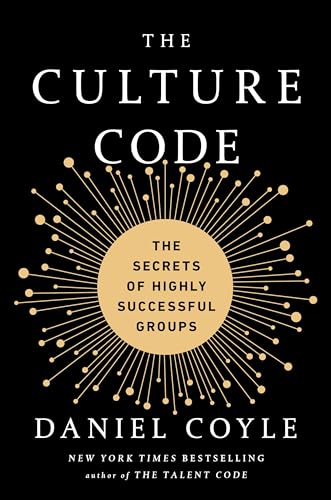
The Culture Code: The Three Skills Behind Every High-Trust Team
A Kurums Book Taste review of The Culture Code for leaders who suspect culture is built in small signals, not slide decks.
Why this book fits Kurums
Culture initiatives fail because they treat culture as messaging - values on walls, town halls, swag. Coyle spent four years inside consistently great groups (Navy SEALs, Pixar, the Spurs, IDEO, even a jewel-thief crew) and found culture living somewhere else entirely: in dense streams of small signals that answer three ancient questions - are we connected, do we share truth, do we share a future?
For the Kurums HR audience the book converts 'culture' from an abstraction into three trainable skills - build safety, share vulnerability, establish purpose - each with mechanisms concrete enough to put into a manager curriculum next quarter.
What the book argues
Skill one is building safety: belonging is signaled physically and constantly - proximity, eye contact, turn-taking, thanks, small courtesies - and the group's performance tracks these belonging cues better than it tracks talent. The famous kindergartner experiment (they beat MBAs at building spaghetti towers because they never manage status) and Google's own team research point the same direction: psychological safety is the foundation everything else is built on, and it is built or destroyed in seconds-long moments.
Skill two is sharing vulnerability: trust does not precede vulnerability, it is created by it - and it starts with the leader. The 'vulnerability loop' (I show uncertainty, you feel safe to show yours, cooperation rises) explains why teams whose leaders say 'I screwed that up' and 'what am I missing?' consistently out-learn teams whose leaders perform infallibility. The chapters on Bell Labs, IDEO's brainstorm norms, and the SEALs' brutal After-Action Reviews show the loop at industrial scale.
Skill three is establishing purpose: high-performing groups are almost embarrassingly repetitive about a small number of vivid priorities - mental models rehearsed as catchphrases, stories, and artifacts until the environment itself narrates what matters. Coyle distinguishes proficiency purposes (creativity is not required, standards are - think airline crews) from creativity purposes (protect the messy early ideas - think Pixar's Braintrust), and shows the signaling has to differ accordingly.
Key ideas, translated to your desk
Safety is built in seconds
Belonging cues - greeting people by name, letting them finish, thanking specifically - are the actual culture program. Audit meetings for them the way you audit budgets.
The leader goes first
'What am I missing?' from the most senior person in the room unlocks more truth than any anonymous survey. Vulnerability is a leadership tool, not a confession.
Repeat the purpose until you are bored
When leadership is sick of saying the priority, the front line is just starting to believe it. Vivid, repeated, artifact-backed - that is how purpose survives contact with Tuesday.
Use it at work
- Train managers on belonging cues explicitly - names, turn-taking, specific thanks - and make them observable behaviors in reviews.
- Install After-Action Reviews on every significant project: what did we expect, what happened, what will we do differently.
- Have leaders open key meetings with one genuine 'here is where I need help' - and watch what it licenses.
- Choose your two priorities and build the catchphrase, story, and artifact for each; retire the other eight.
Read it if
- You own culture, engagement, or leadership development and want mechanisms rather than values statements.
- Your teams are talented but guarded - information hoarding, meeting silence, polite dysfunction.
- You liked Five Dysfunctions and want the research-and-reportage companion.
You can skip it if
- You need org-design or comp levers; this is interpersonal machinery.
- Story-driven business writing feels thin to you - the evidence is woven through narrative.
- Your culture problem is a toxic senior leader; no cue audit fixes what the top keeps breaking.
Discover more from Kurums | Business Intelligence
Subscribe to get the latest posts sent to your email.