
Taste Note - Amazon Marketing Best Sellers
Obviously Awesome: A Working Process for Positioning, Finally
A Kurums Book Taste review of Obviously Awesome for product marketers who agree positioning matters and have never been handed a method for doing it.
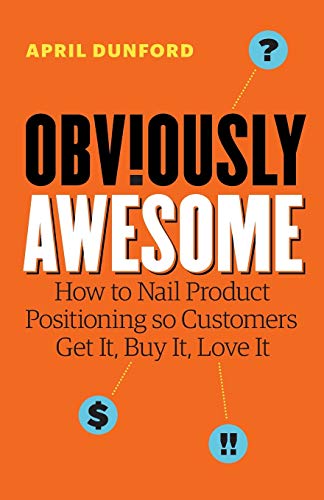
Why this book fits Kurums
Positioning's classic literature is diagnosis-rich and process-poor: it convinces you the battle is for the mind and then leaves you alone with a whiteboard. Dunford - an operator who repositioned products sixteen times - supplies what the classics lack: a concrete, repeatable process from inputs to deliverable, built for teams rather than gurus.
For the Kurums Marketing audience this is the workshop companion to Positioning: read Ries and Trout for why, run Dunford for how - especially her signature insight that choosing your market category is itself the most powerful positioning decision, because context sets every expectation the customer brings.
What the book argues
The foundation is context: the same product reads as completely different things depending on the frame around it - her famous cake/muffin/donut riff and the database-repositioned-as-something-new war story both make the point that buyers use market categories as shortcuts, inheriting assumptions about features, pricing, and competitors from whatever category you invoke. Weak positioning is usually a context accident: the category the founders started in, kept by default.
The five-plus-two components give the analysis structure: competitive alternatives (what customers would really do without you - often a spreadsheet or an intern, not your named rival), unique attributes, the value those attributes enable, the segments who care most about that value, and the market category that makes it all obvious - with trend layered on top only when genuinely helpful, never as the category itself ('trend without category is positioning on quicksand').
The ten-step process operationalizes it: assemble the cross-functional team, shed baggage from legacy positioning, list true alternatives from win/loss evidence, cluster attributes into value themes, isolate the best-fit customers from your happiest-customer patterns, pick the frame of reference - and then choose deliberately among the three style options: head-to-head (compete in the existing category), big-fish-small-pond (dominate a subsegment of it), or create-a-new-game (declare a new category, with honest warnings about its cost). The output is a positioning canvas that feeds messaging, sales decks, and roadmap - and her closing counsel is operational: revisit positioning on a cadence, because markets move the context even when the product stands still.
Key ideas, translated to your desk
Category is the biggest lever
Buyers inherit expectations from the market frame before reading a word of your copy. Choose the category where your strengths are obvious, not the one you started in.
Alternatives aren't competitors
Position against what customers would actually do without you - often 'nothing' or a spreadsheet. That contrast writes sharper value claims than any feature war.
Position from your happiest customers
Your best-fit segment already exists in the win data. Describe who loves you and why before deciding who you are for.
Use it at work
- Run the ten-step workshop on your flagship product with sales, product, and CS in the room.
- Rebuild the alternatives list from the last twenty win/loss notes - record what losers actually chose.
- Test two category frames for the same product in cold outreach and measure comprehension speed.
- Put positioning review on the calendar twice a year, trigger-listed for market shifts.
Read it if
- You own positioning or messaging and need a process the team can run Tuesday.
- Your product gets described six ways by six people internally.
- You read Positioning and immediately asked 'but how?'
You can skip it if
- Your positioning is sharp and recently workshop-tested.
- You want brand theory depth; this is deliberately a field manual.
- You market pure commodities where category choice is fixed by exchange rules.
This book appears in
Curated Tasting Menus that chain this title into a reading route.
Discover more from Kurums | Business Intelligence
Subscribe to get the latest posts sent to your email.