
Taste Note - Amazon Marketing Best Sellers
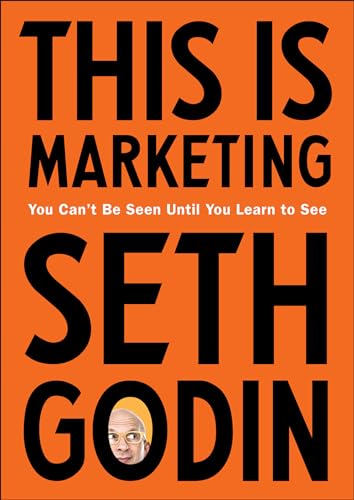
This Is Marketing: Smallest Viable Market, Largest Possible Trust
A Kurums Book Taste review of This Is Marketing for teams tired of interrupting strangers and ready to matter to someone specific.
Why this book fits Kurums
Where the performance stack optimizes attention capture, Godin argues the game changed underneath it: attention is scarce, trust scarcer, and the marketers who win now serve a specific audience so well that the audience does the spreading. This book is his career's synthesis - positioning, permission, tribes - in one argument.
For the Kurums Marketing audience it is the strategy-of-intent layer: before STEPPS mechanics or StoryBrand scripts, the Godin questions - who's it for, what's it for, what change are we trying to make - are the brief that makes every downstream framework work.
What the book argues
The foundation is the smallest viable market: instead of asking how many people you can reach, ask what is the minimum audience that, served exceptionally, sustains the business - then build for them with the courage to say 'it's not for you' to everyone else. Godin's positioning tool is the two-axis map: pick the pair of attributes where you can be the extreme and honest choice, because the middle of any market belongs to inertia and the low price.
The psychology chapters run on his signature vocabulary: people don't buy products, they buy better versions of themselves ('nobody wants a drill bit; they want the hole - and really, the feeling of a job well done'); status roles - affiliation and dominance - drive more purchases than features; and 'people like us do things like this' is the sentence that actually moves behavior. Marketing, in this frame, is the generous act of helping someone solve a problem - and manipulation is its counterfeit, distinguished by whether you'd be proud if the customer knew exactly what you did.
The method chapters assemble the engine: earn permission (anticipated, personal, relevant messages to people who would miss you if you stopped), build tension that the purchase resolves (the gap between where your audience is and where they want to be), find the early adopters who seek novelty, and bridge the chasm by giving them tools to tell the others. Price is positioned as a story, not a number; direct marketing and brand marketing get cleanly separated (measure the first, be patient with the second); and the closing chapters land on trust as the scarcest asset - compounded by showing up consistently for the few before asking anything of the many.
Key ideas, translated to your desk
Serve the smallest viable market
Define the minimum audience that sustains you and build for their exact worldview. Scale is the reward for mattering, never the strategy.
Sell the change, not the thing
Write the sentence: 'Our product helps [specific people] become [who they want to be].' If you can't, the campaign has no engine.
Permission compounds
An audience that would miss your emails is an asset no algorithm can revoke. Build it with generosity before you need it.
Use it at work
- Write your smallest-viable-market definition and list three things you'll stop doing because they serve everyone else.
- Place your brand on a two-axis extremes map against competitors - and move out of any crowded quadrant.
- Rewrite one campaign brief around 'people like us do things like this' for your specific tribe.
- Split your metrics: direct-response spend measured on response, brand spend on patience - never graded on each other's scale.
Read it if
- Your marketing interrupts strangers and conversion keeps proving it.
- You are positioning a new offer and need the intent questions before the tactics.
- You want Godin's twenty books in one evening.
You can skip it if
- You need executional detail - Godin is deliberately altitude, not instruments.
- Aphoristic style wears on you; the substance hides in it.
- Your market truly is a commodity spot market where permission can't differentiate.
This book appears in
Curated Tasting Menus that chain this title into a reading route.
Discover more from Kurums | Business Intelligence
Subscribe to get the latest posts sent to your email.