The average NFL franchise is worth $9.5bn in 2026, up 34% in a year, and trades at 13.4 times revenue, according to Forbes. Sportico puts the average NBA team at $5.51bn, up 113% since 2022, after the Lakers sold for $10bn at 16 times revenue. Real Madrid is valued at $9.5bn on record revenue of €1.2bn. Values rise because leagues are closed, media money is contracted years ahead, private equity has widened the buyer pool and expansion fees reset the floor. Profit has not kept up: most franchises earn a low single-digit yield on the price a buyer pays.
Sports franchise valuations have outrun almost every other asset class for two decades, and the pace quickened in 2025 and 2026. A Seattle Seahawks control stake sold for a record $9.612bn; the Los Angeles Lakers changed hands at $10bn; Forbes now counts no NFL team below $8bn. This article, part of the Sports Economy hub, explains why sports franchise valuations keep rising, what multiples buyers pay, how Europe differs from North America and when the escalator might stall. It pairs with our guide to private equity in sport and our look at football club valuations and multi-club ownership.
How fast are franchise values growing?
Forbes’ 2026 NFL list shows a 34% one-year rise to an average of $9.5bn; Sportico’s NBA average is $5.51bn, up 20% in a year and 113% since 2022; the NHL’s Toronto Maple Leafs reached $4.8bn.
What multiple of revenue do teams sell for?
NBA sales have moved from about 3x revenue in 2010–12 to 13x for the Celtics and 16x for the Lakers in 2025; the NFL average is 13.4x, with the Seahawks sale at 14.6x.
Why does profit matter less than you would expect?
Buyers underwrite scarcity, contracted media income and the next sale, not current earnings. The Dallas Cowboys earn $677m on a $17bn value, a 4% yield; most teams earn far less.
How much are sports franchises worth in 2026?
The 32 NFL teams are worth more than $300bn combined, averaging $9.5bn; the 30 NBA teams about $165bn, averaging $5.51bn; MLB’s Yankees lead baseball at $9bn; the NHL’s Maple Leafs top hockey at $4.8bn; and Real Madrid, at $9.5bn, leads football.
Forbes’ August 2026 NFL list sets the top of the market. The Dallas Cowboys are valued at $17bn, the Los Angeles Rams at $13.5bn and the New York Giants at $12bn; the Cincinnati Bengals, in last place, are worth $8bn. Ten teams clear $10bn. A year earlier the average was $7.1bn, so the league added roughly $77bn of paper value in twelve months.
Basketball has compounded even faster from a lower base. Sportico’s 2025 NBA valuations put the Golden State Warriors at $11.33bn, the Lakers at $10bn and the Knicks at $9.85bn; CNBC’s February 2026 list has the Warriors at $10.8bn and the Knicks at $10.1bn. The “get-in” price for the least valuable team, the Memphis Grizzlies, is about $4bn, two and a half times its 2022 level. In baseball, CNBC’s March 2026 ranking lists the Yankees at $9bn and the Dodgers at $8bn, the latter up roughly 38% in a year on a new local television deal and Shohei Ohtani’s global pull; the Miami Marlins, at $1.4bn, show how wide the spread is within one league.
In football, Forbes’ 2026 list values Real Madrid at $9.5bn on revenue of $1.27bn, followed by Barcelona ($7.5bn), Manchester United ($7.2bn), Liverpool ($6.2bn) and Paris Saint-Germain ($5.8bn). Deloitte’s 2026 Football Money League reports the top 20 clubs earned a record €12.4bn in 2024/25, up 11%, with Real Madrid the first to pass €1.2bn. Türkiye’s biggest clubs sit far below: Galatasaray and Fenerbahçe trade on Borsa Istanbul at market capitalisations in the hundreds of millions of dollars, a reminder that a valuation depends partly on which league’s media market a club sits in.
Why do sports franchise valuations keep rising faster than revenue?
Because buyers pay for scarcity and future contracted income, not current profit. Closed leagues, multi-year national media deals, new buyers from private equity and sovereign wealth, and expansion fees that reset the floor all push prices up faster than the underlying business grows.
The clearest evidence is the revenue multiple. Sportico’s history of NBA transactions shows sales at just over three times revenue in 2010–12, about six times for the Utah Jazz and Minnesota Timberwolves, roughly ten times for the Charlotte Hornets, Dallas Mavericks and Milwaukee Bucks in 2023, 13 times for the Phoenix Suns and Celtics, 12 times for the Portland Trail Blazers’ $4.25bn sale to Tom Dundon and 16 times for the Lakers. The NFL’s Denver Broncos sold at 8.8 times revenue in 2022, when the league average was 8.3; by 2026 Forbes puts the average at 13.4 and the Seahawks sale at 14.6. The multiple has roughly doubled in four years; revenue has not.
Media money explains part of it. The NBA’s $76bn national television package with Amazon, ESPN/ABC and NBC lifts per-team distributions from $103m to $143m in year one and about $281m by 2034/35, a 7% annual escalator a buyer can take to a bank. The NFL’s deals run to 2033 with an opt-out after the 2029 season, so a buyer in 2026 is underwriting a decade of known cash. Our analysis of the NFL and NBA media deals sets out how these contracts set the price of sport.
The rest is supply and demand. There are only 124 franchises across the four big North American leagues, and most never come to market. Meanwhile the pool of eligible buyers widened: the NFL admitted private equity in August 2024, the NBA raised the number of teams a fund may hold to eight, and MLB lifted its cap to 20%. More bidders for a fixed number of assets produces one outcome.
| League / club | Average or top value 2026 | Change | Revenue multiple | Source |
|---|---|---|---|---|
| NFL (average of 32) | $9.5bn; Cowboys $17bn | +34% in one year | 13.4x average; Seahawks sale 14.6x | Forbes, Aug 2026 |
| NBA (average of 30) | $5.51bn; Warriors $11.33bn | +20% in one year, +113% since 2022 | Lakers 16x; Celtics 13x; Blazers 12x | Sportico, 2025 |
| MLB (top and bottom) | Yankees $9bn; Marlins $1.4bn | Dodgers roughly +38% | Not published | CNBC, Mar 2026 |
| NHL (top) | Maple Leafs $4.8bn; Blue Jackets $1.5bn | Leafs +13%; Islanders +40% | Not published | Sportico, Sep 2026 |
| European football (top) | Real Madrid $9.5bn; Barcelona $7.5bn; Man Utd $7.2bn | Top-20 revenue +11% (Deloitte) | Real Madrid about 7.5x revenue | Forbes 2026; Deloitte 2026 |
Note the last row: the most valuable club in world football trades at roughly half the multiple of an average NFL team. That gap is the subject of a later section.
How do Forbes, Sportico and CNBC value a team?
They estimate enterprise value (equity plus net debt) from revenue, operating income, stadium economics, market size and recent comparable sales, then apply a league-specific multiple. The lists differ because each weights comparables, debt and related businesses differently.
Forbes’ football methodology, as described in its 2026 list, considers the latest season’s revenue, operating income, stadium economics and debt. Sportico publishes the revenue multiple implied by each sale and adjusts for team-related businesses such as real estate and regional networks. CNBC’s lists, compiled by Mike Ozanian, include debt and the value of controlled venues. None of them is a transaction; all of them are anchored by the last one.
The anchoring effect is visible in the Browns. Arctos bought a minority stake in May 2026 at a $9bn valuation, about 40% above Forbes’ estimate at the time, and Forbes’ next list duly placed the Browns at $9bn, up 41%. The Las Vegas Raiders show the opposite problem: two minority sales in 2026 implied $9.9bn and more than $11bn, while Forbes settled on $10.3bn. Minority stakes carry no control and often come with preferred terms, so their implied valuations are noisy; control sales are the true marks.
Because the lists are estimates, read them as ranges with a direction. In 2026 the direction has been up in every league, and the spread between top and bottom has widened: the NFL’s floor-to-ceiling ratio is about 2.1x, the NBA’s roughly 2.8x and MLB’s more than 6x.
What role do media rights and expansion fees play?
Media rights supply the contracted cash flow that justifies a high multiple; expansion fees supply the public price that resets every existing franchise. The NBA’s expected $6bn-plus expansion fee and the NFL’s $22bn revenue are both floors under current valuations.
National media deals are shared equally in the NFL and NBA, which is why their floors are so high. Every NFL team receives the same share of national revenue, and Forbes shows the gap between the Cowboys’ $1.278bn revenue and the Jaguars’ $591m is almost entirely local: stadium, sponsorship and premium seating. A buyer of the Bengals at $8bn is buying the same national contract as a buyer of the Cowboys.
Expansion fees are the other anchor. Sportico expects the NBA’s next fee, if the league adds Seattle and Las Vegas, to be around 20 times the $300m payment of 2004, likely in the $6bn range. The NHL set its benchmark with Seattle’s $650m fee in 2018; the WNBA’s 2025 expansion fees of $250m for Cleveland, Detroit and Philadelphia were five times the $50m paid by Golden State two years earlier. Each fee is a transaction the whole league can cite the next time an owner sells. Our article on closed versus open leagues explains why this mechanism does not exist in European football.
There is a counter-current. PwC’s 2026 Global Sports Survey, with 517 executives, forecasts a slight fall in media-rights revenue in mature markets, and Deloitte’s Money League shows broadcasting is now 38% of top-club revenue, behind commercial at 43%. If the next rights cycle merely holds flat, the multiple has to do all the work.
Why are North American franchises worth more than European clubs?
Because American leagues are closed, cost-controlled and share national media money, so each franchise is a protected cash-flow annuity. European clubs face relegation, open wage competition and heavy debt, which compresses their multiples even when revenue is higher.
Real Madrid earned a record €1.2bn in 2024/25, more than any NFL team, yet Forbes values it at $9.5bn, about 7.5 times revenue, while the average NFL franchise with $700m of revenue is valued at 13.4 times. Manchester United, with Deloitte-reported broadcasting revenue falling from €258m to €206m after missing the 2024/25 Champions League, is still worth $7.2bn, but the valuation carries roughly £1bn of debt and a stadium decision that could cost £2bn. No NFL owner worries about one poor season removing a fifth of broadcast income.
The ownership market is also different. UEFA’s multi-club rules, national fit-and-proper tests, member ownership in Spain and Germany, and the political reaction against the 2021 Super League project mean the pool of buyers for a top European club is smaller and the governance risk higher. Apollo’s 55% purchase of Atlético Madrid at about €2.2bn in late 2025 was priced at roughly 5 times revenue; Chelsea’s 2022 sale to the Clearlake–Boehly consortium at £2.5bn was close to 5 times as well. Those are the multiples the NBA was paying in 2015.
The gap is narrowing at the very top. Forbes shows Aston Villa up 56% in a year, and the Premier League’s nine clubs in Deloitte’s top 20 enjoy the closest thing Europe has to an NFL-style shared media pool. Our United Kingdom playbook looks at why that league commands a premium others do not.
Who are the buyers at these prices, and how do they pay?
Three groups: individual billionaires paying mostly cash (Mark Walter, Vinod Khosla), private equity funds taking capped minority stakes, and sovereign or state-linked capital in Europe and the Gulf. Leverage is limited by league rules, so most of the price is equity.
The Lakers sale shows the arithmetic. Mark Walter’s group agreed a $10bn valuation in June 2025, buying out the Buss family’s majority while Jeanie Buss retained a stake and the governor role for a period. NBA debt limits and the league’s 15% controlling-owner minimum mean the buyer needed billions in cash or partner equity, which is where funds such as Sixth Street and Dyal HomeCourt enter: not as controllers but as cheque-writers who make a control transaction possible.
The NFL’s $1.5bn debt ceiling per ownership group, $700m of which may be acquisition debt, means a $9.6bn Seahawks purchase was more than 85% equity. That is why the league’s 2024 private equity rule was less a liberalisation than a necessity: the Khosla group’s deal included Sixth Street and a Carlyle–Dynasty pairing at around 3% each. In Europe the buyers are increasingly institutions too: RedBird at AC Milan, Apollo at Atlético, CVC in LaLiga’s commercial company and sovereign capital at Manchester City, Newcastle and Paris Saint-Germain, as the Gulf playbook explains.
When might the valuation escalator stop?
When one of three things happens: media-rights growth turns negative, the supply of control buyers at $10bn dries up, or a labour or regulatory settlement cuts the cash flow. None has occurred, but all three are now discussed by the people who publish the lists.
The media risk is the most concrete. Regional sports networks have already collapsed in MLB and the NHL; Diamond Sports’ bankruptcy forced several clubs to take lower local deals, which is why MLB valuations are so dispersed. Nationally, the next NFL negotiation after the 2029 opt-out will test whether streaming platforms keep bidding up a product whose linear audience is ageing. If the escalator built into the NBA’s $76bn deal is the last of its kind, the 7% a year a buyer assumed in 2026 becomes a terminal-value problem in 2034.
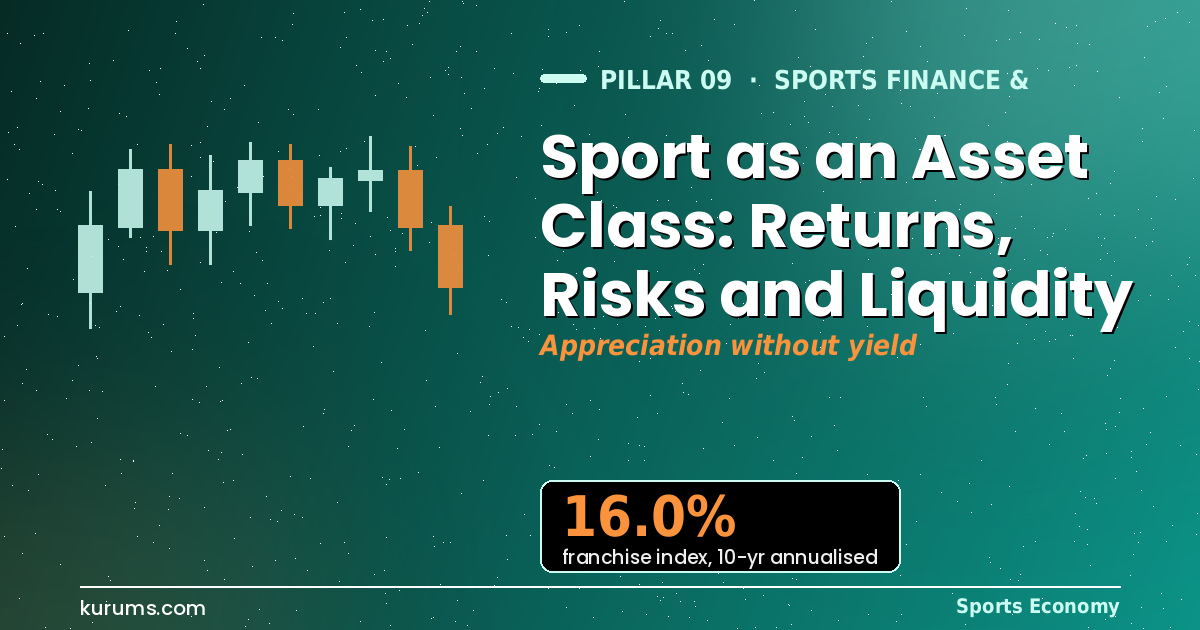
The buyer risk is quieter. The Ross-Arctos Sports Franchise Index records 16% annualised appreciation over the decade to early 2026, but that period included near-zero interest rates and the arrival of private equity as a new bidder class; both tailwinds have now been used. Funds hold capped stakes and need exits; if they are net sellers in the 2030s, the market loses its marginal buyer. Our article on sport as an asset class works through the liquidity question.
The regulatory risk differs by continent. In the United States, the NCAA settlement is redistributing money toward athletes; in Europe, UEFA’s squad-cost rules and the European Court’s rulings on FIFA’s transfer system both change how much revenue reaches the owner. For now, the lists keep rising because every input still points up.
Frequently Asked Questions
What is the most valuable sports franchise in the world?
The Dallas Cowboys, valued by Forbes at $17bn in August 2026, up 31% in a year on revenue of $1.278bn and operating income of $677m. The Los Angeles Rams ($13.5bn) and New York Giants ($12bn) follow. Outside the NFL, the Golden State Warriors (Sportico: $11.33bn) and Real Madrid (Forbes: $9.5bn) lead their leagues.
Do sports teams actually make a profit?
Most do, but modestly relative to price. Forbes’ 2026 NFL data shows operating income from $25m (Vikings) to $677m (Cowboys) on values of $8bn to $17bn, so earnings yields run from well under 1% to about 4%. Many European clubs run losses in pursuit of results. Buyers accept thin yields because they expect the franchise to appreciate.
Why did the Lakers sell for $10bn?
The June 2025 deal, led by Dodgers owner Mark Walter, priced the Lakers at about 16 times revenue, according to Sportico, the highest multiple recorded for a US team. The buyer paid for the second-largest US media market, a global brand, the NBA’s new $76bn television contract with 7% annual growth and the simple fact that control of a marquee NBA team had not been available for decades.
How do expansion fees affect existing team values?
An expansion fee is a public, league-wide price for a franchise with no history, players or stadium, so it sets a floor for every existing team. The NBA’s 2004 Charlotte fee was $300m; Sportico expects the next one to be around $6bn. The WNBA’s 2025 fees of $250m per team were five times the fee paid in 2023, and existing WNBA valuations rose in step.
Discover more from Kurums | Business Intelligence
Subscribe to get the latest posts sent to your email.