Six ways for a small business to find creators without an enterprise budget: the social platforms’ free marketplaces, Heepsy, Collabstr, GRIN’s free plan, Modash and HypeAuditor — with published prices, limits and who each suits.


Marketing · Topic
Influencer marketing for business: the industry and its players, platform playbooks, contracts and disclosure rules, platform reviews, Best lists and creator terms.
Six ways for a small business to find creators without an enterprise budget: the social platforms’ free marketplaces, Heepsy, Collabstr, GRIN’s free plan, Modash and HypeAuditor — with published prices, limits and who each suits.
Six leading influencer marketing agencies compared from the client’s side: Viral Nation, Billion Dollar Boy, The Goat Agency, Obviously, Influential and Whalar — who owns each, what they are known for and how to choose.
Modash is a discovery, outreach and tracking tool covering Instagram, TikTok and YouTube, with published prices from $199 a month billed yearly and a 14-day free trial. Our review covers plans and limits, strengths, gaps and who it suits.
Upfluence combines influencer search, campaign management, affiliate tracking and payments, with deep e-commerce integrations. It charges a fixed fee by quote and requires a twelve-month term. Our review covers costs, contract, features and fit.
GRIN made its name as the creator-management platform for e-commerce brands and now sells self-serve plans from free to $1,500 a month, each with a fee on payments. Our review explains the real cost, the features and who it suits.
CreatorIQ is the enterprise standard for creator marketing, used by more than 1,300 brands and agencies. Our buyer-side review covers how it is priced, what the modules do, what users say and when a lighter tool is the better choice.
No guide matches that filter. Clear the box to see the full list.
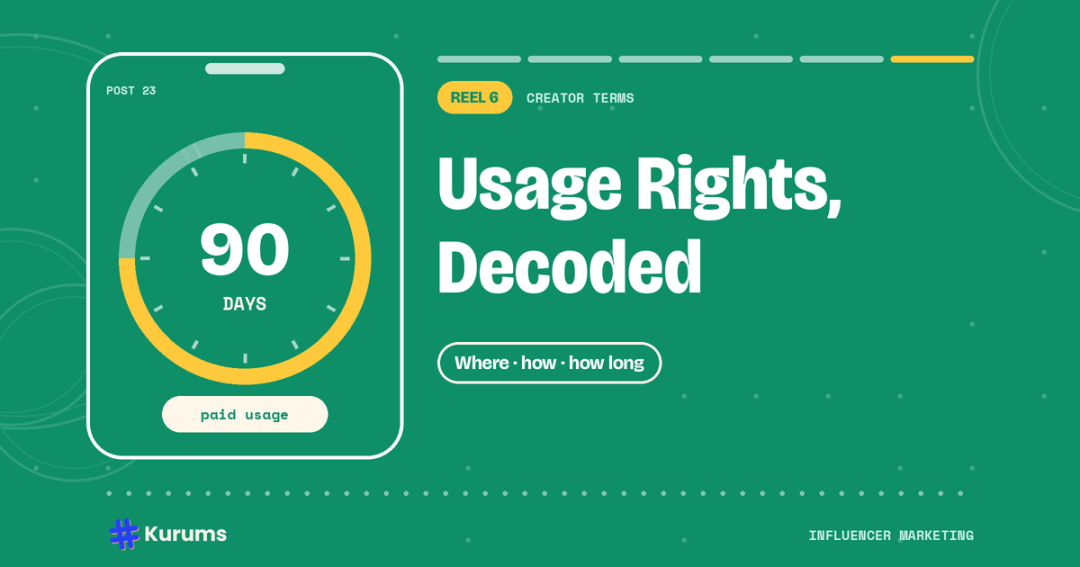
The permission a brand buys to use a creator’s content beyond the creator’s own post: where, how and for how long. Usage rights are the permissions a creator grants a brand to reuse their content. They define where the content may appear, whether it can run as paid advertising, whether it can be edited, in which countries and for how long.
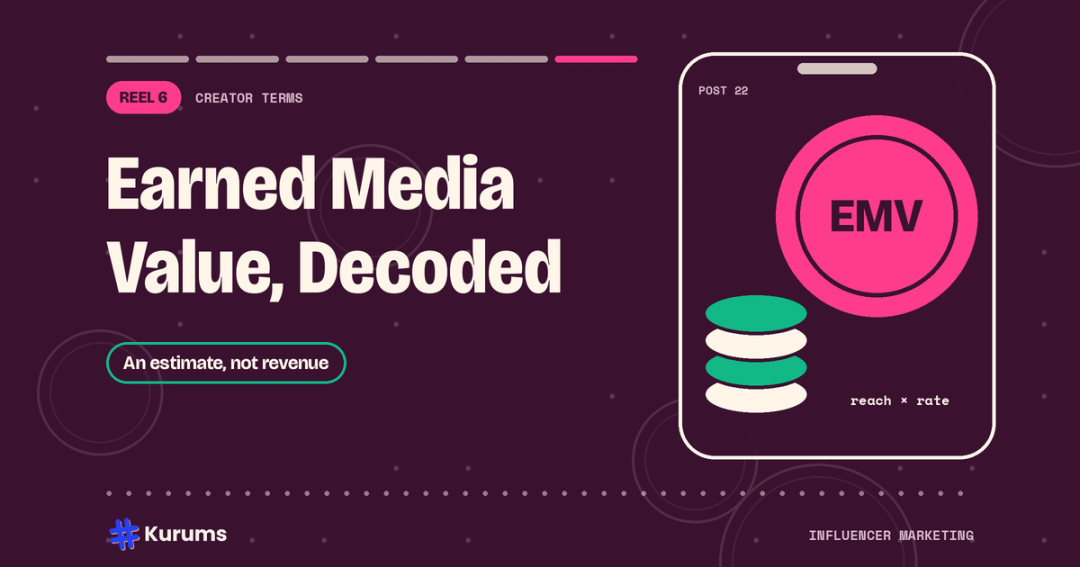
An estimate of what your creator and social coverage would have cost if you had bought the same exposure as advertising. Earned media value, or EMV, is a figure that puts a money value on unpaid or creator-driven exposure. It multiplies results such as impressions or engagements by an assumed cost for each, so the total suggests what equivalent advertising would have cost.
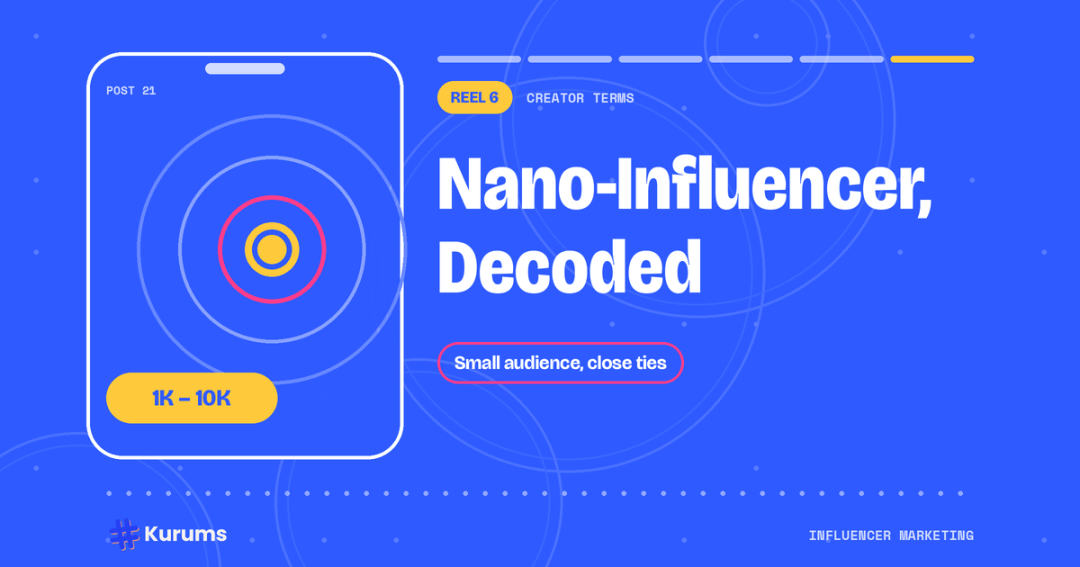
A creator with a small following, roughly a thousand to ten thousand people, who mostly know or trust them personally. A nano-influencer is a creator with a small audience, by the most common convention between about 1,000 and 10,000 followers on a platform. Their reach is limited, but their followers tend to be friends, neighbours or members of a tight niche.
The share of people who did something with a post, such as like, comment, share or save, instead of just scrolling past. Engagement rate is the number of interactions a post receives, such as likes, comments, shares and saves, divided by a measure of audience size and shown as a percentage. The audience measure can be followers, reach or views, which is why the same post can have three different rates.
Content that looks like a customer made it. Increasingly, a paid creator did, and the brand posts it on its own channels. UGC stands for user-generated content: photos, videos and reviews made by ordinary users instead of by the brand. In marketing today it usually means content a brand pays a creator to produce in that natural style, for use on the brand’s own channels and ads.
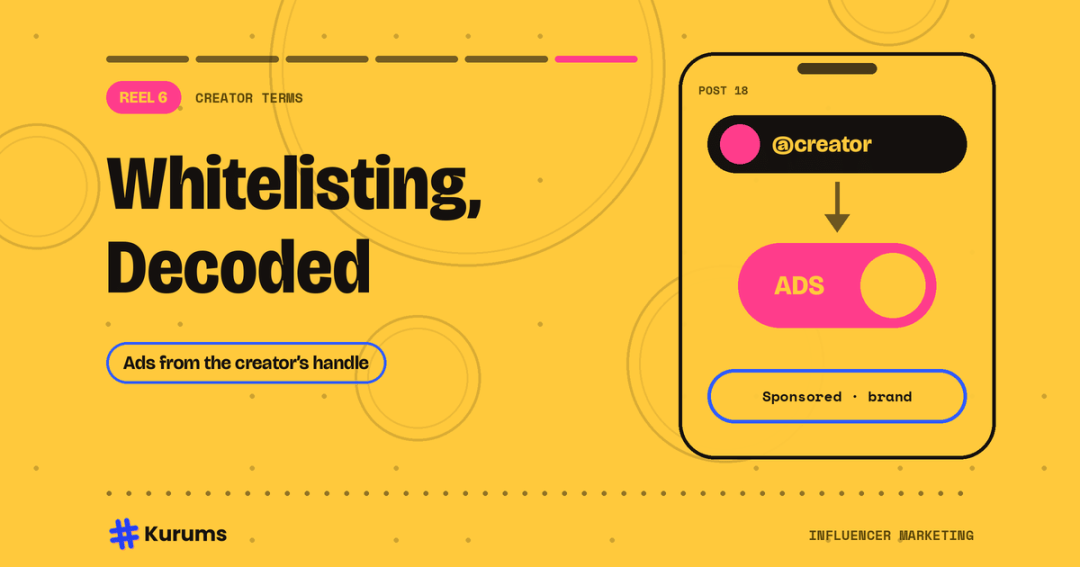
When a brand runs paid ads through a creator’s own account, so the ad shows up under the creator’s name instead of the brand’s. Whitelisting is when a creator gives a brand permission to run paid advertising through the creator’s social media handle. The ad appears to come from the creator, but the brand controls the budget, the targeting and how long it runs.