
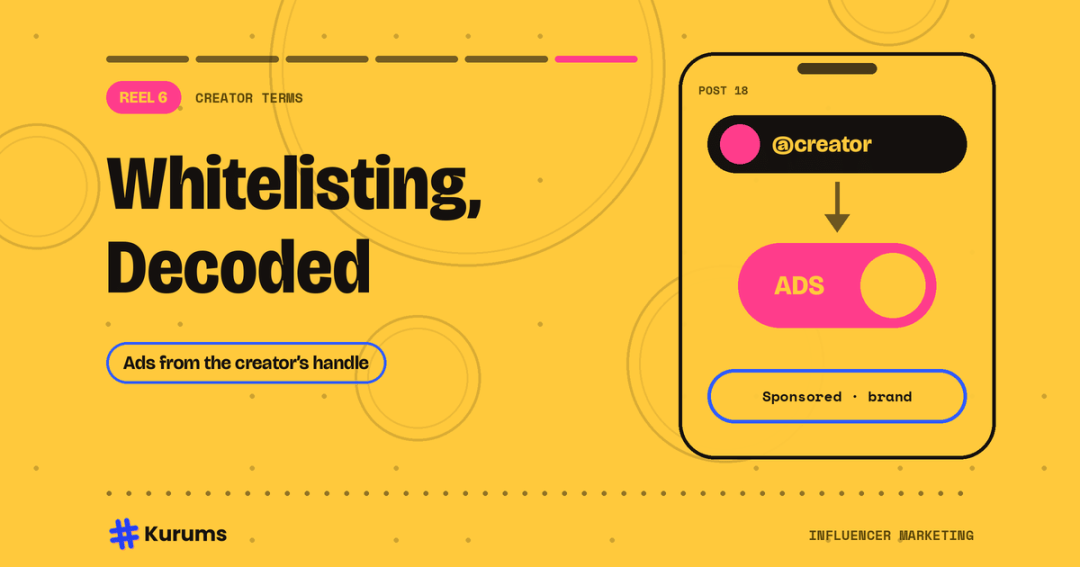
Whitelisting.
aka creator licensing, allowlisting, partnership ads, Spark Ads
When a brand runs paid ads through a creator's own account, so the ad shows up under the creator's name instead of the brand's.
What it actually means
Whitelisting is when a creator gives a brand permission to run paid advertising through the creator's social media handle. The ad appears to come from the creator, but the brand controls the budget, the targeting and how long it runs.
The platforms have built official versions of it. On Instagram the format is called partnership ads and the creator can authorise it with a code; on TikTok the equivalent is Spark Ads, also unlocked with an authorisation code; on LinkedIn a company can sponsor a member's post as a Thought Leader Ad. In each case the brand pays the platform to show the creator's content to people who do not follow the creator.
What people get wrong is treating it as a free extra. Whitelisting is a separate right from the post itself. The creator's face is being used in advertising to strangers, often for months, so creators and their managers charge for it by duration, and they expect to know roughly what will run. A second mistake is confusing it with reposting: putting the video on the brand's own feed is organic reuse, which is a different and cheaper permission.
Where you'll hear it
We love the reel. Can we add sixty days of whitelisting so we can run it as a partnership ad to lookalike audiences? Send over the ad code once it is live.
Translation: the brand wants to pay extra to advertise through the creator's handle for two months.
Also in creator contracts, under "paid usage" or "advertising rights"; in agency proposals, as a line item next to the content fee; and in Meta Ads Manager, where a toggle turns an ordinary ad into a partnership ad.
The pop-culture version
A friend borrows your car for a road trip. They choose the route and pay for the petrol, but every speed camera and every neighbour sees your number plate.
That is whitelisting. The brand drives: it picks the audience, the budget and the dates. The creator's name is on the plate the whole way.
So you agree the rules before handing over the keys: how long, which roads, and who pays if something goes wrong.
The practical rule: put whitelisting in the contract as its own line, with a start date, an end date and the platforms covered, and switch the ads off on the end date.
Say it like you mean it
“The fee covers one reel plus sixty days of partnership ads on Instagram; we will request the ad code on publication.”
It names the right, the platform and the duration, which is everything a manager needs to price it.“We paid for the post, so we can boost it for as long as we like.”
Paying for a post does not include advertising through the creator's handle unless the agreement says so.You will also hear "allowlisting", the same thing under a newer name, and "dark posts", meaning ads that run from the creator's handle without appearing on their profile grid.
How partnership ad codes work, what the creator authorises and what to put in the brief.
Decoded next
Decoded by the Kurums editorial team. Kurums Decoded translates the language of business for people who are new to it. Definitions are kept short on purpose; the serious version above goes deep. Nothing here is financial, legal or career advice.
Discover more from Kurums | Business Intelligence
Subscribe to get the latest posts sent to your email.