
Kurums · 10 free Startup tools
Free Startup Tools and Calculators
Ten tools for the first two years of a company: write the plan, cost the launch, test a price, track first customers and keep investors informed, all without a template subscription.
- 10free tools
- No sign-up
- Your data stays in your browser
- Startup department →
Shape the idea
Money and pricing
Customers, investors and exit
A sensible order for a new company
Write the one-page plan and the one-sentence pitch first. If you cannot say who the customer is and why they will pay in a sentence, a longer deck will not fix it. The business model canvas then shows how the pieces connect: channels, costs and revenue streams.
Before you spend, the startup cost calculator adds a reserve of monthly operating costs to your launch costs to give the cash you need to open, and the pricing test calculator compares two price points on revenue and contribution rather than on sales volume alone.
Once money is coming in and going out, the burn multiple shows how much you burn for each unit of net new revenue, a figure many investors ask about, and the monthly investor update keeps backers informed in a format they can read in two minutes.
Frequently asked questions
Are the startup tools free?
Yes. All ten tools are free and need no sign-up. Your plan and figures stay in your browser.
What is a good burn multiple?
Burn multiple is net burn divided by net new recurring revenue for the same period. As a common benchmark, below 1 is excellent, 1 to 2 is good, and above 2 means growth is expensive. The calculator gives the multiple; the benchmark is yours to apply.
Is a one-page business plan enough for investors?
It is enough to start a conversation and to test the idea yourself. Investors will usually ask for a deck and a financial model later; the one-page plan gives you the content for both.
Can I edit the generated pitch and mission statements?
Yes. The generators give you drafts to edit. Copy the version you like and refine it in your own words.
Tools for other departments
Startup guides on Kurums
The Four Steps to the Epiphany: Customer Development Before the Burn Rate Wins
A Kurums Book Taste review of The Four Steps to the Epiphany for founders and early-stage operators who need a process for finding customers as rigorous as the one they use to build product.
Sequoia Shuts Its Scouts Program: What Start-up Founders Should Do Now
Sequoia is closing its scouts program and London office. How founders should rebuild their fundraising paths.
Synergy, Decoded: What It Actually Means
Synergy is the extra value created when two businesses or teams combine, so that the whole is worth more than the parts added up. In mergers and acquisitions it usually means specific savings or extra sales the combined company expects to get, and it is often the main reason given for paying a premium for a deal.
Valuation, Decoded: What It Actually Means
Valuation is the estimated value of a company, usually expressed as a single price for the whole business. For public companies it falls out of the share price. For private companies and startups it is agreed between buyers and sellers, often during a funding round, using methods like revenue multiples, comparable deals and discounted cash flow.
Canva’s 22% Restructuring: What Start-up Founders Can Learn From a Slowdown Reset
Canva is restructuring 1,271 roles, 22% of staff. Lessons for founders on org design, communication and AI-era team structure.
Anthropic’s Amended S-1 Shows $17 Billion Quarter and $895 Billion Commitments, November 2, 2026: Notes for Startup
On November 2, 2026, Anthropic filed an amended S-1 disclosing third-quarter revenue of approximately $17 billion and aggregate purchase commitments and leases of about $895.4 billion, nearly all for compute and infrastructure, ahead of its planned Nasdaq listing as ANT.
Creative Economy Deals & Openings This Week: Universal’s Beat, Bots and Abu Dhabi (26 October–1 November 2026)
Weekly roundup, 26 October–1 November 2026: UMG’s $3.9bn quarter, a contested JYP tender offer, Christie’s Abu Dhabi debut, the Hirshhorn’s $68m garden, bot-hit tours, a $63m Halloween box office and Türkiye’s Wicked tour.
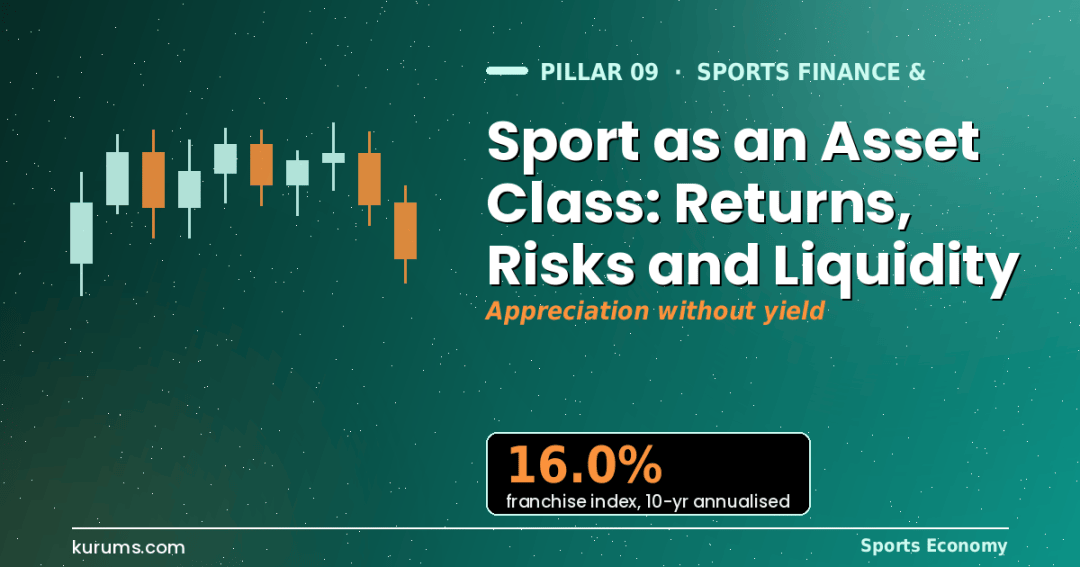
Sport as an Asset Class: Returns, Risks and Liquidity
What sports franchises have returned, where the return comes from, how correlated sport is with other assets, the risks of illiquidity and media rights, and the five routes an investor can use to get exposure.
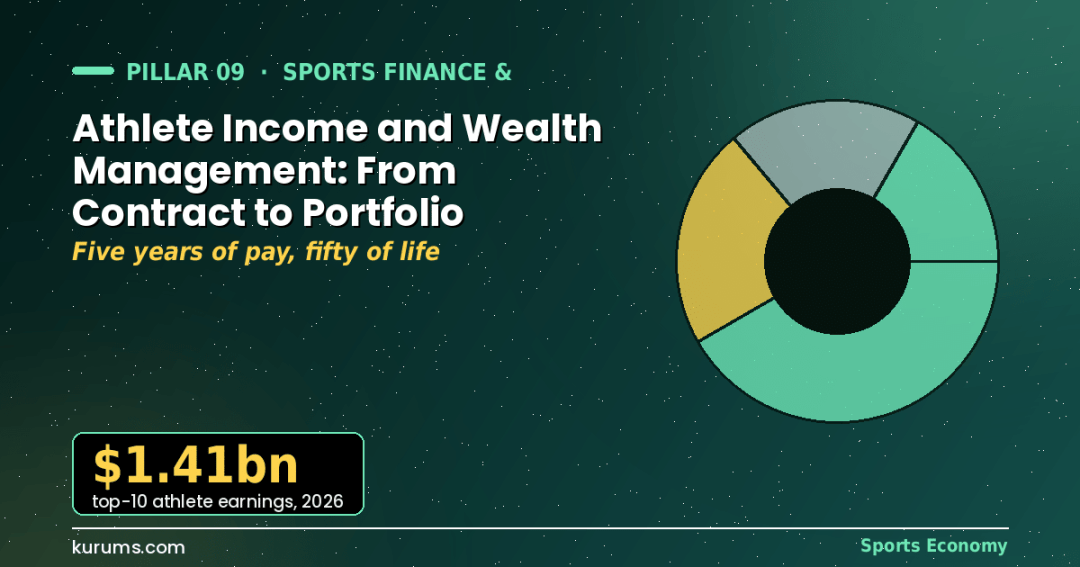
Athlete Income and Wealth Management: From Contract to Portfolio
Where athlete income comes from, how contracts and deferrals work, what tax takes, why so many players run out of money and how the best-advised athletes turn a short career into a lifetime portfolio.
Results depend on the figures you enter; check them against your own records before you rely on them. Last updated: October 2026 · Kurums editorial team.