The hotel industry for owners, operators and founders: the largest hotel companies, business models, KPIs, revenue management, distribution, costs and margins, opening and investing in hotels, technology, rules, software reviews, Best lists and hotel terms.
Hotels are regulated as buildings, as employers, as sellers to consumers and as users of dominant booking platforms. Which licences a hotel needs, who awards stars, what changed for price parity in Europe and how the EU’s short-term rental rules work from 20 May 2026.
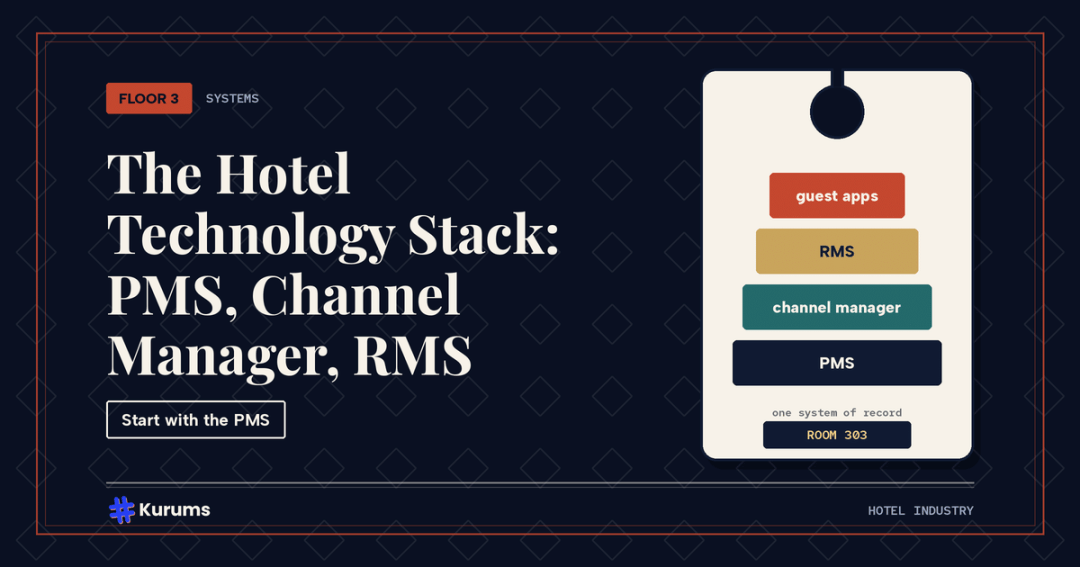
A hotel runs on a chain of connected systems. What the property management system, channel manager, booking engine, central reservation system and revenue management system each do, how they talk to one another, how vendors charge and how to choose a stack by hotel size.
A hotel is property whose rent is renegotiated every night. Why that makes it riskier and potentially more rewarding than other real estate, how hotels are valued from their income, what cap rates and price per key tell you, who invests and what to check before buying.
Opening a hotel is a real estate project, a brand decision and a start-up at once. The steps from feasibility to opening day, what a room costs to build or convert, how projects are financed, which permits apply and what goes wrong in the first year.
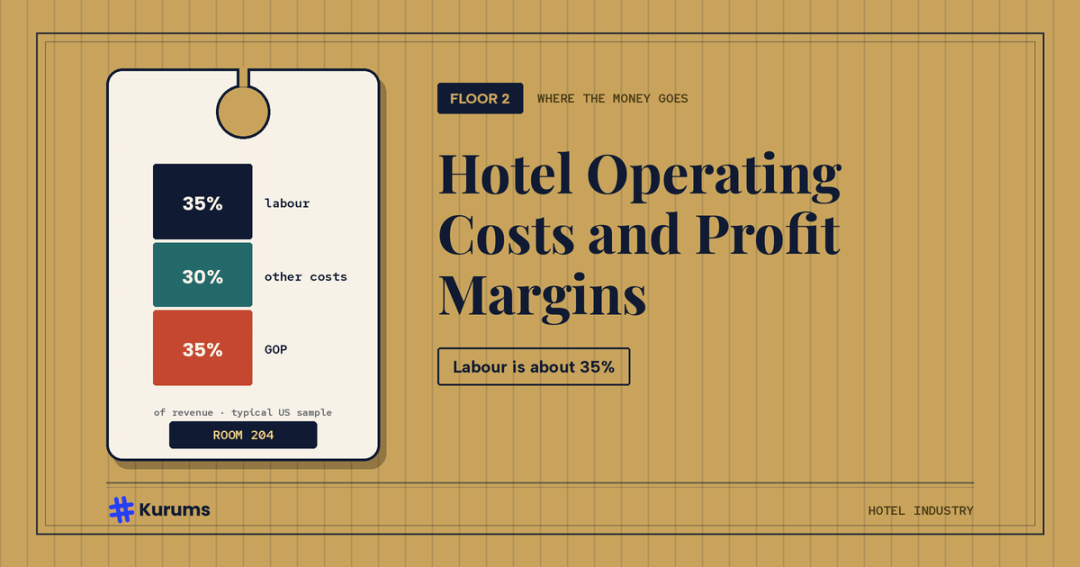
A hotel can sell every room and still disappoint its owner. The hotel profit-and-loss statement line by line, what labour, distribution and overheads cost, the 2025 margin benchmarks, why profit lags revenue and what owners can do about it.
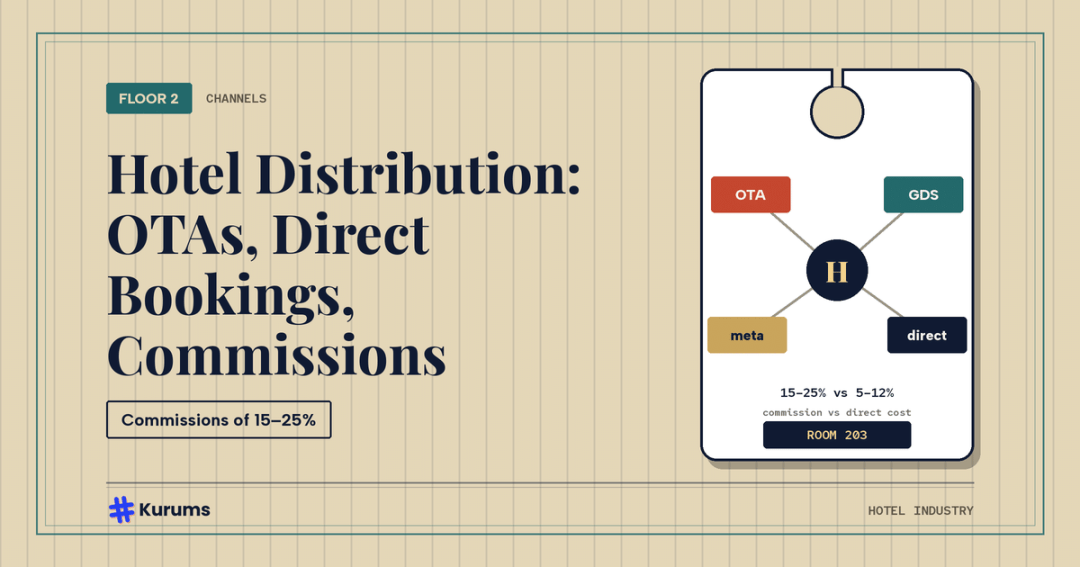
Online travel agencies sell about three in ten hotel bookings and charge 15 to 25 percent for doing it. How each channel works and what it costs, what Europe’s rulings on price parity changed, and the practical steps that move bookings to a hotel’s own website.
A hotel room that is empty tonight can never be sold again. How revenue management works in practice: segmenting demand, forecasting, setting and changing prices, controlling inventory with restrictions and overbooking, pricing groups and choosing software.
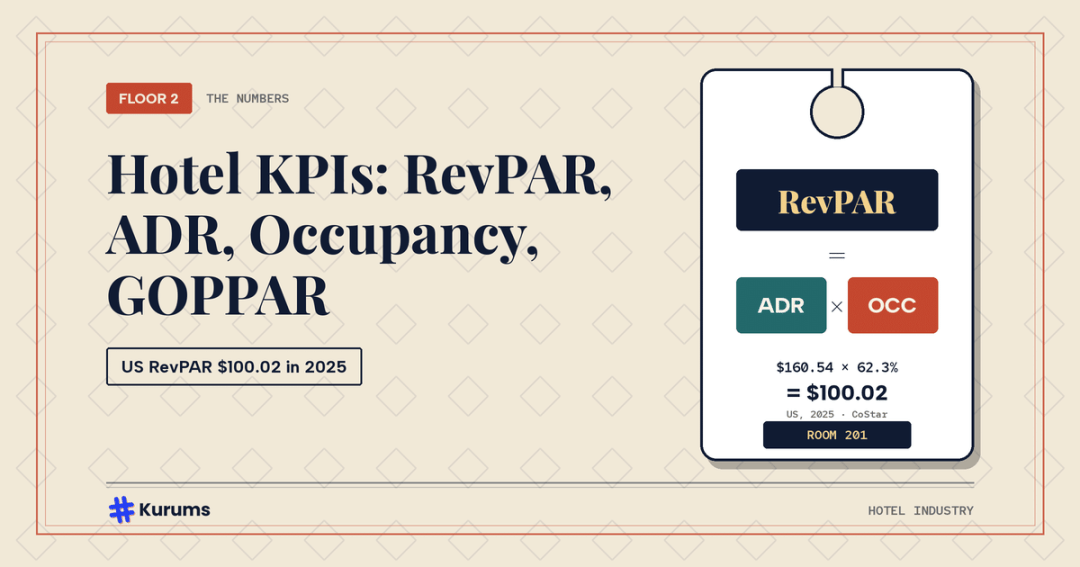
Three numbers describe a hotel’s sales and a handful more describe its profit. The formulas for occupancy, ADR, RevPAR, TRevPAR and GOPPAR, a worked example, the competitive indexes owners use and the 2025 benchmarks to compare against.
Why does one company need thirty hotel brands? How chain scales from luxury to economy are defined, how they differ from star ratings and service levels, what soft brands and extended-stay hotels are, and how an owner chooses the right tier for a site.
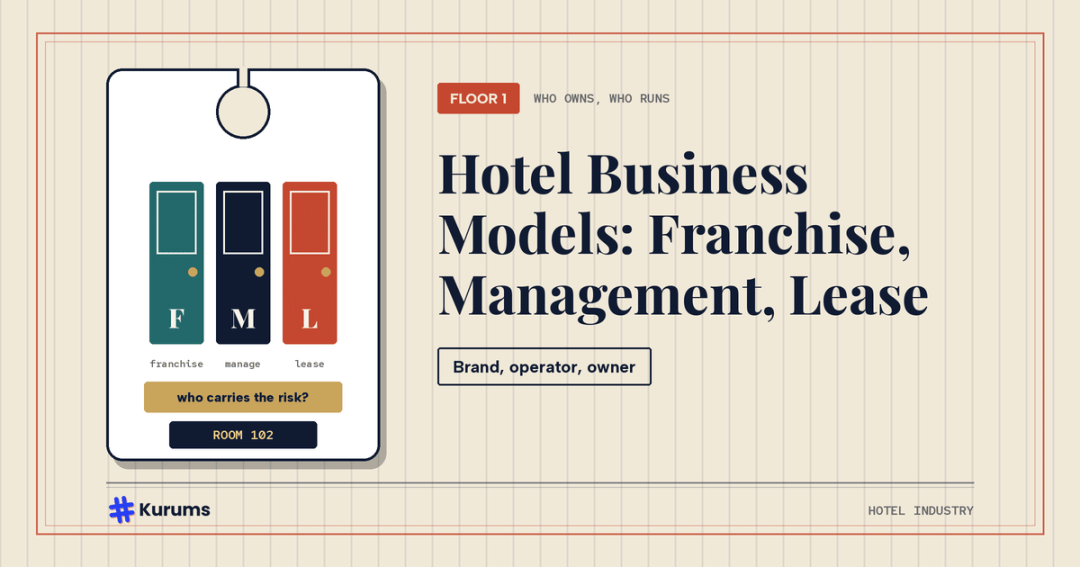
The same hotel can be franchised, managed, leased or run by its owner, and each choice moves risk and reward between the parties. How the four models work, what fees a brand and an operator charge, and how to pick the right structure for a property.
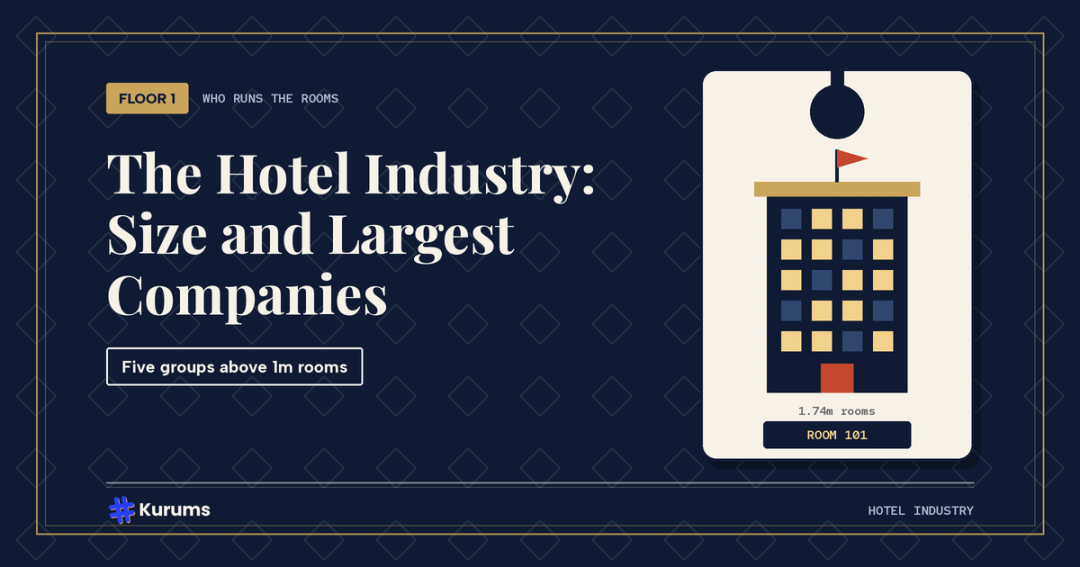
Five hotel groups now have more than a million rooms each, yet most of them own almost none of the buildings. How large the industry is, who the biggest companies are, how owners, brands and operators split the work and the money, and what changed in 2025 and 2026.