Finance Accounting Marketing Human Resources Sales Corporate Governance Technology Startup Procurement Law
Select Page

TL;DR: Snowflake fits multi-cloud independent data platforms with credit + storage consumption. Google BigQuery fits GCP-centric serverless analytics (on-demand TiB or capacity slots). Amazon Redshift fits AWS estates (provisioned nodes or Serverless RPUs). Microsoft Fabric fits Microsoft analytics stacks priced on Capacity Units + OneLake. Default to your cloud gravity and skills, then price the same workload on each official page. Fit labels are Kurums interpretation from public pricing checked 2026-09-17.

Cloud data warehouses store structured analytics data and run SQL at scale for BI and pipelines. This guide compares four primary cloud warehouse platforms for analytics and data-engineering leads β€” not a rewrite of our big data & analytics fundamentals.

We evaluate the same fields for every option: public starting price shape, pricing model, cloud gravity, standout capability and main limitation. We do not crown a single β€œbest overall” winner. Pricing reflects publicly listed models checked on 2026-09-17; always verify live vendor pages and calculators before purchase.

Cloud data warehouse comparison at a glance

Platform Pricing Best For Link
Snowflake Consumption credits + storage; editions Standardβ†’VPS (see consumption table) Multi-cloud data platform Visit →
Google BigQuery On-demand ~$6.25/TiB after 1 TiB free; or capacity slots; storage active/long-term GCP serverless analytics Visit →
Amazon Redshift Provisioned node hourly or Serverless from ~$1.50/hr (RPU); RMS storage separate AWS-centric warehouses Visit →
Microsoft Fabric Fabric F capacities (CU-hour PAYG or reservation) + OneLake storage β€” verify Azure calculator Microsoft BI/analytics stacks Visit →

Pricing reflects publicly listed US models as of 17 September 2026 and changes frequently. Meters differ (credits vs TiB vs RPU vs CU). Free tiers and commits vary widely. Always verify current pricing on each provider’s official site. Fit labels are Kurums interpretation, not vendor rankings.

The best cloud data warehouse platforms in 2026, compared

Snowflake

Best for multi-cloud independent platform

Snowflake official homepage

Best for: Organizations that want a cloud-agnostic warehouse with separated storage/compute and cross-cloud data sharing.

Snowflake sells editions (Standard, Enterprise, Business Critical, VPS) on a consumption model: compute credits plus compressed storage. On-demand and capacity (pre-purchase) options exist; exact credit rates sit in Snowflake’s Service Consumption Table by cloud and region. Strength is elastic warehouses and sharing β€” treat credit burn on always-on warehouses as the main cost risk.

Starting price Consumption (credits) + storage; editions Standard / Enterprise / Business Critical / VPS β€” verify Service Consumption Table
Best for short Multi-cloud data platform
Pricing model Compute credits + storage (on-demand or capacity)
Hosting model Snowflake-managed on AWS, Azure, or GCP
Standout Multi-cloud portability with storage/compute separation and data sharing
Main limitation Credit burn from idle or oversized warehouses can surprise without FinOps guardrails
  • Public pricing options page explains editions and on-demand vs capacity purchasing
  • Strong fit when you need one data platform across clouds rather than a single hyperscaler warehouse
  • Model the same warehouse size + hours + storage TB on the official consumption table before annual commits

Visit Snowflake →


Google BigQuery

Best for GCP-centric serverless analytics

Google BigQuery official homepage

Best for: Teams already on Google Cloud that want serverless SQL analytics with on-demand or capacity (slots) pricing.

BigQuery compute is on-demand (first 1 TiB/month free, then publicly listed per-TiB rates such as $6.25/TiB in many US regions β€” verify live) or capacity via editions/slots. Storage has active and long-term tiers with a free storage allotment. Fits Looker/Sheets-adjacent GCP estates; control costs with partitioning, clustering and slot commitments when query volume is steady.

Starting price On-demand analysis from public per-TiB rates (1 TiB/mo free); capacity/slots editions; storage separate β€” verify cloud.google.com/bigquery/pricing
Best for short GCP serverless analytics
Pricing model On-demand TiB scanned and/or slot capacity + storage
Hosting model Google Cloud (serverless)
Standout True serverless analytics with clear on-demand vs capacity choice
Main limitation Select * and unpartitioned scans inflate on-demand bills quickly
  • Free monthly analysis and storage allotments appear on the public pricing page β€” confirm current numbers
  • Capacity pricing suits predictable high concurrency better than pure on-demand
  • Best default when IAM, networking and talent already live on GCP

Visit BigQuery →


Amazon Redshift

Best for AWS-centric warehouses

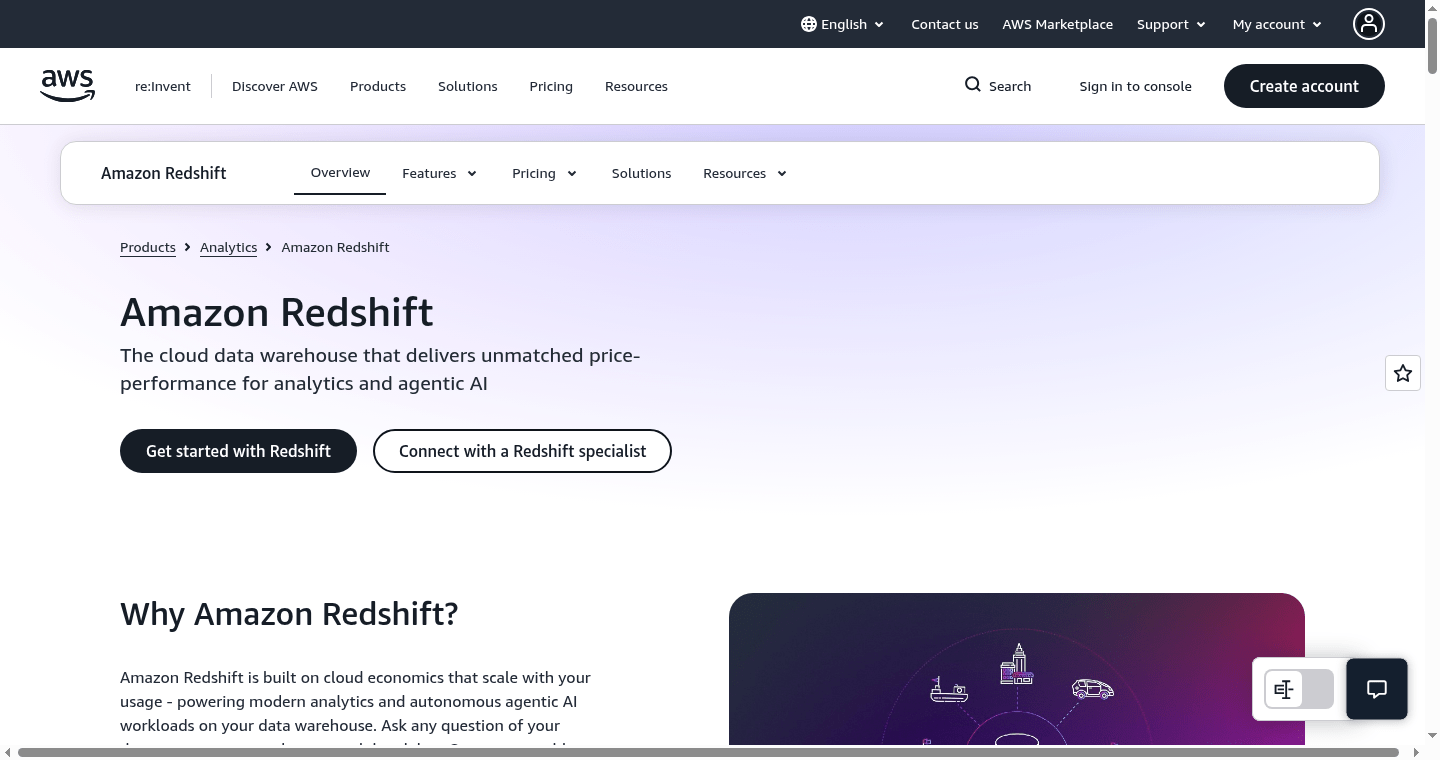
Amazon Redshift official homepage

Best for: AWS estates that want provisioned RA3/RG clusters or Redshift Serverless next to S3 and the AWS analytics stack.

Redshift offers provisioned nodes (on-demand hourly or reserved) and Serverless billed in RPU-hours (public materials cite starting around $1.50/hour depending on base capacity β€” verify the live pricing page). Managed storage (RMS) is billed separately on RA3/RG. Spectrum and concurrency scaling have their own meters. Use the AWS Pricing Calculator for a representative workload.

Starting price Provisioned on-demand/reserved nodes; Serverless RPU-hours (from publicly cited ~$1.50/hr entry β€” verify live); RMS $/GB-month
Best for short AWS-centric warehouses
Pricing model Node hours or RPU-hours + managed storage
Hosting model AWS (provisioned cluster or Serverless workgroup)
Standout Deepest AWS integration (IAM, S3, Glue, Spectrum lake queries)
Main limitation Provisioned clusters can idle-cost; Serverless needs RPU base/max tuning
  • Pause/resume on provisioned clusters helps non-prod cost control
  • Serverless suits spiky BI; provisioned suits steady ETL with reserved discounts
  • Best default when AWS is already the system of record for data and IAM

Visit Amazon Redshift →


Microsoft Fabric

Best for Microsoft analytics consolidation
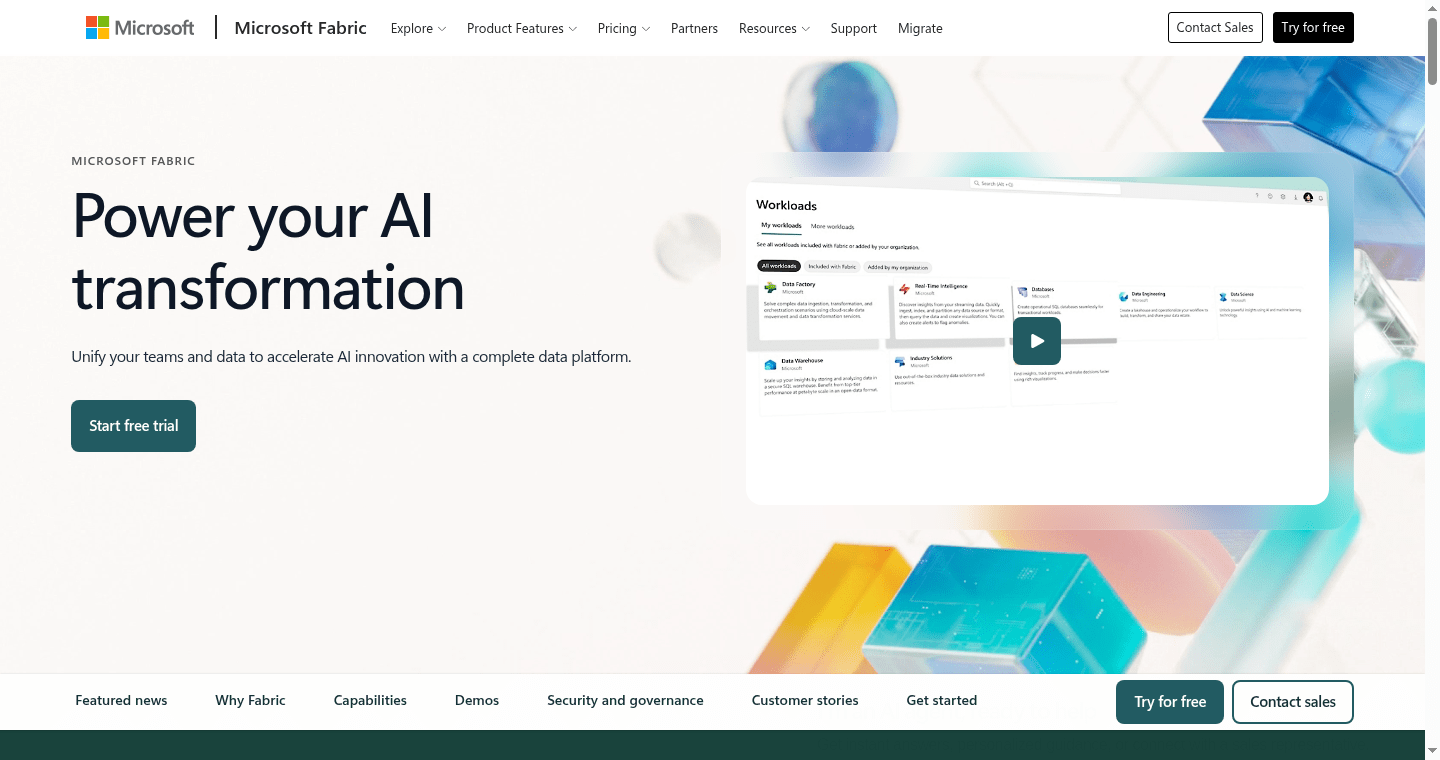
Microsoft Fabric official homepage

Best for: Organizations standardizing on Power BI, Azure and Microsoft 365 analytics who want OneLake + warehouse/lakehouse under Fabric capacities.

Fabric is sold primarily as Azure F-SKU capacities (Capacity Units) with pay-as-you-go and reservation options; OneLake storage is separate. Public Azure pricing details list CU-hour rates by region (example community figures cite F2 PAYG near $0.36/CU-hour in some US regions β€” always confirm the live Azure price sheet/calculator). Power BI license requirements for consumers still matter β€” read Microsoft’s current Fabric licensing notes.

Starting price Azure Fabric capacities (F2… SKUs) billed per CU-hour; OneLake storage separate; Power BI license caveats β€” verify azure.microsoft.com pricing details
Best for short Microsoft BI/analytics stacks
Pricing model Capacity Units (CU) + storage; reservations available
Hosting model Microsoft Azure / Fabric SaaS
Standout OneLake + Power BI adjacency for Microsoft-centric analytics estates
Main limitation Capacity sizing and Power BI license rules are easy to under-model
  • Pause capacities when idle if your ops model allows β€” CU burn is continuous while running
  • Strong fit when Fabric replaces a patchwork of Azure Synapse + Power BI Premium decisions
  • PoC should include warehouse load, Power BI semantic model, and access-control tests

Visit Microsoft Fabric →

How to choose the right cloud data warehouse

Start with cloud gravity (where data and IAM already live) and the skills your analysts already have.

Choose BigQuery on GCP when you want serverless SQL and will manage on-demand scans or buy slots for steady load.

Choose Redshift on AWS when S3/Glue/IAM adjacency matters and you will pick provisioned vs Serverless deliberately.

Choose Fabric when Microsoft analytics consolidation (Power BI + OneLake) is the center of gravity and you will size F capacities honestly.

Choose Snowflake when multi-cloud portability, data sharing, or an independent data platform outweighs single-cloud discounts.

Price one real workload (storage TB + monthly query/compute profile) on each official pricing page, run a short PoC on load + query + access control, and document export paths before annual commits. Fit guidance is Kurums interpretation from public pricing checked 2026-09-17 β€” not sponsored rankings.

Tip: Price the same representative workload (storage TB + monthly query/compute hours or scanned TiB + concurrency) on each shortlisted vendor’s official pricing page or calculator before signing annual commits. Idle provisioned capacity and scan-heavy SQL change the winner more often than feature checklists.

How we evaluate

We compare platforms on the same fields: public pricing and billing basis, free tier or trial, cloud gravity, standout capability, and the main limitation. Order reflects evidence for common buyer situations β€” not affiliate availability. We do not claim β€œbest overall,” β€œmarket leader,” or invented benchmarks.

Primary sources are vendor pricing and documentation pages checked on 2026-09-17 (see SOURCE-LEDGER). Third-party commentary is used only for context and labeled. Re-check every price at publish time.

Frequently Asked Questions

What is the best cloud data warehouse in 2026?

It depends on cloud gravity and skills. BigQuery fits GCP, Redshift fits AWS, Fabric fits Microsoft analytics estates, Snowflake fits multi-cloud independent platforms. There is no single best overall winner.

Snowflake vs BigQuery vs Redshift β€” which should we choose?

Default to the warehouse that matches your primary cloud and team skills, then price the same workload on each official page. Choose Snowflake when multi-cloud portability or independent platform governance matters more than single-cloud bundling.

Is Microsoft Fabric a data warehouse?

Fabric includes warehouse and lakehouse experiences on OneLake under capacity SKUs. Treat it as a Microsoft analytics platform that can replace or absorb warehouse workloads β€” verify current Fabric workloads and Power BI license rules on Microsoft docs.

How is BigQuery priced?

Compute is on-demand (per TiB scanned, with a monthly free allotment) or capacity (slots/editions). Storage is billed separately with active and long-term tiers. Confirm live numbers on cloud.google.com/bigquery/pricing.

Is Snowflake more expensive than Redshift?

Not always. Snowflake credits and Redshift node/RPU math depend on workload shape, idle time and commitments. Model the same hours and storage on both public pages instead of assuming a universal winner.

Do we need a data warehouse or a data lake?

Warehouses excel at structured BI SQL; lakes excel at raw/multi-format retention. Many orgs use both. See Kurums big-data fundamentals for vocabulary β€” this page is the buyer comparison.

Which warehouse is best if we already use AWS / Azure / GCP?

Kurums interpretation: Redshift on AWS, Fabric on Microsoft analytics stacks, BigQuery on GCP β€” unless multi-cloud Snowflake clearly wins on sharing or portability requirements.

How do we estimate warehouse costs before buying?

Inventory top dashboards/pipelines, pick one representative workload, price it in each official calculator/pricing page, then PoC load + three critical queries + access control. Label estimates clearly.

Can we switch warehouses later without rewriting everything?

SQL dialects, orchestration and governance differ. Open table formats and documented export paths reduce pain β€” plan exit before annual commits.

What should we test in a data warehouse proof of concept?

Load a realistic slice, run three business-critical queries under concurrency, test RBAC/masking, and compare month-2 cost with production-like volume β€” not toy datasets.

Last Updated: 17 September 2026 (Europe/Istanbul) · Reviewed by the Kurums Technology editorial team. This comparison is independent and informational; it is not purchasing advice. Verify pricing, features and integrations directly with each provider.

Disclosure: Kurums comparisons are editorial and informational. β€œVisit” links go to official vendor sites. If a link later becomes affiliate or sponsored, it will use sponsored/nofollow attributes and this disclosure will be updated. Always verify current pricing and terms on the vendor page.


Discover more from Kurums | Business Intelligence

Subscribe to get the latest posts sent to your email.

Discover more from Kurums | Business Intelligence

Subscribe now to keep reading and get access to the full archive.

Continue reading

Discover more from Kurums | Business Intelligence

Subscribe now to keep reading and get access to the full archive.

Continue reading