TL;DR:Grafana k6 fits JS-centric CI performance tests (OSS free; Cloud from Free 500 VUh or Pro $19/mo + VUh). Gatling fits code-first JVM teams (OSS free; Enterprise from €89/mo annual). Apache JMeter and Locust fit teams that will own injectors (software free). BlazeMeter fits hosted multi-engine runs of existing scripts. Fit labels are Kurums interpretation from public pricing checked 2026-09-17.
Load testing tools simulate concurrent users and traffic so teams can find bottlenecks before production incidents. This guide compares five primary options for engineering and QA leads — not a rewrite of our software development fundamentals, and not an uptime-monitoring buyer guide.
We evaluate the same fields for every option: public starting price, pricing model, hosting model, standout capability and main limitation. We do not crown a single “best overall” winner. Pricing reflects publicly listed rates checked on 2026-09-17; always verify live vendor pages before purchase.
Load testing tools comparison at a glance
Platform
Pricing
Best For
Link
Grafana k6 / Grafana Cloud k6
OSS free; Cloud Free 500 VUh; Pro $19/mo + ~$0.15/VUh after included
Pricing reflects publicly listed rates as of 17 September 2026 and changes frequently. OSS tools are free to download but not free to operate at scale. Cloud VUh/credits/concurrency caps drive real spend. Always verify current pricing on each provider’s official site. Fit labels are Kurums interpretation, not vendor rankings.
The best load testing tools in 2026, compared
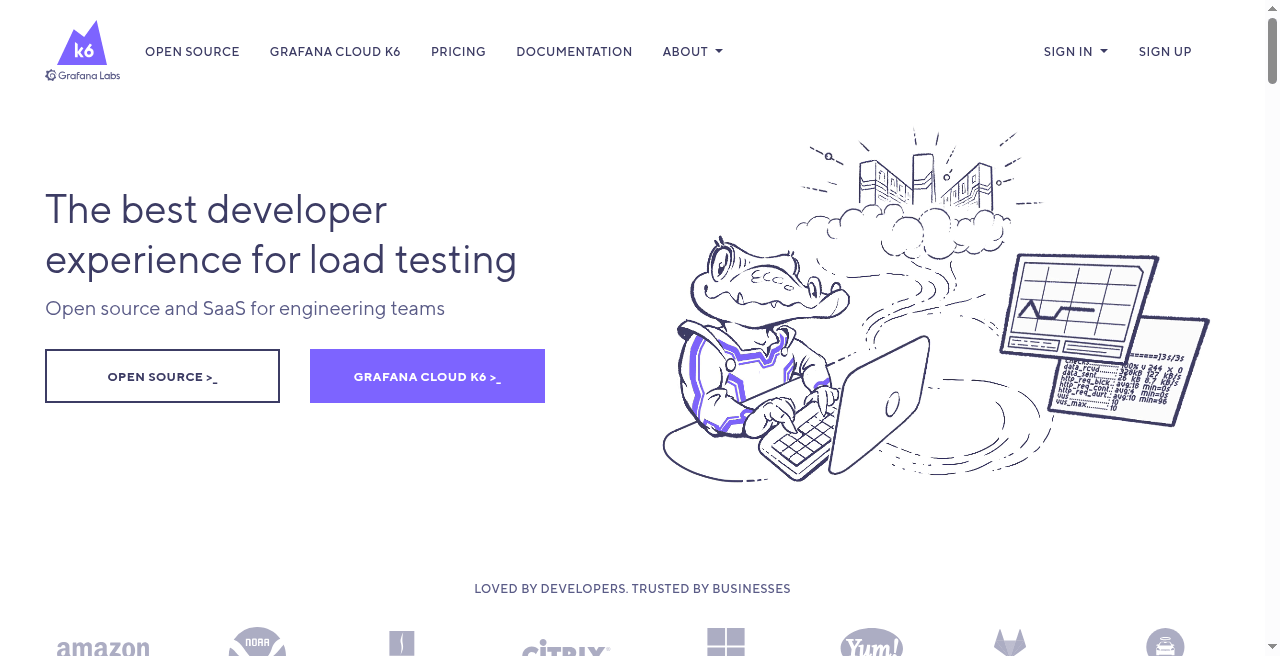
Grafana k6 / Grafana Cloud k6
Best for JS performance tests in CI
Best for: Engineering teams that want JavaScript test scripts, strong CI hooks and optional managed cloud execution via Grafana Cloud.
k6 open source is free to run locally or in your pipelines. Grafana Cloud k6 adds hosted execution and insights: Free includes 500 VUh/month; Pro starts with a $19/month Grafana Cloud platform fee and usage (public materials list about $0.15 per virtual user hour after included allotment, with volume discounts); Enterprise is custom from a $25k/year spend commit. Correlate results with Grafana observability when you already live in that stack.
Starting price
k6 OSS free; Grafana Cloud Free (500 VUh/mo); Pro $19/mo + usage (~$0.15/VUh after included); Enterprise custom
Best for short
Developer-centric JS load tests
Pricing model
OSS free; cloud VUh + platform fee
Hosting model
Self-run OSS and/or Grafana Cloud execution
Standout
Modern JS DX with first-class CI and Grafana correlation
Main limitation
Large browser/UI scenarios may need complementary tools; cloud cost is VUh-sensitive
Treat OSS vs Cloud as different ops models — scripts can move, execution cost cannot be ignored
Model VUh from max VUs × duration before calling Pro “cheap”
Strong fit if Application Observability already sits in Grafana Cloud
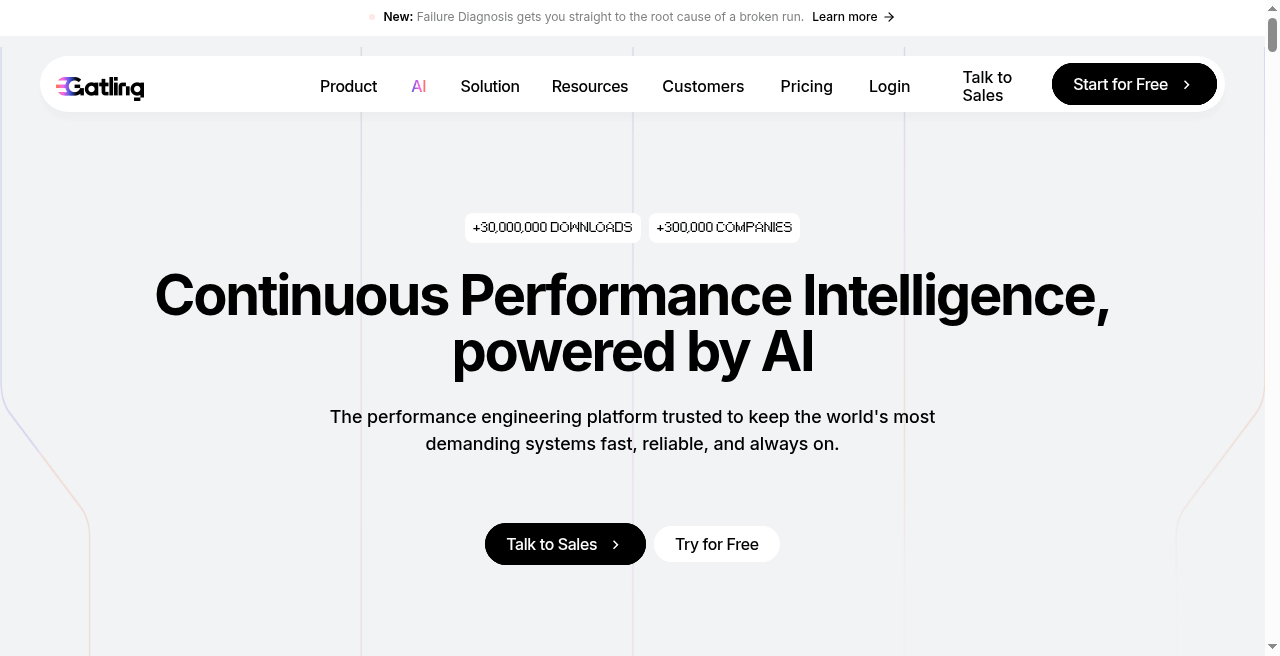
Best for: Teams that prefer Gatling’s test-as-code approach (Scala/Java/JS) and may buy Gatling Enterprise for distributed generators and CI reporting.
Gatling Community Edition is free for self-managed load generation. Gatling Enterprise publishes list plans: Basic from €89/month billed annually (€99 month-to-month) and Team from €356/month annually (€396 monthly), with VU/hour/generator caps per plan; Enterprise tier is quote-based. Credits/minutes meter additional generator usage — read the live pricing page before sizing.
Starting price
Community OSS free; Enterprise Basic from €89/mo (annual) / €99 monthly; Team from €356/mo annual; Enterprise custom
Best for: Teams that want a free, plugin-rich toolkit with GUI test building and CLI CI runs — and will own injector infrastructure.
Apache JMeter is open-source under the Apache License 2.0 with no seat fee. You pay for load generator VMs/containers, network egress and engineering time. Commercial SaaS runners (for example BlazeMeter) can execute JMeter scripts if you want hosted scale without maintaining injectors.
Starting price
OSS free download; infrastructure and maintainer time are your cost
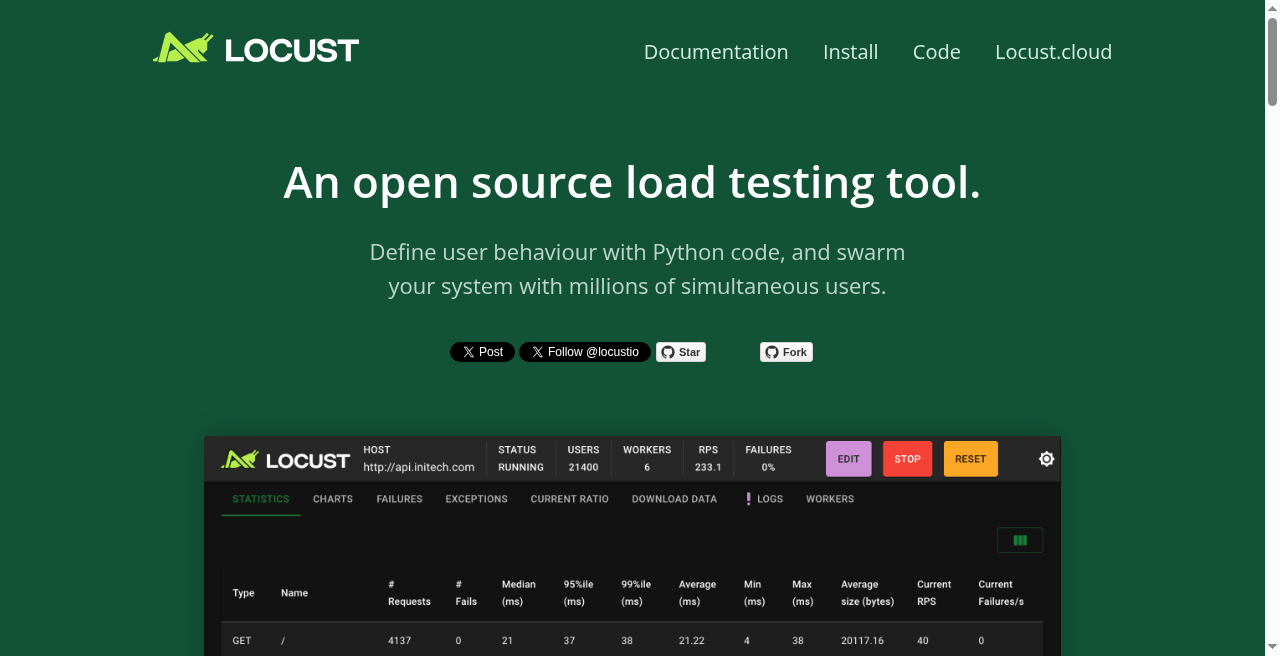
Best for: Python-fluent teams that want scenario logic as code, distributed workers and a simple web UI — without a seat license on the OSS core.
Locust is open source (MIT). Like JMeter, commercial cost is your workers and ops. Locust Cloud / enterprise offerings may exist from vendors around the ecosystem — verify any hosted brand’s public pricing separately and do not invent list prices. OSS Locust remains the default starting point for many Python shops.
Starting price
OSS free; pay for worker VMs/containers and ops time
Best for short
Python developer load tests
Pricing model
Open-source; infra TCO (hosted options vendor-specific)
Best for: Teams that want elastic cloud injectors and CI reporting while keeping existing JMeter, k6 or Gatling scripts.
BlazeMeter (Perforce) publishes Basic and Pro plans on its pricing page (commonly cited near $99–$149/month Basic and $499–$649/month Pro depending on monthly vs annual — verify live figures and concurrency caps). Unleashed/enterprise is sales-assisted. You pay for convenience and scale; engine choice can follow your existing scripts.
Starting price
Public Basic/Pro plans on blazemeter.com/pricing (commonly ~$99–$149 Basic, ~$499–$649 Pro); Enterprise custom — verify live
Best for short
Hosted multi-engine load SaaS
Pricing model
SaaS subscription + concurrency/usage limits
Hosting model
BlazeMeter cloud injectors (plus private options on higher tiers)
Standout
Run familiar open-source scripts without owning injector fleets
Main limitation
Subscription + concurrency caps can exceed OSS+self-host for light intermittent tests
Best when elastic geographic load and shared reports matter more than DIY infra
Start with language preference (JS vs JVM vs Python), whether you will own injectors, and how often you run large tests.
Choose Grafana k6 when developers want JS scripts in CI and may buy Cloud VUh for elastic runs — especially inside a Grafana observability estate.
Choose Gatling when as-code JVM performance testing is the culture and Enterprise collaboration/generators justify the subscription.
Choose JMeter when you need a free, plugin-rich toolkit or already own .jmx libraries — budget injectors honestly.
Choose Locust when Python scenario logic and DIY workers are the path of least resistance.
Choose BlazeMeter when you want hosted scale for existing OSS scripts without running generator fleets.
The most useful tool is the one your team will run on every risky release — not the one with the longest protocol checklist. Fit guidance is Kurums interpretation from public pricing checked 2026-09-17.
Tip: Price the same representative scenario (target VU peak × duration × regions) across two shortlists — OSS+self-host TCO versus one cloud runner — before annual contracts. Concurrency caps and VUh math change the winner more often than feature matrices.
How we evaluate
We compare tools on the same fields: public pricing and billing basis, free plan or OSS license, hosting model, standout capability, and the main limitation. Order reflects evidence for common buyer situations — not affiliate availability. We do not claim “best overall,” “market leader,” or invented market share.
Primary sources are vendor pricing and documentation pages checked on 2026-09-17 (see SOURCE-LEDGER). Third-party commentary is used only for context and labeled. Re-check every price at publish time.
Frequently Asked Questions
What is the best load testing tool in 2026?
It depends on language and ops model. k6 fits JS/CI teams; Gatling fits JVM as-code shops; JMeter and Locust fit OSS+self-host; BlazeMeter fits hosted multi-engine runs. There is no single best overall winner.
Is Grafana k6 free?
k6 open source is free. Grafana Cloud k6 includes a Free allotment (500 VUh/month) then Pro platform fee + VUh usage. Verify live Grafana Cloud pricing.
Gatling Community vs Enterprise — when do we pay?
Community is free for self-managed testing. Buy Enterprise when you need published collaboration, distributed generators and CI reporting under Gatling’s plan caps — from publicly listed Basic/Team euros on gatling.io/pricing.
Is JMeter still relevant?
Yes for teams with .jmx assets, GUI authoring needs or plugin ecosystems — if they will operate injectors or a SaaS runner.
Locust vs k6 — which should we pick?
Prefer Locust for Python-native scenario logic and DIY workers; prefer k6 for JS DX and Grafana Cloud execution paths. Compare team skills first.
When is BlazeMeter worth it vs self-hosting?
When elastic multi-region injectors, shared reports and CI integration save more engineering time than the subscription — model your monthly VU-minutes either way.
How do virtual user hours (VUh) work?
Cloud vendors typically meter max VUs × test duration (rules vary). Always read the vendor’s VUh definition and minimums on the pricing FAQ.
What should we verify before an annual load-testing contract?
Concurrency caps, included VUh/credits, browser vs protocol pricing, private network options, data retention and SSO. Re-open pricing pages at renew time.
Last Updated: 17 September 2026 (Europe/Istanbul) · Reviewed by the Kurums Technology editorial team. This comparison is independent and informational; it is not purchasing advice. Verify pricing, features and integrations directly with each provider.
Disclosure: Kurums comparisons are editorial and informational. “Visit” links go to official vendor sites. If a link later becomes affiliate or sponsored, it will use sponsored/nofollow attributes and this disclosure will be updated. Always verify current pricing and terms on the vendor page.