
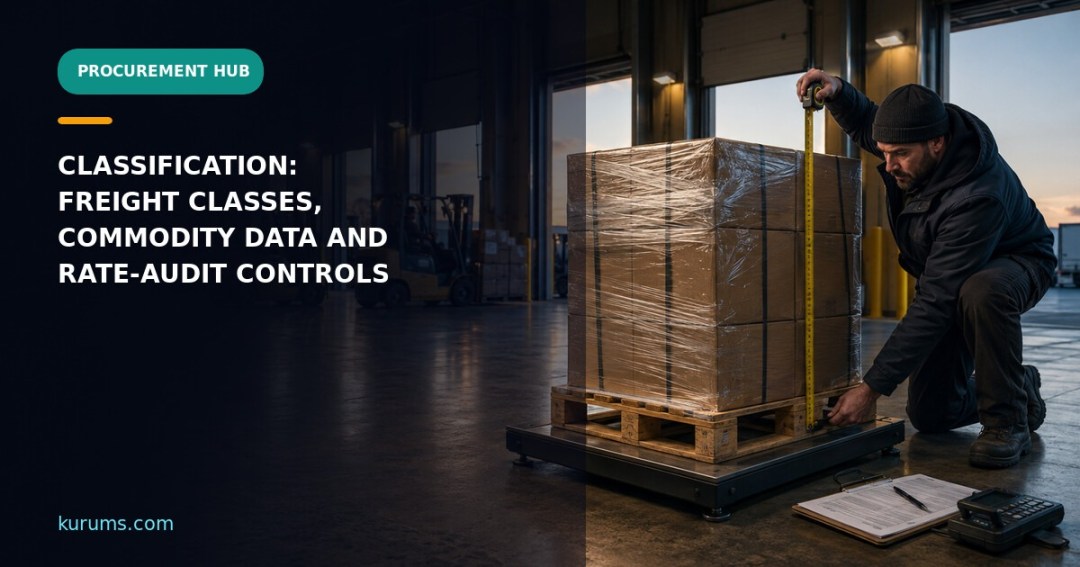
CLASSIFICATION groups freight by transportation characteristics so a rate can be applied. In LTL and other structured freight environments, the item description, density, handling, stowability and liability affect the class or rating. Procurement should control the source data, packaging basis, class decision, exceptions and audit trail instead of treating classification as a carrier-only field.
- Build the classification from the shipped handling unit and the applicable tariff or standard, not from a vague product family.
- Capture dimensions, weight, packaging, density, handling, stowability, liability and hazardous or special conditions.
- Separate a classification or commodity code from customs tariff classification and from a carrier's quoted rate.
- Use reclassification, inspection and invoice variances as data-quality signals and supplier-development inputs.
What Freight Classification Controls
The SSDER glossary describes classification as a list or grouping of cargo items and classification rating as the price applied to a classified item. In practice, the terms can refer to different regimes. A freight class used for LTL rating is not automatically a customs tariff code, product category, dangerous-goods class or internal commodity family.
The procurement objective is to define which classification the quote uses and why. The buyer should state the mode, tariff or standard, item number if applicable, packaging unit, density basis, handling condition, stowability, liability and any exception. That prevents a carrier from applying a higher class after pickup because the shipped form differed from the quote.
Build the Item and Handling-Unit Data
Start with the actual shipping unit: length, width, height, weight, pallet or carton count, packaging, stackability, fragility, orientation, shrink-wrap, overhang and labels. Density is calculated from weight and volume using the standard’s required units. If the shipment is reconfigured, the data must be refreshed rather than inherited from an old product master.
Add handling, stowability and liability facts. A dense, stable pallet may rate differently from a light, fragile or irregular unit even when the product is the same. Record hazardous, temperature, high-value, theft-sensitive or special-lift conditions separately. A generic description such as ‘parts’ gives the carrier no reliable basis for classification or safe handling.
Control Classification Authority and Changes
Define who assigns the class, who approves an exception, which standard version applies and how a disputed class is resolved. NMFTA explains that the National Motor Freight Classification uses characteristics including handling, stowability, liability and density; its current guidance should be checked for the relevant item and effective date. A buyer should not copy a remembered class from another shipment without validating the provision.
A class change can affect rate, minimum charge, capacity, packaging, claims and customer price. Require notice when the carrier, tariff, standard, item provision or packaging assumption changes. Store the source, calculation, photograph, package specification, approval and effective date so the same shipment can be reconstructed after a reclass invoice.
Audit Reclassification and Freight Invoices
The audit compares the quoted class, shipped dimensions and weight, carrier inspection record, applicable rate, minimum, accessorials and invoice. If the carrier reclassifies the shipment, request the measurement, photographs, item provision, reason, date and rate calculation. A reclass may be valid, but the buyer needs enough evidence to determine whether the cause was supplier packaging, data entry, carrier measurement or a standard change.
Trend reclassifications by supplier, SKU, package, dock, lane and carrier. First-pass classification accuracy, dimensional variance, class-change rate, disputed dollars and time to resolve are useful metrics. Corrective actions may include packaging redesign, scale calibration, master-data changes, training or a revised RFQ—not only a negotiated credit.
Worked Example: A Pallet Is Reclassified
A supplier quotes a machine part as a dense, stackable pallet. The shipped pallet includes a tall protective frame and cannot be stacked. The carrier measures a lower density and applies a higher class, plus a handling accessorial. Procurement disputes the invoice using the original dimensions, but the original specification never described the frame or stowability.
The corrected item master stores the complete handling unit, packaging drawing, weight evidence and allowed stack condition. The RFQ asks carriers to price the same configuration, and the supplier must notify packaging changes. If a reclassification occurs, the carrier evidence is reviewed against the approved package rather than the product description alone.
Metrics and Governance
For freight classification procurement controls, measure both service and evidence quality. Useful indicators include first-pass acceptance, exception rate, response time, unplanned cost, document completeness, damage or discrepancy rate, and the percentage of shipments that follow the approved process. A dashboard should distinguish a supplier failure from a carrier, terminal, broker or internal master-data failure.
Review the metric trend with procurement, logistics, finance, quality and the responsible specialist. Use a monthly exception sample to test whether the control worked in a real transaction, not just whether a field was filled. Repeated exceptions should change the sourcing strategy, contract, lane design or supplier development plan.
Keep the control proportionate to risk. High-value, regulated, time-critical or safety-sensitive cargo needs stronger evidence and faster escalation than a routine shipment. Record the decision owner, approval date, source documents and follow-up action so the next buyer can understand the operating history.
Supplier and Carrier Questions
- Which CLASSIFICATION or related glossary condition is assumed in your quotation, procedure or service description?
- Which party owns each data field, physical handoff, inspection, document and exception?
- What evidence will be available before release, loading, movement, receipt, invoice approval or claim?
- What changes require advance notice, requalification, a revised price or a new risk decision?
- How will the supplier report incidents, delays, mismatches and corrective actions, and within what response time?
Implementation Sequence
Implement the control in a small, representative lane first. Capture the baseline process, test the required data and evidence, run a real transaction, and review every exception with the people who performed the work. Do not declare the control effective only because a supplier signed a procedure.
After the first three shipments or operating cycles, update the purchase-order clause, work instruction, scorecard and training. Scale the control to other suppliers only when the evidence is repeatable and the owner can explain what happens when the normal path fails.
Common Mistakes to Avoid
- Confusing freight classification with customs tariff classification, dangerous-goods class or an internal commodity code.
- Using product dimensions instead of the shipped handling-unit dimensions and packaging.
- Ignoring handling, stowability, liability or special conditions because density looks acceptable.
- Accepting a reclass invoice without the carrier's measurement, item provision, date and rate evidence.
- Failing to update the classification after a supplier changes pallet, carton or protective packaging.
Procurement Implementation Checklist
- Name mode, tariff or standard, item provision, effective version and class authority.
- Capture handling-unit dimensions, weight, package, density, stackability and special conditions.
- Separate freight class, customs code, dangerous-goods class and internal commodity data.
- Set approval, exception, notice, reclassification and dispute rules.
- Audit class, measurement, rate, minimum, accessorial and invoice evidence.
- Trend reclassifications and fix packaging, scale, master-data and supplier root causes.
Frequently Asked Questions
What does freight classification mean?
It is the grouping or rating of freight using transportation characteristics so an applicable rate can be determined.
Is freight classification the same as a customs HS code?
No. They serve different purposes and are governed by different rules. Do not substitute one for the other.
Which factors affect LTL freight class?
Common factors include density, handling, stowability and liability, together with the applicable commodity provision and packaging.
Who should assign the class?
The process should name the responsible data or logistics owner, the applicable standard and the approval route for exceptions; the carrier may validate or reclassify.
How should a reclassification be disputed?
Request the measurement, item provision, photos or inspection record, effective rate, reason and calculation, then compare them with the approved handling-unit data.
Related Kurums Guides
- Freight Rates and Surcharges
- Freight Contracts and Parties
- Freight Network Design
- Cargo Security Hardware
- Billed Weight and VGM
- Waiting-Time and Arrival Controls
Standards and Authoritative Sources
- NMFTA — National Motor Freight Classification
- NMFTA — Freight classification overview
- NMFTA — Classification changes
- NMFTA — Precise freight-class process
Glossary terms covered: CLASSIFICATION, freight class, commodity, density, handling, stowability, liability, NMFC
Kurums.com · Procurement, sourcing and business operations
Discover more from Kurums | Business Intelligence
Subscribe to get the latest posts sent to your email.