
Taste Note - Amazon Negotiating Best Sellers
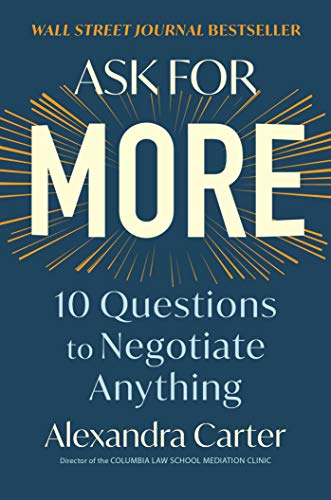
Ask for More: Ten Questions That Prepare Any Negotiation, From Contracts to Disputes
A Kurums Book Taste review of Ask for More for in-house counsel, legal operations leads and managers who negotiate often and prepare too little.
Why this book fits Kurums
Alexandra Carter teaches negotiation and runs the mediation clinic at Columbia Law School, and she has trained diplomats and corporate teams. Ask for More condenses that teaching into ten questions. Its central claim is that most negotiators lose value before the meeting begins, because they argue for a position they never examined and never ask the other side enough to learn what is actually on the table.
For the Kurums Law audience, the appeal is that the method is short enough to use under deadline. Contract renewals, settlement talks, scope disputes with a vendor or a hard conversation with an internal client all benefit from the same discipline: get clear on your own problem and needs first, then spend the meeting asking open questions instead of trading demands.
What the book argues
Carter organises the book around two sets of five questions. The first set is a mirror: questions you ask yourself before you negotiate. What problem am I really trying to solve, what do I need, what am I feeling about it, what has worked for me in similar situations, and what is the first step I can take? She argues that skipping this self-examination is why people anchor on a number or a clause when the underlying need could be met in several ways.
The second set is a window onto the other party. Here the core move is an open invitation to talk, often starting with a simple prompt to tell me more, followed by questions about their needs, their concerns, what they have already tried and how they see the next step. The point is not politeness. Open questions surface information that changes the deal, and people who feel heard are more willing to move.
Throughout, Carter treats negotiation as any conversation in which you steer a relationship, not only formal bargaining. She uses examples from her own clinic work, her teaching and her family to show the questions at work, and she returns repeatedly to one practical lesson: when a talk stalls, the remedy is usually a better question, not a stronger argument.
Key ideas, translated to your desk
Define the problem, not the position
Before drafting a redline or a settlement figure, write one sentence on the problem you are solving. Several outcomes may solve it, and some cost less.
Open with an invitation
Begin the meeting with an open request for the other side's view rather than your opening offer. You learn constraints you would otherwise guess at.
End on a first step
Close every session by agreeing a concrete next action and owner. Momentum matters more than resolving every point in one call.
Use it at work
- Run the five mirror questions as a written prep sheet before every significant contract or dispute call.
- Train your team to open negotiations with an open question and to hold the first offer until they have listened.
- Add a needs and concerns section to your negotiation briefs, filled in for both sides.
- Finish each round by confirming the agreed next step in writing within a day.
Read it if
- You negotiate contracts or disputes regularly and want a repeatable preparation routine.
- You manage lawyers or commercial staff who argue well but listen less than they should.
- You liked Getting to Yes and want a shorter, question-driven companion to it.
You can skip it if
- You want detailed tactics for adversarial, one-shot price bargaining.
- You prefer research-heavy negotiation theory over a practitioner method with personal stories.
- You already use a structured interest-based preparation template that your team follows.
This book appears in
Curated Tasting Menus that chain this title into a reading route.
Discover more from Kurums | Business Intelligence
Subscribe to get the latest posts sent to your email.