
Taste Note - Amazon Sales & Selling Best Sellers
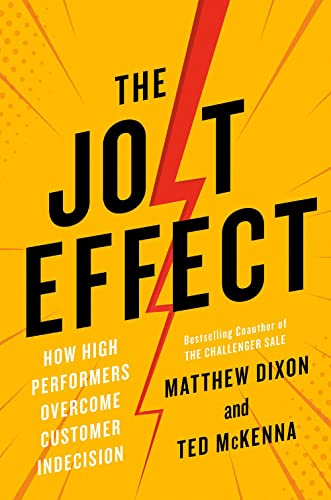
The JOLT Effect: Losing to Indecision - and the Playbook Against It
A Kurums Book Taste review of The JOLT Effect for teams whose biggest competitor shows up in the CRM as 'no decision'.
Why this book fits Kurums
Between 40 and 60 percent of qualified pipelines end in no decision - buyers who agreed the status quo was broken and still did nothing. Dixon's team machine-analyzed two and a half million recorded sales calls to find out why, and the answer rewires standard training: these losses come not from preferring the status quo but from fear of messing up - and piling on more FOMO makes it worse.
For the Kurums Sales audience this is the modern completion of the Challenger arc: challenge wins the case for change; JOLT wins the case for choosing - a second, distinct selling job with its own diagnostics and plays, validated on the largest call dataset the genre has seen.
What the book argues
The research foundation distinguishes two sources of inaction the field conflates: status-quo preference (beaten by the classic burning-platform, cost-of-inaction playbook) and indecision - omission bias (errors of action feel worse than errors of inaction), fueled by valuation problems (which option?), lack of information (what if I haven't read enough?), and outcome uncertainty (will it work for us?). The headline finding: dialing up fear of missing out on indecisive buyers backfires measurably, because it adds pressure to exactly the anxiety that is blocking them.
JOLT is the counter-playbook. Judge the indecision: qualify ability to decide, not just need - probe for decision history and anxiety level, and pass on the truly paralyzed. Offer your recommendation: top performers shift from asking what the buyer wants to telling them, with professional confidence, what they should buy for their situation - curating options instead of multiplying them. Limit the exploration: cap the evaluation respectfully - anticipate objections, control the information diet, call time on research spirals rather than feeding them.
Take risk off the table closes the loop: downside protection - phased starts, opt-outs, success guarantees, over-delivery on early milestones - aimed specifically at the buyer's personal fear of blame. The authors' call data adds craft detail throughout: when to push versus pause, language patterns of high performers with indecisive buyers, and the trust mechanics that make 'here's what I'd do' land as service rather than pressure. The quiet redefinition underneath: the seller's job ends not at the signed case for change but at the buyer's safe-feeling commitment - selling past yes, to done.
Key ideas, translated to your desk
Diagnose fear-of-mess-up separately
'Why change' objections and 'why choose' anxieties need opposite medicine. Label which one is stalling each deal before picking a play.
Recommend; don't re-ask
Indecisive buyers drown in options they asked for. A confident, situation-specific recommendation is the service they actually need.
De-risk the person, not just the project
Pilots, opt-outs, and early-win plans protect the buyer's reputation. Sell to the career anxiety behind the business case.
Use it at work
- Re-code stalled pipeline: status-quo objections vs indecision markers, and assign the matching play.
- Train reps to deliver personal recommendations - scripted, practiced, confidence-toned.
- Build the exploration-limit toolkit: objection pre-emption, curated content, evaluation deadlines framed as service.
- Add a risk-reversal menu to proposals and track its effect on no-decision rates.
Read it if
- 'No decision' is your largest loss category and FOMO plays have stopped working.
- You run Challenger and keep losing deals you won intellectually.
- You want call-data evidence under your coaching, not anecdotes.
You can skip it if
- Your sales are transactional with instant decisions - indecision barely exists there.
- You haven't built the case-for-change muscle yet; start with SPIN and Challenger.
- You expect discovery technique; this is late-funnel medicine specifically.
This book appears in
Curated Tasting Menus that chain this title into a reading route.
Discover more from Kurums | Business Intelligence
Subscribe to get the latest posts sent to your email.