
Taste Note - Amazon Business Management Best Sellers
Working Backwards: The Amazon Mechanisms Technology Leaders Can Actually Copy
A Kurums Book Taste review of Working Backwards for technology leaders who want repeatable mechanisms for hiring, team design, product decisions and metrics.
Why this book fits Kurums
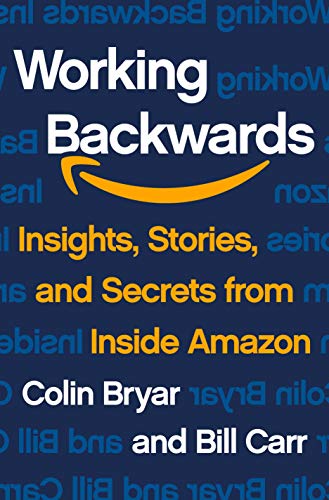
Plenty of books praise Amazon from the outside. Working Backwards is written by two long-time insiders: Colin Bryar, who spent two years as Jeff Bezos's technical advisor, and Bill Carr, who led Amazon's digital media businesses. Instead of a biography, they describe the specific operating mechanisms behind the company's growth, from how it hires to how it writes, organizes teams and measures progress.
For the Kurums Technology audience, the book matters because most of those mechanisms are about how technology and product organizations make decisions at scale. If your engineering teams are blocked by dependencies, your planning runs on slide decks nobody remembers, or your metrics report outcomes you cannot directly influence, the book offers tested alternatives with enough detail to pilot them.
What the book argues
The first part of the book presents what the authors call being Amazonian: leadership principles backed by mechanisms. Hiring uses the Bar Raiser process, in which a trained interviewer from outside the hiring team helps keep the hiring standard from slipping under deadline pressure. Organization moved from small two-pizza teams toward single-threaded leadership, where one leader is dedicated full time to one initiative and owns its outcome without competing priorities or constant cross-team dependencies.
The authors then describe how Amazon communicates and decides. Senior leadership meetings replaced slide presentations with written six-page narratives read in silence at the start of the meeting, because prose forces clearer thinking than bullet points. New products start with a working backwards document, a mock press release and FAQ written before any code, which forces the team to define the customer, the problem and the benefit first. Metrics focus on controllable input metrics reviewed regularly, rather than output metrics such as revenue that teams cannot move directly.
The second part shows these mechanisms in action through the stories of Kindle, Prime, Prime Video and Amazon Web Services. The cases show the method's costs as well as its benefits: long debates over the press release, early bets that looked expensive, and patience while new businesses lost money. The authors' broader argument is that culture is the product of mechanisms people use every week, and that other companies can adopt the mechanisms even if they never become Amazon.
Key ideas, translated to your desk
Write the press release first
Before approving a build, ask the team for a one-page press release and FAQ. If they cannot explain the customer benefit clearly, the project is not ready for engineering time.
One leader, one initiative
Single-threaded leaders remove the coordination tax of shared ownership. Give your most important initiatives a dedicated owner and a team that can ship without waiting on others.
Manage inputs, not outcomes
Revenue and uptime are results. Track the controllable inputs behind them, such as deployment frequency or defect backlog, and review them on a fixed cadence.
Use it at work
- Require a short press release and FAQ for the next significant feature or platform proposal before it enters the roadmap.
- Replace the slide deck in one recurring leadership review with a written narrative read at the start of the meeting.
- Identify one strategic initiative shared across several teams and assign a single-threaded owner with a dedicated team.
- Rewrite your team scorecard so most metrics are controllable inputs, then review them weekly.
Read it if
- You lead an engineering or product organization that is growing faster than its decision processes.
- Your planning and review meetings run on slides and still produce unclear decisions.
- You liked Escaping the Build Trap and want an operating model that ties building to customer outcomes.
You can skip it if
- You want deep technical architecture or AWS engineering detail rather than management mechanisms.
- You are looking for a critical history of Amazon's labor practices or market power.
- Your organization is a small team where one person already owns every decision.
This book appears in
Curated Tasting Menus that chain this title into a reading route.