
Taste Note - Amazon Supply Chain Best Sellers
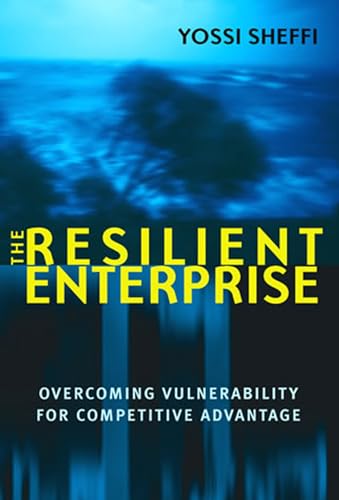
The Resilient Enterprise: Building Supply Chains That Absorb Shocks
A Kurums Book Taste review of The Resilient Enterprise for procurement and supply chain leaders who own continuity when a supplier, port, or region fails.
Why this book fits Kurums
Sheffi, MIT's supply chain authority, wrote the book on resilience years before pandemics and canal blockages made it a board topic - and the frameworks held. Built on deep case studies, led by the famous Nokia-Ericsson fire: one fab failure in New Mexico, two customers, and the response gap decided a chunk of the mobile phone market.
For the Kurums Procurement audience this is the discipline's risk textbook: how to map vulnerability beyond tier one, when to hold redundancy versus build flexibility, and why the cheapest supplier network and the most fragile one are often the same network priced honestly. Every single-source decision your category managers make is a page from this book, signed or unsigned.
What the book argues
The first argument is that disruption is a statistical certainty while each disruption is a surprise - so enterprises must be designed for the category, not the event. Sheffi's vulnerability framework crosses probability with consequence, but his sharper tool is the detection-to-impact timeline: the Nokia-Ericsson case shows two companies hit by the identical fire, where Nokia detected the supply signal in days, locked up global alternative capacity, and redesigned chips for other fabs, while Ericsson's slower escalation left it short for a product cycle - and ultimately out of the handset business as an independent. The disruption was shared; the outcome was chosen years earlier by design and culture.
The second argument weighs redundancy against flexibility and comes down firmly for flexibility. Safety stock, dual sources, and spare capacity buy protection at permanent carrying cost, and Sheffi endorses them selectively - for strategic items with concentrated supply. But the deeper resilience is built in: standardized parts and processes that let any plant make any product, postponement that delays differentiation until demand is known, supplier relationships deep enough that capacity flows to you in a crisis because you are the customer they save. Flexibility, unlike redundancy, also pays off in normal times - it is risk management the CFO will fund.
The third argument is organizational: resilience is a culture of distributed power and honest communication, not a binder. The case studies converge on the same traits - frontline teams authorized to act on early signals without waiting for escalation, continuous communication so everyone shares the operating picture, and leadership that treats passion for the work as a control system. Security chapters extend the frame: layered defenses, detection over prevention alone, and collaboration across the chain, because your resilience is capped by your weakest critical supplier's. The closing claim is that firms converting resilience into flexibility gain share in every disruption - crisis is when prepared companies take markets.
Key ideas, translated to your desk
Map vulnerability past tier one
Your risk lives in suppliers' suppliers - the shared fab, the single chemical plant, the one port. Maintain the map for critical categories before the event, because during it everyone is buying the same alternative.
Prefer flexibility to inventory
Standardization, postponement, and interchangeable plants protect like safety stock but earn their keep in normal operations. Spend redundancy budget only where supply is concentrated and strategic.
Resilience is response speed
Nokia and Ericsson had the same fire and different decades. Drill detection-to-action time for your top risks - the gap between hearing and moving is the whole game.
Use it at work
- Build tier-two maps for your five most critical categories; flag shared upstream nodes across 'diverse' suppliers.
- Classify the portfolio on Sheffi's probability-consequence grid and set redundancy or flexibility strategies per quadrant, not globally.
- Run a disruption drill this quarter: simulate your largest single-source failure and time the detect-decide-act sequence.
- Renegotiate crisis clauses with strategic suppliers - allocation priority, capacity rights, communication SLAs - while you don't need them.
Read it if
- You own supply continuity, supplier risk, or S&OP in any physical business.
- You need the business case for resilience investments a CFO will challenge.
- You want the frameworks behind the post-2020 resilience conversation, from the source.
You can skip it if
- You want this decade's case studies - the frameworks aged perfectly, the examples predate 2005; pair with Arriving Today.
- Your supply chain is trivially simple or fully digital.
- You expect quantitative risk modeling - this is design and management, not stochastic optimization.
This book appears in
Curated Tasting Menus that chain this title into a reading route.
Discover more from Kurums | Business Intelligence
Subscribe to get the latest posts sent to your email.