
Taste Note - Amazon Entrepreneurship Best Sellers
The Mom Test: Customer Conversations That Do Not Lie Back
A Kurums Book Taste review of The Mom Test for anyone validating an idea with conversations - and being politely deceived by every one of them.
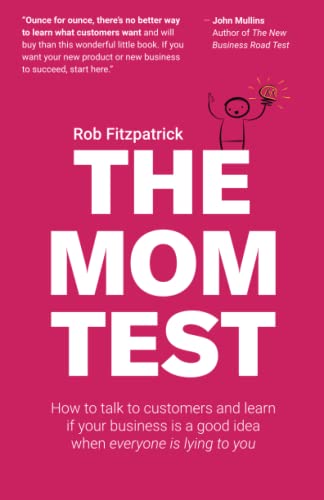
Why this book fits Kurums
Lean Startup says talk to customers; The Mom Test explains why most of those talks produce false positives. People are nice. Ask 'would you buy this?' and they will encourage you all the way to a failed launch. Fitzpatrick's rule: design questions so good that even your mother - who loves you and lies to you - could not mislead you with her answers.
For the Kurums Startup audience this is the missing execution layer of validation, and it applies far beyond startups: internal product teams, new service lines, and consultants scoping engagements all suffer the same compliment-shaped data problem.
What the book argues
The Mom Test itself is three rules: talk about their life, not your idea; ask about specifics in the past, not opinions about the future; and talk less, listen more. 'Would you use this?' is worthless; 'when did this problem last bite you, and what did it cost you?' is data. Pitching disguised as research produces compliments, and compliments - along with fluff ('I would definitely...') and future promises - are to be deflected, not collected.
The commitment chapters are the sharpest: a meeting that ends in praise has failed; a meeting that ends in currency - time (a scheduled follow-up with stakeholders), reputation (an intro to their boss or peers), or money (a letter of intent, a preorder, a deposit) - has succeeded. Fitzpatrick's taxonomy of meeting outcomes turns 'that went well' into a falsifiable claim, which is exactly what founders' self-reports need.
The craft details fill the rest: keep it casual (the best customer conversations do not feel like interviews), ask for the industry's three big problems before revealing your bet, segment down until you know where to find your customer on a Tuesday, and write down exact quotes because summary memory rounds everything toward hope. The closing warning - beware the entrepreneur who 'validated' by collecting twenty coffees and zero commitments - is the whole book in one sentence.
Key ideas, translated to your desk
Never mention your idea
The moment you pitch, the data spoils. Mine their past behavior first; the idea can wait until the learning is banked.
Compliments are the failure mode
'Sounds great!' predicts nothing. Specific past pain, current spend on workarounds, and requests to pay predict everything.
Advance or it didn't happen
Every conversation should end in time, reputation, or money at risk. Zero commitment means you had a chat, not a validation.
Use it at work
- Rewrite your discovery script: three past-behavior questions, zero idea-mentions, one commitment ask.
- Ban 'would you' questions in user research and replace each with 'when did you last...'.
- Grade every customer meeting by currency exchanged - time, reputation, money - and track the ratio.
- Before building any internal tool or new service, run ten Mom Test conversations and count actual commitments.
Read it if
- You are validating anything - product, service, feature - through conversations.
- Your last idea 'tested great' and then nobody bought it.
- You train product managers or founders and need a teachable, short, tactical text.
You can skip it if
- You already run commitment-graded discovery; this will be revision.
- You need quantitative validation methods - surveys and experiments live elsewhere.
- Your customers are machines or markets, not people you can interview.
Discover more from Kurums | Business Intelligence
Subscribe to get the latest posts sent to your email.