
Taste Note - Amazon Sales & Selling Best Sellers
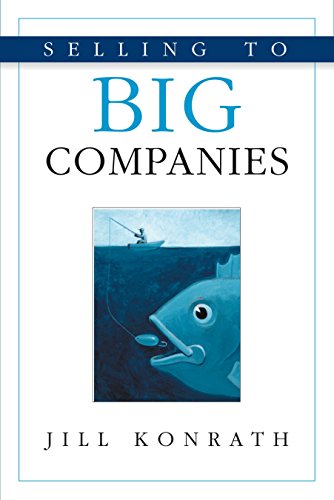
Selling to Big Companies: Breaking Into Accounts That Ignore You
A Kurums Book Taste review of Selling to Big Companies for sellers whose enterprise targets never answer - because the message gives them no reason to.
Why this book fits Kurums
The enterprise shelf covers running deals (SPIN, Challenger) and running cadences (Blount, Weinberg); Konrath owns the narrower, brutal problem of entry - getting a first meeting with corporate buyers who are crazy-busy, risk-averse, and armored against vendors. Her answer, written before 'account-based' had a name, is the ABM playbook at seller scale.
For the Kurums Sales audience the book's enduring core is the relevance doctrine: access is earned by specific, researched, outcome-quantified messaging aimed at a handful of accounts - and her voicemail and letter templates convert to email and LinkedIn with their logic fully intact.
What the book argues
The buyer-reality chapters set the terms: corporate decision-makers are overloaded, protected, and punished for bad vendor bets - so they delete everything generic in seconds. The traditional toolkit (product pitches, 'checking in', creative gimmicks) fails not from execution but from design: it asks the buyer to do the work of finding relevance. Konrath's inversion: the seller does all of it before the first touch.
The preparation half is the book's spine: narrow to a target market where you have proof ('when you speak to everyone, you speak to no one'), research each account (initiatives, filings, press, org changes) until you can name the business issue your offer moves, and - the signature tool - build your value proposition as outcomes with numbers: not what the product does, but what changed for a customer like them (cycle time cut, cost per unit down, revenue lifted), stated in their metrics. Her tests are unforgiving: if your value proposition could come from any vendor, it is not one.
The campaign half assembles account-entry as a persistent, multi-touch system: the researched voicemail script (trigger event, peer-proof value statement, low-pressure close), correspondence that leads with their world, and a planned sequence of varied touches over weeks - professional persistence without stalking, each contact adding a new idea rather than repeating the ask. First meetings then run on her preparation standard: questions built from research, positioned as a peer investigating fit, with follow-up that keeps earning attention. The quiet thesis throughout: in enterprise entry, the research is the differentiation.
Key ideas, translated to your desk
Relevance is manufactured before the call
Buyers grant time to sellers who already understand their situation. Research until you can name the initiative your offer serves - or don't dial.
Value propositions need numbers
'Improved efficiency' is noise; 'cut onboarding time 38% at a firm like yours' is a meeting. Quantify outcomes from real customers in buyer metrics.
Campaigns, not touches
One brilliant message loses to eight relevant ones spaced over six weeks. Plan the sequence per account before the first contact.
Use it at work
- Shrink each rep's entry effort to ten named accounts with written research briefs.
- Rebuild your value proposition bank: customer outcomes with numbers, by industry.
- Script trigger-event voicemails and emails pairs - same logic, both channels.
- Design the standard eight-touch entry campaign and track account-level meeting rates.
Read it if
- Your enterprise outbound gets silence and your team blames the market.
- You sell into protected buyers where one meeting changes the year.
- You want the entry layer that SPIN and Challenger assume already happened.
You can skip it if
- You run deals fluently and entry isn't the constraint.
- Your market answers cold volume; this precision costs more than it returns there.
- Dated channel references bother you - translate, the logic is current.
This book appears in
Curated Tasting Menus that chain this title into a reading route.
Discover more from Kurums | Business Intelligence
Subscribe to get the latest posts sent to your email.