
Taste Note - Amazon Business Ethics Best Sellers
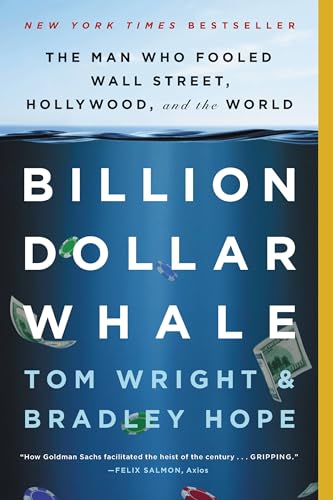
Billion Dollar Whale: The 1MDB Scandal as a Field Guide to Gatekeeper Failure
A Kurums Book Taste review of Billion Dollar Whale for board members, audit chairs and compliance leaders who need to recognise how a fraud passes every checkpoint built to stop it.
Why this book fits Kurums
Governance failures are usually told from the inside of one company. Billion Dollar Whale is different because the fraud it describes ran through a sovereign wealth fund, global banks, auditors, law firms, a Hollywood studio and luxury sellers at the same time. The two Wall Street Journal reporters who broke much of the 1MDB story reconstruct how Jho Low, a well-connected young Malaysian financier, helped set up the fund and then, according to their reporting and later government cases, diverted billions of dollars through a web of shell companies and bank accounts.
For the Kurums Corporate Governance audience the book is valuable precisely because nobody in the chain was entirely ignorant. Bankers, compliance officers, trustees and directors saw pieces of the pattern. The book shows how fees, prestige, deference to political power and the assumption that someone else had checked the deal let each gatekeeper wave the money through. That is the risk every board should be able to describe in its own organisation.
What the book argues
The first part follows Low's rise, from using school and university connections to build a reputation as a dealmaker with access to Gulf investors and Malaysian political leaders, to the creation of the state investment fund that became 1MDB under Prime Minister Najib Razak. The authors show how social proof did the work that due diligence should have done: expensive parties, famous friends and introductions to senior officials made Low appear to be a legitimate intermediary long before anyone verified where the money was going.
The middle of the book traces the money. Through a joint venture with a small oil company, large bond issues arranged with Goldman Sachs, and transfers via banks in Switzerland, Singapore and elsewhere, funds raised for national development were routed into accounts the authors link to Low and his associates. The money then reappeared as luxury property, art, a superyacht, celebrity entertainment and the financing of the film The Wolf of Wall Street. At each step the book highlights the institution that could have stopped the flow and the reason it did not: large fees, a trusted relationship manager, a client too important to question, or paperwork that looked complete.
The final part covers the unravelling, driven by investigative journalists, whistleblowers and regulators in several countries, and the political fallout in Malaysia. The authors argue that the scandal was not a single rogue operator outwitting the system but a system whose incentives rewarded looking away. Their larger point is that modern finance makes it easy to move huge sums quickly, and that the controls meant to slow suspicious money are only as strong as the people willing to ask awkward questions.
Key ideas, translated to your desk
Social proof is not due diligence
Famous co-investors, political sponsors and impressive events tell you nothing about where funds go. Require independent verification of beneficial ownership and use of proceeds regardless of who made the introduction.
Fees are a governance signal
When an advisor or bank earns unusually large fees on a transaction, treat it as a question for the board, not a compliment to the deal team.
Every gatekeeper assumes another checked
Banks rely on auditors, auditors on lawyers, boards on management. Map who is actually responsible for each control and test whether anyone owns the full picture.
Use it at work
- Ask the audit committee to list the five largest third-party payments and intermediaries of the last year and confirm who verified each one.
- Add a red-flag review for any transaction with unusual fees, offshore vehicles or politically exposed counterparties.
- Protect and publicise a whistleblowing channel that reports directly to independent directors.
- Run a tabletop exercise in which the board walks a hypothetical diversion of funds through your own approval chain.
Read it if
- You sit on a board or audit committee and want a vivid case to teach gatekeeper responsibility.
- You work in compliance, anti-money-laundering or risk and need to explain why controls fail in practice.
- You found The Smartest Guys in the Room useful and want a cross-border, financial-system version.
You can skip it if
- You want a governance framework or checklist rather than narrative journalism.
- You need a legal analysis of the later prosecutions and settlements, which came after the book.
- Long descriptions of luxury spending and celebrity parties test your patience.
This book appears in
Curated Tasting Menus that chain this title into a reading route.
Discover more from Kurums | Business Intelligence
Subscribe to get the latest posts sent to your email.