
 Play
Games / Technology
Safe or Risky AI?
Ten ways people use AI tools at work. Decide which ones are safe and which put data, money or reputation at risk. You have five hearts.
EasyTechnology2 minNew
Safe or Risky AI? is a learning aid. Always follow your company’s AI policy.
How to play Safe or Risky AI?
Each round describes how someone used an AI tool at work. Tap Safe or Risky and press Check. After every answer you get the reason in one sentence.
A correct answer scores 10 XP and a perfect run adds 20 XP. A wrong answer costs one of your five hearts. The ten rounds are drawn from a set of fifteen, so every game is different.
Why AI use needs rules
Generative AI tools save hours on drafting, summarising, coding and analysis. The same tools create new risks: confidential data leaving the company, confident answers that are wrong, and automated decisions that nobody checks. Most incidents are not caused by the technology itself but by how people use it.
Five rules for safe AI use
- Use approved tools. Company-approved tools come with contracts that control how your data is stored and whether it is used for training. Personal and free accounts do not.
- Keep secrets out. Client data, source code and unpublished results stay out of any tool that is not approved for them. Remove names and identifiers when you can.
- Check every fact. AI can invent sources, cases and statistics. Anything you publish or file needs a source you have checked yourself.
- Keep a human in charge. Payments, hiring and other decisions that affect people need a human approval step. Laws such as the EU AI Act treat hiring as high risk.
- Watch for prompt injection. Text hidden in emails or web pages can tell an AI assistant to do things you never asked for. Treat its suggested actions with care.
Transparency
More clients, regulators and platforms now expect AI-generated content to be labelled and AI use to be disclosed. Keeping a simple record of which tools helped with which work makes that easy.
The applied AI guides and the technology section on Kurums compare AI tools and policies. For a security warm-up, play Phish or Legit, or browse the free business tools.
Technology guides
Foundry Week: Intel 18A at 70%, TSMC Credit Limits, China Chip Pause
Intel says 18A yields hit 70% and signs Microsoft for EMIB; TSMC reportedly sets credit limits and pauses China orders. What it means for chip buyers.
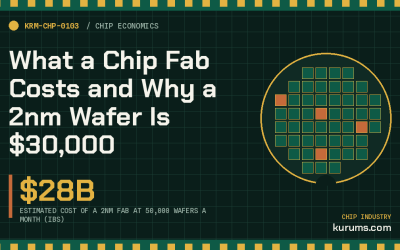
What a Chip Fab Costs in 2026 and Why a 2nm Wafer Costs $30,000
What it costs to build a chip factory, what a wafer costs at 28nm, 3nm and 2nm, how wafer price becomes chip price, and what rising costs mean for buyers.

Semiconductor Market Size 2026: How Chips Became a $1.5 Trillion Industry
Global chip sales are on course to pass $1.5 trillion in 2026. The numbers from WSTS, SIA and Gartner, what is driving them, and what they mean for buyers.