
Taste Note - Amazon Negotiating Best Sellers
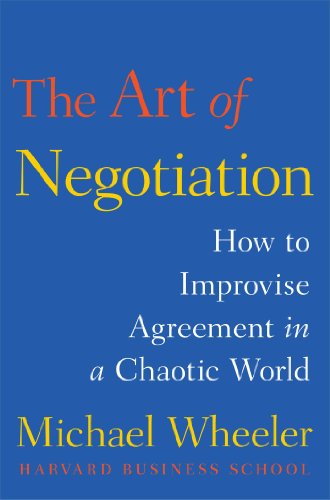
The Art of Negotiation: Improvising Agreement When the Script Breaks
A Kurums Book Taste review of The Art of Negotiation for in-house counsel and deal leaders who need to adapt when talks stop following the plan.
Why this book fits Kurums
Most negotiation books give you a method: prepare your alternatives, find interests, apply objective criteria. Michael Wheeler, who taught negotiation at Harvard Business School for many years, accepts the value of that preparation but argues that real negotiations rarely follow the plan. Counterparts change their positions, new facts appear, emotions rise and the relationship shifts in the middle of a conversation. His book is about the skill that the standard methods leave out: improvising well when the situation moves.
For the Kurums Law audience, that skill matters in contract talks, settlement discussions, regulatory conversations and internal disputes, where the other side rarely behaves as your preparation assumed. In-house lawyers and commercial leaders who already know the principled-negotiation basics from Getting to Yes will find here a way to stay effective when the first offer is strange, the counterpart is unpredictable, or the deal you prepared for turns into a different deal.
What the book argues
Wheeler's central claim is that negotiation is a process of exploration rather than execution. You enter with a plan, but you cannot know in advance what the other side wants, how much flexibility they have or how they will react, so the most important work happens as you learn during the exchange. He compares skilled negotiators to jazz musicians and improvisational performers, who prepare deeply precisely so that they can respond freely to what others do, and he draws on examples from business, diplomacy, sport and the military to show how experienced practitioners adjust as conditions change.
From that view comes a different approach to preparation. Instead of fixing a single strategy and a bottom line and defending them, Wheeler encourages you to prepare to adapt: to clarify what you care about, to think through several ways the talks could unfold, to decide how you will open and what you need to learn early, and to treat your plan as a hypothesis that the first exchanges will test. He describes a continuous cycle of learning, adapting and influencing, in which you read signals, update your assumptions and shape the conversation rather than following a script.
The book also treats the negotiator's own state of mind as a core skill. Wheeler argues that the best negotiators combine calm with alertness: they stay steady enough to think clearly under pressure, yet attentive enough to notice openings and warning signs as they appear. He discusses how fear, anger and overconfidence distort judgment, why it helps to accept uncertainty instead of fighting it, and how to balance the competing pulls of cooperating and competing, of being patient and pressing forward, as the situation evolves.
Key ideas, translated to your desk
Treat your plan as a hypothesis
Prepare your interests, alternatives and opening, then list the assumptions the first exchanges will test. Revise the plan as soon as the facts change.
Learn before you push
Use the early part of any negotiation to gather information about the other side's priorities and constraints before committing to a firm position.
Calm and alert
Build routines that keep you steady in tense talks, such as pauses, breaks and a colleague who watches the room, so that pressure does not drive your decisions.
Use it at work
- Before your next contract negotiation, write three different ways the talks could unfold and what you would do in each.
- List the five questions you most need answered in the first meeting and make learning them the goal of that meeting.
- Agree with your team in advance which concessions need a break and a check-in before anyone makes them.
- After each significant negotiation, record which assumptions proved wrong and how you adjusted.
Read it if
- You already know the principled-negotiation basics and want to handle talks that refuse to follow the plan.
- You negotiate contracts, settlements or regulatory outcomes where the other side is unpredictable.
- You found Getting to Yes useful but want more on reading and adapting during the conversation itself.
You can skip it if
- You need a first introduction to negotiation; start with a more structured method book.
- You want scripts, checklists or ready-made tactics to use word for word.
- You mostly handle standardised, low-stakes agreements with little room for movement.
This book appears in
Curated Tasting Menus that chain this title into a reading route.
Discover more from Kurums | Business Intelligence
Subscribe to get the latest posts sent to your email.