
Taste Note - Amazon Management Best Sellers
The Making of a Manager: A First-Year Curriculum HR Can Hand to Every New People Leader
A Kurums Book Taste review of The Making of a Manager for HR and people leaders who promote strong individual contributors into management and need them to succeed in the first year.
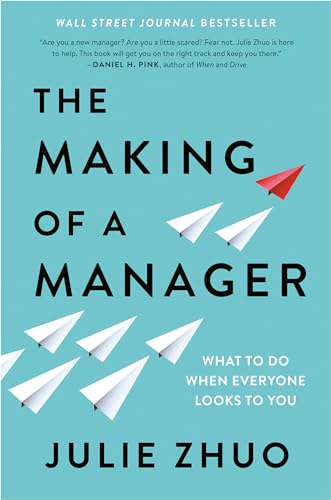
Why this book fits Kurums
Most organizations promote their best individual contributors into management and then leave them to work it out. The cost shows up in HR's data months later: disengaged teams, regretted attrition and new managers who quietly go back to doing the work themselves. Julie Zhuo became a manager at Facebook early in her career and later led large design teams there, and her book is written for exactly that first, uncertain stretch, in the voice of someone who remembers what it felt like.
For the Kurums HR audience the book works as a ready-made curriculum. Its chapters follow the real sequence of a new manager's problems: the first three months, leading a small team, giving and receiving feedback, managing yourself, running meetings, hiring, making things happen and building culture. Because the language is plain and the examples are small and concrete, you can assign a chapter per month of a development programme and use it to start conversations rather than lectures.
What the book argues
Zhuo opens with a definition that the rest of the book depends on: a manager's job is to get better outcomes from a group of people working together. Being a good individual contributor is no longer the measure. She breaks the work into three levers, purpose (the team knows what success looks like and why it matters), people (the team has the right members, with the right skills and motivation) and process (the team works together in a way that makes success likely). Most early struggles, she argues, come from new managers still judging themselves by their own output.
The middle of the book is about the daily craft. She describes the different ways people arrive in management, for example being promoted within a team or inheriting one, and how each brings its own first-month problems. She spends a long section on feedback: making it specific and regular, setting expectations at the start rather than surprising people at review time, and asking for feedback about yourself so the team sees it as normal. She covers one-on-ones, how to run meetings that end with decisions, and how to manage your own energy, insecurity and impostor feelings so they do not leak into the team.
The later chapters widen the lens to hiring and execution. Zhuo argues that hiring is among the highest-leverage things a manager does, and that the job includes designing the process, selling candidates and deciding carefully. On execution, she stresses planning backwards from outcomes, being clear about priorities, and following through. The final chapters deal with nurturing culture and leading a growing team, where the manager starts to manage other managers and must lead through others rather than directly.
Key ideas, translated to your desk
Judge new managers on team outcomes
Rewrite the first-year objectives for every newly promoted manager so they are measured on the team's results, not on their personal output.
Purpose, people, process as a check-in
Use the three levers as the agenda for an HR check-in with a struggling manager; the weak lever usually becomes obvious in ten minutes.
Set expectations before you need feedback
Coach new managers to agree what great looks like with each report in the first month, so later feedback refers to something both sides already accepted.
Use it at work
- Build a twelve-month new-manager programme with one chapter of the book per month and a facilitated peer discussion after each.
- Add a purpose, people and process self-assessment to the 90-day review for every newly promoted manager.
- Give new managers a one-on-one template and ask them to hold the meetings weekly for the first quarter.
- Pair each first-time manager with an experienced manager outside their reporting line for the first six months.
Read it if
- You run or design development programmes for first-time managers and want one accessible core text.
- You are an individual contributor about to take your first team and want a realistic picture of the job.
- You found The Coaching Habit useful and want a broader view of the whole manager role around those conversations.
You can skip it if
- You lead managers of managers already; High Output Management will serve you better at that level.
- You want research-heavy evidence on management practices; this is a practitioner's account rather than a study.
- Your environment is far from technology companies and you find Silicon Valley examples hard to translate.
This book appears in
Curated Tasting Menus that chain this title into a reading route.
Discover more from Kurums | Business Intelligence
Subscribe to get the latest posts sent to your email.