
Taste Note - Amazon Accounting Best Sellers
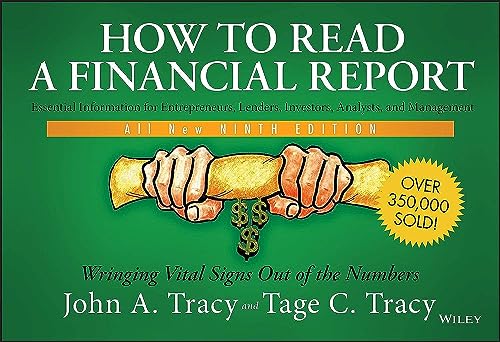
How to Read a Financial Report: Following Every Sale and Expense Into the Balance Sheet
A Kurums Book Taste review of How to Read a Financial Report for accounting leaders and managers who need to explain why profit, balance sheet and cash never move in lockstep.
Why this book fits Kurums
Most people who read financial statements read them one at a time: revenue and profit on the income statement, a list of assets and debts on the balance sheet, and a cash flow statement that seems to tell a different story. John and Tage Tracy built the whole book around the opposite habit. They show how every line on the income statement has a partner account on the balance sheet, and why that link explains the gap between profit and cash. It is a long-running Wiley title that has gone through many editions because that one idea keeps being useful.
For the Kurums Accounting audience the value is practical. You are the person who has to tell a CEO why a record-profit quarter left the bank account thinner, or why receivables grew faster than sales. This book gives you a shared language and a set of diagrams you can borrow when the room includes operators, owners and board members who never trained as accountants.
What the book argues
The book opens by arguing that financial statements are a connected system, not three separate reports. Sales drive accounts receivable, cost of goods sold drives inventory, operating expenses drive prepaid expenses, accounts payable and accrued liabilities, and depreciation draws down the book value of fixed assets. The authors walk through a sample company and trace each connection, so you see why a change in one statement must show up in another.
From there it argues that profit and cash flow are different measures and that confusing them is the most expensive reading mistake a manager can make. Because revenue and expenses are recorded on an accrual basis, growth that ties up cash in receivables and inventory can make a profitable business short of money. The statement of cash flows is presented as the reconciliation that explains this gap, and the authors spend real time on how to read it line by line.
The later chapters move to judgment. Ratios such as gross margin, return on equity, the current ratio and days of receivables are explained as questions to ask rather than scores to report. The authors also show that accounting method choices, such as inventory costing and depreciation methods, legitimately change reported profit, and they discuss how numbers can be massaged, what footnotes and the audit report add, and why a reader should look beyond the headline figures.
Key ideas, translated to your desk
Every line has a partner
When you review a monthly pack, pair each income statement line with its balance sheet account. A jump in sales should explain the jump in receivables; if it does not, ask why.
Profit is not cash
Growth consumes cash through receivables and inventory before it returns it. Put a short cash-versus-profit bridge on the first page of every management report.
Method choices move profit
Inventory and depreciation methods are legitimate choices that still change the bottom line. Disclose your choices plainly so nobody mistakes a method effect for performance.
Use it at work
- Build a one-page diagram that links each income statement line to its balance sheet account and use it in your next board pack.
- Add a cash-versus-profit bridge to every monthly report so operating leaders see where cash is tied up.
- Track days of receivables and days of inventory alongside revenue growth, and flag any month where they diverge.
- Run a short workshop for non-finance managers using the book's sample company before the next budget cycle.
Read it if
- You regularly explain financial results to people who are smart but not trained in accounting.
- Your business is growing and you need to show why profit and cash are drifting apart.
- You liked Financial Intelligence and want the more structured, statement-by-statement version of the same lesson.
You can skip it if
- You already teach statement linkage and cash flow analysis; much of this will be familiar ground.
- You want detailed IFRS or US GAAP technical guidance; this is a reading guide, not a standards manual.
- You are looking for valuation methods; the book stops at reading and interpreting the reports.
This book appears in
Curated Tasting Menus that chain this title into a reading route.