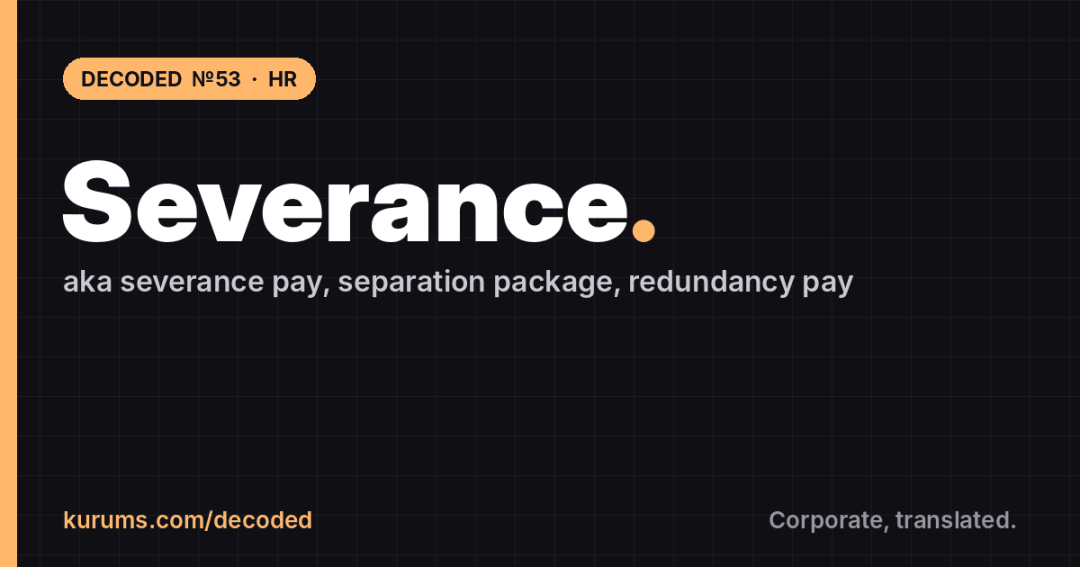
Severance.
aka severance pay, separation package, redundancy pay
The money, and the terms that come with it, when a job ends.
What it actually means
Severance is pay and sometimes other benefits an employer gives a worker when their job ends, usually because of layoffs, restructuring or termination without serious misconduct. Depending on the country, it may be required by law, set by a contract or offered voluntarily, and it often comes with an agreement the employee is asked to sign.
How severance works depends heavily on where you are. In many countries, labor law sets a minimum amount based on how long you worked there, and some also require a notice period or pay in place of notice. In the United States, most employment is at will, and in many cases employers are not legally required to pay severance at all, though many still offer it. A package can include salary, continued health coverage for a while, help finding a new job, or payment for unused leave.
The part people overlook is the agreement. Severance offers often come with a separation agreement that includes a release of claims, meaning you agree not to sue the employer over the job ending. It may also include confidentiality or non-disparagement terms. You usually get some time to review it, and sometimes amounts can be discussed. Read every line before signing, and if the stakes are high, many people ask an employment lawyer or a local advisory service to look it over.
Where you'll hear it
Everyone affected will get the statutory minimum plus two extra weeks for each year of service, provided they sign the separation agreement within the review period.
Translation: there is a legal floor, the company is adding more on top, and the extra part depends on signing the agreement in time.
Also in employment contracts, where a severance clause may promise a set payout for senior roles; in layoff announcements, where companies describe the package being offered; and in negotiation advice, where people discuss whether the release of claims is worth what the employer is paying in return.
The pop-culture version
Picture a contestant on a long competition show who gets sent home midway. They do not leave empty-handed. The producers give them a parting package: some cash, a gift bag, maybe a paid trip back home.
But before they collect, there is paperwork. They agree not to reveal what happened backstage, not to badmouth the show, and not to make claims against the production later. The gift is real, but it comes with strings, and the strings are the point of the deal.
Severance often works the same way. The money softens the exit, and the agreement protects the employer. Neither part is automatically bad. It just means the package is a trade, and you should understand both sides of it before you say yes.
The practical rule: severance is usually a trade, not just a gift. Find out what the law where you work requires, read what you are giving up in return, and take the review time you are offered.
Say it like you mean it
“Before I sign, can you confirm which part of the package is statutory and which part depends on the release?”
It asks a precise, calm question that separates what you are owed from what is being exchanged for your signature.“Every company has to give you severance when they let you go.”
Rules vary widely by country and contract, and in some places, including much of the US, it is often not legally required.You will also hear garden leave, when someone is paid through their notice period but asked to stay home, and pay in lieu of notice, when the employer pays out the notice period instead of having you work it.
A practical guide to ending employment properly, covering notice periods, termination for cause, severance terms and the documentation employers should keep.
Decoded next
Decoded by the Kurums editorial team. Kurums Decoded translates the language of business for people who are new to it. Definitions are kept short on purpose; the serious version above goes deep. Nothing here is financial, legal or career advice.
Discover more from Kurums | Business Intelligence
Subscribe to get the latest posts sent to your email.