Austin Startup Atlas
Where the startups actually are. An interactive, district-by-district map of Austin's company clusters — from IBM's 1967 outpost and Michael Dell's dorm room to Giga Texas, the Bastrop 'Musk belt' and a record $7 billion funding year. Who sits where, what they sell, when each cluster took root, and the stories behind the pins.
Three moves, then explore
20 companies, 10 districts, one weird magnet
Every pin is a company founded in — or headquartered in — greater Austin. Colors are clusters. The city's superpower is migration: companies, founders and factories keep moving in, and the map keeps stretching east.
Schematic map — district shapes and pin positions are simplified for readability, not navigation. Pin = founding or HQ district.
IBM Austin
North Austin: Parmer & Mopac · est. 1967 · Pioneers: Chips to GroceriesThe 1967 outpost that seeded everything
National Instruments
North Austin: Parmer & Mopac · est. 1976 · Pioneers: Chips to GroceriesThree UT engineers and the test-and-measurement empire
Whole Foods Market
Downtown · est. 1980 · Pioneers: Chips to GroceriesThe grocery store that invented a category
Dell Technologies
Round Rock · est. 1984 · Pioneers: Chips to Groceries$1,000 and dorm room 2713
Apple Austin
North Austin: Parmer & Mopac · est. 2019 · Transplant HQs & CampusesThe $1B campus — Apple's biggest site outside Cupertino
Oracle Austin
East Austin & Riverside · est. 2020 · Transplant HQs & CampusesThe HQ that came — and moved on
Samsung Austin Semiconductor
North Austin: Parmer & Mopac · est. 1996 · SemiconductorsThe fab that anchored Texas silicon
Silicon Labs
Downtown · est. 1996 · SemiconductorsDowntown's homegrown chip company
AMD Austin
Southwest Parkway · est. 1979 · SemiconductorsWhere many of AMD's comeback chips were designed
Indeed
Downtown · est. 2004 · Marketplaces & TravelThe job-search giant with its name on the skyline
HomeAway
Downtown · est. 2005 · Marketplaces & TravelVacation rentals before Airbnb
Tesla Giga Texas
Southeast & Airport · est. 2021 · The Musk Belt & EnergyThe factory that brought the HQ
SpaceX Bastrop
Bastrop & Del Valle · est. 2021 · The Musk Belt & EnergyStarlink's Texas factory floor
The Boring Company
Bastrop & Del Valle · est. 2016 · The Musk Belt & EnergyTunnels, flamethrowers and a Bastrop HQ
X (Twitter)
Bastrop & Del Valle · est. 2024 · The Musk Belt & EnergyFrom Market Street to a Bastrop business park
Apptronik
UT Austin · est. 2016 · Robotics & Defense TechApollo: the humanoid out of UT's robotics lab
YETI
Southwest Parkway · est. 2006 · Consumer Brands & MediaThe $300 cooler that built a cult
Tito's Handmade Vodka
Southeast & Airport · est. 1997 · Consumer Brands & MediaA mortgage, a pot still, a billion-dollar brand
Outdoor Voices
South Congress & Zilker · est. 2013 · Consumer Brands & MediaThe cautionary pin: #DoingThings, undone
WP Engine
Downtown · est. 2010 · SaaS & SecurityWordPress hosting — and the war of 2024
When each cluster took root
Austin wasn't built in one wave. Each decade stacked a new industry on the last one's founders, capital and exits.
IBM lands in 1967, Texas Instruments and Motorola follow, and UT mints the engineers. National Instruments (1976) proves homegrown deep tech works; Whole Foods (1980) proves Austin retail weirdness scales; Michael Dell's dorm room (1984) proves everything else. Sematech's 1988 arrival makes Austin the US chip industry's chosen capital.
Samsung picks Austin for its first US fab (1996); Silicon Labs (1996) and a wave of Crystal/Motorola alumni startups bloom; Dell conquers the Fortune 500 from Round Rock; Tito fires up a pot still (1997). The 'Silicon Hills' nickname sticks just in time for the dot-com party.
The crash hits Austin's dot-coms hard — then SXSW Interactive turns the city into tech's annual pilgrimage (Twitter, 2007). The rebuild generation founds Rooster Teeth (2003), Indeed (2004), HomeAway (2005) and YETI (2006): media, marketplaces and a cooler cult.
WP Engine (2010), Bumble (2014) and Apptronik (2016) headline the homegrown wave while the inbound migration accelerates: Google and Meta fill downtown towers, Apple breaks ground on a $1B campus (2019), and 'moving to Austin' becomes Silicon Valley's favourite threat.
Oracle (2020) and Tesla (2021) move their HQs in; X joins the Bastrop belt (2024); Oracle wanders on to Nashville (2024) proving HQs are now marketing. The money turns hard-tech: a record $7.19B in 2025, led by Base Power, Saronic's defense vessels and Apptronik's humanoids — while March 2024 buries Rooster Teeth and Outdoor Voices.
Michael Dell's company started in 1984 in room 2713 of UT's Dobie Hall with $1,000 — and a dorm rule that he hide the inventory when his parents visited. It became the world's biggest PC direct-seller.
A 1981 Memorial Day flood destroyed the first Whole Foods eight months after opening — no insurance. Staff and customers rebuilt it unpaid in four weeks. Amazon bought the company for $13.7B in 2017.
Twitter's 2007 breakout happened at SXSW in downtown Austin. Seventeen years later, Musk moved X's headquarters to Bastrop — thirty minutes from the conference that made it famous.
SpaceX's Starlink factory, The Boring Company's HQ and X's headquarters all sit in rural Bastrop County, minutes apart — with Giga Texas just up the river. One county, four Musk operations.
Eight clusters, eight origin stories
Where each industry concentrated, when it started, and why it stuck. Open a file.
🤠 Pioneers: Chips to Groceries›
Austin's founding four tell the whole story in miniature. IBM (1967) imported the engineering culture; National Instruments (1976) proved locals could build global deep tech; Whole Foods (1980) proved Austin's weirdness was a business model; and Dell (1984) — $1,000, dorm room 2713 — proved a Texas kid could out-execute the Valley. Sematech's 1988 arrival, won against 130 rival cities, locked in the chip trajectory. Every later wave hired from, sold to, or was angel-funded by this one.
🏢 Transplant HQs & Campuses›
The transplant era made Austin mandatory for Big Tech: Apple's $1B, 133-acre Parmer campus (its largest outside Cupertino), Google and Meta towers downtown, Amazon filling the Domain. Oracle's HQ move (2020) was the era's loudest headline — and its 2024 re-move to Nashville the quiet punchline: the jobs and campuses stay, the 'HQ' label travels. Austin learned to price the difference.
🔶 Semiconductors›
Samsung's 1996 fab decision — extended by the $17B+ Taylor expansion, among the largest FDI in US history — anchors the literal silicon in Silicon Hills. Around it: Silicon Labs' downtown-designed IoT chips, AMD's Southwest Parkway campus where Zen-era processors took shape, NXP's twin fabs, and Infineon's design teams. Semiconductors are Austin's oldest continuous industry and, in the CHIPS Act era, suddenly its most strategic again.
🛒 Marketplaces & Travel›
The web generation that rebuilt Austin after the dot-com bust: Indeed (2004) grew into the world's busiest job site with its name on a downtown tower; HomeAway (2005) invented scaled vacation rentals years before Airbnb and exited to Expedia for $3.9B, seeding a decade of angel money; RetailMeNot, Bumble's dating empire and Vrbo's descendants carry the consumer-web torch. The cluster's gift wasn't one giant — it was the alumni network.
🚀 The Musk Belt & Energy›
No city has a cluster like the Musk belt. Giga Texas rose from the river flats in under two years and became Tesla's global HQ (2021); SpaceX's Bastrop plant mass-produces Starlink kits; The Boring Company runs its tunnelling empire from the same county; X's headquarters joined them in 2024. Around the gravity well, an energy-hardware scene is compounding — Base Power's $1B round (2025) the headline — betting that the grid is the next platform.
🤖 Robotics & Defense Tech›
Austin's newest serious cluster walks on two legs and sails unmanned. Apptronik's Apollo humanoid — out of UT's Human Centered Robotics Lab, Series A swollen past $935M — leads the embodied-AI bench; Saronic's autonomous naval vessels hit a $4B valuation on 2025's defense-tech wave; Diligent Robotics' hospital robots and ICON's house-printing gantries round it out. UT supplies the lab-to-market pipeline; Texas supplies the permissive testing ground.
🧊 Consumer Brands & Media›
Austin's consumer genius is building cults, not apps. Tito's turned a mortgaged pot still (1997) into America's best-selling vodka; YETI made $300 coolers a identity; Kendra Scott built a jewellery empire from a spare bedroom. The warnings share the same DNA: Outdoor Voices' #DoingThings hype ended with every store closed in a single March 2024 week — the same month Warner Bros. Discovery shut 21-year-old Rooster Teeth, the web-video pioneer that built podcast-era Austin media.
☁️ SaaS & Security›
The quiet money: Austin B2B software. WP Engine (2010) hosts a meaningful slice of the web and survived 2024's bizarre WordPress civil war with its reputation enhanced; SailPoint rode identity security to repeat public listings; NinjaOne hit $5B (2025) automating IT; Q2 banks the banks; data.world, Planview and a hundred quieter firms fill the towers. Less photogenic than robots and vodka — but it pays most of the salaries.
Why startups cluster in Austin
Strip away the breakfast tacos and Austin's advantage is a single sentence: nowhere else in America do companies, factories and founders find it this easy to simply move in. Shenzhen compresses idea-to-object, Bengaluru idea-to-team, London idea-to-funded; Austin compresses the loop from decision to relocation. Tesla's HQ, Samsung's $17 billion fab, Apple's biggest campus outside Cupertino, three Musk companies in one rural county — none were founded here. All chose here. The record $7.19 billion that venture investors put into Austin startups in 2025 — up 65% in a year — is the ecosystem's dividend on four decades of being chosen.
The base layers were built, not imported. IBM's 1967 site and Sematech's 1988 arrival made Austin the chip industry's academic-industrial capital; UT's fifty thousand students supplied the labor; and the homegrown founding four — National Instruments, Whole Foods, Dell, later Tito's and YETI — established the city's strange dual genius for deep tech and cult consumer brands. The dot-com bust hurt, but SXSW turned the hangover into an annual pilgrimage: Twitter's 2007 breakout happened downtown, and the conference made 'Austin' a brand every founder already knew before the moving trucks started rolling.
The 2020s turned migration into strategy. No state income tax and permissive land rules pulled the HQ wave (Oracle 2020, Tesla 2021) and the hard-tech wave behind it: Giga Texas rose in under two years, SpaceX, Boring and X stacked up in Bastrop County, and the funding mix flipped from apps to atoms — Base Power's $1 billion grid bet, Saronic's $4 billion autonomous vessels, Apptronik's humanoids walking out of UT's robotics lab with over $935 million behind them. Austin 2026 is what 'reindustrialisation' looks like with a music festival attached.
The caveats are honest ones. What moves in can move on — Oracle's HQ lasted four years before wandering to Nashville. The creative culture that made the city recruitable is being priced out of it, and March 2024 buried both Rooster Teeth and Outdoor Voices in a fortnight. The ecosystem still lacks a homegrown consumer-software giant of Valley scale, and 38% of 2025's record capital went to just five companies. Austin's bet is that in the hard-tech decade, land, energy, permits and talent-on-trucks beat legacy density. The $7 billion year suggests the market is taking the bet too.
District cheat sheet
| District | What it's known for |
|---|---|
| Downtown | With North Lamar, the old core, re-skinned in glass: Whole Foods' HQ above its flagship, Silicon Labs on the lake, WP Engine and Indeed's tower on the 6th Street grid. |
| UT Austin | West Campus and fifty thousand students and the dorm (room 2713, Dobie Hall) where Michael Dell started upgrading PCs. Apptronik walked out of UT's Human Centered Robotics Lab. |
| East Austin & Riverside | Warehouses turned studios turned campuses — Oracle's lakefront HQ experiment landed here in 2020 (before the 2024 Nashville re-move). |
| South Congress & Zilker | The postcard strip: consumer brands, flagship stores — and Outdoor Voices' rise and retreat, Austin DTC's cautionary tale. |
| Southwest Parkway | With Barton Creek, the hill-country office belt: YETI's mothership and AMD's longtime Austin campus. |
| North Austin: Parmer & Mopac | The original tech corridor: IBM since 1967, National Instruments since 1976, Apple's $1B campus and Samsung's fab along Parmer Lane. |
| The Domain | Austin's 'second downtown' — Amazon, Meta and a tower boom of satellite offices; more badge-swipes than founders, but the densest tech payroll in town. |
| Round Rock | Dell country: the dorm-room company's world HQ moved here in the 90s and built a Fortune-50 giant in the suburbs. |
| Southeast & Airport | Where Austin makes things: Giga Texas across the river flats and Tito's distillery still running on the southeast edge. |
| Bastrop & Del Valle | The Musk belt: SpaceX's Starlink plant, The Boring Company's HQ and X's 2024 headquarters — three Musk companies within a few country miles. |
Austin startups raised $7.19 billion in 2025 — an all-time record, up 65% in a year (Crunchbase). Base Power's $1B round, Saronic's $4B valuation and NinjaOne's $5B led the surge.
Samsung's Taylor expansion — announced 2021, $17B and counting — ranks among the largest foreign direct investments in US history, extending a Texas-fab relationship that began in 1996.
March 2024 took both of Austin creative culture's icons in a fortnight: Rooster Teeth, shut down by Warner Bros. Discovery after 21 years, and Outdoor Voices, which closed every store in a week.
Apptronik's Apollo robot walked out of UT's Human Centered Robotics Lab into pilots with Mercedes-Benz and GXO — on a Series A that ballooned past $935 million by early 2026.
Related reads from the USA company files
Deep dives from the Kurums Startup department on the companies pinned above.
Startup Growth

TikTok – The Algorithm That Ate the World
On September 26, 2016, Zhang Yiming's company ByteDance launched Douyin, a short-form video app for the Chinese market. The app allowed users to create...
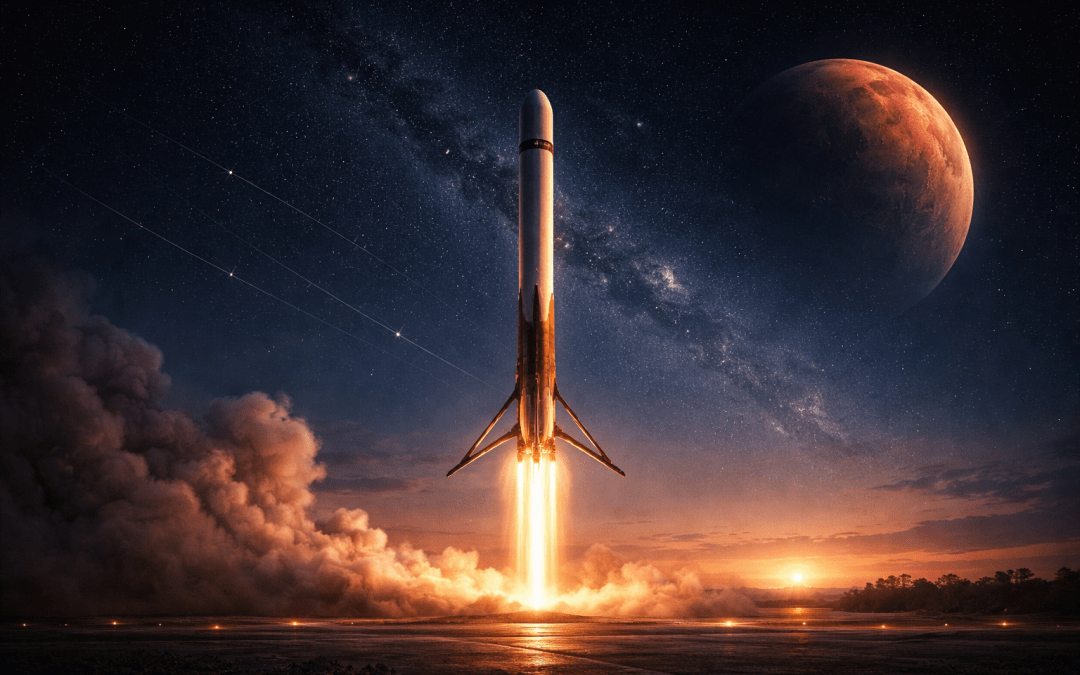
SpaceX – Making Life Multiplanetary
On June 28, 2015, a Falcon 9 rocket carrying supplies to the International Space Station exploded 139 seconds after liftoff. The failure was SpaceX's third in...

Amazon – Everything Store – Built on Everything Else
In July 1994, Jeff Bezos was a senior vice president at D.E. Shaw, a quantitative hedge fund in New York, pulling down an enviable Wall Street salary. He had...
Space & Frontier Tech
Orbex Assets Sold: What Omnidea’s PrimeNEO Plan Means for Launch
Eight months after Orbex collapsed, Portugal’s Omnidea has bought its factory, designs and brand. Here is why Orbex failed, what the buyer gets and what investors should learn.
Sovereign Space Programs: Nebex’s US$700M Latin America Framework
Space exchange startup Nebex has partnered with Mexico’s Thrusters Unlimited on US$700 million of planned government space programmes. Here is how the model works and what is still unproven.
Outpost Space Factories: Orbital Manufacturing Sold as a Service
Outpost Technologies has launched a manufacturing-as-a-service offer built on its reentry vehicles. Here is how the model works, who funds it and how it compares with Varda.
Startup News
Anthropic’s $16.8 Billion Quarter: What Startup Founders Can Learn From Frontier AI Economics
Anthropic told investors Q3 revenue hit $16.8 billion ahead of a possible IPO. What the numbers mean for startups building on AI, planning compute costs and raising capital.
Anthropic Reports $16.8 Billion Q3 Revenue on October 14, 2026: Notes for Startup
Anthropic told prospective investors on October 14 that third-quarter revenue reached $16.8 billion and that the company was profitable on an adjusted basis, as it prepares for a potential IPO. Reuters reported on October 15 that investors now discuss a valuation of about $1.5 trillion, down from roughly $2 trillion previously expected.
Bumble’s $1.3 Billion Sale: What Founders Can Learn From a Take-Private
Ithaca Holdings is buying Bumble for $1.3 billion, far below its 2021 peak. Lessons for founders on exits, roles after a sale and protecting your product identity.
Austin startup ecosystem — FAQ
Why did Austin become a startup hub?
Four compounding draws: UT's fifty-thousand-student talent engine (and its chip-era engineering legacy from IBM/Sematech days), no state income tax plus cheap-ish land that made both founders and factories mobile toward Texas, a culture — 'Keep Austin Weird', SXSW — that made recruiting against the Valley easy, and the 2020–21 HQ rush (Tesla, Oracle, Apple's campus) that converted a regional scene into a national one. The record $7.19B of 2025 funding says the flywheel held.
Which districts matter most for startups?
Downtown & North Lamar hold the homegrown HQs (Whole Foods, Indeed, WP Engine, Silicon Labs); the Parmer/Mopac corridor is big-tech and fab country (Apple, Samsung, IBM, NI); Round Rock is Dell's kingdom; the Domain is the satellite-office 'second downtown'; and the southeast — Giga Texas through Bastrop — is where the Musk belt builds hardware. The map above shows all ten zones.
What are the ecosystem's biggest failures?
March 2024 supplied both at once: Rooster Teeth — the web-video pioneer that defined Austin creator culture for 21 years — shut down by Warner Bros. Discovery, and Outdoor Voices closing every store in a week after a decade of DTC hype. Add meme-stock-era Phunware's collapse and Oracle's HQ wandering on to Nashville, and Austin's lesson reads: migration cuts both ways.
How does Austin compare with the other atlases?
Shenzhen's moat is the supply chain, Hangzhou's a platform's capital, Bengaluru's engineering talent, London's financial depth. Austin's is migration gravity — the proven ability to attract factories, HQs and founders wholesale (Tesla, Samsung's $17B fab, the Musk belt) and convert them into local ecosystems. Its weakness is the mirror image: what moves in can move on, as Oracle showed.
Is the map geographically accurate?
It is a schematic: district shapes and pin positions are simplified for readability, not navigation. Pins mark the district where a company was founded or keeps its headquarters/flagship site, based on public company information as of October 2026. Companies whose exact district we could not verify (Bumble, SailPoint, NinjaOne, Base Power, Saronic, Diligent, ICON among them) appear in the cluster files rather than on the map.