
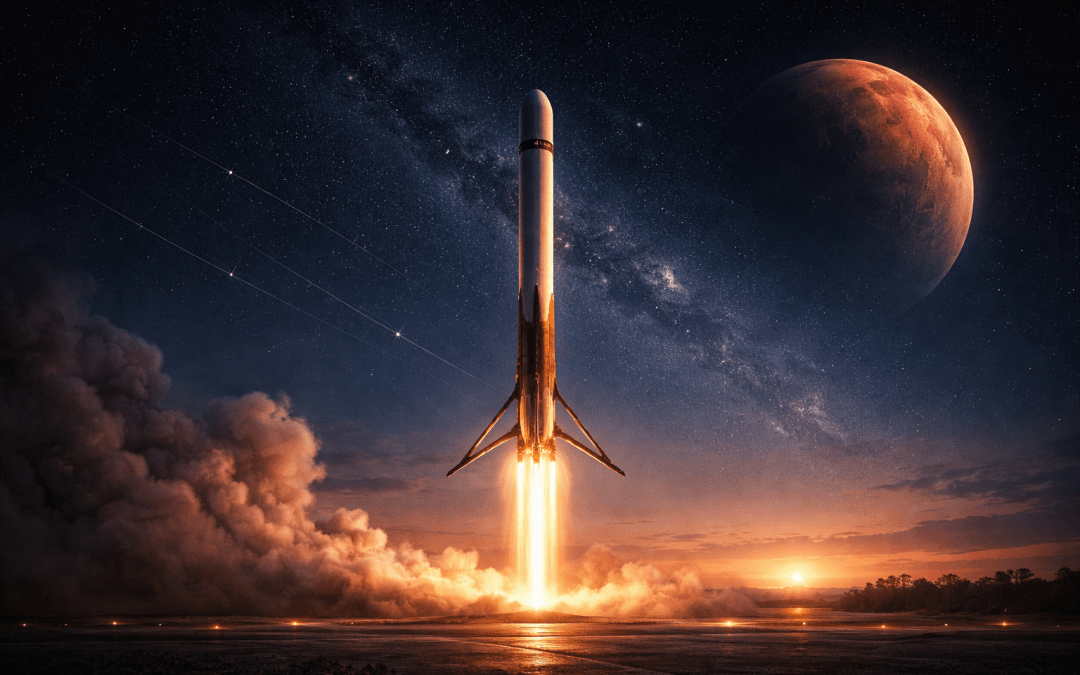
On June 28, 2015, a Falcon 9 rocket carrying supplies to the International Space Station exploded 139 seconds after liftoff. The failure was SpaceX's third in seven years and threatened NASA contracts worth billions. Elon Musk stood in the Mission Control center at SpaceX headquarters in Hawthorne, California, watching the screens go dark. For most aerospace companies, this failure would have triggered months of investigation, committee meetings, and cautious review before attempting another launch. For Musk and SpaceX, the imperative was different: identify the cause, fix it, and launch again within months. The company did exactly that—returning to flight in December 2015, just six months later. More remarkably, that December launch ended with the Falcon 9's first stage returning to land vertically at Cape Canaveral, a historic first that would transform the economics of spaceflight.
The incident captured SpaceX's essential character: willing to accept dramatic failures as the price of moving quickly toward ambitious goals, combining engineering excellence with risk tolerance that traditional aerospace companies found reckless, and pursuing visions that seemed fantastical—reusable rockets, Mars colonization, global internet from satellites—with the systematic determination to make them real. Musk founded SpaceX in 2002 with $100 million of his PayPal fortune and a goal that aerospace veterans considered delusional: reducing space launch costs by orders of magnitude and eventually enabling human settlement of Mars. Twenty years later, SpaceX had become the world's most valuable private company, dominated commercial and government launch markets, built a satellite internet constellation serving millions, and developed the most powerful rocket ever successfully flown. The company succeeded by rejecting aerospace industry conventions about what was possible and what was prudent.
The name "SpaceX" (Space Exploration Technologies Corp.) signaled ambition beyond commercial satellite launches. The "X" suggested experimental, cutting-edge, frontier-pushing—connotations that aligned with Musk's personal brand and the company's mission. Unlike aerospace contractors that existed primarily to execute government contracts, SpaceX positioned itself as pursuing an independent vision of making humanity multiplanetary, with government and commercial contracts funding that larger mission. This narrative attracted talent who wanted to work on something meaningful beyond quarterly earnings and government procurement, creating recruiting advantages that traditional aerospace companies couldn't match.
The Founding: A Billionaire's Space Dream
Elon Musk's path to founding SpaceX combined childhood obsession with space exploration, fortune made in internet companies, and frustration with NASA's stagnant human spaceflight program. After selling PayPal to eBay for $1.5 billion in 2002, Musk had resources to pursue expensive passions. He initially attempted to buy refurbished Russian ICBMs to launch a greenhouse to Mars as a publicity stunt to reignite public interest in space exploration. The plan was rejected by Russian rocket suppliers who didn't take Musk seriously, an experience that convinced him to build his own rockets rather than relying on existing providers.
The fundamental insight was that rocket costs were artificially high due to legacy aerospace contractors' cost-plus business models, lack of competition, and vertical integration that prevented innovation. Musk believed rockets could be built for a fraction of current costs by using modern manufacturing techniques, eliminating unnecessary complexity, and reusing hardware rather than throwing it away after single use. The aerospace industry considered this analysis naive—Musk had no rocket engineering experience, and the consensus was that existing costs reflected the genuine difficulty and danger of spaceflight. However, Musk had $100 million to test his thesis.
The founding team combined Musk's vision and capital with aerospace engineers willing to challenge industry orthodoxy. Tom Mueller, who became chief propulsion engineer, had been building rocket engines as a hobby. Chris Thompson, VP of Structures, came from Boeing but was frustrated with its bureaucracy. The team shared Musk's belief that spaceflight was unnecessarily expensive and that first-principles engineering could dramatically reduce costs. The early culture combined startup energy with genuine rocket science, creating an unusual hybrid of Silicon Valley and aerospace.
The initial business plan was straightforward: develop a small rocket (Falcon 1) capable of carrying satellites to orbit at a fraction of current prices, establish commercial viability, then develop larger rockets for more ambitious missions. The plan assumed that lower launch costs would create new markets—companies and countries priced out of space access would purchase launches if prices dropped significantly. This market creation logic was unproven but plausible. The more ambitious goal, enabling Mars colonization, was acknowledged as long-term and dependent on revolutionary improvements in rocket reusability and affordability.
The location choice—Hawthorne, California, in a former Boeing building—was deliberate. Musk wanted to be in Los Angeles for personal reasons and recruiting talent from aerospace companies concentrated in Southern California. The building was large enough for manufacturing and testing, with high ceilings accommodating rocket assembly. The location symbolized both connection to aerospace heritage and departure from it—taking over Boeing's old facility to build rockets in ways Boeing hadn't.
The Falcon 1 Failures: Nearly Dying Three Times
SpaceX's first three Falcon 1 launch attempts from 2006-2008 all failed, nearly bankrupting the company and testing Musk's commitment to space exploration. The first launch in March 2006 ended when a fuel leak caused a fire that destroyed the rocket 33 seconds after liftoff. The second attempt in March 2007 ended when the first stage collided with the second stage during separation, destroying both. The third attempt in August 2008 failed when the first and second stages collided similarly. Each failure cost tens of millions of dollars the company could barely afford and consumed months of work.
The failures were crushing to morale and credibility. Aerospace industry veterans saw them as confirmation that SpaceX's approach was reckless and that space launch was too difficult for newcomers without decades of experience. Customers who had contracted for Falcon 1 launches questioned whether SpaceX would ever achieve orbit. Musk personally struggled with the failures, which he later described as among the most difficult experiences of his life. The company was running out of money, Tesla was simultaneously facing bankruptcy, and the financial crisis of 2008 was destroying capital markets.
The fourth Falcon 1 attempt on September 28, 2008, was make-or-break: SpaceX had enough capital for one more attempt, and failure would likely mean bankruptcy. Musk gathered employees and acknowledged the stakes bluntly, telling them this was potentially the last launch. The tension was extraordinary—years of work, hundreds of millions of dollars, and the company's existence depended on successful execution under intense pressure. The rocket launched, separated properly, and achieved orbit, becoming the first privately-developed liquid-fuel rocket to reach orbit. The success was literal salvation, proving SpaceX's model viable and providing breathing room to secure additional contracts and funding.
The Falcon 1 experience taught lessons that shaped SpaceX's culture: accept that failures will happen, fail fast and learn quickly rather than avoiding risk, and test through actual launches rather than endless simulations. This approach contrasted sharply with traditional aerospace, where failures were career-ending disasters that triggered exhaustive reviews and conservative risk-avoidance. SpaceX embraced rapid iteration and intelligent risk-taking as necessary for innovation, though this sometimes meant spectacular public failures like exploding rockets.
The financial desperation of the Falcon 1 era also established SpaceX's frugality and efficiency focus. The company built rockets for a fraction of what traditional contractors spent by vertical integration (manufacturing components internally rather than relying on expensive suppliers), lean operations (minimal bureaucracy and overhead), and rapid iteration (fixing problems quickly rather than exhaustive analysis paralysis). These practices became competitive advantages as SpaceX scaled, allowing the company to underbid incumbents by 30-50% while maintaining margins.
The NASA Partnership: Government Validation and Funding
NASA's decision in December 2008 to award SpaceX a $1.6 billion contract for twelve cargo resupply missions to the International Space Station saved the company from bankruptcy and validated the commercial spaceflight model. The contract was part of NASA's Commercial Orbital Transportation Services (COTS) program, which aimed to develop private sector capabilities to replace the Space Shuttle for ISS cargo. The partnership was controversial—NASA was trusting critical missions to a company that had just barely achieved its first successful orbit—but it proved transformative for both parties.
The NASA relationship provided reliable revenue that allowed SpaceX to develop the Falcon 9 rocket and Dragon spacecraft capable of ISS missions. The funding came with demanding requirements: NASA's safety and reliability standards, extensive documentation, and oversight that forced SpaceX to mature organizationally. The company needed to implement quality control, testing protocols, and program management that hadn't been necessary for small commercial launches. This professionalization was painful but essential for handling complex missions.
The partnership also created tension between NASA's risk-averse culture and SpaceX's rapid iteration approach. NASA wanted extensive analysis and conservatism; SpaceX wanted to test and fix problems through actual flights. The compromise involved SpaceX adopting more formal processes while NASA accepting more risk than traditional contracting relationships. The arrangement worked because both parties needed each other: NASA needed commercial alternatives to expensive traditional contractors, and SpaceX needed the credibility and revenue that NASA contracts provided.
The first Dragon capsule reached the ISS in May 2012, making SpaceX the first commercial company to deliver cargo to the station. The success demonstrated that commercial companies could reliably perform missions previously limited to government agencies and established aerospace contractors. NASA subsequently awarded SpaceX contracts worth billions for additional ISS cargo missions and later for Commercial Crew—carrying astronauts to the ISS, replacing reliance on Russian Soyuz vehicles after the Space Shuttle retired.
The NASA relationship illustrated the benefits of government-private partnerships in aerospace: NASA provided early funding and mission validation that created markets for commercial services, while SpaceX provided innovation and cost reduction that government agencies struggled to achieve internally. The model contrasted with traditional cost-plus contracts where contractors were paid costs plus profit percentage, creating incentives to maximize costs rather than minimize them. Fixed-price contracts aligned SpaceX's interests with efficiency and successful completion.
The Reusability Vision: Landing Rockets on Barges
Rocket reusability was SpaceX's founding vision but took over a decade to achieve. The concept was simple: if first-stage boosters could land and be reflown, launch costs would drop dramatically since the booster represented 60-70% of the rocket's cost. However, no one had successfully landed an orbital rocket booster vertically—the technical challenges of reentry, precision guidance, and soft landing were considered too difficult and risky to be worth attempting when expendable rockets worked adequately.
SpaceX's approach combined incremental progress with eventual breakthrough. Early tests used Grasshopper, a vertical takeoff and landing test vehicle that demonstrated controlled descent and landing in test flights from 2012-2013. The tests proved that software and control systems could land rockets precisely. The next step was attempting to land orbital-class Falcon 9 first stages after actual missions. Initial attempts landed in the ocean for data collection without expecting successful recovery. Later attempts used autonomous drone ships as landing platforms—floating barges with precisely maintained position in the ocean.
The early landing attempts failed spectacularly, with boosters crashing into drone ships and exploding. The failures were shared publicly through videos that became viral sensations, turning rocket landings into entertainment and generating enormous publicity. The transparent approach to failure contrasted with traditional aerospace secrecy and created public support and interest. Even failures generated positive attention because they demonstrated genuine attempt at revolutionary capability rather than conservative incrementalism.
The breakthrough came in December 2015 when a Falcon 9 first stage successfully landed at Cape Canaveral after launching satellites to orbit. The landing proved that orbital-class boosters could be recovered and potentially reused. Subsequent successful landings on drone ships demonstrated capability to recover boosters even after high-energy missions that required landing far from launch sites. By the late 2010s, SpaceX was routinely landing and reusing boosters, with some flying ten or more times. The reusability achievement reduced launch costs and gave SpaceX capabilities that no competitor could match.
The economic impact was significant but not as dramatic as initial projections suggested. Refurbishment costs and the need for extensive inspections between flights meant that reuse didn't reduce costs by 90% as optimistic projections suggested. However, even 30-50% cost reductions were substantial and gave SpaceX pricing flexibility that pressured competitors. Customers became willing to fly on "flight-proven" boosters at discounts, creating market acceptance of reuse. The capability also increased SpaceX's launch capacity—the company could launch more frequently with limited manufacturing capacity by reusing boosters rather than building new ones for every launch.
Starlink: Satellite Internet Constellation
The Starlink project, announced in 2015 and beginning deployment in 2019, represented SpaceX's most audacious business venture: launching thousands of satellites into low Earth orbit to provide global broadband internet. The concept had been attempted and failed by previous companies including Iridium and Globalstar, which went bankrupt after building satellite constellations that couldn't compete economically with terrestrial internet. SpaceX believed it could succeed where others failed by leveraging low-cost launches from Falcon 9, rapid satellite manufacturing, and improved technology.
The business case was compelling if the technology worked: billions of people lacked high-speed internet access, and even in developed markets, rural areas and mobile users could benefit from satellite internet. The total addressable market was potentially hundreds of billions of dollars annually. However, the capital required was enormous—tens of billions for satellite manufacturing, launches, and ground infrastructure. The constellation would need to be massive (potentially 12,000+ satellites initially, with plans for up to 42,000) to provide global coverage and sufficient bandwidth.
The regulatory challenges were substantial: SpaceX needed spectrum allocations from multiple countries, licensing for constellation operation, and coordination with other satellite operators to avoid interference and collisions. The company filed applications with the FCC and international regulators, navigating complex telecommunications regulations while competing with OneWeb, Amazon's Project Kuiper, and other planned constellations. The regulatory environment was complicated by national security concerns (satellite internet could serve areas where governments wanted to control information flow) and space debris concerns (thousands of new satellites would increase collision risks).
The deployment began in 2019 with initial Starlink satellite launches. SpaceX used its own Falcon 9 rockets to launch batches of 60 satellites at a time, achieving economies of scale impossible for commercial customers who paid per kilogram to orbit. This vertical integration was crucial—SpaceX could dedicate launch capacity to Starlink without competing for limited commercial launch slots. By the early 2020s, SpaceX had launched thousands of Starlink satellites and was providing service to hundreds of thousands of customers globally, particularly in rural areas and developing countries with limited terrestrial internet infrastructure.
The service quality was surprisingly good, with latency and bandwidth competitive with terrestrial broadband in many use cases. However, the business model faced challenges: user terminals cost hundreds of dollars to manufacture but were sold at lower prices to encourage adoption, creating losses per customer. The monthly subscription fees ($110+ initially) generated revenue, but achieving profitability required massive scale to spread constellation costs across millions of subscribers. Whether Starlink would become a sustainably profitable business or a money-losing side project cross-subsidized by SpaceX's launch business remained uncertain.
Starship: The Mars Vehicle
Starship, SpaceX's fully reusable super-heavy-lift launch system under development from 2019 onward, represented Musk's ultimate vision: a vehicle capable of carrying 100+ tons and 100+ passengers to Mars, refuelable in orbit, and completely reusable. The system consisted of a Super Heavy booster and Starship spacecraft, both designed to land and be rapidly reflown. The scale was extraordinary—Starship would be the largest and most powerful rocket ever flown if successful, exceeding even the Saturn V that carried astronauts to the Moon.
The development approach was controversial and radical: SpaceX built multiple Starship prototypes rapidly and tested them to destruction, learning through iterative failures rather than exhaustive analysis before testing. Early prototypes exploded during pressurization tests, landing attempts, and high-altitude flights. The explosions were spectacular, generating viral videos and memes, but SpaceX treated them as normal parts of rapid development. Traditional aerospace companies were horrified by the public failures and apparent waste, but SpaceX's approach allowed testing dozens of design iterations in the time traditional approaches would complete one.
The technical challenges were immense: developing the most powerful rocket engine ever built (Raptor, running on liquid methane and oxygen), creating heat shield capable of surviving reentry from interplanetary velocities, perfecting orbital refueling to enable deep space missions, and achieving reliability sufficient for human spaceflight. The company made progress on all fronts but encountered repeated delays. Timelines Musk projected for Starship capabilities consistently proved optimistic by years, though the company eventually achieved technical milestones that skeptics claimed were impossible.
The business justification for Starship development was initially unclear: SpaceX's existing Falcon 9 and Falcon Heavy rockets served current commercial and government customers adequately. Starship was designed for missions that didn't yet exist—lunar surface access, Mars colonization, point-to-point Earth transport. However, as development progressed, potential applications emerged: NASA selected Starship as the lunar lander for Artemis program, providing billions in development funding; satellite deployment could be revolutionized by Starship's payload capacity; and Starlink V2 satellites were designed specifically for Starship's capabilities.
The relationship between Starship development and SpaceX's Mars ambitions was direct: Musk openly stated that Starship's purpose was enabling Mars settlement, with commercial applications funding that larger goal. This mission-driven approach attracted engineers who wanted to work on meaningful problems and created tolerance for expensive development that might not generate immediate returns. However, it also created tension between commercial reality and aspirational goals—SpaceX needed to serve paying customers while investing heavily in technology for missions decades away.
The Musk Factor: Visionary Leader or Impossible Boss
Elon Musk's management of SpaceX combined technical brilliance, inspirational vision, and interpersonal dysfunction that created extraordinary company culture and significant human costs. Musk involved himself deeply in engineering decisions, personally reviewing designs and challenging assumptions. His technical knowledge was substantial—he could engage in detailed engineering discussions about propulsion, materials, and trajectories. This hands-on leadership ensured that executive vision aligned with technical reality and prevented bureaucratic drift, but it also created chaos when Musk changed directions impulsively.
The work culture was intense and demanding: 80-100 hour weeks were common, deadlines were aggressive to the point of being impossible, and Musk would personally berate employees who failed to meet his expectations. The pressure was rationalized as necessary to achieve extraordinary goals—sending humans to Mars required extraordinary effort and couldn't be accomplished through 40-hour workweeks and leisurely timelines. Many employees thrived in this environment, finding the mission and technical challenges worth the personal costs. Others burned out or left damaged by the experience.
The hiring and firing patterns reinforced intensity: SpaceX recruited talented young engineers willing to sacrifice work-life balance for meaningful work, extracted extraordinary productivity during their tenure, and accepted high turnover as some people couldn't sustain the pace. This model worked for the company but had social costs—employees postponed families, damaged relationships, and sometimes developed health problems from stress and overwork. The tradeoff was whether the mission (advancing spaceflight and eventual Mars settlement) justified the human costs.
Musk's public persona and Twitter activity created both opportunities and problems for SpaceX. His celebrity attracted attention, investment, and talent that SpaceX couldn't otherwise access. His willingness to engage publicly and share SpaceX's progress generated enthusiasm and support. However, his controversial statements, political activities, and personal behavior sometimes damaged SpaceX's reputation and relationships. Government customers and investors occasionally expressed concern about dependence on a CEO whose public behavior was unpredictable.
The comparison to Steve Jobs was frequent and apt: both were brilliant, demanding leaders who achieved extraordinary results through combinations of vision, technical understanding, and willingness to push people beyond what they thought possible. Both also treated people cruelly at times and prioritized results over employee wellbeing. Whether such intensity was necessary for the achievements or whether gentler approaches could have succeeded was debated, with different conclusions depending on whether one prioritized outcomes or process.
The National Security Relationship: Essential and Complicated
SpaceX's relationship with the U.S. military and intelligence community evolved from initial skepticism to dependence as the company proved capabilities and reliability. The Department of Defense initially preferred traditional contractors with decades of experience and security clearances. However, SpaceX's lower costs and demonstrated capabilities gradually won military contracts, particularly for satellite launches. By the 2020s, SpaceX was launching most U.S. national security payloads, a remarkable achievement for a company that hadn't existed 20 years earlier.
The national security certification process required extensive documentation, facility inspections, and security protocols that forced SpaceX to implement procedures it had avoided in commercial operations. The company needed to segregate national security work from commercial activities, implement strict access controls, and satisfy requirements that seemed bureaucratic but were essential for handling classified payloads. The compliance was expensive and administratively burdensome but necessary for accessing lucrative government contracts.
The Ukraine conflict in 2022 illustrated both Starlink's strategic importance and the complications of private companies providing military-critical infrastructure. When Russian invasion disrupted Ukrainian communications, SpaceX provided Starlink terminals that enabled Ukrainian military communications and coordination. The service was strategically valuable—Ukraine's military depended on Starlink for operations—but it also made SpaceX a party to geopolitical conflicts. Musk's comments about Ukraine-Russia relations and reported discussions about restricting Starlink service in certain areas raised concerns about private control over military infrastructure.
The dependence was mutual: SpaceX needed government contracts for revenue and validation, while the government increasingly depended on SpaceX for critical launch capabilities and potentially for satellite internet in contested regions. This dependence created vulnerabilities—if SpaceX failed or Musk made decisions contrary to U.S. interests, alternatives were limited. The government attempted to maintain competition by supporting other launch providers, but SpaceX's cost and capability advantages made it difficult for competitors to remain viable.
The regulatory environment for SpaceX was complicated by national security classification: some SpaceX capabilities and contracts were classified, making public discussion and regulatory oversight difficult. The company operated under ITAR (International Traffic in Arms Regulations), which restricted information sharing and employee hiring. These security requirements conflicted with SpaceX's general transparency and international ambitions, creating tensions that required constant management.
The Competition: Traditional Aerospace's Slow Response
SpaceX's emergence disrupted traditional aerospace contractors who had dominated space launch for decades. Companies including United Launch Alliance (a Boeing-Lockheed Martin joint venture), Arianespace (European), and Roscosmos (Russian) had shared the commercial and government launch market with minimal price competition. SpaceX's entry with costs 30-50% below incumbents forced responses, though traditional aerospace companies struggled to match SpaceX's efficiency and innovation pace.
United Launch Alliance (ULA) exemplified traditional aerospace challenges. ULA's Atlas V and Delta IV rockets were reliable and technically capable but expensive, using cost-plus contracts that incentivized spending rather than efficiency. When SpaceX began competing for government contracts, ULA initially dismissed the threat, arguing that SpaceX lacked reliability and experience. However, as SpaceX accumulated successful launches and won contracts, ULA was forced to respond with Vulcan Centaur, a new rocket designed for lower costs and reusability. The development was slower and more expensive than SpaceX's, highlighting structural advantages of startup culture over established defense contractors.
Blue Origin, founded by Jeff Bezos in 2000, represented different approach: massive funding, patient development, and less public visibility than SpaceX. Blue Origin focused initially on suborbital tourism with New Shepard and developed New Glenn orbital rocket with capabilities potentially competitive with Falcon 9. However, Blue Origin's development pace was far slower than SpaceX's, with New Glenn repeatedly delayed. The contrast highlighted the importance of iteration speed and operational focus—SpaceX launched hundreds of times while Blue Origin was perfecting designs through analysis and testing before flight attempts.
International competitors including Arianespace and China's state space programs responded to SpaceX by developing reusable rockets and reducing costs, validating SpaceX's model while attempting to maintain competitive positions. The global space launch market increasingly bifurcated between SpaceX and everyone else, with SpaceX capturing majority market share in commercial launches and growing share of government missions. The competition was no longer about whether reusability and low costs were possible but whether anyone could match SpaceX's execution.
The traditional aerospace business models—cost-plus contracts, slow development, risk aversion—proved poorly suited to competing with SpaceX's approach. Established companies attempted to create SpaceX-like subsidiaries with startup culture, but these efforts generally failed because parent company culture and incentive structures undermined the subsidiaries. The incumbents were slowly being disrupted, and their responses were too late and too cautious to regain leadership.
The Mars Vision: Aspirational Goal or Practical Plan?
Musk's stated goal of establishing a self-sustaining city on Mars by the 2050s was simultaneously inspiring and preposterous. The technical challenges were immense: developing life support systems, generating power and resources from Martian environment, protecting against radiation, establishing agriculture, and building infrastructure—all on a planet with no breathable atmosphere, extreme cold, and eight-month communication delays from Earth. The costs would be hundreds of billions or trillions of dollars over decades, with uncertain returns.
The rationale Musk articulated was civilizational insurance: if humans remained confined to Earth, a catastrophe could end the species. Becoming multiplanetary provided redundancy and increased the chances of long-term survival. This argument had merit but also raised questions: were resources spent on Mars colonization better used addressing Earth's problems like climate change, poverty, or pandemics? The tradeoffs were stark and the priorities reflected values about exploration, risk, and human destiny that were fundamentally subjective.
The practical steps toward Mars settlement involved developing Starship, establishing lunar bases as testbeds for closed-loop life support, understanding long-term health effects of reduced gravity and radiation, and developing in-situ resource utilization to produce fuel and materials from Martian resources. Each step was technically challenging and expensive, requiring decades of effort. SpaceX was making progress on some elements (Starship development, launch costs reduction) but other elements (life support, radiation protection, agricultural systems) required capabilities beyond SpaceX's expertise and resources.
The skepticism about Mars settlement was widespread and justified: even optimistic timelines put meaningful Martian presence decades away, costs were likely to exceed projections by orders of magnitude, and public or private funding for such an endeavor was uncertain. However, Musk's approach of articulating an ambitious vision and working backward to identify necessary steps had proven effective for SpaceX's commercial success—reusable rockets seemed equally impossible initially. Whether Mars settlement would follow the same trajectory or prove genuinely infeasible was unknowable in advance.
The Mars vision served crucial functions regardless of achievability: it attracted talent who wanted to work on historically significant projects, it provided strategic direction for technology development, and it generated public interest and support. Even if Mars cities never materialized, the technologies developed pursuing that goal—reusable rockets, satellite internet, efficient spacecraft—created value independently. The vision was simultaneously serious long-term goal and inspirational narrative that enabled building actual capabilities.
Conclusion: Transforming Space Access While Pursuing the Impossible
SpaceX's impact on spaceflight was revolutionary: the company reduced launch costs by more than half, proved that reusable rockets were practical, broke the traditional aerospace contractors' government launch monopoly, and deployed a satellite internet constellation that had defeated previous attempts. These achievements were concrete and transformative, validating Musk's founding belief that spaceflight could be dramatically cheaper and more accessible through private sector innovation and risk-taking.
However, the company's success depended on factors that might not be replicable: Musk's personal wealth funding initial development, NASA contracts providing reliable revenue during growth, the unique historical moment when launch costs could be slashed through better engineering, and tolerance for work culture that extracted extraordinary effort at significant human cost. Whether SpaceX's model represented the future of aerospace or was a unique combination of circumstances that succeeded once but couldn't be repeated was uncertain.
The Mars vision remained audacious and distant, with meaningful progress requiring sustained effort for decades and resources that might never materialize. The vision served the company well as inspiration and direction, but whether SpaceX or anyone would actually establish Mars cities was more doubtful than the company's marketing suggested. The gap between aspiration and reality was large, though SpaceX had closed similar gaps before when achieving reusable rockets that experts declared impossible.
Elon Musk built SpaceX into the most capable and valuable space company through combination of technical vision, risk tolerance, capital deployment, and willingness to accept failures as learning opportunities. His management style damaged people while achieving extraordinary results, raising questions about whether the achievements justified the costs and whether gentler approaches could have succeeded. The answer depended on values: if advancing spaceflight and pursuing Mars settlement were paramount goals, then Musk's approach was arguably necessary; if employee wellbeing and sustainable culture were equally important, then the approach was questionable regardless of technical achievements.
SpaceX demonstrated that established aerospace companies had been inefficient and unambitious, that private companies could innovate faster than government agencies in some domains, and that visionary leadership with adequate resources could challenge conventional wisdom about what was technically and economically feasible. The company changed spaceflight profoundly and proved that revolutionary rather than incremental progress was possible with the right combination of talent, capital, and leadership. Whether SpaceX would ultimately succeed in making humanity multiplanetary remained to be seen, but the company had already succeeded in making space more accessible and reintroducing possibility to an industry that had accepted stagnation as inevitable.
Discover more from Kurums | Business Intelligence
Subscribe to get the latest posts sent to your email.