
Taste Note - Amazon Business Ethics Best Sellers
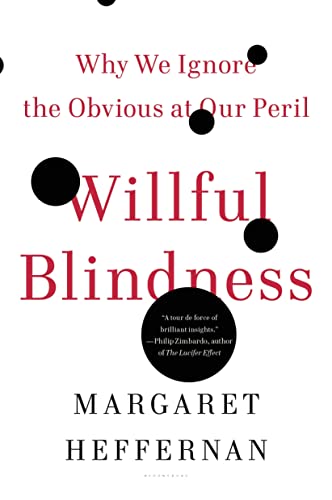
Willful Blindness: Why Boards and Leaders Miss What Is Right in Front of Them
A Kurums Book Taste review of Willful Blindness for directors, ethics officers and executives who need to see the warning signs their organization is quietly trained to ignore.
Why this book fits Kurums
Most governance failures are not secrets. In case after case, the facts were available to people inside the company, and the problem was that nobody with authority chose to look at them. Margaret Heffernan, a former CEO, takes a legal idea, that you can be responsible for what you could have known and deliberately avoided knowing, and turns it into a working theory of how organizations go blind together.
For the Kurums Corporate Governance audience, the value is that the book moves the conversation from individual villains to ordinary mechanisms: loyalty, familiarity, overwork, obedience and the comfort of agreeing with the room. Those mechanisms are present in every boardroom and audit committee, which is exactly why a director should be able to name them before the next crisis forces the lesson.
What the book argues
Heffernan opens with the legal doctrine of willful blindness: courts can hold people liable for what they should have known and chose not to find out. She then argues that this is not a rare moral defect but a normal human tendency. We prefer information that confirms what we already believe, we protect the people and institutions we love, and we filter out facts that would force painful change. The more familiar and comfortable an environment is, the less we question it.
The middle of the book walks through the forces that make blindness collective. People defer to authority, as the classic obedience experiments showed, and conform to the group even when their own eyes disagree. Ideology narrows what leaders are willing to see. Exhaustion and overwork reduce the mental capacity needed to notice anomalies. Bystanders assume someone else will act. Heffernan draws on corporate disasters, industrial accidents and financial collapses to show how each force operated inside real organizations staffed by capable people.
The final argument is that seeing is a discipline that can be practiced. Heffernan gives attention to the people she calls Cassandras, employees and outsiders who raise warnings and are ignored or punished, and argues that organizations must deliberately protect dissent, diversify who is in the room and make it safe to deliver bad news. Blindness is the default; insight has to be designed in.
Key ideas, translated to your desk
Familiarity is a risk factor
The longer a board works with the same executives, auditors and assumptions, the less it questions them. Treat long tenure and long-standing relationships as reasons to add fresh scrutiny, not as proof of trust.
Silence is information
When nobody raises concerns, it may mean people do not feel safe to speak, not that there is nothing to say. Measure whether bad news reaches the board, not just what the news says.
Exhaustion blinds
Overloaded executives and overloaded board agendas miss weak signals. Protect time in meetings for open questions instead of filling every minute with approvals.
Use it at work
- Add a standing agenda item where each director names one thing the board might be avoiding looking at.
- Review how whistleblower reports are routed and confirm at least one channel reaches the audit committee directly.
- Invite a dissenting internal voice or outside expert to present to the board once a year on a topic of real disagreement.
- Map the board's relationships and tenure, and rotate committee roles where familiarity has become comfort.
Read it if
- You sit on a board or audit committee and want language for the soft causes of hard failures.
- You run ethics, compliance or internal audit and need a persuasive case for protecting dissent.
- You liked The Smartest Guys in the Room and want the psychology behind why insiders did not stop it.
You can skip it if
- You want a step-by-step governance framework or checklist; this book diagnoses more than it prescribes.
- You already know the obedience and conformity research well and want only new evidence.
- You need jurisdiction-specific guidance on director liability or whistleblower law.
This book appears in
Curated Tasting Menus that chain this title into a reading route.
Discover more from Kurums | Business Intelligence
Subscribe to get the latest posts sent to your email.