
Taste Note - Amazon Sales & Selling Best Sellers
Predictable Revenue: The Specialized Outbound Model That Made Pipeline a Process
A Kurums Book Taste review of Predictable Revenue for sales leaders who need pipeline that does not depend on a few heroes or a lucky quarter.
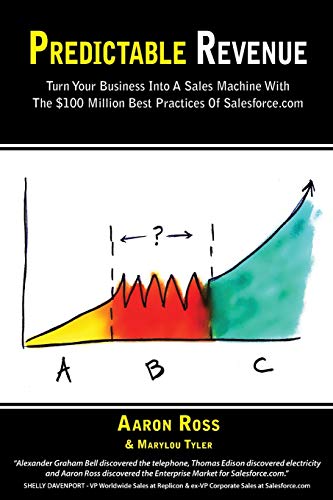
Why this book fits Kurums
Many B2B companies still run sales the way they did on day one: every rep prospects, qualifies, demos, closes and manages accounts, and the forecast is a guess built on whoever had a good month. Predictable Revenue is the operating manual for breaking that pattern. Aaron Ross describes the outbound system he built at Salesforce.com, which the book credits with adding about one hundred million dollars in recurring revenue, and turns it into a repeatable design any growing sales team can copy.
For the Kurums Sales audience the book matters because it reframes pipeline as an engineering problem. Instead of asking reps to work harder, it asks you to separate roles, measure each stage and build a lead engine that produces a forecastable number of qualified opportunities every month. That shift is now standard in SaaS, but many teams adopted the job titles without the discipline behind them.
What the book argues
The central argument is specialization. Ross insists that prospecting and closing are different jobs and that asking one person to do both guarantees both are done poorly. He splits the team into distinct roles: people who handle inbound leads from marketing, dedicated outbound prospectors whose only job is to generate qualified opportunities, account executives who close, and customer success staff who keep and grow accounts. Each role gets its own targets and its own metrics, so you can see exactly where the pipeline leaks.
Second, the book argues for what Ross calls Cold Calling 2.0: outbound prospecting without traditional cold calls. Prospectors send short, plain emails to senior people at well-chosen target accounts, often asking to be pointed to the right person rather than pitching. Conversations start from a referral inside the account and a clear ideal customer profile, not from a script read to strangers. The method depends on narrow targeting, honest testing of messages and steady volume, and the authors are explicit that it works best for companies with a high enough deal value to justify the effort.
Third, it argues that predictable revenue is a leadership outcome rather than a sales tactic. The book distinguishes lead types it calls seeds, nets and spears, roughly word of mouth, marketing programs and targeted outbound, and asks leaders to know which they rely on. It pushes executives to measure leading indicators such as new qualified opportunities created, to fix the sales process before hiring more reps, and to treat employees as capable of owning results. Revenue becomes predictable when the inputs are measured, not when the closers are motivated.
Key ideas, translated to your desk
Never let closers prospect alone
When account executives must also generate their own pipeline, prospecting is the first thing dropped in a busy month. A dedicated prospecting role protects the top of the funnel.
Forecast from opportunities created
Closed deals tell you about last quarter. The number of new qualified opportunities created each month is the leading indicator that tells you about the next one.
Ask for a referral, not a meeting
A short email asking a senior contact who owns the problem gets more honest replies than a pitch, and an internal referral makes the next conversation warmer.
Use it at work
- Map every rep's week and measure how much time goes to prospecting versus closing before you hire again.
- Write a one-page ideal customer profile and reject outbound lists that do not match it.
- Add new qualified opportunities created per month to your sales dashboard as a primary metric.
- Test two short referral-style outbound emails against your current sequence for one month and keep the winner.
Read it if
- You lead a B2B team whose pipeline depends on a few strong individuals.
- You are designing or fixing an SDR function and want the original logic behind it; pair it with Fanatical Prospecting or The Sales Acceleration Formula.
- You report revenue to a board and need a defensible model for future bookings.
You can skip it if
- You sell low-value, transactional products where outbound effort cannot pay for itself.
- You want current tooling or channel tactics; some examples are clearly of their era.
- You need deal-level skills such as discovery or negotiation rather than team design.
This book appears in
Curated Tasting Menus that chain this title into a reading route.
Discover more from Kurums | Business Intelligence
Subscribe to get the latest posts sent to your email.