
Taste Note - Amazon Product Management Best Sellers
Escaping the Build Trap: Measuring Technology by Outcomes, Not Features Shipped
A Kurums Book Taste review of Escaping the Build Trap for technology and product leaders who ship constantly but struggle to show the business value of what they build.
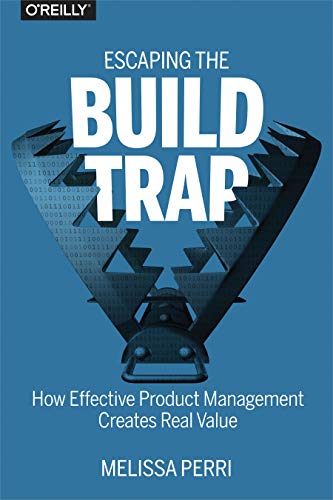
Why this book fits Kurums
Many technology departments are busy without being effective. Roadmaps fill up, sprints close on time and release notes grow longer, yet nobody can say with confidence which of those features moved revenue, retention or cost. Melissa Perri calls this the build trap, and her book is a direct guide for leaders who suspect their team has fallen into it.
For the Kurums Technology audience the book matters because it connects engineering work to company strategy in plain terms. It explains what a product manager should actually do, how strategy should cascade into product decisions, and what leadership must change in goals, budgets and incentives for teams to work on outcomes. It is short enough to share with executives outside technology, which is part of its value.
What the book argues
Perri defines the build trap as the state in which an organization measures success by output, such as features delivered and deadlines met, rather than by outcomes, such as changed customer behavior and business results. She argues that companies fall into it because output is easy to count and feels like progress. The way out starts with understanding the value exchange between a company and its customers: products succeed when they solve real customer problems in a way that also creates value for the business.
The second part of the book focuses on the product manager. Perri describes common failure modes, including the product manager as a mini-CEO, as a waiter who simply takes orders from stakeholders, and as a project manager tracking delivery. She argues instead that the role is to understand the business and the customer well enough to decide what to build and why. On strategy, she describes it as a framework for decision making rather than a detailed plan, cascading from a company vision to strategic intents, product initiatives and the options teams test.
The final parts describe the process and the organization. Perri presents the Product Kata, a repeatable loop of understanding the direction, analyzing the problem, setting a goal and experimenting toward it, and stresses that discovery and experiments should come before full build. She then argues that a product-led organization also needs outcome-based roadmaps, communication that reports progress against goals, product operations support, and budgeting and reward systems that stop paying teams for volume of features.
Key ideas, translated to your desk
Output is not outcome
A shipped feature is a bet, not a result. Report on the customer or business change you expected and whether it happened.
Strategy is a decision framework
A good strategy tells teams which problems matter and which to ignore, so they can choose solutions without waiting for approval on every item.
Incentives decide behavior
If teams are rewarded and funded for delivery dates and feature counts, they will stay in the build trap regardless of what the strategy deck says.
Use it at work
- Rewrite the top five items on your roadmap as problems and target outcomes, with the metric each one should move.
- Add a short discovery step with customer evidence or a small experiment before any initiative gets full engineering capacity.
- Change your quarterly review so teams report outcomes against goals, not just features shipped and velocity.
- Clarify product manager responsibilities in writing so the role is about deciding what and why, not taking orders or tracking tasks.
Read it if
- Your technology team ships on schedule but leadership questions the value of what gets delivered.
- You are introducing or reshaping product management in a company that has mostly run on projects.
- You read Inspired and want a more organizational view of how product teams fit company strategy.
You can skip it if
- You need detailed engineering practices such as testing, deployment or architecture guidance.
- Your organization already runs on outcome-based roadmaps, OKRs and continuous discovery.
- You prefer large data sets over the case-style narrative and the book's fictional example company.
This book appears in
Curated Tasting Menus that chain this title into a reading route.